Theme

Conflict and Peace

Stories related to violent conflicts, diplomatic tensions, and conflict prevention, mediation and resolution.

Editor's choice
News
NATO Chief says war is on Europe's doorstep, and warns against complacency

NATO Chief says war is on Europe's doorstep, and warns against complacency

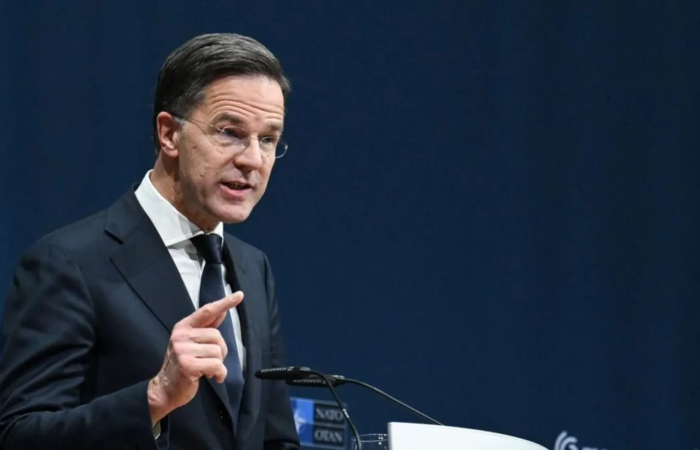
Russia could attack a Nato country within the next five years, the Secretary General of NATO, Mark Rutte, said in a stark new warning. "Nato's own defences can hold for now," Rutte warned in Berlin, but conflict was "next door" to Europe and he feared "too many are quietly complacent, and too many don't feel the urgency, too many believe that time is on our side. "Russia is already escalating its covert campaign against our societies," Rutte said in a speech in Germany. "We must be prepared for the scale of war our grandparents or great-grandparents endured." Earlier this month, Russia's President Vladimir Putin said his country was not planning to go to war with Europe, but it was ready "right now" if Europe wanted to - or started a war. But similar reassurances were given by Moscow in 2022, just before 200,000 Russian troops crossed the border and invaded Ukraine. Putin has accused European countries of hindering US efforts to bring peace in Ukraine - a reference to the role Ukraine's European allies have recently played in trying to change a US peace plan to end the war, whose initial draft was seen as favouring Russia. But Putin was not sincere, Nato's secretary-general said in the German capital, Berlin. Supporting Ukraine, he added, was a guarantee for European security. "Just imagine if Putin got his way; Ukraine under the boot of Russian occupation, his forces pressing against a longer border with Nato, and the significantly increased risk of an armed attack against us." Russia's economy has been on a war footing for more than three years now - its factories churn out ever more supplies of drones, missiles and artillery shells. According to a recent report by the Kiel Institute for the World Economy, Russia has been producing each month around 150 tanks, 550 infantry fighting vehicles, 120 Lancet drones and more than 50 artillery pieces. The UK, and most of its Western allies, are simply not anywhere near this point. Analysts say it would take years for Western Europe's factories to come close to matching Russia's mass-production of weapons. "Allied defence spending and production must rise rapidly, our armed forces must have what they need to keep us safe," the Nato chief said.
Editor's choice
News
Thai-Cambodia border clashes enter fourth day

Thai-Cambodia border clashes enter fourth day

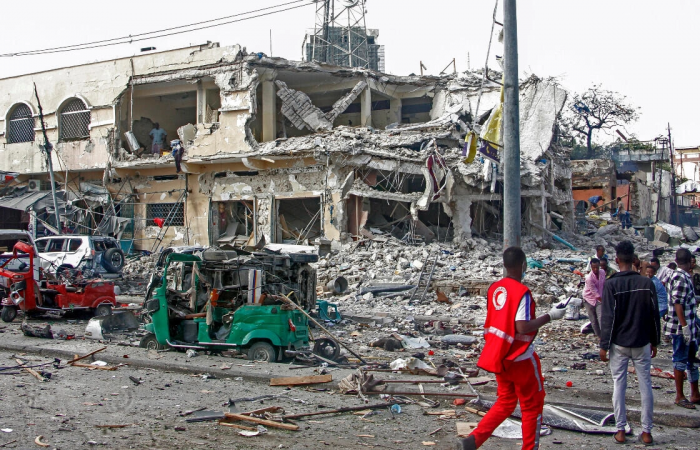
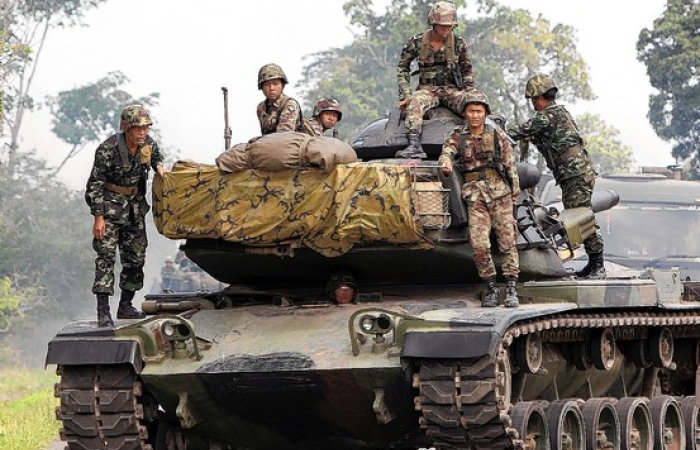
Renewed fighting between Thailand and Cambodia has entered its fourth day, with both sides accusing one another of violating international law, as they await a promised phone call from United States President Donald Trump. Cambodia’s Ministry of Defence accused Thailand’s military of carrying out numerous attacks within the country in the early hours of Thursday morning, including deploying tanks and artillery to strike targets in the country’s Pursat, Banteay Meanchey, and Oddar Meanchey provinces. In one such attack, Cambodia accused Thai soldiers of violating international humanitarian law by firing on civilians in Prey Chan village in Banteay Meanchey province. In another, it accused Thai forces of shelling “into Khnar Temple area”, and said Thai forces had also “fired artillery and support fire into the O’Smach area”. “Cambodia urges that Thailand immediately stop all hostile activities and withdraw its forces from Cambodia’s territorial integrity, and avoid acts of aggression that threaten peace and stability in the region,” the Defence Ministry said. Clashes took place on Wednesday at more than a dozen locations along the contested colonial-era demarcated 817-kilometre (508-mile) Thai-Cambodian border, with some of the most intense fighting being reported since a five-day battle in July, which saw dozens killed on both sides. Cambodia’s Ministry of the Interior said homes, schools, roads, Buddhist pagodas and ancient temples had been damaged by “Thailand’s intensified shelling and F-16 air strikes targeting villages and civilian population centres up to 30km [18.6 miles] inside Cambodian territory”. (click the image to read the full story).

Filter archive

Publication date
Editor's choice
News
EU concerned at situation in the Balkans amid tension between Kosovo and Serbia

EU concerned at situation in the Balkans amid tension between Kosovo and Serbia

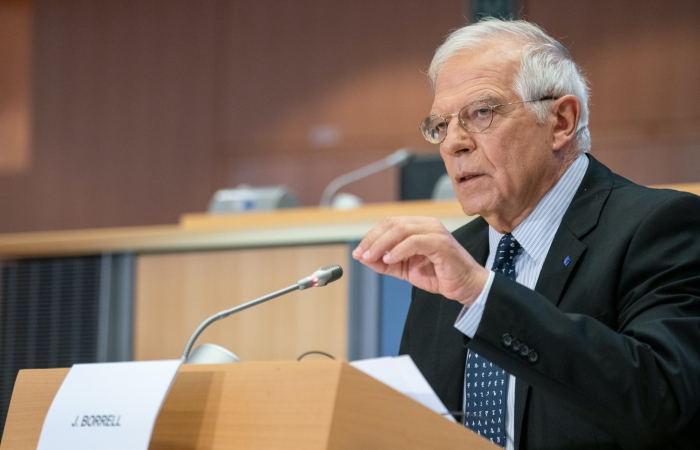
EU High Representative for Foreign and Security Policy, Josep Borrell, has expressed concern at recent developments in the Balkans amid increasing tensions between Kosovo and Serbia. Borrell, who is currently on an official visit to Abu Dhabi where he is participating in the 2022 Sir Bani Yas Forum, on Saturday (5 November) spoke with Serbian president Alexander Vucic and Kosovar Prime Minister, Albin Kurti. A statement issued later by the European Extern Action Service, said: "The recent developments in the relations between Kosovo and Serbia put years of hard work and achievements reached under the EU-facilitated Dialogue between Belgrade and Pristina at risk and hamper the security situation in the region and beyond. The European Union calls both sides to refrain from any unilateral actions, which might lead to further tensions.
Editor's choice
Interview
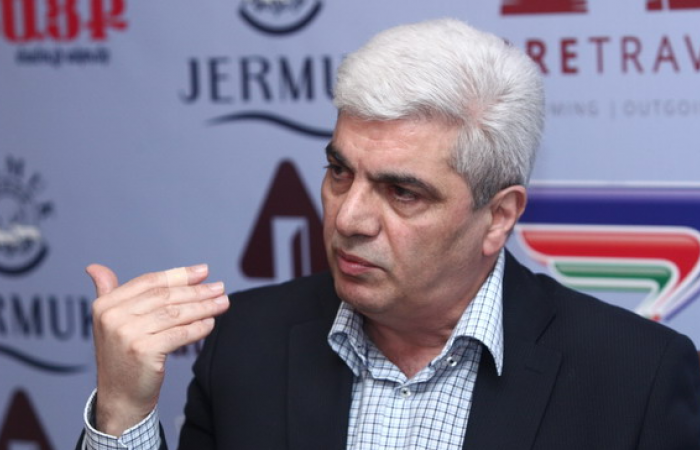
Stepan Grigoryan: "The current Armenian government really wants peace"

Stepan Grigoryan: "The current Armenian government really wants peace"

Dr Stepan Grigoryan, the Chairman of the Board of the Analytical Centre on Globalization and Regional Cooperation, is a respected analyst and opinion-shaper in Yerevan who has over many years been a moderate voice in what has often been a toxic inter-Armenian debate on the prospects for peace between Armenia and Azerbaijan and in the wider region. He spoke to commonspace.eu in Tbilisi on 22 October 2022 about the current state of the Armenia-Azerbaijan peace process, recent events surrounding it, and prospects for the future. Speaking about the current political situation in Armenia Stepan Grigoryan said "We have a strong civil society, active NGOs and active experts, and they act like pillars of independence in Armenia. And this civil society also criticises Nikol Pashinyan, but they are trying to help him. Yes, I myself am sometimes not happy with what Nikol Pashinyan is doing, but I try to help him with my advice, with my publications, with my speeches. So in Armenia one should not only look at the political field - which is polarised - but civil society too. We shouldn’t think that we have an ideal government, they have made many mistakes, but they really want peace."
Editor's choice
Opinion
Opinion: Russia's muted comeback to the Armenia-Azerbaijan peace process

Opinion: Russia's muted comeback to the Armenia-Azerbaijan peace process

"After a long pause, on October 31, Russia brought together the leaders of Armenia and Azerbaijan in a meeting mediated by President Vladimir Putin in the Russian resort town of Sochi. Over the past year, ever since the November 26, 2021 summit in Sochi, Russia’s initiatives  in support of a peace process between the two South Caucasus republics did not  give results, while the major mediating role in the process was taken over by the European Union", writes Vasif Huseynov in this op-ed for commonspace.eu. The document shared following the trilateral meeting did not contain any provisions concerning critical issues such as the future of Nagorno-Karabakh or the Russian peacekeeping force in the region. "How will the the peace talks unfold in the immediate future, especially considering that the leaders of Armenia and Azerbaijan are supposed to meet in Brussels this month in accordance with the results of August 31 summit", asks Vasif Huseynov.
Editor's choice
News
In Sochi, leaders affirm committment to Prague principles but leave space for a role for Russia

In Sochi, leaders affirm committment to Prague principles but leave space for a role for Russia

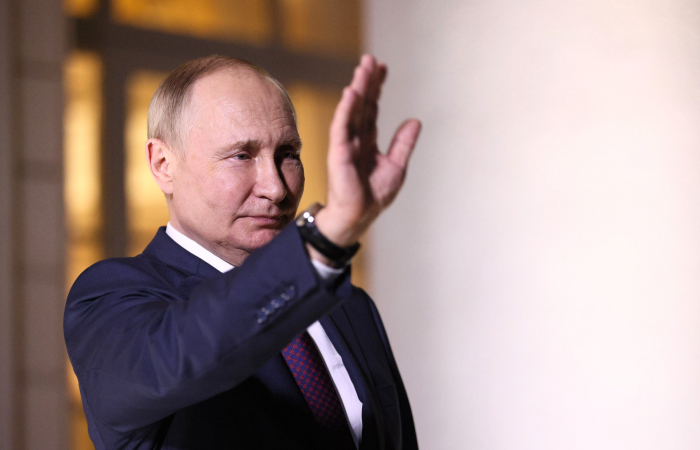
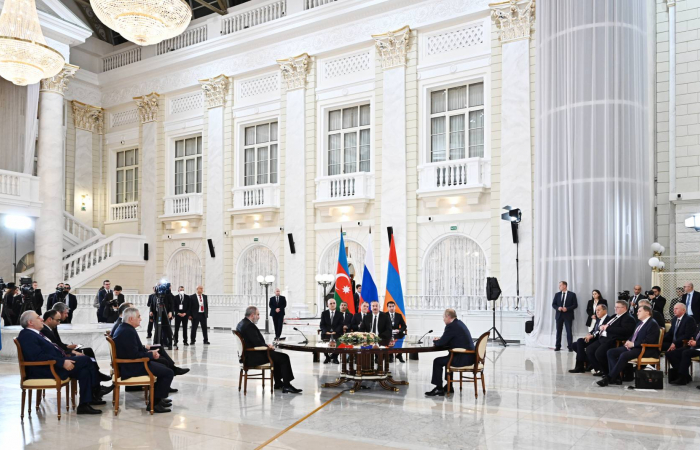
The president of Russia, Vladimir Putin, on Monday (31 October) hosted in Sochi the leaders of Armenia and Azerbaijan, prime minister Nikol Pashinyan and president Ilham Aliyev. Putin met separately with the two leaders, before hosting a two-hour trilateral meeting to discuss the current state of Armenia-Azerbaijan relations. The highly choreographed meetings in the grand settings of the Kremlin's summer residence in Sochi did not, it seems, result in the expectations that the Russian leader had of the sessions. After concluding the discussions only Putin made press comments, saying that they could not agree on many issues, but that he still felt that the meeting was "useful". The Russian president said that many elements that had been included in the draft of the statement prepared by the experts had to be deleted. In the joint written statement eventually issued at the end of the meeting, the three leaders touched upon the current state of Armenia-Azerbaijan relations, and the role of Russia. The statement appeared to endorse most of what was included in the Prague statement of 6 October 2022 between the president of the European Council, the president of France and the leaders of Armenia and Azerbaijan. The statement appeared to give a nod to a continuing Russian military force in Nagorno-Karabakh, and spoke about dialogue between representatives of societies.
Editor's choice
News
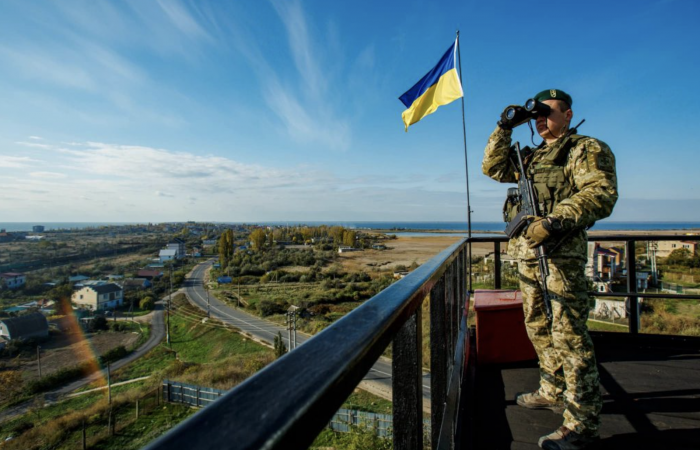
Ukraine strengthens military forces on border with Belarus

Ukraine strengthens military forces on border with Belarus

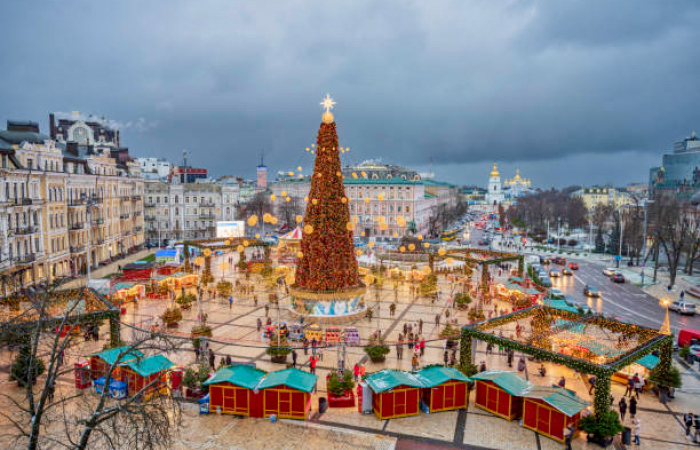
The Ukrainian army has reinforced its military strength in the north of Ukraine, along the border with Belarus. Ukrainian Deputy head of the General Staff's Main Operations Directorate Oleksii Hromov reported this at a press conference on Thursday morning (27 October). How strong Ukrainian the new units in the north are now and whether those reinforcements will come at the expense of military deployments in the south Hromov did not tell. "Right now we do not see a build-up of an attacking force, but that threat is there and will remain there," Hromov said. "We are responding to it and have reinforced our forces in the north." The Ukrainians have been preparing for another possible attack from Belarus for several weeks. At the beginning of the invasion, Russia tried to capture the capital Kyiv from that direction, and although the Ukrainians chased them away, military activity in the neighbouring country has recently been increasing again.