Region

South Caucasus

The South Caucasus – a region encompassing Armenia, Azerbaijan and Georgia - is one of strategic importance, not only for adjacent countries, such as Turkiye, Russia, Iran and the Central Asian states, but also for neighbours such as the European Union and the GCC states, and globally for the United States, India, China, Pakistan and Japan.

commonspace.eu team brings decades of experience of working in the South Caucasus and we are pleased to share our insights with our loyal readers through the website, and the sister newsletter, Caucasus Concise.

Editor's choice
Monday Commentary
Monday Commentary: 2025 was a momentous year for the South Caucasus

Monday Commentary: 2025 was a momentous year for the South Caucasus

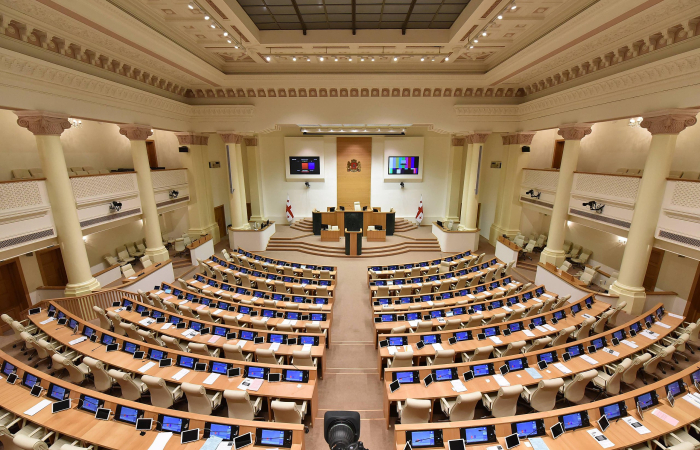
The year 2025 has ended up being a momentous year for the South Caucasus, writes Dennis Sammut in his Monday Commentary. Armenia-Azerbaijan relations have been redefined, with consequences for the whole region and beyond. That huge development overshadowed key moments in the domestic trajectory of the two countries, which however have deep consequences for the two countries, and even beyond. It has also been a tumultuous year for Georgia too. The country has been gripped in a political crisis throughout 2025, with no obvious end in sight. Whatever the domestic arguments, on the international stage Georgia is today a shadow of what it used to be until recently. It not only has lost the chance of joining the European Union any time soon, but it has also lost its position as the leading South Caucasus country. Today, in the new reality of the region, it lags as a tired third. Important as 2025 was, it ended with a lot of unfinished business. So 2026 will also be crucial for the three countries. Since regaining its statehood in 1991 after the dissolution of the Soviet Union, Armenia-Azerbaijan relations have been defined by war. The two fought open wars, wars of attrition, and propaganda wars, incessantly. Tens of thousands of people lost their lives, and hundreds of thousands were displaced. Many had lost hope that the two could try the alternative – i.e. peaceful co-existence. Yet in 2025 they were proven wrong.
Editor's choice
Opinion
Opinion: A sustainable peace requires consistent long-term European involvement

Opinion: A sustainable peace requires consistent long-term European involvement

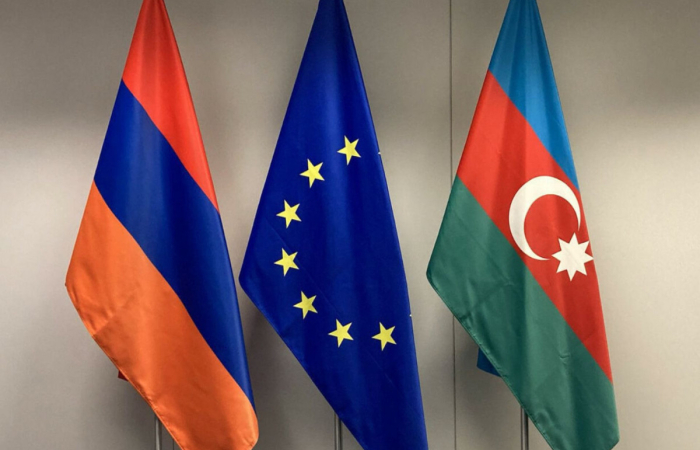
There is no denying that the EU, especially key member states acting in support, helped bring Baku and Yerevan closer to the Washington Declaration of August 8, 2025. But a declaration is not a treaty. Turning principles into a peace deal and eventually to a sustainable peace requires consistent long-term European involvement, writes Yalchin Mammadov in this-op-ed for commonspace.eu Before facilitating trust between Armenia and Azerbaijan, the EU is first expected to address its own credibility gap with Baku. A more balanced approach—such as including Azerbaijan, alongside Armenia, in the European Peace Facility—could be a useful first step. Diplomats can negotiate peace; societies must build peace. In this context, the EU can do what it does the best: long-term societal engagement. By expanding youth and academic exchange programmes, investing in cross-border civil society initiatives, and fostering people-to-people cooperation, Brussels can help shape a new generation equipped to sustain peace beyond political cycles. Such tools are slow and unglamorous, but if ignored, even the strongest treaty risks collapse. And obviously, these aspects require two-way engagement and genuine willingness by both governments to facilitate contact. If Brussels wants to remain influential, it needs to replace outdated one-size-fits-all policies with ambitious, interest-driven and differentiated approaches. Without a clear regional strategy, which appears to be the current situation, the South Caucasus will continue to sit at the margins of Europe’s security architecture—leaving space for other powers to take the lead. (You can read the op-ed in full by clicking the image.)

Filter archive

Publication date
Editor's choice
News
Final reading of new “foreign agents” law approved by Parliament in Georgia

Final reading of new “foreign agents” law approved by Parliament in Georgia

The Georgian Parliament has passed the final reading of a new "foreign agents" law that targets both organisations and individuals who receive foreign funding and fail to register with the Justice Ministry.  The bill had drawn sharp criticism from Georgian opposition parties as well as U.S. and EU officials, who believe this bill will be used as a tool to suppress civil society and independent media.
Editor's choice
News
US Senate Committee approves Bipartisan Act supporting sanctions on Georgian Dream officials

US Senate Committee approves Bipartisan Act supporting sanctions on Georgian Dream officials

The US Senate Foreign Relations Committee approved the bipartisan Megobari Act, which supports the aspirations of the people of Georgia for integration into Euro-Atlantic structures and imposes sanctions on officials of the governing party Georgian Dream and its allies undermining this path. Following this approval, the bill has been sent to other committees in the US Senate for review.
Editor's choice
News
Russia warns Armenia of high economic price if it pursues EU membership

Russia warns Armenia of high economic price if it pursues EU membership

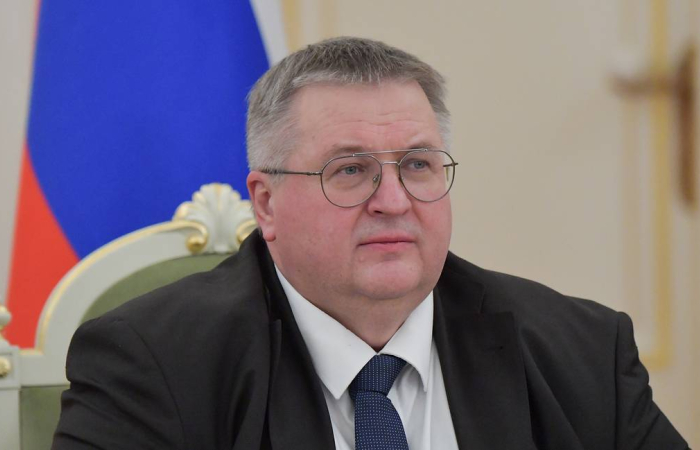
Accession to the EU is incompatible with Armenia’s continued membership in the Eurasian Economic Union, a Russian-led trade bloc that gives it tariff-free access to Russia’s vast market, according to Russian Deputy Prime Minister Aleksei Overchuk. Armenia would also have to pay much more for Russian energy resources and food, Overchuk said. Last week, the Armenian Parliament adopted a bill calling for the government to seek accession to the EU, representing a significant shift in Armenia’s foreign policy perspective away from its long-time ally Russia.
Editor's choice
News
Council of Europe Congress adopts critical resolution on Georgia

Council of Europe Congress adopts critical resolution on Georgia

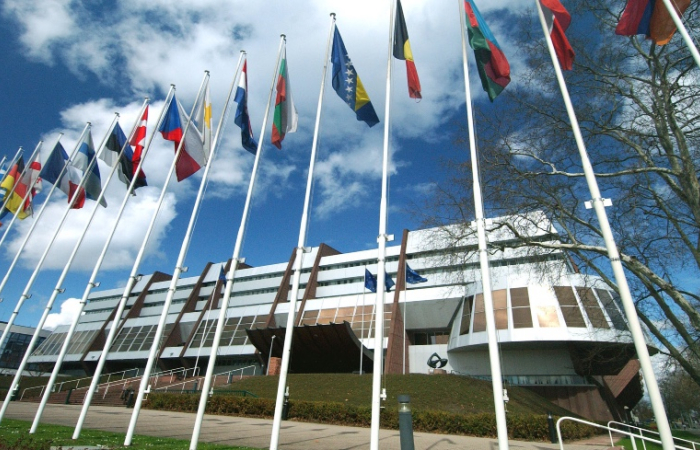
The Congress of Local and Regional Authorities of the Council of Europe meeting in Strasbourg has adopted a critical resolution on Georgia that expresses deep concern over clear signs of democratic backsliding and the weakening of human rights in the country. It points at the increasing polarisation in society and the adoption of legislation that contradicts Council of Europe standards. 101 members voted in favour and only 10 against. The Congress of Local and Regional Authorities is an institution of the Council of Europe, responsible for strengthening local and regional democracy in its 46 member states and assessing the application of the European Charter of Local Self-Government.
Editor's choice
Opinion
Opinion: Lessons Learnt for the South Caucasus from the Russia-USA ‘Rapprochement’

Opinion: Lessons Learnt for the South Caucasus from the Russia-USA ‘Rapprochement’

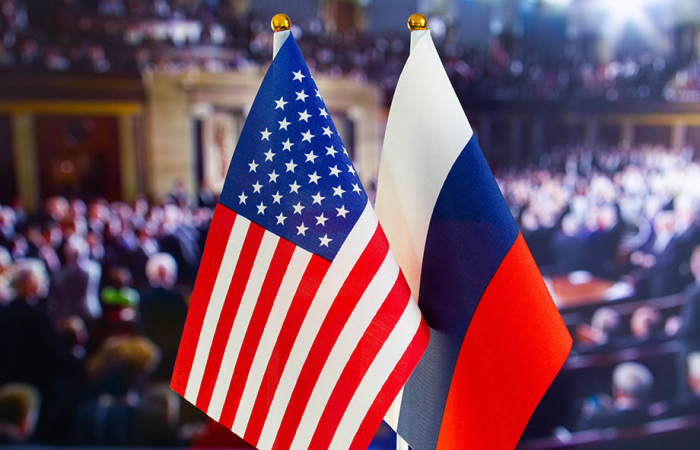
The evolving dynamics of Russia-USA relations have sent shockwaves through the post-Soviet space, with the South Caucasus emerging as a critical region to observe the fallout. Recent negotiations between the United States and Russia, particularly those aimed at resolving the war in Ukraine, have exposed fault lines in international diplomacy that carry profound lessons for Armenia, Azerbaijan, and Georgia. The implications of this “rapprochement” are starkly illustrated by Ukraine’s experience, Azerbaijan’s strategic foresight, and Armenia’s persistent miscalculations in relying on external powers for security.
Editor's choice
News
147 media workers injured during protests in Georgia since November

147 media workers injured during protests in Georgia since November

147 media workers have been affected in recorded incidents involving violence against journalists, obstruction of their work, and confiscation or damage of equipment since November 2024 when pro-European protests began in Georgia, according to a study by the Centre for Media, Information and Social Research (CMIS).
Editor's choice
Opinion
How Music Can Create Unexpected Bridges Between Armenia and Azerbaijan

How Music Can Create Unexpected Bridges Between Armenia and Azerbaijan

In less than two months the Eurovision Song Contest will be held once more, this time in Switzerland. The competition, established by the European Broadcast Union in 1956, has many detractors but also many loyal fans. Intended to bring the countries of the European Broadcasting Area (EBA) together, the event is meant to be a celebration of cultural diversity and creativity. That hasn’t always been the case, however, especially when the acts are from the South Caucasus.
Editor's choice
News
Georgia Freezes NGO Bank Accounts and Accuses Them of Sabotage

Georgia Freezes NGO Bank Accounts and Accuses Them of Sabotage

Prosecutors in Georgia have launched a criminal investigation into five civil society organizations, accusing them of “sabotage” and ordering the freezing of their bank accounts in relation to their role in anti-government demonstrations. In a statement on Monday, the Prosecutor’s Office said the groups had funneled more than two million lari (650,000 euro) to finance “illegal activities,” including paying protesters’ fines and purchasing equipment. Authorities claim the groups bear responsibility for violence and destruction linked to recent demonstrations.
Editor's choice
News
Former President Saakashvili handed four more years in jail by court in Georgia

Former President Saakashvili handed four more years in jail by court in Georgia

A court in Georgia has handed a further prison sentence to the jailed former president, Mikheil Saakashvili. Saakashvili was sentenced on Monday to four-and-a-half years behind bars for illegally crossing the border when returning to the country from exile in 2021, his lawyer said. He is already serving concurrent terms for embezzlement and abuse of power while in office, bringing his total sentence to more than 12 years.