Sudan in context
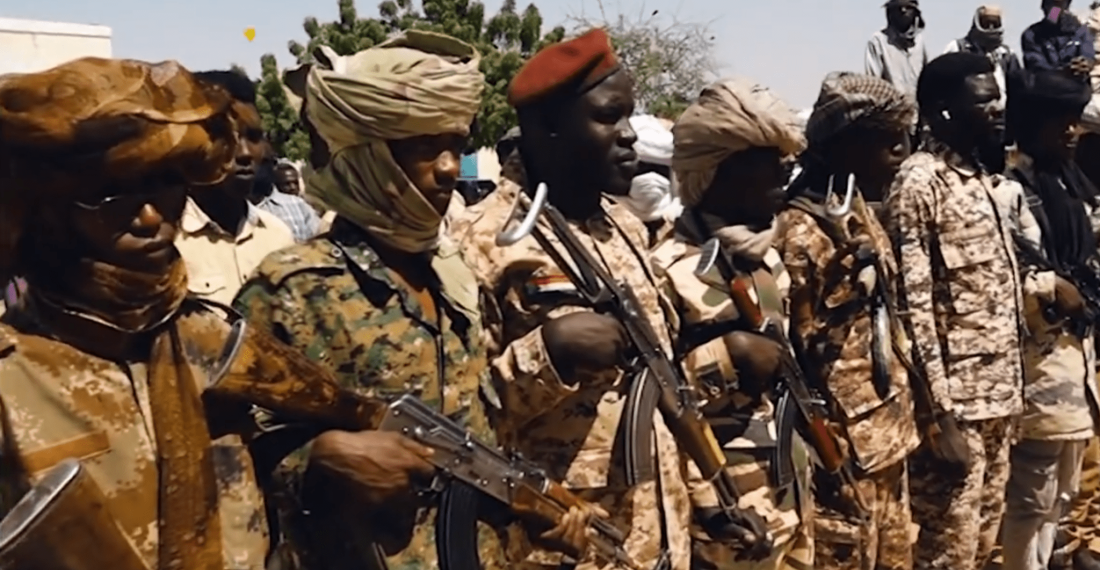
In today’s crowded field in international relations, Sudan is hardly ever in the centre stage. These days news, in the mainstream western media at least, is where Donald Trump decides to focus. But the events of the last days in Sudan were too grotesque to ignore. The rebel Rapid Support Forces (RSF), finally won complete control over the Southern region of Darfur, overrunning the last base of the Khartoum government army (SAF), in EL Fasher. In the process, the RSF forces went on a spree of violence, killing at random civilians, and conducting a massacre in a hospital. The world twinged. Western governments issued condemnations, and the mainstream Western media, with the exception of the BBC, which has kept an interest in the country throughout, reached out for its atlases to find out where Al Fasher was.
Sudan is the third largest country in Africa, occupying, an area of 1,886,068 square km (728,215 square miles ) and with a population of around fifty million.
One of the peculiarities of Sudan is that nearby Egypt, to the north, considers it an essential part of its security, because of the Nile, which is Egypt’s lifeline, some say life.
In the 19th century, Sudan was conquered by the Egyptians under the dynasty of Muhammad Ali. However, this was challenged by the Mahdist uprising, culminating in the fall of Khartoum and the killing of General Gordon in 1885. The Egyptians lost control, the British intervened, and an Anglo-Egyptian army eventually defeated the Mahdist forces. In 1899, Egypt reluctantly agreed to share sovereignty over Sudan with the United Kingdom as a condominium. In effect, Sudan was governed as a British possession, but with a twist.
London, always careful about the niceties, decided that, given the peculiarity of the situation, Sudan could not be governed as a colony from the Colonial Office and the Colonial Civil Service. In 1901, the Sudan Political Service was created, and it soon became an elite within the British Colonial elite. The Sudan Political Service was small and tightly knit. It took only between seven and ten recruits each year, and competition was very stiff.
The “thin white line” in Sudan was very thin indeed.
Many historians have wondered how Britain managed to rule over its vast empire, the so-called “thin white line”. The Colonial Officer turned historian, Anthony Kirk-Green, argues that the “thin white line” that held the British Empire together was “exiguous to the point of disbelief”. However, he insists that it was never imperceptible or ineffective, due to four factors: coercion, collaborators, confidence and competence.
In Sudan, the British “thin white line” was very thin indeed. Having been recruited to the Sudan Political Service, a 25-year-old Oxbridge graduate, was given a quick induction and sent off to manage a province the size of Wales, with little to support him, except his wit. Thus, Britain managed Sudan for the first half of the 20th century, until it hastily granted it independence in 1956.
Education
Despite many colonial shortcomings, some of which continue to haunt Sudan, one positive legacy was education. The British established a solid education system, some of which survives. For a long time, Sudan had the best education system in Africa. It also meant that for decades, Sudanese could be found doing jobs of bilingual clerks or translators across the Arab world.
Islam, al-Bashir and Turabi
For thirty years, from 1989 to 2019, Sudan was ruled by Omar Hassan al-Bashir, a military man who seized power in a coup against the democratically elected government, until he was himself deposed thirty years later in another coup.
He moulded Sudan in an Islamist frame, with the help of the Islamist ideologue Hassan Turabi. By introducing Sharia Law, and emphasising the country’s Islamic character, al Bashir consolidated his power, but exacerbated divisions in the country. His legacy haunts Sudan. Turabi, whilst presenting himself as a moderate, was in fact a radical. Sometimes he even angered al Bashir, who had him arrested several times.
Will Sudan split again?
Like most African countries, Sudan is an artificial construct, put together by the Colonial power, in this case Britain, for its own convenience and purpose. The first split, although it was long coming, saw the south becoming independent South Sudan in 2011.
Today, the Central Government, led by the Sudanese Army, barely controls the capital, Khartoum.
With the independence of South Sudan, the issue of one of the deepest fault lines in Sudan was, at least momentarily, resolved. South Sudan’s population tends to adhere to Christian or animist beliefs, and was long at odds, often in violent conflict, with Sudan’s largely Muslim and Arab northern government. Now, 70% of the population of Sudan are characterised as Sudanese Arab Muslims. Which still leaves a big chunk of the population as minorities.
The biggest threat of secession at the moment is Darfur. Despite its multiethnic composition, with the fall of el Fasher, the Arab-Islamic Rapid Support Forces now have a choice, of either consolidate and seek separation from the rest of Sudan, or using Darfur as a springboard for another attempt to capture Khartoum. In both scenarios, the future of Sudan is bleak.
External players
What can be done? The UK is interested in Sudan, but has too much colonial baggage. The EU does not have so much baggage, but is not interested. The United States, Russia and China appear reluctant to get embroiled, whilst keeping their options open.
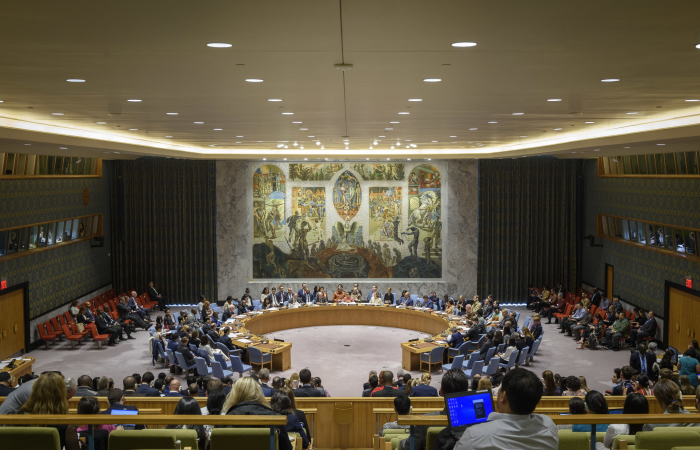
This situation plays out in the UN Security Council, where Sudan is regularly discussed, most of the time to highlight the humanitarian aspects of the problem
That leaves the three GCC countries that have the will and the financial capacity, to influence the situation, in what is for them a close neighbour: UAE, Saudi Arabia and Qatar. And of course Egypt, for whom the future of Sudan is an existential issue.
The UAE has often been accused if backing the RSF, which it denies. Another alleged RSF backer is the strongman in Eastern Libya, General Haftar. Egypt backs the Khartoum government. Qatar in the past acted as mediator.
A key role can be played by four countries that form the so-called "Quad initiative" — the US, Egypt, Saudi Arabia and the UAE. They include the states that could exert real influence in Sudan. The initiative's objective was a roadmap to end the war or, at the very least, a humanitarian truce. However, last week (26 October), the Quad talks in Washington failed.
At the moment, Sudan’s only hope is that international pressure can convince countries like the UAE and Egypt to back an immediate ceasefire, and return Sudan to international humanitarian law.
Sudan is already a failed state. But its people are resourceful, and given the right conditions, they can rebuild their country. The world must help them to do so.
source: Dennis Sammut is the Director of LINKS Europe, and Managing Editor of commonspace.eu. His Monday Commentary is published weekly on commonspace.eu