Region

South Caucasus

The South Caucasus – a region encompassing Armenia, Azerbaijan and Georgia - is one of strategic importance, not only for adjacent countries, such as Turkiye, Russia, Iran and the Central Asian states, but also for neighbours such as the European Union and the GCC states, and globally for the United States, India, China, Pakistan and Japan.

commonspace.eu team brings decades of experience of working in the South Caucasus and we are pleased to share our insights with our loyal readers through the website, and the sister newsletter, Caucasus Concise.

Editor's choice
Monday Commentary
Monday Commentary: 2025 was a momentous year for the South Caucasus

Monday Commentary: 2025 was a momentous year for the South Caucasus

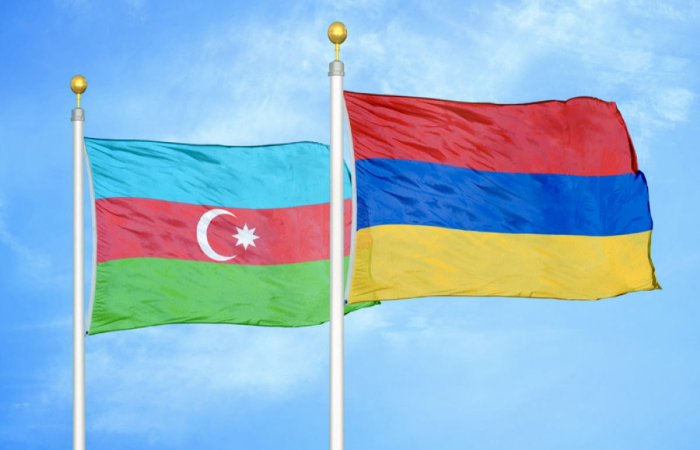
The year 2025 has ended up being a momentous year for the South Caucasus, writes Dennis Sammut in his Monday Commentary. Armenia-Azerbaijan relations have been redefined, with consequences for the whole region and beyond. That huge development overshadowed key moments in the domestic trajectory of the two countries, which however have deep consequences for the two countries, and even beyond. It has also been a tumultuous year for Georgia too. The country has been gripped in a political crisis throughout 2025, with no obvious end in sight. Whatever the domestic arguments, on the international stage Georgia is today a shadow of what it used to be until recently. It not only has lost the chance of joining the European Union any time soon, but it has also lost its position as the leading South Caucasus country. Today, in the new reality of the region, it lags as a tired third. Important as 2025 was, it ended with a lot of unfinished business. So 2026 will also be crucial for the three countries. Since regaining its statehood in 1991 after the dissolution of the Soviet Union, Armenia-Azerbaijan relations have been defined by war. The two fought open wars, wars of attrition, and propaganda wars, incessantly. Tens of thousands of people lost their lives, and hundreds of thousands were displaced. Many had lost hope that the two could try the alternative – i.e. peaceful co-existence. Yet in 2025 they were proven wrong.
Editor's choice
Opinion
Opinion: A sustainable peace requires consistent long-term European involvement

Opinion: A sustainable peace requires consistent long-term European involvement

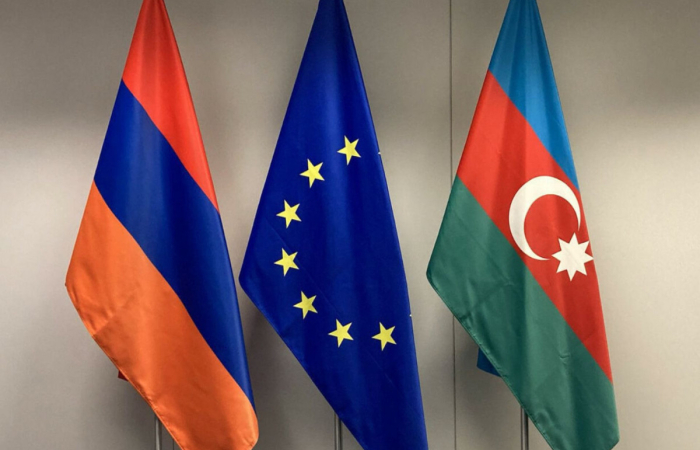
There is no denying that the EU, especially key member states acting in support, helped bring Baku and Yerevan closer to the Washington Declaration of August 8, 2025. But a declaration is not a treaty. Turning principles into a peace deal and eventually to a sustainable peace requires consistent long-term European involvement, writes Yalchin Mammadov in this-op-ed for commonspace.eu Before facilitating trust between Armenia and Azerbaijan, the EU is first expected to address its own credibility gap with Baku. A more balanced approach—such as including Azerbaijan, alongside Armenia, in the European Peace Facility—could be a useful first step. Diplomats can negotiate peace; societies must build peace. In this context, the EU can do what it does the best: long-term societal engagement. By expanding youth and academic exchange programmes, investing in cross-border civil society initiatives, and fostering people-to-people cooperation, Brussels can help shape a new generation equipped to sustain peace beyond political cycles. Such tools are slow and unglamorous, but if ignored, even the strongest treaty risks collapse. And obviously, these aspects require two-way engagement and genuine willingness by both governments to facilitate contact. If Brussels wants to remain influential, it needs to replace outdated one-size-fits-all policies with ambitious, interest-driven and differentiated approaches. Without a clear regional strategy, which appears to be the current situation, the South Caucasus will continue to sit at the margins of Europe’s security architecture—leaving space for other powers to take the lead. (You can read the op-ed in full by clicking the image.)

Filter archive

Publication date
Editor's choice
Opinion
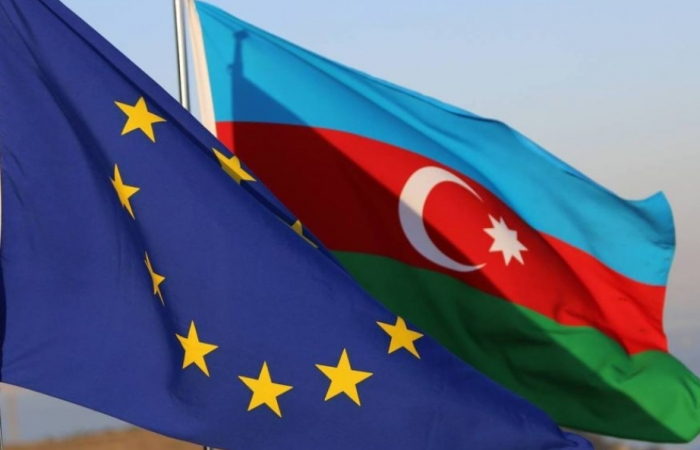
Azerbaijan and the EU should seize the new momentum in bilateral relations

Azerbaijan and the EU should seize the new momentum in bilateral relations

On April 25, the EU’s High Representative for Foreign Affairs and Security Policy, Kaja Kallas paid a visit to Azerbaijan. This was the first visit of the EU’s top diplomat to Baku in the past nine years. Both sides gave positive messages during the visit about the existing situation in bilateral relations and future prospects. President Ilham Aliyev reaffirmed Azerbaijan’s position as a dependable EU partner, drawing attention to the Southern Gas Corridor’s steady supply of natural gas to Europe over the past four years. Currently, ten European nations – eight of them EU members – receive Azerbaijani gas, positioning Baku as a major contributor to the continent’s energy security. Aliyev also pointed to effective collaboration under the Southern Gas Corridor Advisory Council and noted promising opportunities in renewable energy. Azerbaijan’s involvement in advancing the Trans-Caspian Energy Corridor and joint Black Sea energy projects with countries like Georgia, Romania, Hungary, and Bulgaria was also underscored.
Editor's choice
Opinion
Opinion: Landmine free South Caucasus – the job is far from finished

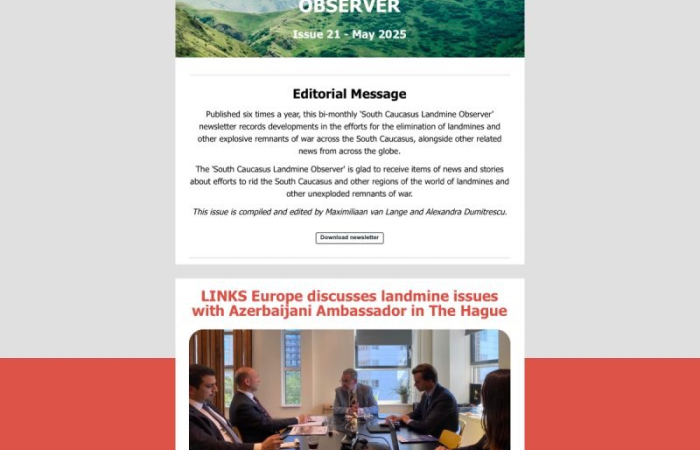
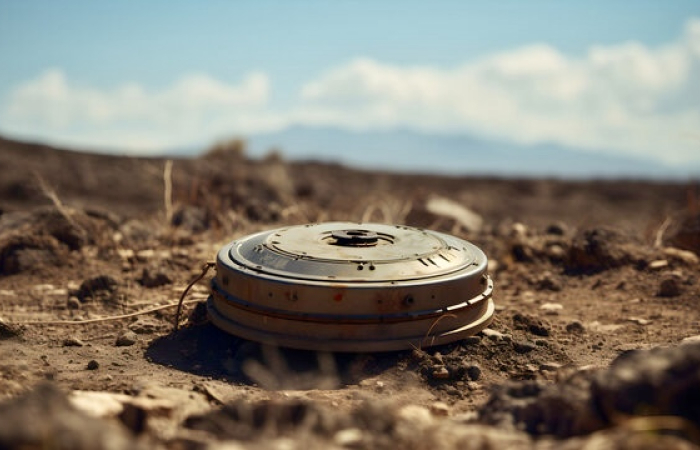
Opinion: Landmine free South Caucasus – the job is far from finished

The South Caucasus remains one of the world's most landmine-affected regions, littered with landmines and unexploded ordnance (UXO). Although Armenia, Azerbaijan and Georgia each face this challenge in their own way, none has fully overcome it. For the three countries of the South Caucasus, winning this battle requires a holistic regional approach, something which has so far eluded them because of political circumstances and historical tensions. From October 2018 to March 2024, LINKS Europe Foundation, with the support of the European Union (EU), led the regional campaign ‘Landmine Free South Caucasus’, prioritising awareness raising and regional cooperation. The campaign was delivered in Armenia, Azerbaijan and Georgia with the participation of demining agencies, official bodies and civil society organisations. Active simultaneously in all three countries and communicated in five languages, the campaign reached thousands of people and mobilised policymakers and opinion-shapers across the region.
Editor's choice
News
Irakli Kobakhidze reappointed Chairman of Georgian Dream

Irakli Kobakhidze reappointed Chairman of Georgian Dream

Irakli Kobakhidze has once again become the chairman of Georgian Dream, the party founded by oligarch Bidzina Ivanishvili in 2012 which has since been in power in Georgia. Ivanishvili is the party’s honorary chairman and is widely seen as the country’s shadow ruler. Kobakhidze is also the current prime minister of Georgia and had previously served as party chairman until February 2024. At that time, a political reshuffle took place with then Prime Minister Irakli Garibashvili becoming party chairman, while Kobakhidze was nominated for the prime minister’s post.
Editor's choice
News
Azerbaijan and China sign Comprehensive Strategic Partnership

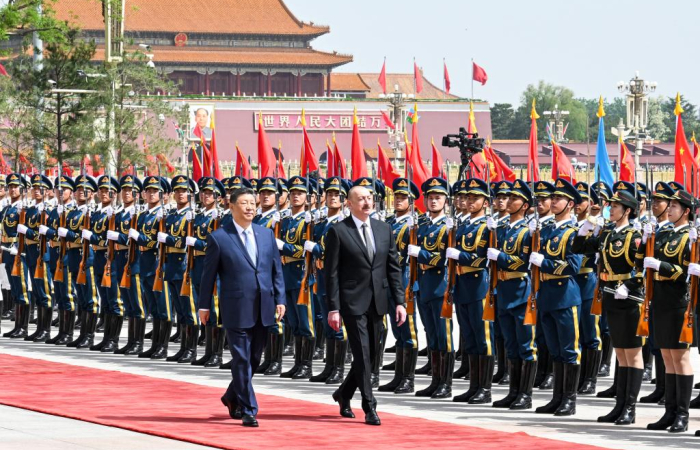
Azerbaijan and China sign Comprehensive Strategic Partnership

China and Azerbaijan have announced the establishment of a comprehensive strategic partnership between the two countries following talks between Chinese President Xi Jinping and Azerbaijani President Ilham Aliyev in Beijing on 23 April. During the talks, President Xi said that both sides should continuously enhance political mutual trust, deepen practical cooperation and strengthen international collaboration to open a new chapter of all-round cooperation. President Aliyev was in China for  a state visit between 22 and 24 April.
Editor's choice
Opinion
Opinion: Armenia Braces for a Turbulent Pre-Election Period

Opinion: Armenia Braces for a Turbulent Pre-Election Period

With parliamentary elections in Armenia just over a year away, opposition figures and some analysts are increasingly questioning Prime Minister Nikol Pashinyan’s prospects for re-election. Critics argue that he has failed to fulfil his widely promoted peace agenda and hold him accountable for the exodus of approximately 100,000 ethnic Armenians from the former Soviet-era Nagorno-Karabakh Autonomous Oblast (NKAO) in late September 2023. They also point to unrealistic campaign promises made during the last parliamentary elections held in 2021, including the pledge to reclaim the strategic hilltop citadel of Shusha and pursue remedial secession for the separatist but now dissolved Karabakh — goals widely seen as unattainable from the outset.
Editor's choice
News
LINKS Europe announces the names of all the chairpersons of the five thematic groups for the development of the Armenia-Azerbaijan dialogue

LINKS Europe announces the names of all the chairpersons of the five thematic groups for the development of the Armenia-Azerbaijan dialogue

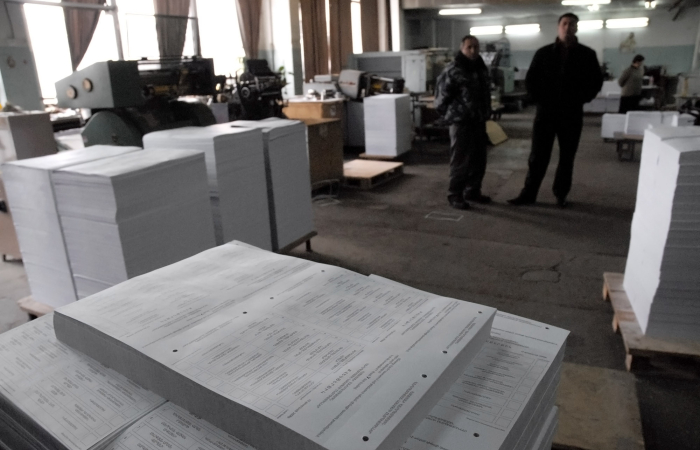
LINKS Europe has successfully completed the first phase of its project to develop the Armenia-Azerbaijan dialogue as part of its commitment within the EU4Peace III programme, funded by the European Union. In this first phase, which lasted from September 2024 to April 2025, LINKS Europe conducted an assessment of Armenia-Azerbaijan relations and mobilised the personnel necessary for delivering the project output. LINKS Europe Foundation is pleased to announce the names of the chairs/co-chairs of the five thematic groups within the initiative.  
Editor's choice
Opinion
Opinion: Genocide Law or Political Weapon? Armenia History Debate Again Turns Toxic

Opinion: Genocide Law or Political Weapon? Armenia History Debate Again Turns Toxic

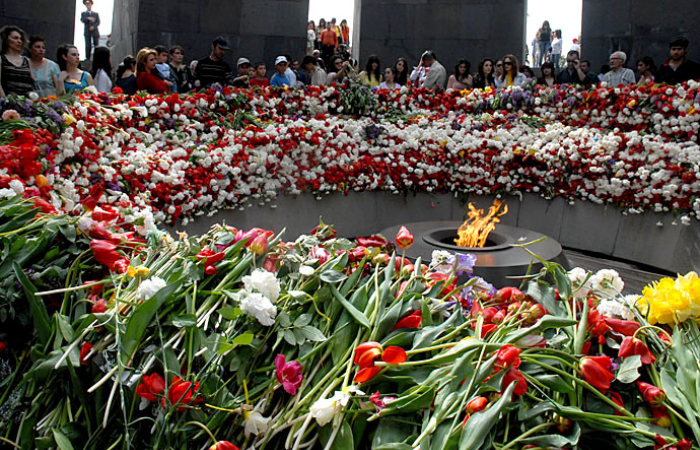
A brawl broke out in Armenia’s National Assembly on 22 April after opposition lawmakers proposed new legislation to impose harsher penalties on those who deny or question the 1915 mass killing and deportation of up to 1.5 million Armenians by the then Ottoman Empire — and whether it should be recognised as genocide. The term, coined in the 1940s by Polish lawyer Raphael Lemkin, was partly inspired by the Armenian experience. Armenia already has laws addressing genocide denial, but this new initiative specifically targets anyone and not just those seeking to incite “hatred, discrimination, or violence.” Punishment of up to five years imprisonment would also be increased though the proposed changes are unlikely to pass a parliamentary vote.
Editor's choice
News
US and Ukraine sign deal giving US access to country’s valuable mineral wealth

US and Ukraine sign deal giving US access to country’s valuable mineral wealth

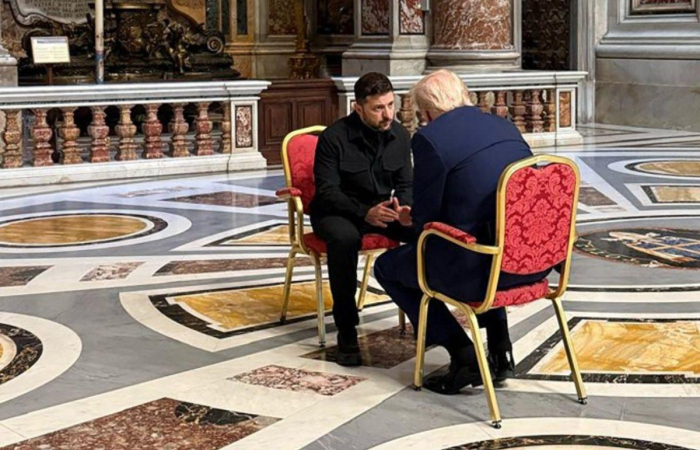
The United States and Ukraine have signed a minerals deal after a two-month delay, in what President Donald Trump's administration called a new form of US commitment to Kyiv after the end of military aid. Ukraine said it secured key interests after protracted negotiations, including full sovereignty over its own rare earths, which are vital for new technologies and largely untapped. Trump had initially demanded rights to Ukraine's mineral wealth as compensation for US weapons sent under former president Joe Biden after Russia invaded just over three years ago.