Region

South Caucasus

The South Caucasus – a region encompassing Armenia, Azerbaijan and Georgia - is one of strategic importance, not only for adjacent countries, such as Turkiye, Russia, Iran and the Central Asian states, but also for neighbours such as the European Union and the GCC states, and globally for the United States, India, China, Pakistan and Japan.

commonspace.eu team brings decades of experience of working in the South Caucasus and we are pleased to share our insights with our loyal readers through the website, and the sister newsletter, Caucasus Concise.

Editor's choice
Monday Commentary
Monday Commentary: 2025 was a momentous year for the South Caucasus

Monday Commentary: 2025 was a momentous year for the South Caucasus

The year 2025 has ended up being a momentous year for the South Caucasus, writes Dennis Sammut in his Monday Commentary. Armenia-Azerbaijan relations have been redefined, with consequences for the whole region and beyond. That huge development overshadowed key moments in the domestic trajectory of the two countries, which however have deep consequences for the two countries, and even beyond. It has also been a tumultuous year for Georgia too. The country has been gripped in a political crisis throughout 2025, with no obvious end in sight. Whatever the domestic arguments, on the international stage Georgia is today a shadow of what it used to be until recently. It not only has lost the chance of joining the European Union any time soon, but it has also lost its position as the leading South Caucasus country. Today, in the new reality of the region, it lags as a tired third. Important as 2025 was, it ended with a lot of unfinished business. So 2026 will also be crucial for the three countries. Since regaining its statehood in 1991 after the dissolution of the Soviet Union, Armenia-Azerbaijan relations have been defined by war. The two fought open wars, wars of attrition, and propaganda wars, incessantly. Tens of thousands of people lost their lives, and hundreds of thousands were displaced. Many had lost hope that the two could try the alternative – i.e. peaceful co-existence. Yet in 2025 they were proven wrong.
Editor's choice
Opinion
Opinion: A sustainable peace requires consistent long-term European involvement

Opinion: A sustainable peace requires consistent long-term European involvement

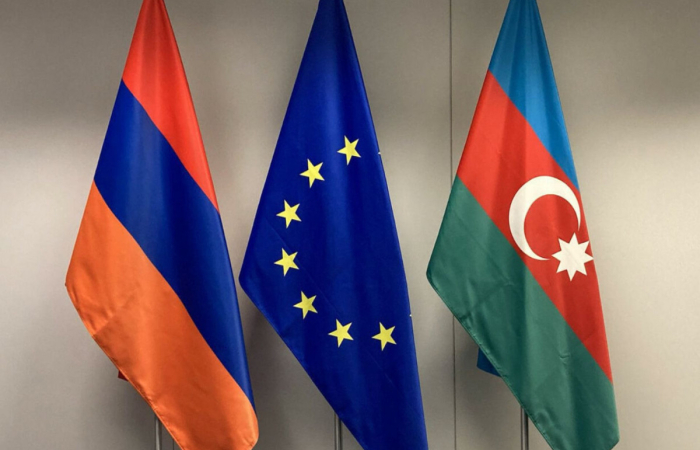
There is no denying that the EU, especially key member states acting in support, helped bring Baku and Yerevan closer to the Washington Declaration of August 8, 2025. But a declaration is not a treaty. Turning principles into a peace deal and eventually to a sustainable peace requires consistent long-term European involvement, writes Yalchin Mammadov in this-op-ed for commonspace.eu Before facilitating trust between Armenia and Azerbaijan, the EU is first expected to address its own credibility gap with Baku. A more balanced approach—such as including Azerbaijan, alongside Armenia, in the European Peace Facility—could be a useful first step. Diplomats can negotiate peace; societies must build peace. In this context, the EU can do what it does the best: long-term societal engagement. By expanding youth and academic exchange programmes, investing in cross-border civil society initiatives, and fostering people-to-people cooperation, Brussels can help shape a new generation equipped to sustain peace beyond political cycles. Such tools are slow and unglamorous, but if ignored, even the strongest treaty risks collapse. And obviously, these aspects require two-way engagement and genuine willingness by both governments to facilitate contact. If Brussels wants to remain influential, it needs to replace outdated one-size-fits-all policies with ambitious, interest-driven and differentiated approaches. Without a clear regional strategy, which appears to be the current situation, the South Caucasus will continue to sit at the margins of Europe’s security architecture—leaving space for other powers to take the lead. (You can read the op-ed in full by clicking the image.)

Filter archive

Publication date
Editor's choice
News
Georgian NGOs call for international support following intimidation

Georgian NGOs call for international support following intimidation

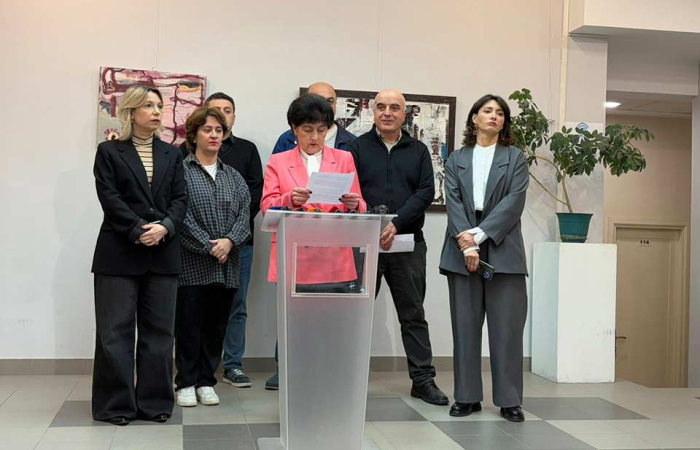
Representatives of non-governmental organisations have issued a joint statement condemning the coordinated searches carried out at the homes of leaders of public foundations.They characterized these actions as “yet another attempt to instil fear and suppress independent civic activity.”
Editor's choice
News
How Armenia is trying to build a Silicon Valley in the South Caucasus

How Armenia is trying to build a Silicon Valley in the South Caucasus

In Armenia tech education starts early. In a typical three-storey state school in the suburbs of Yerevan, the Armenian capital, nine-year old Slavik is demonstrating his invention, a box with three LED lights.  Next to him, 14-year-old Eric and Narek are showing their smart greenhouse model that monitors temperature and controls fans automatically through a mobile app. Other children are enthusiastically showcasing their inventions: games, robots, apps and smart home projects. Eleven-year-old Arakel is holding his cardboard model of a house with a retractable clothesline.
Editor's choice
Opinion
Opinion: Trilateral meeting in Tbilisi - what does it mean for the South Caucasus?

Opinion: Trilateral meeting in Tbilisi - what does it mean for the South Caucasus?

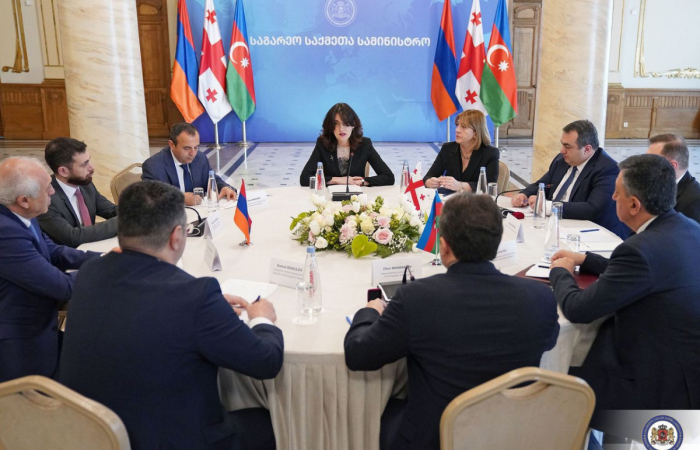
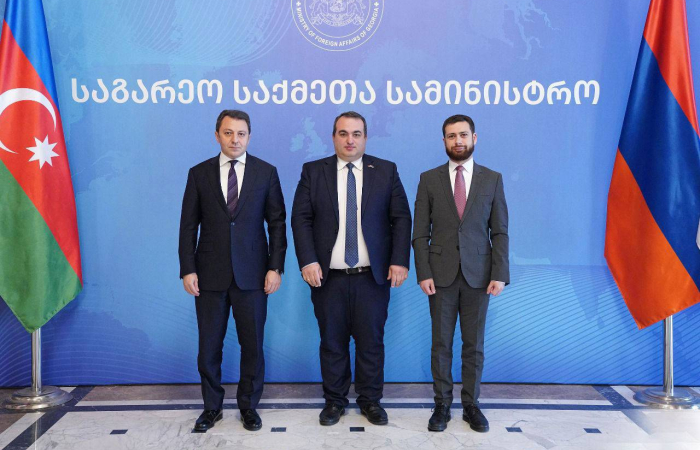
On April 17, 2025, Tbilisi played host to a historic moment, as the foreign ministers of Armenia, Azerbaijan, and Georgia convened for the first-ever formal trilateral consultations. The central aim of the parties was to establish a transparent channel for dialogue and explore concrete steps for regional cooperation. The discussions were notably constructive, the parties identified several areas for potential collaboration, and importantly, the meeting set the stage for further talks, with a promise to follow up on the progress made and to develop a more comprehensive roadmap for trilateral cooperation. It was a signal that the political realities of the region are shifting. Now it is important to understand why such cooperation was not possible until now and why it has become possible only today.
Editor's choice
Opinion
Opinion: Armenia–Turkey Normalisation Process: What Next?

Opinion: Armenia–Turkey Normalisation Process: What Next?

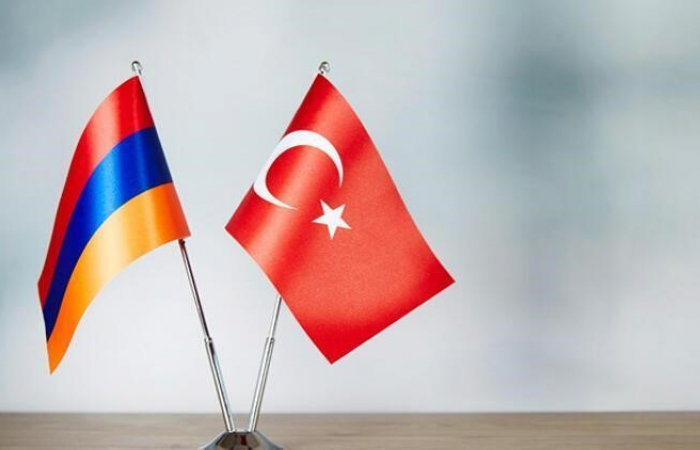
Since Armenia gained independence from the Soviet Union in 1991, normalizing relations with Turkey has been one of the country’s top foreign-policy priorities. The rationale behind this has been both economic, to end the blockade and facilitate access to Turkish Mediterranean ports, and political, to drive a wedge in the Azerbaijan–Turkey strategic partnership. Armenia took steps towards normalization in 2008 and 2009. As a result of intensive negotiations, Armenia and Turkey signed two protocols in Zurich in 2009 to open their borders and establish diplomatic relations. However, Turkey did not ratify them, under intense pressure from Azerbaijan.
Editor's choice
News
OSCE Secretary General Feridun Sinirlioğlu in Georgia for official talks

OSCE Secretary General Feridun Sinirlioğlu in Georgia for official talks

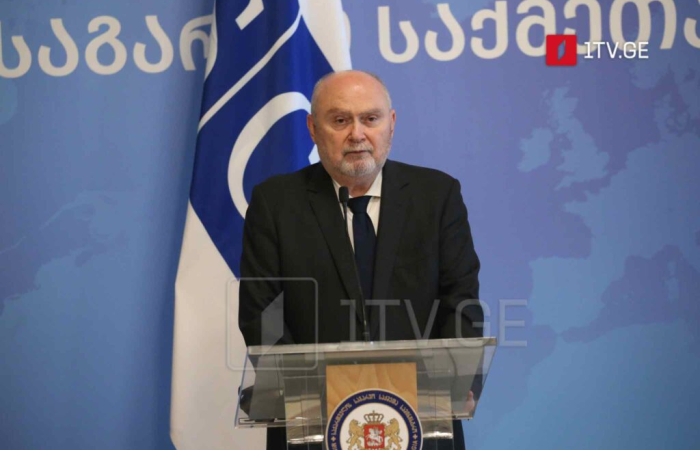
The Organisation for Security and Co-operation in Europe’s (OSCE) Secretary General Feridun Sinirlioğlu is in Tbilisi this week, in his first visit since the October parliamentary elections widely seen as flawed. The OSCE/ODIHR’s own observer mission had criticised the government’s handling of the October 2024 elections. On Wednesday, Sinirlioğlu met with the Prime Minister Irakli Kobakhidze.
Editor's choice
Opinion
Opinion: Azerbaijan Reiterated Support for Ukraine’s Territorial Integrity

Opinion: Azerbaijan Reiterated Support for Ukraine’s Territorial Integrity

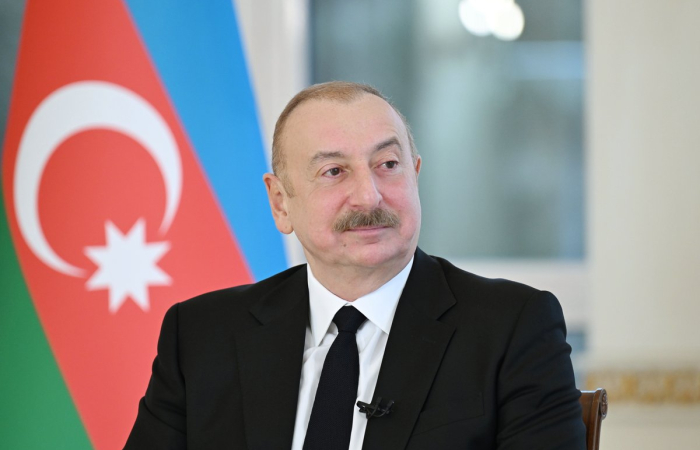
On April 9, at an international conference in Baku, Azerbaijan’s President Ilham Aliyev delivered a statement on the ongoing peace talks between Russia and Ukraine, mediated by the United States. Reaffirming Azerbaijan’s steadfast commitment to Ukraine’s territorial integrity, Aliyev sharply criticized proposals that urge Ukraine to cede parts of its territory in exchange for a ceasefire. “No country, at least in my understanding, will agree to compromise on territorial integrity, and to expect Ukraine to agree that they will sacrifice their internationally recognized territory in exchange for peace is not fair and not realistic,” he declared.
Editor's choice
Opinion
Opinion:  Compromise necessary to overcome Armenia-Azerbaijan Constitutional Impasse?

Opinion: Compromise necessary to overcome Armenia-Azerbaijan Constitutional Impasse?

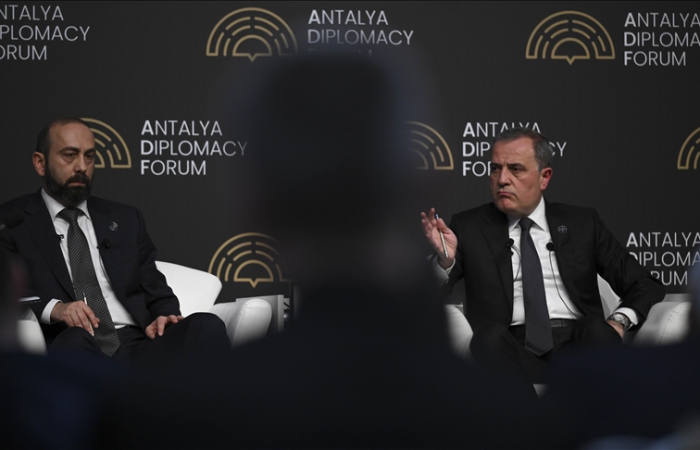
Since February 2020, it is not uncommon for the leaders of Armenia and Azerbaijan to appear on the same stage at international events – or at least at the Munich Security Conference. The same has not been true for their foreign ministers. That changed on April 12 at the Antalya Diplomacy Forum, a notable moment just weeks after the finalisation of a long-overdue treaty aimed at normalising relations between the two countries. While the road ahead remains uncertain, the meeting carried clear symbolic significance.
Editor's choice
News
Georgia, Armenia, Azerbaijan Hold Trilateral Talks in Tbilisi

Georgia, Armenia, Azerbaijan Hold Trilateral Talks in Tbilisi

A trilateral meeting between Georgia, Azerbaijan, and Armenia was held in Tbilisi on April 17, with the participation of Georgian deputy foreign minister Lasha Darsalia and his counterparts, Azerbaijan’s Elnur Mammadov and Armenia’s Vahan Kostanyan, along with their delegations. The Foreign Minister of Georgia Maka Botchorishvili also took part in the talks.
Editor's choice
Opinion
Opinion: How to Take the Most from the Present De-Facto Peace Period in Armenia-Azerbaijan Relations

Opinion: How to Take the Most from the Present De-Facto Peace Period in Armenia-Azerbaijan Relations

The Antalya Diplomacy Forum, held on April 11-13 in the resort Turkish town of Antalya, presented a rare opportunity for trilateral engagement among the foreign ministers of the three South Caucasian countries. The candid exchange between Azerbaijan’s Jeyhun Bayramov, Armenia’s Ararat Mirzoyan, and Georgia’s Maka Bochorishvili, facilitated by Türkiye, offered a fragile yet meaningful sign that this fractured region may be inching toward regional peace and prosperity. Importantly, each minister underlined the significance of overcoming dividing lines in the South Caucasus and opening a new chapter for intraregional cooperation.