Filter archive

Publication date
Editor's choice
Opinion
Putin can no longer claim victory in Ukraine, Nobel Peace Prize winner, Dimitry Muratov, tells BBC

Putin can no longer claim victory in Ukraine, Nobel Peace Prize winner, Dimitry Muratov, tells BBC

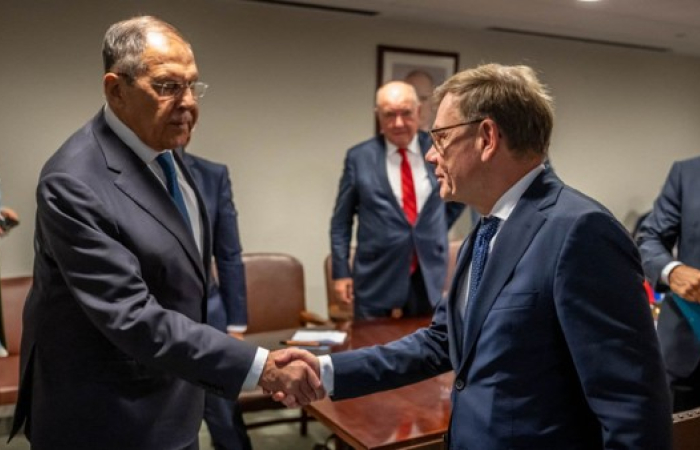
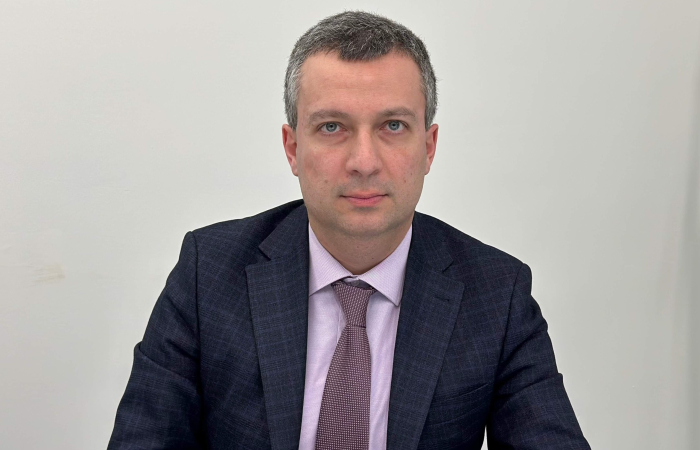
It is not often that people in Russia speak openly against Vladimir Putin. But the Nobel Peace Prize winner, and former editor of Novaya Gazeta, Dmitry Muratov, has broken this silence, in an interview with Steve Rosenberg, the BBC Russia correspondent, which was aired on the BBC news channel. Rosenberg says that at the Moscow offices of newspaper Novaya Gazeta, the corridors are silent. There is an overwhelming sense of emptiness  "There is no newspaper anymore," former chief editor Dmitry Muratov  says. Mr Muratov co-founded Novaya Gazeta more than 30 years ago. It became the flagship for hard-hitting independent journalism in Russia, shining a light on human rights abuses and high-level corruption. In 2021 Mr Muratov was joint winner of the Nobel Peace Prize for his efforts "to safeguard freedom of expression." The Nobel Committee noted that "six of [Novaya Gazeta's] journalists have been killed, including Anna Politkovskaya who wrote revealing articles on the war in Chechnya." It was recognition for courageous reporting. But it didn't protect the paper. "Putin issued a decree and the newspaper's printing presses were nationalised," Mr Muratov explains. "Its registration was revoked." Novaya Gazeta does retain a presence online. But only just: the authorities have blocked access to its website. It can only be accessed from abroad, or with the help of VPNs – virtual private networks used to circumvent restrictions. The newspaper's difficulties reflect the broader crackdown on free speech in Russia which has accelerated since the Kremlin's full-scale invasion of Ukraine in 2022. "Most opinion leaders have been declared 'foreign agents', 'extremists' or 'terrorists'. Several hundred," says Dmitry Muratov. "Figures vary, but at a conservative estimate, since the start of Russia's 'special military operation' [in Ukraine] at least 1,500 people are now in prison having spoken out against current state policy. That's three times more than during the savage days of the KGB in the USSR." In his 1975 Nobel Peace Prize lecture dissident Andrei Sakharov listed the names of more than 120 political prisoners he was aware of in the Soviet Union. A decade later what the Kremlin had assumed in 2022 would be a short, successful "military operation" has become the bloodiest conflict in Europe since the Second World War. Yet a confident President Putin continues to predict victory for Russia. But Muratov insists: "There will never be 'victory', because what has been going on for nearly five years – no matter how it ends – can no longer be considered a victory. It cannot be a victory when two Slavic nations have ripped a million people to shreds. Or more than a million. It seems to me that the situation with Ukraine now is this: you can destroy it, but you cannot conquer it. What do I mean by destroy? Continued escalation all the way to the use of a nuclear weapon." Does he really believe the Kremlin leader would use nuclear weapons in this war? "All those political experts who say 'Putin thinks this' or 'Putin is scared of that'…they're all charlatans," claims Dmitry Muratov. "It's in the same league as astrology. Nobody knows what's going on in Vladimir Putin's head. And I don't know. "I see things only as a journalist. I study big data. And since the beginning of the year the need to use nuclear weapons has been mentioned more than 500 times. When wackos say this, I pay no attention. But I've heard it discussed on state TV. And at the St Petersburg International Economic Forum, a state-run event, one of the speakers talked up the use of nuclear weapons as something favourable, something good." When he announced the mass invasion of Ukraine in February 2022, President Putin spoke of "ensuring the security of Russia." "Tell me, has security increased?" Dmitry Muratov asks. "With Ukrainian drones now attacking warehouses of [Russia's largest online retailer] Wildberries; with the petrol crisis, the disruption to mobile internet, the political prisoners? Has security increased, or not?" Despite opinion polls registering a fall in Vladimir Putin's domestic approval ratings, Russia's president – Mr Muratov believes - retains a tight grip on power. "Sorry, I don't believe all this talk about a split among members of the elite, about secret conspiracies. The country is run by Vladimir Putin. They're frightened of him. "And this fear is reinforced in every way by his main support base: the Federal Security Service (FSB)." As critical as he is of his own government, he has few illusions about the West. "[Putin] knows very well the true value of European leaders. On the one hand they talk to him about human rights. He laughs out loud because, with the other hand, they sign agreements – or used to sign agreements – with Russia on trading oil, gas, diamonds…all that stuff. When they talk to Putin about European values, he truly laughs out loud. He knows the true value of people who preached to him those values." (click image to read more)
Editor's choice
News
Despite crisis, Lebanon takes the lead to become first country in the Middle East to abolish the death penalty

Despite crisis, Lebanon takes the lead to become first country in the Middle East to abolish the death penalty

Lebanon's parliament has voted to abolish the death penalty, a move that would make it the first country in the Middle East to formally end capital punishment. A majority of MPs in the 128-seat parliament backed the measure on Tuesday (11 August), while Hezbollah's parliamentary bloc voted against it. The legislation will now go to the cabinet before being passed to President Joseph Aoun for signing. The government has already expressed its support for the measure. Lebanon has not carried out an execution since January 2004, although courts have continued to hand down death sentences. Rights groups estimate that more than 78 people remain on death row. Under the new legislation, capital punishment will be replaced with life imprisonment with hard labour. However, the legislation does not yet set out in detail how the new sentence would be enforced. Hard labour is already written into Lebanese law but has rarely been implemented in recent years. The country's financial crisis and overcrowded prisons have limited the authorities' resources and capacity. The latest legislation follows years of campaigning by civil society groups and lawyers for the removal of capital punishment from Lebanese law. (click image to read more)
Editor's choice
News
Joint Statement of the US, Armenia and Azerbaijan on the One-Year Anniversary of the White House Peace Summit

Joint Statement of the US, Armenia and Azerbaijan on the One-Year Anniversary of the White House Peace Summit

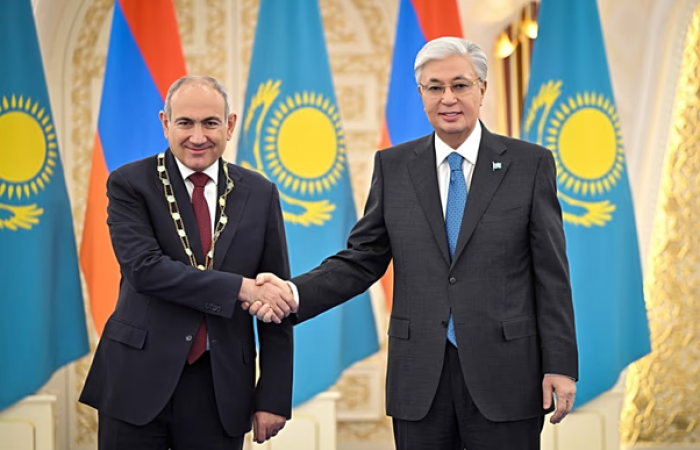
Armenia, Azerbaijan, and the United States, on 10 August 2026, issued a joint statement. It said: One year ago, President Trump hosted a historic White House summit with President Ilham Aliyev of Azerbaijan and Prime Minister Nikol Pashinyan of Armenia where President Aliyev and Prime Minister Pashinyan signed the Joint Declaration for peace. Witnessed by the three leaders, the draft “Agreement on the Establishment of Peace and Inter-State Relations between the Republic of Armenia and the Republic of Azerbaijan” was initialed by the Armenian and Azerbaijani Foreign Ministers. On this first anniversary, there is deep pride in what our countries have achieved together and great resolve to build upon the foundation that ended decades of conflict and put the South Caucasus on a path towards a more prosperous future. In recognition of these historic and tremendous efforts to secure peace, President Aliyev and Prime Minister Pashinyan jointly nominated President Trump for the Nobel Peace Prize.   The Joint Declaration provided a concrete roadmap for Armenia and Azerbaijan, with the support of the United States, to strengthen peace, achieve prosperity, and deepen partnership. In the year since these courageous leaders gathered, the countries have laid the groundwork for continued success.    ✓ Armenia and Azerbaijan maintained stability along the Armenia-Azerbaijan border, and the two sides are taking concrete steps to normalize relations, delimit borders, and build confidence through measures essential to lasting stability.   ✓ The Trump Route for International Peace and Prosperity (TRIPP) — a multimodal transit route — is moving from vision to reality, with concrete progress such as the U.S.-Armenia agreement to form the TRIPP Development Company to lead infrastructure development. Engineering surveys in Armenia are already underway. Azerbaijan has nearly completed in its territory a highway and railroad to connect to TRIPP in Armenia.  The three countries also support the building of an electricity transmission line through the TRIPP.   ✓ The United States granted $201 million to the Trans-Caspian Enterprise Fund to help bring private sector investment to the Trans-Caspian Trade Route (Middle Corridor) in the South Caucasus and Central Asia.    ✓ The United States has deepened ties with both Armenia and Azerbaijan, signing charters outlining new, bilateral strategic partnerships, as well as Memoranda of Understanding on energy security, border infrastructure and security, AI and semiconductor innovation, and critical minerals, which are investments in the long-term prosperity of all three nations and have already produced tangible results.   ✓ Following the spirit of the White House peace summit, Azerbaijan has unilaterally lifted all transit restrictions with respect to Armenia. Within one year, close to 60,000 tons of goods have been transported to and from Armenia through Azerbaijan. Azerbaijan also supplied 20,000 tons of oil products to Armenia. The two countries continue to work to increase bilateral trade.   ✓ Telecom operators in the two countries signed an internet agreement that will diversify regional connectivity routes, enhance reliability and resilience in the South Caucasus, and support infrastructure development in Eurasian telecom networks.     ✓ The OSCE Minsk Group and related structures were dissolved at the joint request of Armenia and Azerbaijan — a recognition that the era of unresolved conflict is over.   ✓ Upon invitation of the United States, Armenia and Azerbaijan joined the Board of Peace, demonstrating that they stand side by side with the United States in efforts to create a more peaceful and prosperous world.    The United States, Armenia, and Azerbaijan reaffirm their unwavering support for the sovereignty, territorial integrity, and jurisdiction of both Armenia and Azerbaijan within their internationally recognized borders. The three states remain committed to the full implementation of the August 8 Joint Declaration, in both letter and spirit, as well as unlocking the extraordinary economic potential of the region.  Additionally, the United States remains committed to the full implementation of the bilateral Charters and Memoranda of Understanding signed with Armenia and Azerbaijan and tostrengthening its bilateral relationships with both countries.   True peace is never achieved in just one day, but as President Trump says – Promises Made, Promises Kept. Azerbaijan and Armenia’s steps toward a lasting peace are a model for the world – and we look forward to the region’s bright and prosperous future.
Editor's choice
News
Mecca Joint Defence Agreement is a historic development that may change the face of the Wider Middle East

Mecca Joint Defence Agreement is a historic development that may change the face of the Wider Middle East

The Mecca Joint Defence Agreement, signed on 7 August 2026 in Mecca, by Saudi Crown Prince Mohammed bin Salman, Turkish President Recep Tayyip Erdoğan, and Pakistani Prime Minister Shehbaz Sharif, establishes a collective defence arrangement under which an armed attack against any one of the three states is to be regarded as an attack against all three. This is a historic step, and the agreement is a landmark event, that will change the future of the wider Middle East. Saudi Arabia, Turkiye and Pakistan are different countries with many particular features. But there is enough common ground between them to make the new situation created by the Mecca Defence Agreement significant, and their efforts credible. They are also complimentary in terms of what they can bring to the process that they are about to start.Pakistan and Turkiye have large and developed standing armiies; Pakistan has nuclear weapons; Turkiye has a dynamic and expanding arms industry; Saudi Arabia has financial resources, and extensive diplomatic kudos in the Islamic world and beyond. The official statement announcing the new agreement said: “Guided by the longstanding historical ties among the three states, based on the enduring bonds of brotherhood and Islamic solidarity that unite them, and building upon their shared strategic interests and longstanding defense cooperation, HRH the Crown Prince, the President of Türkiye, and the Prime Minister of Pakistan signed the Makkah Joint Defence Agreement, reflecting the three states' shared commitment to further strengthening their collective security and to promoting peace, security, and stability in the region and beyond, in pursuit of a secure and prosperous future. The agreement is intended to strengthen collective deterrence against any act of aggression, and stipulates that any armed attack against any one of the three states shall be regarded as an attack against them all. It further provides for the enhancement of all aspects of defense cooperation among the three states”. Turkish foreign minister Hakan Fidan said that the pact would function similar to NATO, with a minister's committee, political and military committees, and a permanent secretariat to oversee the implementation of decisions. The permanent general secretariat is expected to be based in Saudi Arabia.