The war in Ukraine rages on, and the constant pounding of Kyiv by Russian drones and missiles, is a reminder that this is not a war being fought in some far away border region. The war turned out very different from the one Vladimir Putin had envisioned when he launched his full-scale invasion of Ukraine in February 2022.
Two factors caught the Russians by surprise: the first was the readiness of the Ukrainian people to resist. At first this caught the west by surprise too. Many in the Chancelleries of Europe thought the whole thing will be over within a week. Ukrainian initial resistance, enabled Westerners to think again. A mainly European willingness to help Ukraine emerged, together with an understanding that the battle for Ukraine was actually a battle for Europe. Short of engaging in direct combat, Europe – the EU plus non-EU countries such as Britain, Norway, and honorary Europeans, such as Canada, have given an unprecedented amount of support to Ukraine, ensuring that the country kept functioning in a war environment. Putin was not prepared for either, yet he persisted with his adventure, not caring about the costs – human, financial and moral – in pursuit of some vague dream of a “Great Russia”
Russia’s price – half a million dead
Independent sources put the number of Russians dead in the Ukraine war as exceeding half a million. However you look at this, it is a staggering amount. Whilst Putin is sensitive to the ability of Russian society to absorb pain for the sake of the motherland, the level of losses is so high that it now has become an issue.
Duma elections
Russia has just held Parliamentary (Duma) Elections. There was not even a pretense that these were anything other than a staged show. They serve only to keep the ruling elites that sustain Vladimir Putin, busy. They certainly did not offer the Kremlin an opportunity to gauge the mood of Russian society. So Putin remains dug in, and defiant. Which doe not mean he is also not seeking a way out, if one that suits hm is available. What others outside do, therefore, matters.
Ukraine’s resolve
Ukraine’s resolve in resisting Russian aggression has been inspirational. The country has made huge sacrifices; tens of thousands of young Ukrainians have died defending their country. Ukraine has been able to optimise its drone capability in order to take the battle back to the Russians, including to Moscow and St Petersburg. But to defend itself and its cities and citizens from sophisticated Russian weaponary Ukraine needs western support. This has not been as forthcoming as the Ukrainians hoped. Certainly Donald Trump has been less enthusiastic in helping Ukraine than his predecessor. Maybe this is now changing too.
Europe’s support needs to remain high and consistent, and ambivalence must be avoided
Europe’s support for Ukraine must remain high and consistent. Ambivalence must be avoided.
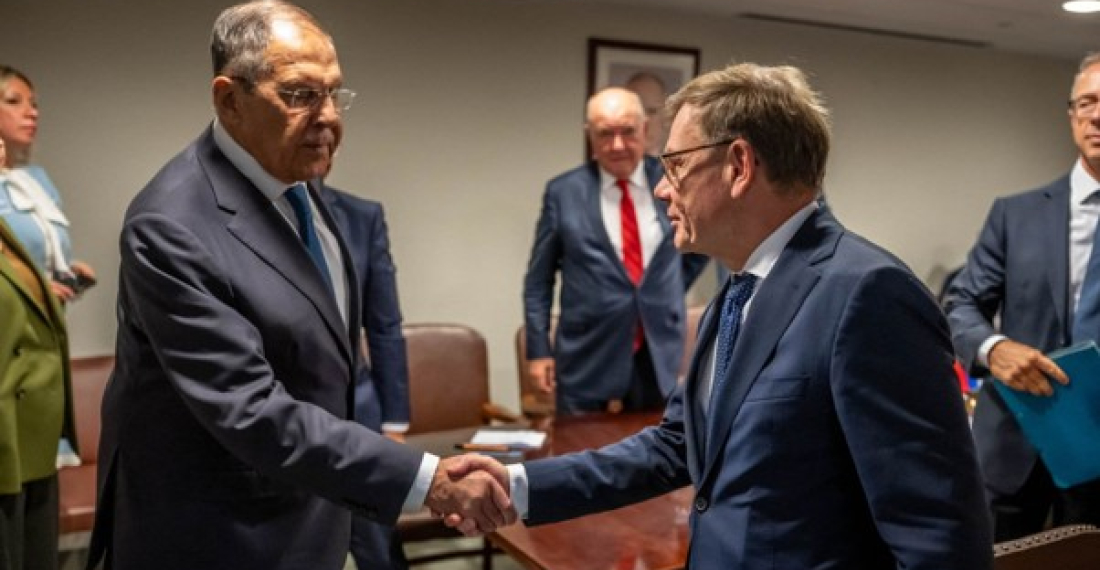
Last week, Germany’s foreign minister held talks with his Russian counterpart in the first face-to-face meeting between top officials of the two nations since Vladimir Putin’s full-scale invasion of Ukraine. Johann Wadephul said he used the “intense conversation” with Sergei Lavrov in New York to warn Moscow against further escalation after a drone laden with explosives was discovered at Leipzig airport last month in an incident that Berlin has blamed on Russia. He said that he “gave Russia a clear warning” not to continue in the same vein, adding: “We can defend ourselves, we can fight back, and we will do so.” Wadephul told German public broadcaster ZDF that he had also offered Lavrov “a chance to de-escalate” in Ukraine, adding that it had “fallen on deaf ears”. “I also made it very clear to Russia: we stand with Ukraine, Ukraine has our full support, and economic pressure on Russia will continue,” he said. “I said that again to Lavrov and called on him finally to be prepared to enter talks.” The meeting lasted around 20 minutes and ended with a handshake between the two men.
I support diplomacy and dialogue as a means of resolving issues. But I am also aware that isolating Russia diplomatically is an important way of putting pressure on Russia to end the mayhem it unleashed in Ukraine. The German Foreign Minister has to ask himself if the 20-minute meeting with Lavrov was worth easing that pressure.
The last time Lavrov met a German foreign minister was in January 2022, the month before Putin launched his full-scale assault on Ukraine.
Europe must continue supporting Ukraine, and isolating Russia should be part of that strategy. On the other hand engaging with Russia as part of a search for a solution is necessary. Balancing the two considerations is a difficult business, and Europe is best acting in a united fashion on this matter too.
Source: Dr Dennis Sammut is the Director of LINKS Europe Foundation, and Managing Editor of commmonspace.eu.