It has been a little over a year since Armenia and Azerbaijan initialed a peace agreement in Washington, and the mood in the South Caucasus is neither breakthrough nor stalemate. A government-facilitated Peace Bridge initiative has brought dozens of citizens across the border in both directions, and Armenia can now import goods from Russia via Azerbaijani territory. Yet the agreement still stands unsigned and unratified, and the long-promised opening of the Armenia-Türkiye border, agreed in principle back in 2022, has still not come to reality. There remains a parallel struggle linking both outcomes to a change in Armenia's constitution.
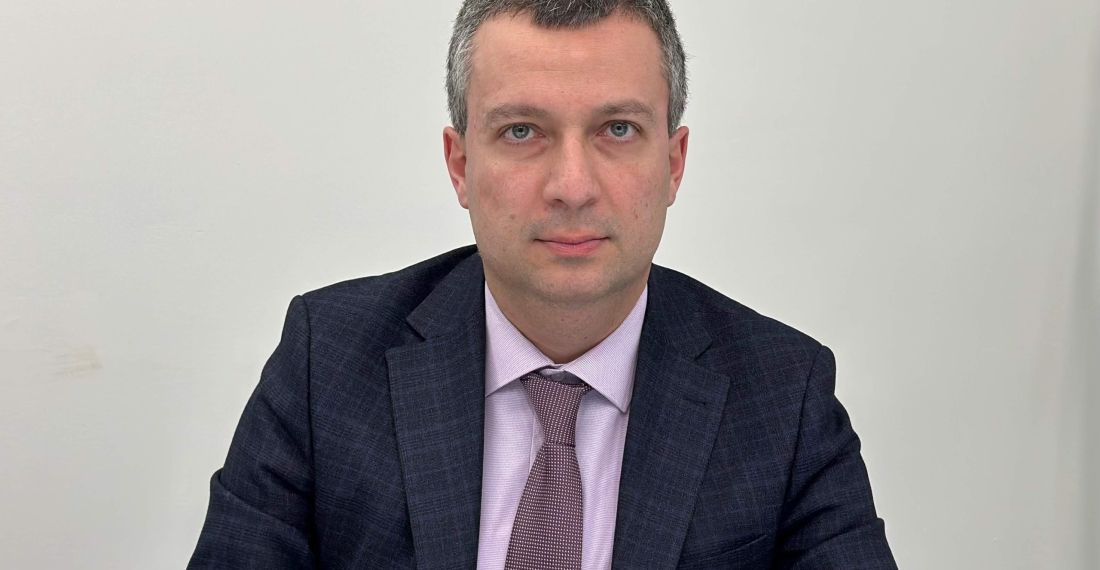
Dr Benyamin Poghosyan has spent close to two decades studying exactly this terrain. A historian by training, he worked at Armenia's Ministry of Defence think tank, the Institute for National Strategic Studies, for a decade, including three years as a director of the institute, before joining APRI Armenia as Senior Research Fellow in 2023. Since 2021, he has served as the Armenian co-rapporteur of the Joint Armenian-Azerbaijani Liaison Group (JOLIG), a dialogue platform facilitated by LINKS Europe, working alongside Azerbaijani counterparts through some of the most difficult years in the two countries' recent history. JOLIG was dissolved in 2024 and replaced by the Armenia-Azerbaijan Expert Strategic Platform, which monitors developments in Armenia-Azerbaijan relations and acts when necessary.
Read the full interview below:
Welcome, Dr Poghosyan. You spent almost a decade at Armenia's Ministry of Defence think tank, eventually leading it before moving to independent research at ARPI Armenia, and along the way became a consistent voice writing on Armenian foreign policy and the region's geopolitics. I would like to simply start at the beginning: what first pulled you toward this field? Was there a moment, person, or certain reality that shaped your interest, and how has your thinking evolved along the way?
Thank you for this opportunity, and to begin, this is an interesting question because originally my educational background was history. I got my MA in modern Armenian history, and then I got a PhD 22 years ago, in 2004. Again, my focus was modern Armenian history and the Armenian Genocide. But frankly speaking, I have always been interested in international relations and geopolitics. I think from probably my school days in the early 1990s, when the Soviet Union collapsed, and it was a mess in the South Caucasus and Armenia; there was the energy crisis, economic crisis, and about every type of crisis you can imagine. Probably this was also triggering for me when I just started to grasp what was happening around me when I was only 13, 14, 15 years old. There was also the regional mess, the Yugoslav wars, the Gulf Wars of 1990 and 1991. So all this somehow triggered an interest in me to better understand international relations: what is happening between states, why this is happening, why we have wars in some areas of the world, why in other areas we have cooperation. And, the European Union was just launched, I think, in 1993.
So, all of this somehow facilitated my interest in international relations and geopolitics. At the end of the day, my understanding was that I had a real love for history, but again, modern history; maybe in retrospect this was some sign that medieval or ancient history is not interesting enough for me. At the end of the day, I decided to use my background in history as a sort of launchpad to jump into international relations. And frankly speaking, I think this was a logical decision because there are many things that are happening now that you cannot simply understand if you do not know the historical background. So, from this perspective, I think my knowledge of modern history, especially modern Armenian history and modern history of the South Caucasus, helped me. This helped me to switch from history as a field of knowledge to international relations. So this is my short answer.
After getting my PhD in history, I went for a short certificate program at the Fletcher School of Law and Diplomacy. It was in 2006. It was a famous program funded by the late Armenian philanthropist, Aso Tavitian, who brought hundreds of Armenians to Fletcher School to for short certificate programs. Unfortunately, Mr. Tavitian passed away in 2020, but the project still continues, and many young Armenians are still able to go to the Fletcher School of Law and Diplomacy. So when I decided to transition from history to international relations, the few months I spent at Fletcher were my first steps to augmenting my theoretical understanding of international relations- you know, these IR theories about liberalism, constructivism, defensive realism, offensive realism, and everything else.
Then I came back, and I said, okay, I want to become an expert on geopolitics. And let's not forget that in the late 2000s, the think tank world in Armenia was not developed. There were probably one or two think tanks at the time. This idea was just coming to Armenia. But there was the Ministry of Defence with their Institute for National Strategic Studies (INSS). So, I joined the Institute, and I grew up there professionally, and ended up being the director of the institute for three years, from 2016 until early 2019. Then, after 10 years of having this government job, I said, okay, now I should be more independent. So, I left the government job and later joined ARPI Armenia in January 2023, where I am focused on, again, South Caucasus geopolitics and, in particular, Armenia-Azerbaijan and Armenia-Türkiye relations, which sort of has been my field for the last, probably, I will say, 20 years, more or less.
You have served as the Armenian co-rapporteur of the Joint Armenian-Azerbaijani Liaison Group since it was established in 2021, work we at LINKS Europe have had the privilege of facilitating alongside you. What has that actually been like, personally, sitting across the table from Azerbaijani colleagues year after year? Has it changed how you see the other side, or how you see your own country's position? And who are the people, on either side of that table, who've shaped how you think about this process?
I have been interacting with LINKS Europe and also with the director of LINKS Europe (Dennis Sammut), I think starting from 2014 or 2015, so even before JOLIG was established and before the 2020 Nagorno-Karabakh War. With my interactions with the Azerbaijani experts starting probably from 2014, I think the first time was at a conference with a focus on the South Caucasus' geopolitics, and there were, of course, experts from Azerbaijan. It was an interesting experience, especially working at a state think tank for the Ministry of Defence.
I will take this opportunity to look back over the last 12 years, at least my personal interactions with Azerbaijani experts and Azerbaijani colleagues. First of all, I would say that in the last 12 years, I, and hopefully I can use the term we, I mean, I and the Azerbaijani experts, were able to develop a sort of, I would call it, probably, a professional and personal respect. Probably this is key, despite, of course, the fact that on many issues we have diverging views. We had diverging views before 2020; we had diverging views in the period between the 2020 war and the forced displacement of Armenians from Nagorno-Karabakh in September 2023, and also now, this is geopolitics, and this is the world.
But still, the number one interesting thing for me is that despite having divergent views, and sometimes very divergent views, and these are all on very sensitive issues, not like, okay, I like Coca-Cola and someone else likes Pepsi Cola. And you can say, okay, it's up to you; go to the supermarket, buy whatever you want. These are very, very sensitive issues related to ethnicity, to the land, to the history, cultural heritage, and everything in between. But despite these sensitive issues, which of course added additional tensions in discussions, we were able to develop a personal respect and sort of professional relationship.
And here, of course, I have to express my appreciation and gratitude to Dr. Dennis Sammut. In a very tough moment, after the 2020 war, when JOLIG was established, this was a first step to reinvent or relaunch these expert dialogues after the 2020 war, which definitely was a very traumatic event for Armenians. At the end of the day, we lost the war. But still, Dr. Sammut was able to somehow bring the right people and also create the right environment. For example, my Azerbaijani colleague Ahmad Alili, as I said, I probably met him first in 2014. So we already had a sort of relationship. And I will say this also helped us while being Armenian and Azerbaijani co-rapporteurs for the JOLIG. But definitely the work of LINKS and the personal attitude and personal efforts of Dr. Dennis Sammut helped us. Of course, if I look back on these 12 years, I guess this will continue because, for better or worse, geopolitics never stops as we have no finalized, institutionalized peace between Armenia and Azerbaijan.
Of course, there was some sort of evolution. Before 2020, it was different positions. Our Azerbaijani colleagues were mostly unhappy or complaining about the result of the first Nagorno-Karabakh War, 1992- 1994. After 2020, somehow the sides shifted: because they won the war, Armenia lost the war, and of course, it's a tragedy the forced displacement of Armenians in September 2023. What has never changed, though, was this personal respect and professional relationship despite having strong disagreements, despite even having significant disagreements on terming events. What happened, for example, in 2020, what happened in September 2023? You may understand that our understanding or our wording was completely different from the Azerbaijani understanding and the Azerbaijani wording. Also, what happened in 1992, 1994? There was completely different wording and understanding. But again, we were able to have sort of professional respect and personal respect. And this helps us to come up with some joint products.
For example, in April 2022, JOLIG published its report – “The South Caucasus from war to peace: 30 measures between now and 2030”. Again, this was in April 2022, when everything was very fluid. But still, we were able to come up with some joint ideas. Also, I would like to emphasize the role of my colleagues, Johnny Melikyan and Stepan Grigoryan, the initial members of JOLIG. Then JOLIG was expanded, and we have six Armenians in our group, including Gevorg Melikyan, Taron Hovhannisyan, and Tatevik Hayrapetyan. So all played a role in the success of JOLIG.
Of course, some people will say, okay, but what did you do? You meet, you write papers, but at the end of the day, you could not prevent the forced displacement of Armenians from Nagorno-Karabakh, et cetera. But I think we should understand that the role of experts is different from the role of politicians. We are not prime ministers; we are not decision makers. The role of experts is to discuss very sensitive issues and to come up with some ideas and some suggestions, while the role of politicians is to accept or not to accept them. So, from this perspective, I may argue that the JOLIG was a success, and now we are continuing this process, although the JOLIG was dissolved in 2024 and replaced by the Armenia-Azerbaijan Expert Strategic Platform which monitors developments in Armenia-Azerbaijan relations and acts when necessary. We look forward to our future meetings, and we hope that LINKS Europe and, personally, Dr. Dennis Sammut, will be able to continue his facilitation.
It's now been just over a year since the Washington summit where Armenia and Azerbaijan initialed their peace agreement. Beyond the technical assessment of where things stand, what's genuinely settled and what's still being worked out, I'm curious how this moment actually feels to you personally, as someone who has spent years working toward exactly this kind of breakthrough. Does it feel like the moment you hoped for?
Look, there is a famous joke about pessimists and optimists. You have a glass of water, and for pessimists, they say, Oh, the glass is half empty, and optimists say, okay, the glass is half full. And there is also a continuation of the joke. Basically, when realists come, they say, okay, let's forget about the glass; let's focus on solving problems. I would hope that I'm partly in this realism school. So, I'm not fully optimistic and doubt that soon the South Caucasus will become the next Baltic region, like Lithuania, Latvia, Estonia, or Benelux, like the Netherlands, Belgium, and Luxembourg. No, I don't think this will happen, probably not in my lifetime.
I also don't want to be perceived as a pessimist saying that, oh, nothing will happen, all of these are nonsense, it's not important. At the end of the day, we will again start a war, and again, thousands of people will be killed. There will be destruction, etc., etc. I don't want to be this type of person. I want to be a realist. So, what we have now and what we don't have now.
Let's start with Armenia-Azerbaijan, but I will also touch on the Armenia-Türkiye relationship, because this is some sort of triangle. At ARPI Armenia, we coined the term “the vicious circle” to try to explain the Armenia-Azerbaijan-Türkiye triangle, at least in the last few years. So, what positive things do we have? First, we have an initialed peace agreement. This is a fact. This is important. We have an understanding; we have an agreement on how to facilitate the connection between Azerbaijan and the Nakhchivan Autonomous Republic, which was one of the key demands by Azerbaijan since the end of the Second Nagorno-Karabakh War.
And from the Armenian perspective, while initially Azerbaijani demands, or the Azerbaijani perception of this route, was that it should be at least de facto fully extraterritorial, some of my Azerbaijani colleagues even told me that we would like to travel from Azerbaijan to Nakhchivan via Armenian Syunik the same way if you were traveling from Baku to Sumqayit, or if you are traveling from Yerevan to Gyumri, which is the second-biggest city in Armenia. It means no passport control, nothing, no control, similar to how you may travel from The Hague to Amsterdam. Yes, no one stops you, no one checks you, et cetera, which de facto was an idea of a fully extraterritorial corridor. Now we have an agreement about TRIPP, which, of course, we still have to wait for full details on the ground, but one thing is clear: TRIPP is not this de facto fully extraterritorial corridor, which Azerbaijan, and I assume also Türkiye, was demanding in the period from late 2020/early 2025. So, TRIPP will be under Armenian sovereignty and there is a model for this: back office/front office; and probably private companies will interact with Azerbaijanis, who will cross the border. I’m not in a position to say that this TRIPP will be 100% under Armenian sovereignty, but definitely this is not the 100% extraterritorial corridor that Azerbaijan was pushing for. So, all of these are positive.
Also, there is limited economic interaction between Armenia and Azerbaijan. It started in late 2025. Armenia is buying diesel and gasoline from Azerbaijan. Now we can import goods from Russia and some other countries via railway through Azerbaijan. So now we have a railway connection with Russia. Of course, it's not directly passing from Azerbaijan to Armenia. It goes from Russia to Azerbaijan, then trains enter from Azerbaijan to Georgia and from Georgia to Armenia. But still, now there is a railroad connection between Armenia and Russia, and, for example, almost weekly we hear the news that several wagons of wheat came from Russia to Armenia, fertilizers came from Russia to Armenia, even liquid petroleum gas. LPG came from Russia to Armenia, again, using the Azerbaijani railroad. So all of these are positive signs.
Also, now we have a government-facilitated confidence-building initiative, Peace Bridge, which was launched in late 2025. Originally, 5 Armenians and 5 Azerbaijanis; then the group extended in the last meetings, it was 20 Azerbaijanis and 20 Armenians. And this group physically crossed the Armenia-Azerbaijan border, Armenians went to Baku, Azerbaijanis came to Yerevan, and there were meetings in Azerbaijani and Armenian resorts. Of course, all these are positive signs. So, to say that nothing happened and we are in the same place as, for example, as in summer 2024, is not true.
But also, let’s speak about what hasn't happened. The peace has not been institutionalized; the peace agreement is initialed, but not signed and not ratified. There is no breakthrough in the Armenia-Türkiye normalization process, despite the process itself continuing for almost five years. It started in late 2021, and more than four years ago, Armenia and Türkiye reached an agreement to open the border for citizens of third countries and diplomatic passport holders. More than four years ago, in July 2022, and nothing happened yet. The issue is that no breakthrough has happened yet. And these positive things are reversible. At the end of the day, this was President Aliyev’s decision to allow transit of goods from Russia to Armenia via Azerbaijan. And any day, for whatever reason, President Aliyev may make another decision and say no, starting from tomorrow, because of ABC or XYZ, I am banning, or I will not allow Armenia to use Azerbaijani territory for transit.
Are we close to a breakthrough? It's very difficult for me to assess, and maybe the negative thing is that I have the background of these 20 years, analyzing everything. If I were a young researcher who jumped into this process after 2023, I would probably be much more optimistic. I have some sort of background in my brain, which probably brings me from the optimistic side to the realist side, hopefully not the pessimist side. Again, what we have now. Azerbaijan is saying, okay, no peace agreement can be signed until Armenia changes its constitution. I have discussed this probably 100 times with almost all top Azerbaijani experts. I will not give their names because maybe I will forget someone, and they will say, okay, but I'm also one of the top Azerbaijani experts, why you missed me. Is this demand to change the constitution and remove the reference to the Declaration of Independence of Armenia from the constitution preamble, is this a real concern, or is this just a pretext not to sign the peace agreement? Despite the multiple explanations that I heard from my Azerbaijani colleagues, I still strongly believe that this is a pretext not to sign a peace agreement. And for me, the second problem is that while Azerbaijan is not signing and ratifying the peace agreement, Azerbaijan is also using the absence of this peace agreement to prevent Armenia-Türkiye normalization. The constant message from Baku to Ankara is: no Armenia-Türkiye normalization, and no border opening for the citizens of third countries, which was agreed more than four years ago. Nothing may happen until a peace agreement is signed and ratified between Armenia and Azerbaijan.
And now I'm coming back to the term which we at ARPI Armenia coined: “A vicious circle”. What is this vicious circle? It is when Azerbaijan is not signing the peace agreement, using, from my understanding, the pretext of constitutional change, it simultaneously stops Armenia-Türkiye normalization, using the absence of Armenia-Azerbaijan peace agreement.
So, many positive things have happened. Again, I'm not in a position to say nothing happened, but still no breakthrough. And as of now, I would say if you looked at what happened just after August 2025, we have had many positive things: economic interactions, a peace bridge initiative, et cetera, et cetera, et cetera, but still no significant breakthrough. And by breakthrough, I mean two things: institutionalized peace, a signed and ratified peace agreement, and Armenia-Türkiye normalization, establishment of diplomatic relations, and opening of the border, at least for the citizens of certain countries. As long as these two things have not happened, my understanding is that we are still in this vicious circle.
In regard to this vicious circle, with this parallel idea of Armenia-Türkiye normalization and the signing and ratification of the peace agreement. Watching this reality unfold, how connected do you truly view this vicious circle? Is there a way to decouple this circle? And is there a version of the future that you can find yourself hoping for, or is there another situation unraveling?
So how can you break this vicious circle? Well, this week we are having our annual flagship forum, APRI Forum 2026. And one of the sessions which took place on September 23 was focused on ways to break the Vicious Circle. We had experts from both Azerbaijan and Turkiye joining us online. Now, I will briefly speak by sharing Armenia's perspective. Is it possible to break this vicious circle or not? I am not trying to reinvent the wheel; everything is very easy. There are three sides of this vicious circle: Azerbaijan, Armenia, and Türkiye. So, option number one: how to break the vicious circle. Either you convince Azerbaijan to drop its pretext of changes to the Armenian constitution and sign and ratify a peace agreement with Armenia, and then automatically this will open the way for Armenia-Türkiye normalization. Or you convince Azerbaijan to greenlight Armenia-Türkiye normalization without a peace agreement being signed. So this is option number one. Related to Azerbaijan.
Option number two, related to Türkiye. Either Türkiye convinces Azerbaijan to greenlight normalization with Armenia without a signed and ratified peace agreement. Or someone convinces Türkiye not to wait for this green light from Azerbaijan and normalize relations with Armenia, again, before a signed and ratified peace agreement with Azerbaijan.
But you may say, okay, if you are speaking about the triangle, it's three-sided. We said what Azerbaijan may or may not do, what Türkiye may or may not do. But what about Armenia? Look, when I'm looking at Armenian government policy in the last three years, especially after the forced displacement of Armenians from Nagorno-Karabakh, the Armenian government's position is very clear. They are ready to sacrifice almost everything to have institutionalized peace with Azerbaijan and to have normal relations with Türkiye. So, the official Armenian government position is, and all these are on the record and have been stated by the Armenian Prime Minister multiple times, starting from 2023.
The Armenian government is saying that the Nagorno-Karabakh chapter is closed; no Nagorno-Karabakh movement should be continued in Armenia. The Armenian government is also pushing forward the ideology of Real Armenia, which clearly states that Armenia should be only within its Soviet-Armenian borders, 29,743 square kilometers of territory, nothing more. The Armenian government has removed the international recognition of the Armenian genocide from its foreign policy agenda. Between 1998-2018 the recognition of the Armenian Genocide, specifically the international recognition of the Armenian Genocide, was part of Armenia's foreign policy agenda. As a gesture of goodwill the Armenian government decided to remove the logo of Mount Ararat, a sacred mountain for the absolute majority of Armenians all over the globe, from the border crossing stamps. When you are entering Armenia or leaving Armenia, you stamp your passport. And the logo was there, I think, starting in the early 2000s, for 20 years.
And even more, the Armenian government and the Prime Minister himself stated that, yes, the reference to the Declaration of Independence should be removed from the Armenian constitution because the declaration is a conflicting document. And as long as there is a reference to the declaration, Armenia cannot have peace with its neighbors. And we have the process of these constitutional amendments. The government now says that the new draft of the constitution will be published by the end of 2026, probably in December. And then somewhere in 2027, a referendum may happen.
But this is also related to Armenian domestic politics. To reach a referendum, first you should approve this constitutional text by a two-thirds majority in parliament. After the June 2026 parliamentary elections, the ruling party lacks that majority. I don't know if they will even be able to overcome this parliamentary hurdle. But even if somehow they find some loopholes and bring the constitution to a referendum, it's a very complex and complicated issue because many Armenians are just saying, okay, why should our constitution be reviewed or approved by the president of the neighboring country?
I and APRI Armenia Vice President were in Ankara in February 2026 to present our report on Turkish Foreign Policy in the South Caucasus. There was a discussion with the leading Turkish experts, and many asked why Armenia is not changing its constitution? And I said, look, guys, what Turkish position would be if, for example, Greece comes to Türkiye and says, okay, to solve our problems, Türkiye should change its constitution and kick out, I don't know, Article XXX from the Turkish constitution. What will be your approach?
And all Turkish experts said that, of course, our approach will be: sorry for this; what the hell does the Greek government or the Greek prime minister have to do with the Turkish constitution? This is an issue of the Turkish people. This is an issue of the Republic of Türkiye. And I said, okay, the same way: why do you anticipate that Armenians will say because the president of the neighboring country demands changes to our constitution, the constitution should be changed. So, what I want to say is that even if the constitution reaches the referendum, the result of the referendum is very complex and complicated issue. And this process may take years and years. So, answer to your potential question: what Armenian side can do. My point is that the Armenian government has probably done everything, and even from my perspective, sometimes the Armenian government has done even more than it should do to reach institutionalized peace with Azerbaijan and to normalize relations with Türkiye, have diplomatic relations, open the border, etc., etc. So that is why my understanding is that at least in the coming months, or at least one year, probably if this vicious circle is going to be broken, it should be broken either through actions by Azerbaijan or by Türkiye.
Now, I would love to just zoom out a little bit and look at the wider region, Georgia, new connectivity projects, roles of outside powers. What do you think is one of the more underappreciated dynamics that is shaping the South Caucasus currently? Something that maybe is only visible from where you sit, working this closely and having such a relationship with this peace process.
So probably the number one thing which is not being noticed is the agency of the South Caucasus countries themselves. Because when you are sitting in Washington, in Brussels, in Beijing, or in Moscow, probably you see that, okay, the South Caucasus states are compact countries. Yes, Azerbaijan is a little bit stronger. It has oil and gas. Armenia lost wars; Georgia has transit, access to the Black Sea, but still, they are compact countries. They have nothing to offer to the world as countries. They are all subject to the interference of big or middle powers, they have no agency, and the South Caucasus is just a place where middle and great powers are clashing with each other, like Russia, Iran, Türkiye, the United States, the European Union, individual European countries, Israel, India, China, Pakistan. So, it's a mess. But if you are zooming out, you may think that, okay, the countries have zero agency. They are too weak to resist, they should do whatever big powers are telling them and they should accept their fate, they have no chance of shaping the regional geopolitics. They simply are statists who are just watching what big guys or big bosses decide.
And I think this is the wrong perception. Of course, the South Caucasus itself is a compact region. South Caucasus countries are compact states. They're not in a position to say that they are shaping global geopolitics, but definitely they are in a position to at least influence the shaping of regional geopolitics, especially now when we are in the process of moving away from the unipolar world to nobody knows where. I know that some experts still argue that we live in a unipolar world because US economic and military might is uncontested. Some people are saying, no, we live in a multipolar world because there is China, there is Russia, and some argue that we live in a jungle with no rules.
But whatever the current situation is, I don't want to coin new terms to call it. I think one term, Vicious Circle, is enough to be coined. But again, countries of the South Caucasus have the capacity to influence regional geopolitics. I'm not saying that they have the decisive capacity to decide what will happen with the South Caucasus. Definitely not. But South Caucasus countries increasingly have the agency to choose partners, to diversify, to do ABC, to do XYZ. And I think this understanding is sometimes missing. Because again, if you are watching from Brussels, from Washington, from Beijing, from Moscow, you may see some small compact countries as nothing- they're just simply waiting for their fate, and the big guys will come and say, you do this, you do that. But no, the world is not working this way anymore. Maybe this was the case during the Cold War, where, yes, there was a US and Soviet Union or socialist camp and capitalist camp, but not now. And I think this is probably the most interesting thing that is missing from European, American, Russian and Chinese perspectives: that Countries of the South Caucasus, despite being compact, despite having multiple problems, conflict, internal issues, et cetera, et cetera, are becoming more and more capable of influencing and shaping their own fate.
source: Santiago Ferbel-Azcarate interviewed Dr Benyamin Poghosyan for the Thursday Interview feature, on commonspace.eu
Enjoyed this interview? Thursday Interview has featured a wide range of voices from across Europe, the Caucasus and Central Asia, and beyond. You can read them here:
11 June - Satu Koivu read the interview here
4 June - Amanda Paul read the interview here
28 May - Régis Genté read the interview here
21 May - Stephen Gethins MSP read the interview here
14 May - Nigel Ellway read the interview here
7 May - Mehman Aliyev read the interview here
30 April - Dr. Andrzej Klimczyk read the interview here
23 April - Dimitar Borumov read the interview here
19 March - Brian Mefford read the interview here
12 March - Dr. Jamie Shea read the interview here
5 March - Fidan Namazova read the interview here
27 February - Dr. Anar Valiyev read the interview here
19 February - Ambassador Akan Rakhmetullin read the interview here
12 February - Johnny Melikyan read the interview here
5 February - Dr. Sarah Njeri read the interview here
29 January - Mykhailyna Skoryk-Shkarivska read the interview here
22 January - Dr. Stepan Grigoryan read the interview here
15 January - Murad Muradov read the interview here