Filter archive

Publication date
Editor's choice
Opinion
Opinion: The future of the China-US-Russia triangle after Pelosi's visit to Taiwan

Opinion: The future of the China-US-Russia triangle after Pelosi's visit to Taiwan

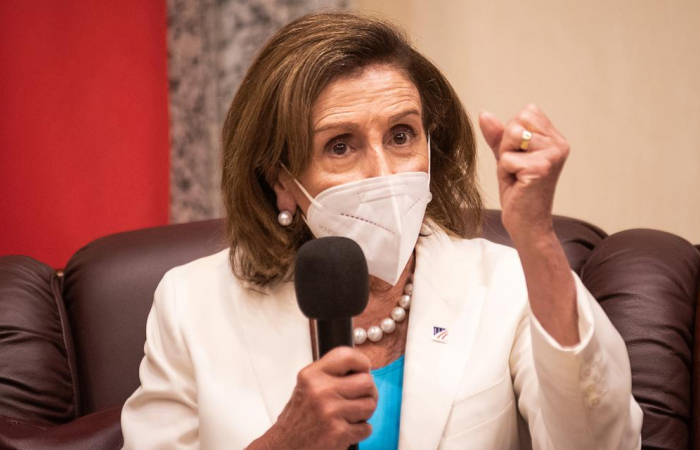
Since February 24, 2022, the international community's focus was concentrated entirely on the war in Ukraine and the growing Russia – West confrontation. It seemed that nothing could change the situation until the end of hostilities in Ukraine. However, on August 2 and 3, almost everyone’s attention shifted from Ukraine to Taiwan. As the Speaker of the US House of Representatives, Nancy Pelosi, stated her intention to visit Taiwan, up to half a million people were watching the trajectory of her plane on air flight tracking sites. The negative reaction of China, including the warning of President Xi during his conversation with President Biden that those who played with fire would be perished by it, created hype around this visit. Many were discussing the possibility of Chinese military jets closing the airspace over Taiwan and preventing Pelosi’s plane from landing in Taiwan, while some enthusiasts were even contemplating the possibility of a US-China direct military clash. As Pelosi landed in Taiwan and met with the Taiwanese President, the global social media was full of amateur assessments about the strategic victory of the US and the confirmation of the US global hegemony. However, as the dust settles down, and information noise and manipulation eventually decreases, a more serious assessment is needed to understand the real consequences of this visit.
Editor's choice
Monday Commentary
Monday Commentary: Europe must keep focused on Ukraine, whilst upping its diplomatic role in the Middle East

Monday Commentary: Europe must keep focused on Ukraine, whilst upping its diplomatic role in the Middle East

The crises unleashed by the US-Israeli attack on Iran on 28 February is now in the second week. The Islamic Republic of Iran is taking a battering, but shows no sign of collapse. It has a chosen a new Supreme Leader – the son of the one killed  at the start of the US/Israeli attack, and is preparing for a long fight. There are ninety million Iranians, most of who are likely to rally around the flag, and defend their country. The crises has implications, for the whole region and the whole world, and we are just at the start. Ukraine has been pushed off the front pages. It is very easy for it now to be pushed off the agenda of European leaders. It must not. Regardless of the enormity of what is going  on in the Middle East, Europe – and that means the EU and other countries such as the UK, Norway and Switzerland – must remain focused on Ukraine, and in supporting the Ukrainian people in the face of Putin’s aggression. For Europe, Ukraine is an existential issue. The crises in the Middle East only makes the challenge that it presents more complicated, not less serious. Europe has already done a lot, but its efforts are yet not complete. It has provided generous financial support. Its embrace of Ukraine is not complete. Top of the agenda is Ukraine’s EU membership. One can always find reasons to delay this process. Many will be valid reasons. But there is one overarching reason why this must happen soon. It will seal Europe’s commitment to Ukraine, and it will fulfill Ukraine’s desire for a European future. Yes, it is a political reason, but Ukraine is first and foremost a political challenge, one that Europe must win. The crises in the Middle East is not a distraction. It is real enough, and will also have huge implications for Europe. But Europe has less tools at its disposal. It does not have the military means to be involved independently. The relationship with the GCC countries is not strong enough. Its influence on Iran is at best modest. Its relationship with both the US and Israel is ambivalent, and evolving. But Europe cannot remain a bystander. What will happen in the Middle East will have consequences – be it in politics, security, energy or economics. Europe must up its diplomatic game in the Middle East. This effort must cut through the established bureaucracies. It must find away of pooling the resources, and knowledge, of the EU member states, EU institutions and non- EU European countries such as the UK. It must find a way of working with key partners like Turkey. This effort must be fast and flexible, and can start with the appointment of a heavyweight at the head of this effort – someone who can talk easily with Merz, Macron, Stammer, Erdogan, von der Leyen and other European leaders. Diplomacy is the only way out of the present Middle East crises. Europe cannot afford to be sidelined in this. It must lead. With Ukraine and the Middle East in turmoil, European resources, and ingenuity, will be stretched to the limit. But Europe does not have a choice. It must engage with both. Differently, but with an equal sense of urgency and purpose.
Editor's choice
Event
Best wishes on the occasion of International Women's Day 2026

Best wishes on the occasion of International Women's Day 2026

The editorial team of commonspace.eu extend their best wishes on the occasion of International Women's Day 2026, to all our women  readers and subscribers, and to all women worldwide. This year, as the world struggles to deal with conflict in different parts of the world, our thoughts are with women caught in war, especially those in Ukraine, Gaza, Sudan, Iran and other parts of the world. International Women’s Day is celebrated every year on 8 March to honour the achievements of women worldwide and to highlight the ongoing fight for gender equality. It is a day that recognises the social, economic, cultural, and political contributions of women, while also encouraging action towards creating a more equitable society. (click the image to read the full article)