


Water scarcity and its historical causes
Many news outlets (Central Asia Concise included) portray Central Asia as a rapidly evolving region, blessed with critical natural resources, crucial for global trade, and with the potential for a bright future as long as it is able to chart a steady political and economic course. However, while most of the Central Asian countries may benefit from an abundance of energy resources, critical raw minerals and gold, it is starkly contrasted by the increasing scarcity of the most fundamental resource of all, water. This looming threat is not a recent or unknown problem to the region. As of 2025, it is estimated that 82 million people in Central Asia are exposed to water insecurity. The World Bank has also predicted that over 5 million people in Central Asia may become internal migrants as a direct consequence of water scarcity. Central Asian governments also directly recognise and address these issues rather than sweep them under the rug. To name a few examples, Uzbekistan has previously stated that 90 percent of its agriculture needs artificial irrigation, and that up to a third of its population lives in areas vulnerable to disasters and degradation due to water scarcity. Furthermore, Kyrgyzstan has recently pinned water scarcity, leading to less drinking water and arable land, as a key factor driving Kyrgyz citizens to leave the country in search of better opportunities abroad. To better understand the root cause of this critical scarcity, it is worth looking back in time.
Central Asia’s water woes still reverberate with the echoes of the Soviet Union’s disastrous water policies in the area. While initially advantageous and practical, Moscow’s centralized control on water in the area led to infrastructure being constructed that did not take the borders that would later define the Central Asian countries into account. The fragmentation of this formerly centralized infrastructure would lead to various co-dependencies and potently increase the potential for escalation between the fledgling states. Furthermore, the Soviet Union’s focus on water-intensive mass agriculture of cotton would outlast the superpower and remain the crop of choice in the region, putting further strain on water reservoirs. The Aral Sea is perhaps the best evidence for this, having shrunk to less than 10% of its original volume since the 1960s, due to artificial irrigation. Ultimately, water scarcity is not a new phenomenon and has been a persistent and known problem to the region, being the root cause for many escalations throughout post-Soviet Central Asia.
Tensions markedly escalated in the early 2000s over the two main rivers flowing into the Aral Sea, the Syr Darya going from Kyrgyzstan through Uzbekistan to Kazakhstan and the Amu Darya from Tajikistan through Uzbekistan and Turkmenistan. In brief, the three downstream countries, Kazakhstan, Uzbekistan, and Turkmenistan, being heavily dependent on large amounts of water, mainly for agricultural purposes, were engaged in a tit for tat with the upstream suppliers, Kyrgyzstan and Tajikistan. These countries were in turn dependent on downstream nations in other ways, mainly through energy exports. In one instance, Kyrgyzstan repeatedly flooded Uzbekistan downstream during the winter, thereby also reducing water supply during the summer period crucial for agriculture yields. This was reportedly due to Uzbekistan’s unreliable or possibly deliberate withholding of energy resources to the upstream country. Kyrgyzstan however, utilizing hydropower dams as alternate sources of energy, also have an incentive to release more water during the winter, especially if gas imports from downstream countries are unreliable. The vicious cycle would repeat itself and be mirrored in similar ways by other co-dependent countries in the region. Most recently, in 2021, significant clashes between Kyrgyzstan and Tajikistan erupted following a dispute over a water reservoir near Vorukh. However, apart from sporadic tensions, Central Asia has managed to gradually detach itself from this zero-sum game on water supply and has engaged in a much more collaborative manner to tackle the issue.
Tajikistan’s ‘water diplomacy’
Current water management in the region depends on continuous dialogue, which is already happening between Kazakhstan, Uzbekistan, and Tajikistan on how to manage supply during the coming irrigation season. Meanwhile, as part of the series of preparation meetings for the 2026 UN Water Conference, Tajikistan is also hosting the Fourth High-Level International Conference on the International Decade for Action, called “Water for Sustainable Development” from 25-28 May in Dushanbe. According to the United Nations Convention to Combat Desertification (UNCCD), the event brings together over 2,500 participants from 31 countries as well as 33 international organisations and financial institutions. The event was opened by Tajik President Emomali Rahmon and also included UN Under-Secretary-General Armida Salsiah Alisjahbana, the UN Special Envoy on Water Retno Marsudi, and the UN University Rector Tshilidzi Marwala. According to the UNCCD the main objective is to further progress combined efforts and support the implementation of voluntary commitments registered in the Water Action Agenda of the UN Water Conference, as well as engaging in actions towards achieving the 2030 Agenda for Sustainable Development goals. While these objectives refer to further objectives set out in other events and lofty UN goals that may seem at first detached from the water situation in Central Asia, from Tajikistan’s perspective, the conference fits into a bigger overarching strategy of water diplomacy.
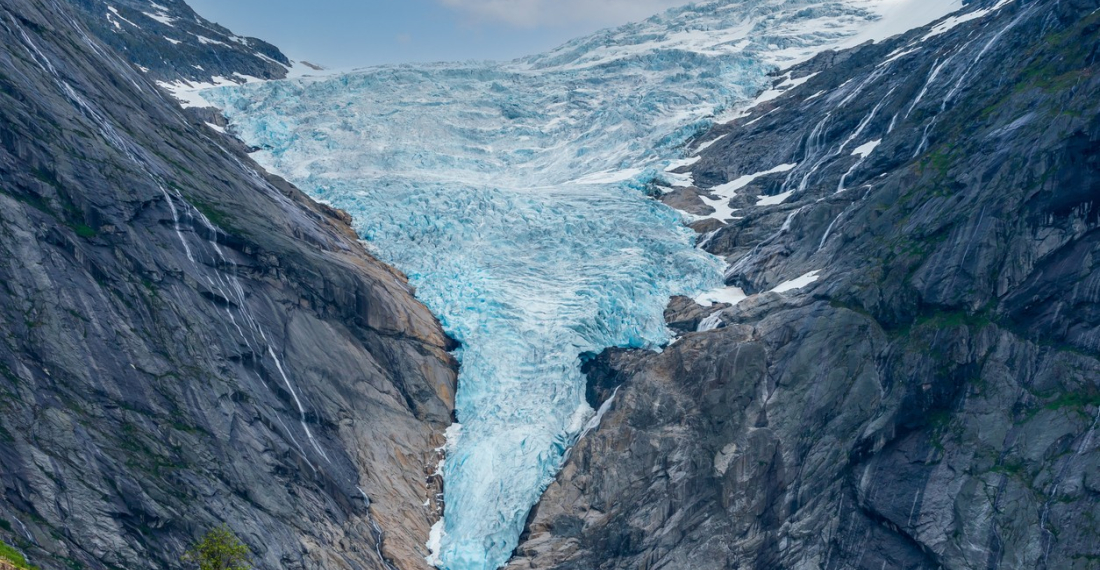
This week’s meeting is hosted by the Tajik Government’s ‘Dushanbe Water Process’ platform. The Dushanbe Water Process has been a key mechanism that Tajikistan uses to keep water on the international agenda. Having hosted a string of regular international water-focused events since 2003, Tajikistan is also behind 14 UN resolutions on water resources. Over time, Tajikistan has managed to carve out a geopolitical niche as an important country in water diplomacy, having the ability to regularly convene UN agencies, governments, international organisations and other important players in the field. This diplomatic power is useful for a small country that is the source of much of the water available in Central Asia, which comes in yearly cycles from its glaciers. Through the Dushanbe Water Process and Tajikistan’s constant engagement in water diplomacy, it has managed to put melting glaciers as a key point on the global water agenda, most evident by the UN Glaciers Initiative. On a more practical level, Tajikistan’s water diplomacy has also enabled it to better support critical projects, such as its Rogun hydropower project which looks to capitalise on Tajikistan’s yearly downstream flows and provide around 10 million people in the country with better access to electricity. The project, which was historically a source of tension with downstream Uzbekistan, for the reasons mentioned earlier, is now able to develop in a much more permissive and collaborative environment and has recently secured backing from the World Bank. Tajikistan’s status as one of the smaller Central Asian countries, consistently economically overshadowed by larger regional neighbours, still carries the heavy responsibility of being the origin point for a vast amount of the region’s water supply. Coupled with the fact that Central Asia has inherited a fragmented and difficult water infrastructure system from the Soviet Union and has been dealing with water related tensions ever since, Tajikistan’s focus on water diplomacy shows the country’s aptitude and willingness to move past these constraints. Overall, Tajikistan’s water diplomacy, having become not only a foreign policy speciality of the government, but also a way to foster regional collaboration and drive real infrastructure improvements, shows a real commitment to both international as well as regional collaboration to deal with this most pressing of issues.
However, the way ahead may still hold significant challenges in store. As mentioned earlier, sporadic tensions over water disputes are far from rare, and there is always the possibility that severe seasonal anomalies or other factors may push the precarious regional water balance over the edge and ignite further hostilities. Finally, there is a new looming water issue on the horizon that may have significant spillover effects for the region. Afghanistan’s construction of the Qosh Tepa Canal, which could divert between 8 and 20 percent of the Amu Darya’s annual flow, will be a significant test for the region’s resilience to further water diversions, as well as how a project like this will affect the political tensions in the area. This is especially sensitive in relation to Afghanistan, with whom most Central Asian governments are still cautious to establish extended ties with. Notably, Tajikistan has recently suffered from significant border skirmishes originating from armed groups within Afghanistan, whereas Uzbekistan, in contrast, has pursued a much more open relationship with the Taliban government defined by deepening economic ties (as detailed in a previous newsletter. How the Qosh Tepa Canal will affect the region once it is completed and if it will severely impact the already precarious regional water situation remains to be seen. Nonetheless the project will likely remain a challenge for future water distribution and a test for Tajikistan’s water diplomacy as well as any other regional mechanisms that look to foster collaboration on this issue.
Source: This briefing first appeared in Central Asia Concise on 28 May, and was prepared by the editorial team of commonspace.eu.



