Europe has grown uncomfortably familiar with Russia’s policy towards its “near abroad”: the former Soviet states that Moscow continues to treat as part of its rightful sphere of influence. Sheltered by NATO and still invested in managing relations with Russia, Western capitals responded to the 2008 war in Georgia and the 2014 annexation of Crimea as serious but containable shocks: the first largely through mediation and monitoring, the second through non-recognition and sanctions. That sense of distance has since collapsed. Russia’s full-scale invasion of Ukraine in 2022 turned the post-Soviet space into a central theatre of European security, while Donald Trump has further unsettled confidence in the NATO umbrella itself.
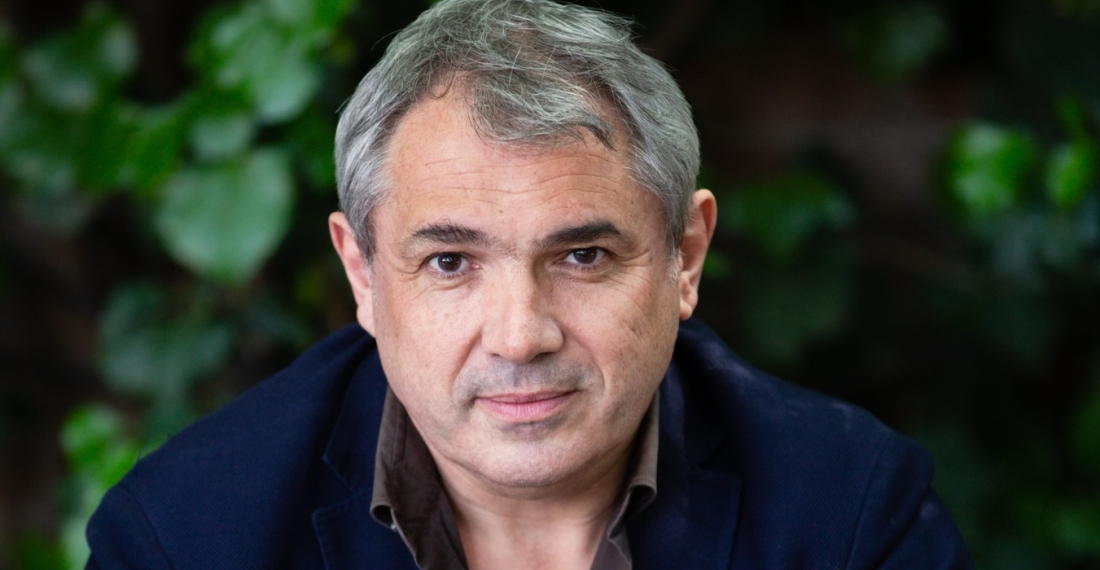
Few observers are better placed to make sense of this moment than Régis Genté. A French journalist mostly based in Tbilisi for more than two decades, he has covered the South Caucasus and the wider post-Soviet world for Le Figaro, Radio France Internationale, and France 24, alongside policy work for think tanks including IFRI. In his book Notre homme à Washington: Trump dans la main des Russes, he argues that the US president's posture toward Moscow is neither erratic nor accidental, but the product of a four-decade Russian cultivation that has tied Trump to the Kremlin more tightly than Washington or Brussels yet admits. In this conversation, he traces those ties, explains how Putin keeps Russia's elites bound to the Kremlin, and reads Georgia's political crisis as a case study in Russian post-imperial influence.
“He never threatens Putin, and the few times he has started to threaten Putin, often on the same day or the day after, he goes back.
It is also because of his own political DNA. Independently from Russia, who he is politically, makes him a man who can discuss with Russia, and who can be fascinated by Russia. So it is a mix: Russia ties him, but at the same time, his own character leads him to be pro-Russian, to be fascinated by force, because he does not like democracy much more than Putin likes democracy.
Some people say Trump is erratic, and that is certainly true. But when it comes to Russia, NATO, and related issues, he has always followed the same line. His first trip to Moscow was in 1987. What he said when he returned, including that the US should not finance other NATO members, is exactly what he says today.”
Read the full interview below:
Welcome, Mr Genté. You have spent more than two decades reporting on the South Caucasus and the wider post-Soviet space, mostly based in Tbilisi. Could you begin by describing your professional trajectory, and what first made you devote so much of your career to this region?
Before becoming a journalist, I studied philosophy and worked on questions of order and disorder, how order comes from disorder and vice versa. I saw that the post-Soviet area would be the right place to observe this.
I was not wrong. I was fascinated to see how another world would emerge from the Soviet Union, and how things were reorganising. This was my interest in the region and, as a journalist, I always approached it with my philosophical background. My questions came from philosophy, which I see as something very concrete. It is not only big ideas. It is about how these ideas apply in reality.
For my whole career, I have tried to work between these big questions and the facts I collected on the ground. Journalism is a profession where you can still do things in your own way, with your own style. My style was to question realities through big questions, while also working in a very classic way: looking at the facts, and trying to describe them as precisely as possible.
For 25 years, I was a freelancer working for mainstream media such as Le Figaro in Paris, Radio France Internationale, and France 24. I also approached the whole post-Soviet area as a region that had something in common: a shared past, certain political traditions, the way power is exercised, the way rulers look at their populations, and the way populations look at power.
There is also, of course, the huge Russian influence, a kind of post-imperial or Neo-imperial approach to the region. I have always compared different parts of this space. I think it is fruitful to compare, for example, Kyrgyzstan with Belarus, Georgia, Armenia, and so on. This was my way to question reality and to shed light on the region and its dynamics over this quarter of a century.
One of the ways through which you question those realities and structures of power is through your book, Notre homme à Washington: Trump dans la main des Russes, in which you argue that Donald Trump’s relationship with Russia should be understood over several decades, including his 1987 trip to Moscow and his subsequent criticism of NATO. For readers unfamiliar with your argument, could you set out the context and explain what led you to write the book? Today, with Russia’s war against Ukraine continuing, war involving Iran further straining Western resources, and NATO facing renewed political pressure from Donald Trump’s administration, how should we understand the implications of Trump’s approach to Russia and the Alliance?
We understood that Trump coming back to power would have a huge impact on the whole world, starting with the post-Soviet region. One of the main focuses of his last campaign was to say that he would bring peace between Russia and Ukraine, first in 24 hours, then in 100 days, then in six months. Now we see that the question is still far from being solved, and not going in the direction Trump expected.
A few weeks ago, he said again that Ukraine had lost the war and should give up. But this is exactly the opposite of what we see on the ground. Ukraine has many weaknesses and is exhausted by the war, but it is still fighting. For several months, Russia did not take any significant territory, while Ukraine has started to win back some small areas. The situation on the front is not the same as it was a few months ago.
I wrote this book also with the question of how power works in mind. For five or seven thousand years, we have tried to understand how power works, and it is still not really clear. In the relationship between Trump and Russia, I found a way to question this.
The book is an investigation, but mostly I tried to sum up in 250 pages what was known, but not well known in Europe or in France: what this relationship was, what it was made of, and how the Russians cultivated Trump for more than four decades. Not as an agent. He is not an agent; he is too big for that. But as what they apparently called a “confidential contact”. This is the vocabulary the KGB used about him: someone you cultivate, someone you help, someone you help to grow, and who then helps you.
This is also a story about money. Very large amounts of Russian money went through his businesses, whether casinos or real estate. One example is that in 2008, a Russian billionaire bought Trump’s Palm Beach villa for around $95 million, while Trump had bought it four years earlier for around $41 million. This was during the global financial crisis, Trump had not done any work on the villa, and the Florida real estate market had not changed in a way that could explain it. So, obviously, it looked like a present of $54 million.
A lot of money came from various sources, and obviously he had a relationship first with the Soviet Union, then with Russia, which looks like that of a confidential contact.
When I finished the book, six months before the election, my publisher and I bet on the fact that Trump would win. My feeling was that the sociopolitical context that brought him to power in 2017, and that made him elected the first time, was still there. He could be re-elected, and indeed he was re-elected, and in a stronger way than the first time.
I wrote at the end of the book that if Trump would try to solve the Ukrainian conflict, he would try to do it absolutely in favour of Russia. Because of this four-decade story, he is tied by the Russians. And this is exactly what we see. You remember the Oval Office moment with Zelensky, where Trump wanted him simply to capitulate? He is still in the same mood, he would like to see the war settled on terms favourable to Russia, but he cannot impose this outcome. He is not acting alone: there is public opinion, there is the US political establishment, and there are limits to what he can achieve. So far, he has not achieved what he wanted in Ukraine. In fact, the situation has moved in a different direction. Even if Trump may wish for a Russian victory, he has not been able to deliver one.
Trump is tied by the Russians. The compromising information is not necessarily sexual, as has been said. That is not the most important thing, and maybe it does not exist. It is through money. He says amazing things. He never threatens Putin, and the few times he has started to threaten Putin, often on the same day or the day after, he goes back.
It is also because of his own political DNA. Independently from Russia, who he is politically, makes him a man who can discuss with Russia, and who can be fascinated by Russia. So it is a mix: Russia ties him, but at the same time, his own character leads him to be pro-Russian, to be fascinated by force, because he does not like democracy much more than Putin likes democracy.
Some people say Trump is erratic, and that is certainly true. But when it comes to Russia, NATO, and related issues, he has always followed the same line. His first trip to Moscow was in 1987. What he said when he returned, including that the US should not finance other NATO members, is exactly what he says today.
So he is very consistent. He has the same line; he did not change. This is also an opinion shared not only by him, but by many people in the Republican Party in the US since the 1980s and even before. It is part of US isolationism.
This is how I start my book. Putin said at the beginning that he would prefer Biden to Trump, because Biden was more predictable. But as often with Putin, you have to understand it the other way. He prefers Trump because Trump is very reliable and predictable for Russia.
You have spent many years covering post-Soviet elites and the way power operates in the region. Specifically regarding Vladimir Putin, how do you rationalise his unflinching hold on power in Russia today? What do Western policymakers and journalists misunderstand about how these political systems function?
At the beginning of the full-scale invasion, in July 2022, I published a report for IFRI, a French think tank, on the decision-makers in Russia, the ruling circles. My methodology was to look at rankings in Russian media and identify the 100 most powerful people in Russia. This is not the absolute truth, but it gives an idea of who is powerful.
Among these 100 people, mostly men, at the time only one had defected: Anatoly Chubais. Now, four years later, we have two: Chubais and Dmitry Kozak. Kozak said at the very beginning of the full-scale invasion that it would not work, and that Russia should find another solution than war with Ukraine. For that, he was sidelined. He was not punished, but he was removed from politics.
So in more than four years, only two of the 100 most powerful people in Russia publicly disagreed with the war and left. At the same time, we know from Russian journalists and other sources that most of the elite are against this war. But they are against the war and, at the same time, they support the war.
There was a famous recording between the billionaire Farkhad Akhmedov and the music producer Iosif Prigozhin (who has nothing to do with the famous Yevgeny Prigozhin). In the discussion, they say they are against the war, that because of the decision of “the old man”, meaning Putin, they are losing their assets in the UK and Europe. They are very angry at Putin. But a few minutes later, they discuss how to make money in Melitopol or somewhere in Ukraine. So in the same discussion, they are against the war, but then ask: how do we make money from it? How do we help the regime?
This is a very powerful regime that Mr. Putin has built over 25 years. It makes no one in the elite able to leave it or go against it. The only way for them is to serve the regime. If they want to continue to grow and exist within the elite, they have to serve the regime.
That is why I always recommend that Western powers be very cautious when dealing with Russian figures, such as former oligarchs, who often want to leave Russia because they are not part of Mr. Putin’s inner circle. None of them can leave Russia with their money just because they want to. If they are allowed to leave with their capital, it is on one condition: that they continue to serve the regime.
This is how dictatorships usually work. They do not let big pockets of money, billionaires, do whatever they want. That may happen in the West, but not in a dictatorship. Some Russian billionaires would love to put their money in London, in the US, or elsewhere, and be free from Russia. But none can do this freely.
So the elite is under Mr. Putin’s control through different means: carrot and stick. The carrot is that if they serve the regime, they get access to money, Russian resources, and national projects. The stick is that they are under the control of the siloviki, the law enforcement forces, which are totally under Mr. Putin’s control.
I know some very powerful people. They are really powerful, but at the same time they are under the scrutiny of the FSB. I have examples, though I will not give names, of powerful people who at some point had too many influential Telegram channels in their hands. These channels were suspended or declared foreign agents, to make sure they would not create too powerful a media base within the regime.
Today, much of Georgian society remains strongly pro-European, while the government has pursued a course that many see as increasingly hostile to the EU, civil society, and independent media. How do you see the political crisis in Georgia developing, and what should observers look at in order to understand the future of Georgian democracy?
The first war Mr. Putin fought outside Russia’s borders was in Georgia: the 2008 war. Of course, the first war was the second Chechen war, which he relaunched when he came to power, promising to solve what he called the 'Caucasian problem’. But the first war outside Russia was in Georgia, in summer 2008.
For me, this was the beginning of the war in Ukraine. It is the same war, exactly the same war: the same method, the same approach. You do some military rehearsal, and then it turns into the invasion of a country. This is also how the war started in Ukraine in 2014. What is going on in Georgia is a kind of political victory for Russia, while in Ukraine Russia is still pursuing this militarily.
The war in Georgia was a warning to the West: Russia was saying that the West should give up and leave what Russia considers its “near abroad” in Russian hands. This did not happen in the way Russia wanted, so there was the war in Ukraine in 2014 and then the full-scale invasion eight years later.
In Georgia, maybe because it is smaller and for different reasons, Russia found another way. This is again a question of elites. The man who really has Georgia under his control is an oligarch who made his money in Russia, Bidzina Ivanishvili. He is obviously totally under Russian control. As I said before, no powerful billionaire in Russia can escape power in Russia. A dictatorship or authoritarian regime cannot let big pockets of money be free from the Kremlin. It does not exist. There is not a single example.
So why would a Georgian oligarch who made his money in Russia, and whose money was still in Russia until he became a politician in his own country, be free from Russia? It does not exist. He managed to take his money out of Russia, and for me, that is a very big sign. If he managed to do that, then he helped Russia in a way that made him deserve it.
What is going on in Georgia is a purely post-colonial or imperial situation, where the former colonial ruler uses its leverage through the elites, as happened several times with the UK or France in Africa, for example, to control what it considers its sphere of influence. In this case, it is the Caucasus. Russia tries to do the same in Central Asia, the South Caucasus, Ukraine, Belarus, and so on.
We saw this through the tools implemented in Georgia to keep control. They were purely Russian, especially the law on foreign agents, which at the beginning was a copy-paste of the Russian law. Then, to hide this a little, they changed the law slightly, but the spirit is the same. It is a Russian law, and it is the main tool to establish Russian-style power in Georgia.
The heart of the operation was precisely to pull Georgia out of the Western sphere of influence and into the Russian sphere of influence. This is why the foreign agents law was initiated: to go against the EU’s requirements at the time for Georgia to become a candidate for EU membership. There were 12 conditions set in June 2022 to accelerate Georgia’s path toward candidate status. One of these conditions was to make civil society more involved in decision-making.
The answer, obviously dictated by Russia, was precisely to introduce the foreign agents law. If civil society organisations receiving money from the West are called foreign agents, how can they be more involved in decision-making? So it was answering this EU condition point by point, word for word, in the opposite direction.
It was always designed to make sure that Georgia would split with the West, and that the West would see Georgia as a country that cannot be a candidate because it is going in the wrong direction. And this is exactly what happened. It helped the Georgian authorities to say: we are European, but Europe does not want us. Then they created the idea that the West wanted to open a second front in Georgia, and so on.
The dynamics are now very strong. Georgian society remains broadly pro-Western, but there is a huge propaganda effort, which is making part of the population change its mind and see Europe in a darker way. Because of the repression, many Georgians are also leaving the country, especially people who are politically and socially active.
There is now a feeling in Tbilisi that nothing will change only through Georgians fighting in the streets, and that the fate of Georgia will again be decided by the fate of Ukraine and the war there. Georgians understood this from the very first day. I remember covering the first rally on 24 February 2022 in front of parliament, and the young people there said: our future depends on who wins in Ukraine. This is more true than ever.
Do you have anything final that you would like to say to our audience?
We should really keep paying attention to what is going on in the post-Soviet area, because we see now that Russia plays an absolutely decisive role in how the world is changing, in this multipolar world and so on.
Russia is an extremely important factor. Unfortunately, in the West, we do not always understand the region because we often look at it through the eyes of Russia. I saw Western diplomats coming to Georgia and saying, “I read a lot to prepare, I read Dostoevsky.” It is not the right way.
We are not listening enough to people from the post-Soviet area: from Georgia, Ukraine, Armenia, Kazakhstan, and so on. They have a huge experience of Russia. They know Russia, and often we underestimate the value of what they say.
Many people criticised Saakashvili. He did make mistakes, that is true. But at the same time, back in 2009, his advisers were telling me: the next war will be in Ukraine, and it will start in Crimea. They were five years ahead. They understood this.
They also said many things that did not prove true. This is why we have to understand the region: to identify what is true, what is a mistake, and what is propaganda. But when you know the region, you know where to put your attention. I remember Saakashvili’s team telling me this five years ahead. So we should listen to the other republics of the post-Soviet area, and not ignore them, as we do too often.
Purchase: Notre homme à Washington: Trump dans la main des Russes by Régis Genté