Within a tumultuous peace and security environment in the South Caucasus, the European Union has over time established itself in multiple capacities. A network of financial, diplomatic, and security ties comprise the Union’s larger interests in working together with Armenia and Azerbaijan for the benefit of peace, security and stability in the region.
The European Union Mission in Armenia (EUMA) fulfils an active part in the EU’s contribution to the normalisation process in the South Caucasus. The monitors patrol the entire length of Armenia’s border with Azerbaijan from six Forward Operating Bases on the Armenian side. The Mission conducts both day and night patrols. Total staff of EUMA is over 200 international and national members who are working in different roles such as monitors and in supporting functions. One important task of the Mission is to build confidence among local border communities. Azerbaijan has repeatedly criticised EUMA, describing it as a “propaganda tool” used against Azerbaijan, and viewing the Mission’s presence on the Armenian side of the border with suspicion.
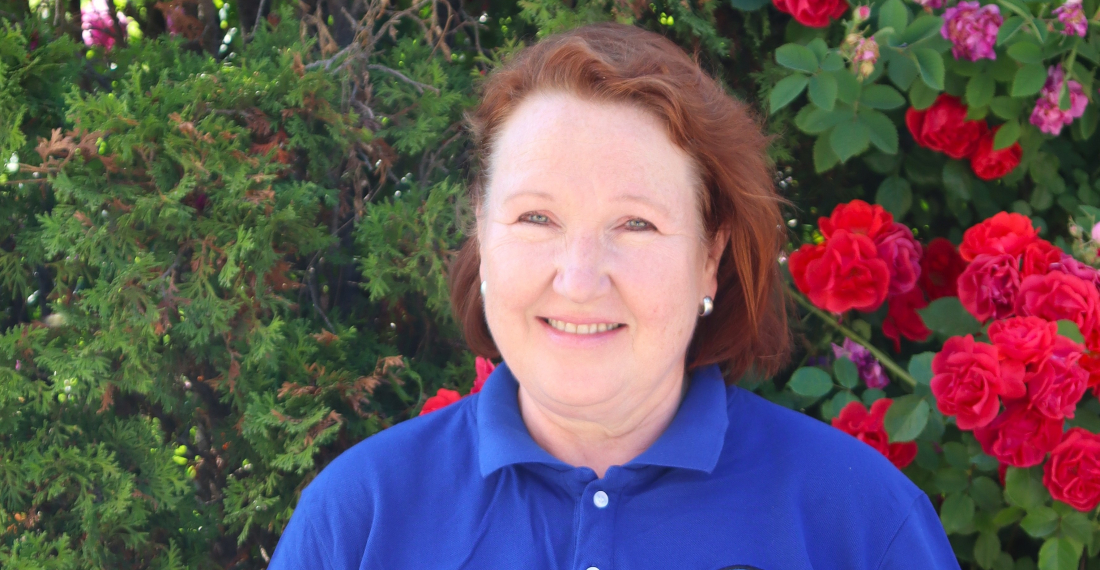
In this final issue of Thursday Interview ahead of a summer recess, we speak to Ms. Satu Koivu, who has since March of this year served as Head of Mission for the European Union Mission in Armenia. HoM Koivu started her career in the Finnish police force, over time building a distinguished career in policing, crisis management, international peacekeeping, and security sector reform.
Before taking up her post in Armenia, she served as Senior Police Adviser and Head of Police Component in the United Nations Peacekeeping Force in Cyprus. She has also held advisory and training roles in EU and UN policing missions and courses, including in Palestine, Rwanda, Kenya, and Finland. At the national level, she has held senior positions in the Finnish police, including as Assistant Police Commissioner and Chief of Human Resources Development at the National Police Board of Finland, where her work focused on capacity building, organisational development, police leadership, and professional standards.
We speak to HoM Koivu about her professional life before taking up her post in Armenia, how EUMA fits into the region’s wider goal of peace and stability, the negative perception of the Mission in Azerbaijan, and what it means to build trust and confidence in a still fragile post-conflict environment.
“We are proud to say that since EUMA’s establishment in 2023, the mission’s presence has contributed to a significant reduction in the number of shooting incidents in border areas. This demonstrates how the presence of an international organisation can help conflict parties refrain from violence. Last spring, in 2025, when shooting incidents increased in certain sections of the border, we introduced night patrols. These patrols enhanced the sense of security among residents of border communities and helped reduce tensions and violent activity. Since May 2025, incidents along the border have largely ceased, and the situation has become considerably calmer.”
Read the full interview below:
Ms. Koivu, your career has taken you from national police work in Finland to international assignments in places such as Cyprus, the Palestinian Territories, Rwanda, and Namibia. What lessons from those very different environments do you find relevant in the South Caucasus today?
As a young girl, when I was thinking about my future field of work, I had many options. However, I decided to join the Finnish Police, although it was not the popular choice, as we did not have many women police officers in service at that time. My decision was based on the fact that I wanted to do work which has meaning, and this has been a guiding principle throughout my career, both domestically and internationally.
Based on my experiences in United Nations (UN) peacekeeping and EU Common Security and Defence Policy (CSDP) missions, I have learned a lot. The main lesson has been that serving peace and stability is important, and it makes a difference in people’s everyday lives.
It is true that this type of work is nowadays often challenged in terms of purpose, effectiveness, results, etc. I agree that there is, of course, always room for improvement, but I personally feel that this work is needed now even more than ever. In the current world, with Foreign Information Manipulation and Interference (FIMI), physical threats, and human rights and the rule of law being challenged, it requires commitment and belief in values to be able to deliver. Also, working in conflict areas always means working in a politically very sensitive environment.
Regardless of these challenges, I feel that in EUMA, our team is committed to our mandate implementation, and the best feedback is when we have managed to stabilise the area of our operation and bring hope for a better future for those people we engage with. It is small steps forward, and it is work with meaning.
How would you describe the European Union Mission in Armenia’s overall purpose? How has the work of the mission evolved? How does it fit into the region’s wider goal of peace and stability?
The European Union Mission in Armenia was established on 20 February 2023 following an official request from the Armenian authorities to deploy a civilian mission along the Armenia–Azerbaijan border. It was preceded by a short-term mission, the EU Monitoring Capacity (EUMCAP), which was deployed on the Armenian side of the border from October to December 2022 in the aftermath of the conflict between Armenia and Azerbaijan.
EUMA’s primary task is to monitor and report on the situation along the Armenian side of the Armenia–Azerbaijan border to EU Member States. The mission also contributes to human security in conflict-affected areas and, where possible, supports confidence-building efforts between Armenia and Azerbaijan. It is important to emphasise that EUMA is a civilian and unarmed mission. We perform exclusively civilian tasks, and both our vehicles and monitors are clearly identifiable.
Our area of operations covers approximately 1,000 kilometres of the Armenia–Azerbaijan border and is supported by six Forward Operating Bases (FOBs) located in Ijevan, Martuni, Jermuk, Yeghegnadzor, Goris, and Kapan.
We are proud to say that since EUMA’s establishment in 2023, the mission’s presence has contributed to a significant reduction in the number of shooting incidents in border areas. This demonstrates how the presence of an international organisation can help conflict parties refrain from violence. Last spring, in 2025, when shooting incidents increased in certain sections of the border, we introduced night patrols. These patrols enhanced the sense of security among residents of border communities and helped reduce tensions and violent activity. Since May 2025, incidents along the border have largely ceased, and the situation has become considerably calmer.
In addition to monitoring the security situation, we conduct human security patrols, during which we visit villages and towns, meet local residents, listen to their concerns, and report our findings. We are frequently invited to schools and universities to speak about our mission and the European Union. We also maintain a number of cooperation projects with civil society organisations, as well as youth and women’s groups. Building trust between the people of Armenia and the European Union is an important part of our work. Over the past year, the number of cooperation initiatives has increased significantly, and we are encouraged by the growing interest in both the EU and our mission.
It should be mentioned that EUMA is one element of the broader efforts undertaken by the European Union and the international community to support peace, stability, and confidence-building in the South Caucasus.
By the time your current mandate ends in February 2027, what would success concretely look like for you?
An improved security environment in the border regions and a substantial reduction in shooting incidents are among our most important achievements. During our time in Armenia, we have seen that the visible presence of an international organisation can help deter violence and encourage restraint among the parties.
Another key measure of success is the trust we have built with local communities. We have witnessed a strong willingness among residents to cooperate with us, share their concerns, and discuss their hopes and plans for the future. The trust of local people is one of our most valuable achievements and an essential foundation for our work.
Naturally, we welcome the initialling of the peace treaty between Armenia and Azerbaijan and call for its swift signing and ratification. It is extremely positive to witness concrete actions being taken on the ground between the Armenian and Azerbaijani authorities. The delimitation process is being discussed; demining activities are visible; and the Peace Bridge Initiative visits are ongoing. The signing of the Peace Agreement would be a major development for peace and stability in the region.
Given the negative attitude of official Baku towards the mission, are there areas where indirect or technical engagement with Azerbaijani counterparts could reduce misperceptions of EUMA’s activities, in your view?
We remain open to engagement with Azerbaijani stakeholders. For example, we have participated in some media initiatives, including with the Topchubashov Center. We have also cooperated with PressClub TV through joint initiatives involving the Yerevan and Baku Press Clubs.
We continue to look for opportunities to support programmes that bring together Armenians, Azerbaijanis, and others from across the region. Such initiatives can help foster dialogue, mutual understanding, and confidence.
I would also like to emphasise the impartial nature of our work. We report to EU Member States on all relevant developments along the Armenia–Azerbaijan border, regardless of which side is involved. We strive to carry out our mandate in the most transparent, objective, and professional manner possible.
Prime Minister Pashinyan’s election victory is likely to provide policy continuity in Yerevan, including on the peace agenda with Azerbaijan and Armenia’s closer engagement with the EU. He has also not secured the kind of overwhelming mandate that would make difficult domestic compromises easy. In the immediate aftermath of the 7 June vote, does anything change for EUMA? Does Pashinyan's victory make the mission’s work clearer, more complicated, or essentially unchanged?
We welcome the democratic choice of the Armenian people and hope that the outcome of the elections will contribute to continued peace, stability, and prosperity in Armenia. As for EUMA’s work, the Mission was deployed at the invitation of the Armenian Government, and its mandate was agreed upon by Armenia and the European Union. The current mandate runs until February 2027. EUMA continues to carry out its work impartially and in full accordance with its mandate, maintaining a regular and visible presence in border communities. Any decisions regarding potential changes to the Mission’s mandate or activities would be a matter for agreement between Armenia and the European Union.