Theme

Domestic Politics

Stories related to the internal politics of states and various domestic issues. 

Editor's choice
News
Aden under curfew, as problem in Yemen's south deepens

Aden under curfew, as problem in Yemen's south deepens

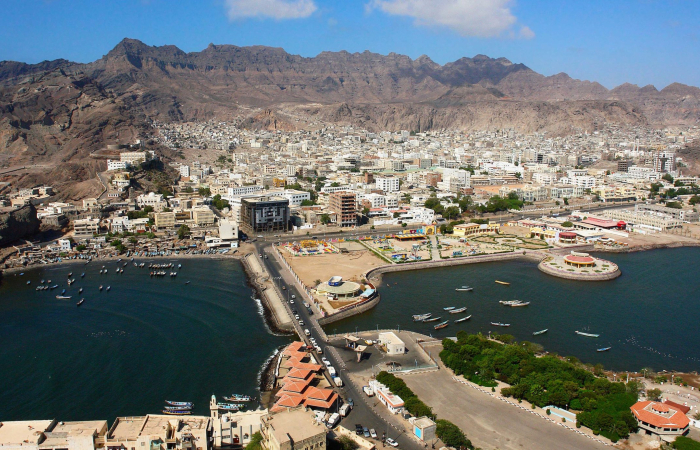
The port city of Aden, in Yemen's south, has been put under curfew, as the rift in the country between  the Saudi led coalition which  backs Yemen's presidential governing council, and the southern forces led by the Southern Transitional Council (STC), deepens. Abdul Rahman al-Mahrami, a member of the Yemeni Presidential Governing Council and commander of the al-Amalik brigades, has ordered a curfew in the temporary capital, Aden, "to maintain security". "A curfew has been imposed throughout Aden Governorate from 9:00 p.m. to 6:00 a.m., in accordance with the instructions of Commander Abdul Rahman al-Mahrami, a member of the Presidential Management Council," the statement said. It states that only security and military personnel, as well as medical and technical teams with approved permits, will be allowed to move in the area during these hours. Yemen's presidential council, which is backed by Saudi Arabia and which already is in a struggle with the Houthi Movement in the north of the country who also occupy the capital Sanaa, two days ago issued an order for the arrest of the head of the Southern Transitional Council (STC),, Aidarous al Zubaidi. The STC have wide support among people in the South, and advocate that South Yemen restores its independence. The coalition warned of further escalation in Aden, long regarded as an STC stronghold, as the Presidential Leadership Council (PLC) chief accused STC leader Aidarous Al Zubaidi of “high treason” and announced the revocation of his membership in the governing body. The moves mark a sharp escalation in tensions within the anti-Houthi camp, despite National Shield Forces, rivals of the STC and former allies, having recently retaken control of Hadhramaut and Mahra from southern fighters. The STC’s takeover of the two regions last month angered Saudi Arabia and contributed to igniting the current internal conflict. (click the picture to read more)

Filter archive

Publication date
Editor's choice
News
The Gap between East and West Germany

The Gap between East and West Germany

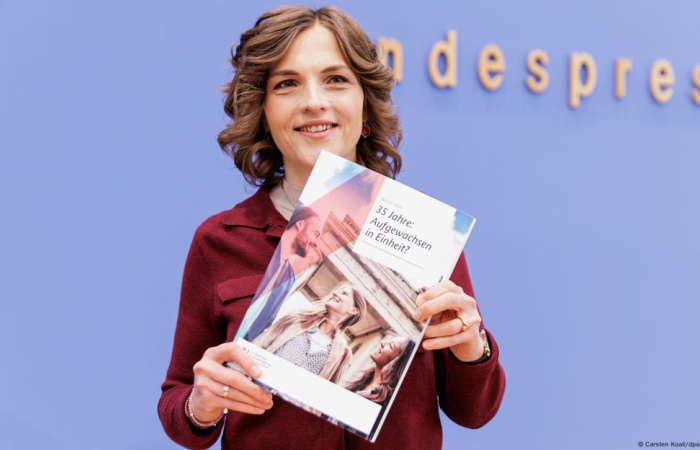
There is still a wide gap between East and West Germany, writes Marcel Furstenau on the website of the German broadcaster, Deutsche Welle. There is still a wide gap, even amongst young people who have only ever lived in a unified country. The new commissioner for eastern Germany, Elisabeth Kaiser, attempts to explain why. Elisabeth Kaiser is from Gera, in the eastern state of Thuringia. When the federal commissioner for eastern Germany was born in 1987, Germany was still divided. Two years later, the  Berlin Wall fell, and on October 3, 1990, the communist GDR  became history. "I did not consciously experience the period of reunification, but the stories of my parents and grandparents have shaped me," Kaiser wrote in an annual report presented in Berlin just in time for the 35th anniversary of German Unity Day. For the 38-year-old member of the centre-left Social Democratic Party (SPD) this is a first, as she has only been in office since May 2025, when the new federal government was formed.
Editor's choice
News
Victory for Moldova's European Path

Victory for Moldova's European Path

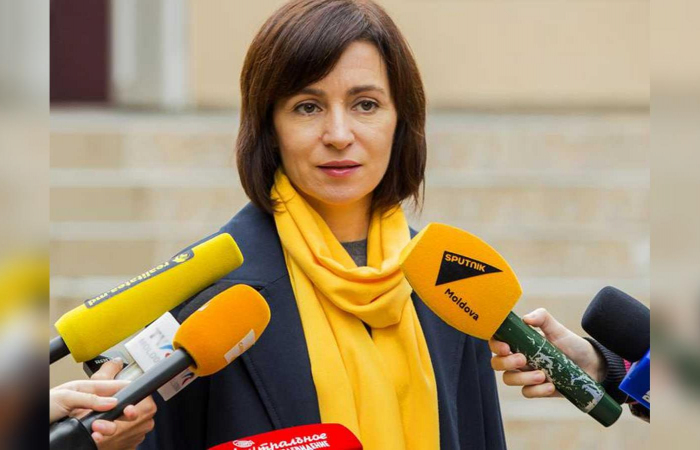
The pro-European party of Moldovan President Maia Sandu has won a new majority in parliament in elections seen as critical for her country's future path to the EU. Sandu had warned of "massive Russian interference" after voting, saying the future of her country, flanked by Ukraine and Romania, was at stake. Igor Grosu, the leader of Sandu's Party of Action and Solidarity (PAS), said it had been "an extraordinarily difficult battle" and that Russia had thrown "everything it had" at the election. PAS secured 50% of the vote, with 99.9% of the 1.6m votes counted, far ahead of the pro-Russian Patriotic Electoral Bloc on under 25%. Turnout was 52%, higher than in recent years. One of the main opposition leaders, Igor Dodon, had claimed victory even before results came in and called for protests outside parliament on Monday. European Commission President Ursula von der Leyen welcomed the result. "You made your choice clear: Europe. Democracy. Freedom," she wrote on X. Polish Prime Minister Donald Tusk praised Sandu, saying she had "saved democracy" and "stopped Russia in its attempts to take control over the whole region. A good lesson for us all". Recent Moldovan votes have been far closer, but soon after polls closed it became clear that Sandu's party was on course for another majority in the 101-seat parliament. Four years ago, the president's party won 52.8% of the vote, and based on latest results it is now set to clinch 55 seats. To form a government it will not need to rely on support from other parties, such as the Alternativa bloc or the populist Our Party.
Editor's choice
News
Moldova votes in crucial parliamentary elections

Moldova votes in crucial parliamentary elections

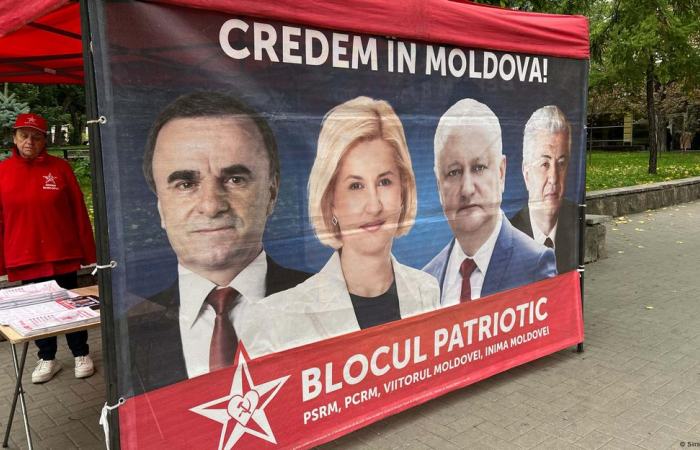
Moldova is voting in crucial parliamentary elections that will determine the country's future. Sunday's general election will be the most crucial since Moldova gained independence from the Soviet Union in 1991. Russia is doing all it can to divert the country from its European course. If a flood of videos on TikTok is to be believed, the people of Moldova are currently living through a reign of terror. These short videos claim that the country is being governed by a "dictatorship" of its pro-European President, Maia Sandu, and the ruling liberal-conservative Action and Solidarity Party (PAS). They also allege that this "puppet regime" has sold itself to the EU and NATO and US billionaire George Soros with a view to destroying Moldova's agriculture, "introducing LGBTQ ideology" and leading the country into a war against the Russian Federation. One of the people who posts such things on TikTok almost daily is former President Igor Dodon, a devoted follower of Russian President Vladimir Putin. Dodon is leader of the Party of Socialists of the Republic of Moldova (PSRM) and head of the Patriotic Electoral Bloc alliance. The logo of the alliance features a red-and-white star surrounding a heart with the Soviet hammer and sickle at its center. Dodon describes himself as right-wing and committed to "traditional values," closing his videos with the Orthodox Christian salutation "God help us!" This blend of hatred of Europe and the West, Soviet nostalgia, loyalty to the Kremlin, Orthodox Christian piety and right-wing populism appeals to a large part of Moldovan society, particularly in view of the precarious economic situation of many people in the country, especially pensioners. On Sunday, Moldovans go to the polls to elect a new parliament. This will be the first scheduled general election since Moldova and Ukraine were granted candidate status by the EU in 20 For months now, the poll has been seen as a pivotal election and one that could take the country either further along the road to the EU or back to Russia. Opinion polls in the country are considered notoriously unreliable. The unpredictability of the vote is further compounded by the fact that almost half of all voters have still not made up their mind who they are going to vote for. Even though Sandu's liberal-conservative, pro-European, anti-corruption civil rights party PAS is expected to remain the strongest party, it might lose the absolute majority it got in 2021. Two other electoral alliances that opinion polls indicate will be represented in the new parliament are both clearly pro-Russian. These are the Patriotic Electoral Bloc and the political alliance known as Alternative, which was founded by Mayor of Chisinau, Ion Ceban. Our Party (PN) is another party that could enter parliament. It was founded by businessman Renato Usatii, a political adventurer and populist who made his fortune in Russia and is hard to pin down politically. Usatii could end up holding the balance of power and determining whether the country keeps its pro-European government or gets a pro-Russian one.
Editor's choice
News
Libya government reaches preliminary accord with powerful armed group

Libya government reaches preliminary accord with powerful armed group

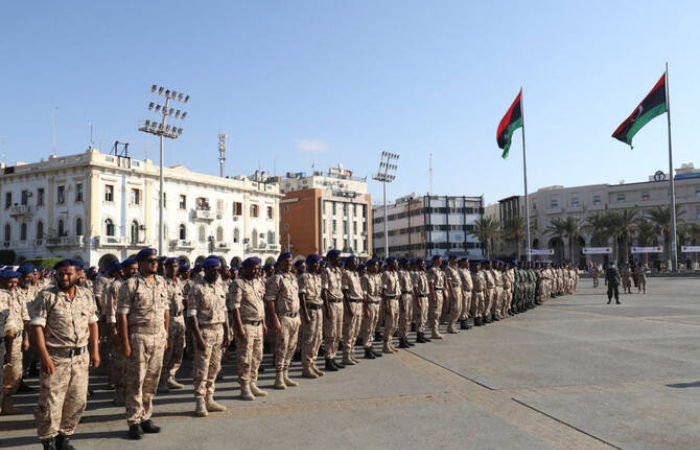
Libya’s UN-recognized government based in Tripoli has reached a preliminary accord with a powerful armed group to end months of tensions that have flared into occasional violence, a government adviser and local media said on Saturday 13 September. Negotiations between the government and the Radaa Force were facilitated by Turkiye, according to the same sources quoted by Arab News. Ziyad Deghem, an adviser to the head of the Presidential Council transitional body, said the details of the accord “will be announced to the public at a later date.” Libyan broadcaster Al-Ahrar on Saturday posted on X a video that it said showed defense ministry forces entering an airport controlled by Radaa.
Editor's choice
News
President of Kazakhstan calls for drastic parliamentary reform including abolition of Senate

President of Kazakhstan calls for drastic parliamentary reform including abolition of Senate

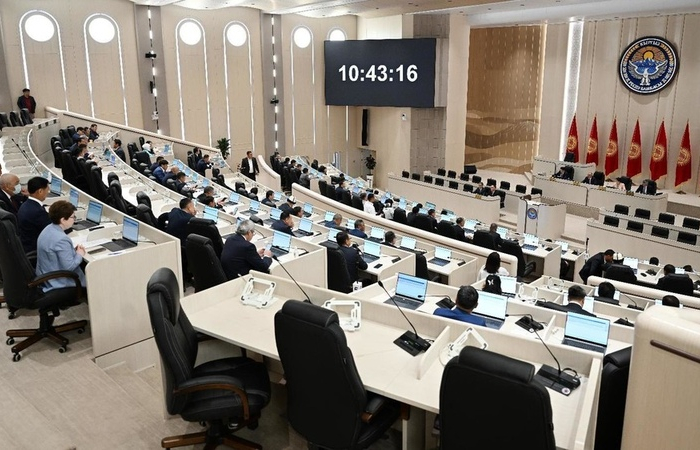
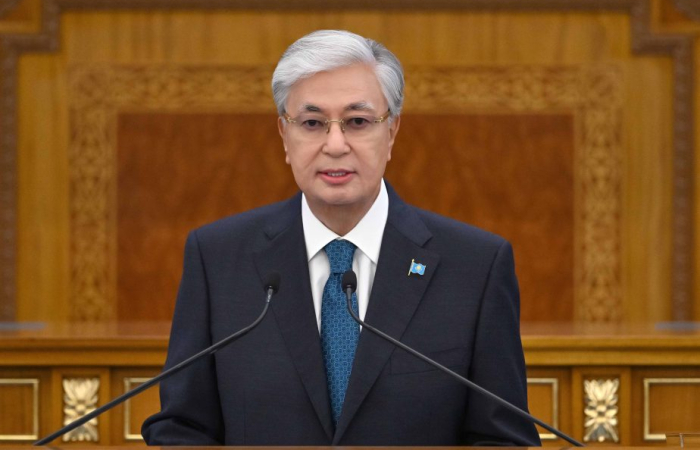
The President of Kazakhstan Kassym-Jomart Tokayev has called for drastic parliamentary reform including abolition of the Senate and a return to a unicameral legislature, mirroring the single-chamber Supreme Council of the early post-independence years. President Tokayev made the call on 8th September as he delivered his annual address to the nation before the Kazakh parliament. In his speech, Tokayev touched on topics as varied as artificial intelligence, electric scooters, inflation, nuclear power development, the scandalous behavior of women, and the need to shift to a unicameral parliament via a future constitutional referendum.
Editor's choice
News
French Prime Minister Francois Bayrou ousted after just nine months in office

French Prime Minister Francois Bayrou ousted after just nine months in office

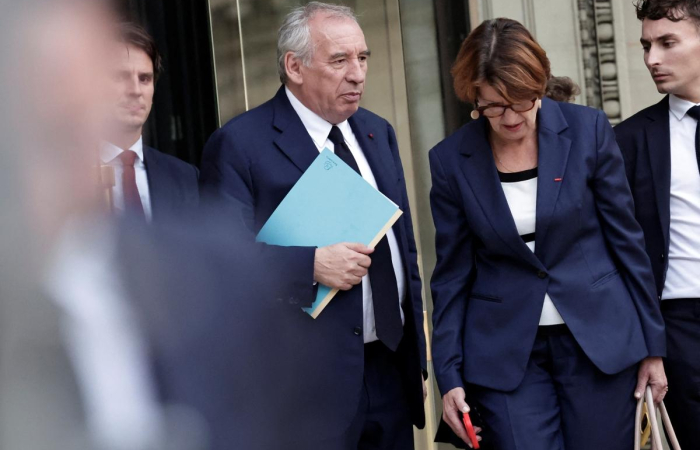
Legislators toppled France’s government in a confidence vote on Monday 8 September, a new crisis for Europe’s second-largest economy that obliges President Emmanuel Macron to search for a fourth prime minister in 12 months. Prime Minister Francois Bayrou was ousted overwhelmingly in a 364-194 vote against him. Bayrou paid the price for what appeared to be a staggering political miscalculation, gambling that lawmakers would back his view that France must slash public spending to rein in its debts. Instead, they seized on the vote that Bayrou called to gang up against the 74-year-old centrist who was appointed by Macron last December.
Editor's choice
Analysis
Despite disillusionment, Pashinyan favourite to win crucial 2026 vote in Armenia

Despite disillusionment, Pashinyan favourite to win crucial 2026 vote in Armenia

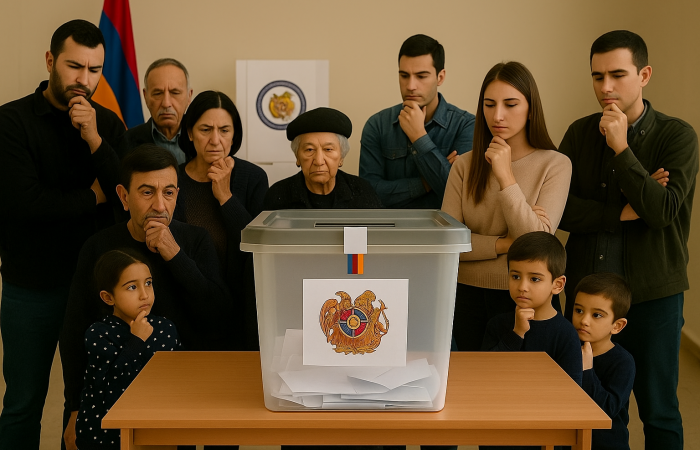
Next year’s parliamentary elections in Armenia will not focus on the economy or other domestic issues, but rather on the country’s place in the surrounding region and relations with its neighbours. Prime Minister Nikol Pashinyan, down but not out following military defeat and political upheaval, has staked his future on reaching what would prove to be a historic peace agreement with Azerbaijan. But with public trust at an all-time low, disillusionment among the electorate could make this the most unpredictable vote since independence was declared in 1991. Armenia will hold parliamentary elections on 7 June 2026, its first regularly scheduled national vote since April 2017. In this analysis for commonspace.eu, Onnik James Krikorian argues that "ten months before the vote, the outcome still remains difficult to predict. Though it still seems most likely that the incumbent will win, a great deal will also be determined during the official campaign period itself, and new developments on the ground. If peace with Azerbaijan is finally within reach, and there are signs that this is the case, it will be difficult for voters to reject stability instead of insecurity and the further risk of war. Ultimately, the 2026 election will determine not just who governs Armenia, but whether the country can finally emerge from decades of conflict and semi-regional isolation, or if it is destined to remain trapped by it." He adds, "that might prove enough to sway even reluctant support for Pashinian at the ballot box. The opposition has still yet to offer any viable alternative – or even one at all."
Editor's choice
News
At least 800 people have died in a powerful earthquake in Afghanistan, with entire villages being destroyed

At least 800 people have died in a powerful earthquake in Afghanistan, with entire villages being destroyed

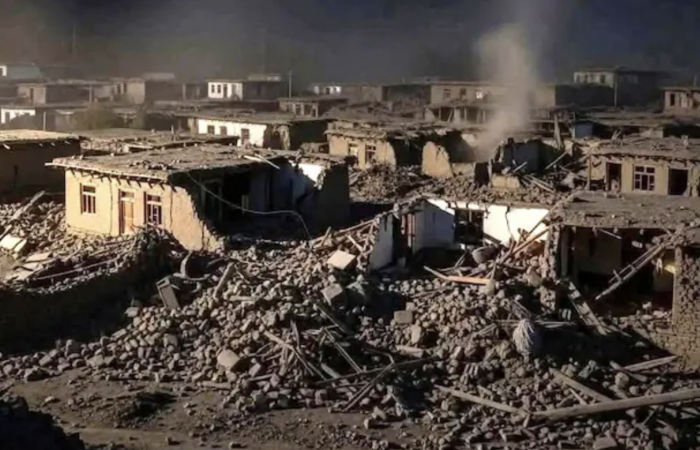
According to the Taliban government, an earthquake measuring 6.0 on the Richter scale in eastern Afghanistan killed around 800 people on Sunday night. More than 2.700 people are also reported to have been injured. The death toll has risen rapidly in recent hours. This is partly due to the inaccessibility of the mountainous region.