Theme

Domestic Politics

Stories related to the internal politics of states and various domestic issues. 

Editor's choice
News
Aden under curfew, as problem in Yemen's south deepens

Aden under curfew, as problem in Yemen's south deepens

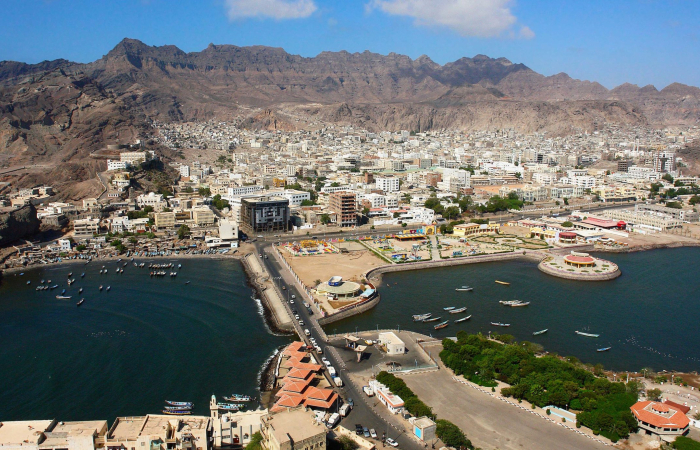
The port city of Aden, in Yemen's south, has been put under curfew, as the rift in the country between  the Saudi led coalition which  backs Yemen's presidential governing council, and the southern forces led by the Southern Transitional Council (STC), deepens. Abdul Rahman al-Mahrami, a member of the Yemeni Presidential Governing Council and commander of the al-Amalik brigades, has ordered a curfew in the temporary capital, Aden, "to maintain security". "A curfew has been imposed throughout Aden Governorate from 9:00 p.m. to 6:00 a.m., in accordance with the instructions of Commander Abdul Rahman al-Mahrami, a member of the Presidential Management Council," the statement said. It states that only security and military personnel, as well as medical and technical teams with approved permits, will be allowed to move in the area during these hours. Yemen's presidential council, which is backed by Saudi Arabia and which already is in a struggle with the Houthi Movement in the north of the country who also occupy the capital Sanaa, two days ago issued an order for the arrest of the head of the Southern Transitional Council (STC),, Aidarous al Zubaidi. The STC have wide support among people in the South, and advocate that South Yemen restores its independence. The coalition warned of further escalation in Aden, long regarded as an STC stronghold, as the Presidential Leadership Council (PLC) chief accused STC leader Aidarous Al Zubaidi of “high treason” and announced the revocation of his membership in the governing body. The moves mark a sharp escalation in tensions within the anti-Houthi camp, despite National Shield Forces, rivals of the STC and former allies, having recently retaken control of Hadhramaut and Mahra from southern fighters. The STC’s takeover of the two regions last month angered Saudi Arabia and contributed to igniting the current internal conflict. (click the picture to read more)
Filter archive

Publication date
Editor's choice
Opinion
Pashinyan Targets Remnants of Old Regime as Election Showdown Looms

Pashinyan Targets Remnants of Old Regime as Election Showdown Looms

For over a week now, the Armenian public has been subjected to another unedifying spectacle between the country’s political and spiritual leadership. Tirades posted on social media by Prime Minister Nikol Pashinyan targeting Armenian Catholicos Karekin II, who he accuses of fathering at least one child despite an oath of celibacy, have been incendiary. The allegation is not new. Armenian media even named an alleged daughter back in 2013. However, Pashinyan’s wife, Anna Hakobyan, further ratcheted up tensions by referring to some members of the clergy as paedophiles while not presenting any evidence.
Editor's choice
Monday Commentary
Monday Commentary: The world needs a new narrative

Monday Commentary: The world needs a new narrative

A wave of right-wing sentiment is gripping the world, not least in Europe where right-wing parties that until yesterday were considered to be on the fringe of the political spectrum, are now knocking on the doors of government, if they are not in government already. It is no longer possible to dismiss this movement, nor to ignore it. The question needs to be asked why people are flocking to these parties. Migration is often cited as a reason, but whilst a factor, on its own this is not an adequate explanation. Thousands of people, who until recently voted for the centre-left, or centre-right parties – in Europe usually associated with Social Democrats and Christian Democrats – are now supporting parties, some of who have a pedigree in fascism and nazism. Yet many who vote for far-right and populist parties are neither fascists nor nazis. They are mostly decent working people, and their families, who are disillusioned by the political class, often described as the political elite, and are in desperation seeking something different.
Editor's choice
News
Who is Italian?

Who is Italian?

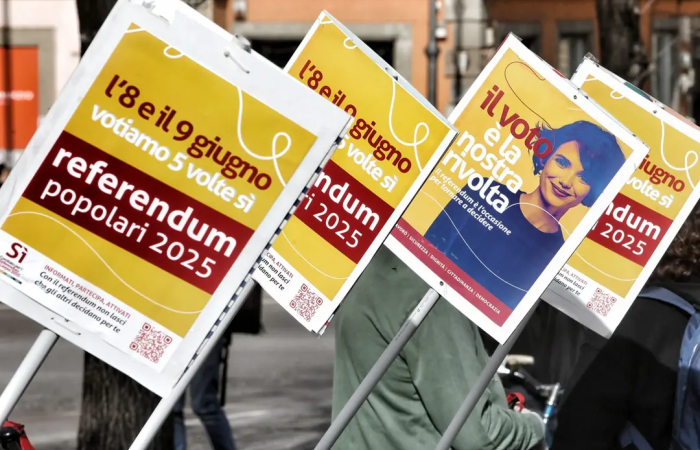
Italians go to vote on 8 and 9 June in a referendum that is dividing the nation and will help define "Who is Italian". Until the mid-19th century Italy was "a mere geographical expression", divided in small states and parts of it occupied by foreign powers. Eventually, the Italian language brought people together, and the Italian state as we know it emerged by 1871. In todays Italy, the question of who gets to be Italian is a sensitive one. Large numbers of migrants and refugees arrive in the country each year helped across the Mediterranean from North Africa by smuggling gangs. The national referendum on Sunday and Monday proposes halving the time required to apply for Italian citizenship. Cutting the wait from 10 years to five would bring this country in line with most others in Europe. The referendum was initiated by a citizens' initiative and is supported by civil society groups. But for such a referendum to be valid, 50% of all voters in Italy have to turn up. Giorgia Meloni, the country's hard-right prime minister, has announced she will boycott the vote, declaring the citizenship law already "excellent" and "very open". Other parties allied to her are calling on Italians to go to the beach instead of the polling station.
Editor's choice
News
African Union expresses concern over US president's new travel ban

African Union expresses concern over US president's new travel ban

On Wednesday (4 June), US President Donald Trump signed a new travel ban affecting 12 countries, including seven in Africa: Chad, the Republic of the Congo, Equatorial Guinea, Eritrea, Libya, Somalia and Sudan. Burundi, Sierra Leone and Togo also face partial restrictions. President Trump justified the ban as a national security measure aimed at protecting the United States from foreign threats. The ban is set to take effect on Monday (9 June).
Editor's choice
News
Transparency International condemns censorship of TV channels and intimidation of critical media in Georgia

Transparency International condemns censorship of TV channels and intimidation of critical media in Georgia

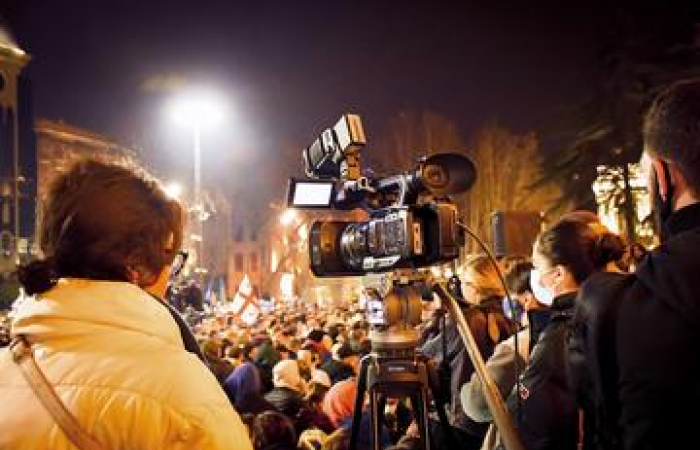
Transparency International has denounced censorship conducted by the ruling party of Georgia including attempts to intimidate critical media and suppress independent journalism in Georgia and called  for international support to defend Georgian democracy and media freedom. In a statement released on 4th June, Transparency International said independent media in Georgia must be able to ask critical questions and demand answers from the government and noted that the legal intimidation of critical broadcasters is in direct contradiction to both the Georgian Constitution and the country’s international obligations.
Editor's choice
News
Saudi Arabia wants to prevent new drama during Hajj pilgrimage with drones, among other measures

Saudi Arabia wants to prevent new drama during Hajj pilgrimage with drones, among other measures

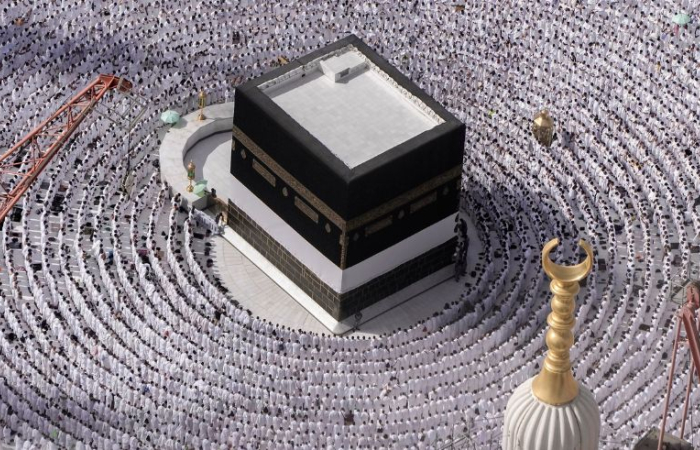
Today (4 June), more than 1.8 million Muslims began the Hajj pilgrimage to Mecca in Saudi Arabia. This holy pilgrimage presents one of the biggest logistical challenges for the country's authorities. This year, for the first time, the country is deploying drones and expanding the network of cooled roads to cope with the enormous crowds.
Editor's choice
News
Migration dispute topples Government coalition in the Netherlands

Migration dispute topples Government coalition in the Netherlands

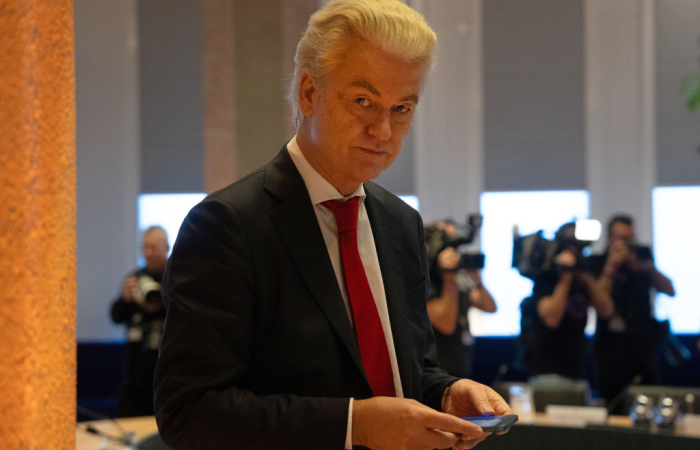
The Dutch government coalition has collapsed after far-right leader Geert Wilders pulled his party out of the ruling four-party coalition on Tuesday in a dispute over a crackdown on migration, triggering a political crisis just three weeks before the Netherlands is scheduled to host a summit of NATO leaders in The Hague. Wilders announced his decision in a message on X after a brief meeting in parliament of leaders of the four parties that make up the fractious administration. Prime Minister Dick Schoof called an emergency Cabinet meeting for the afternoon and new elections may be called for later this year.
Editor's choice
News
Conservative nationalist Nawrocki wins Polish presidential election

Conservative nationalist Nawrocki wins Polish presidential election

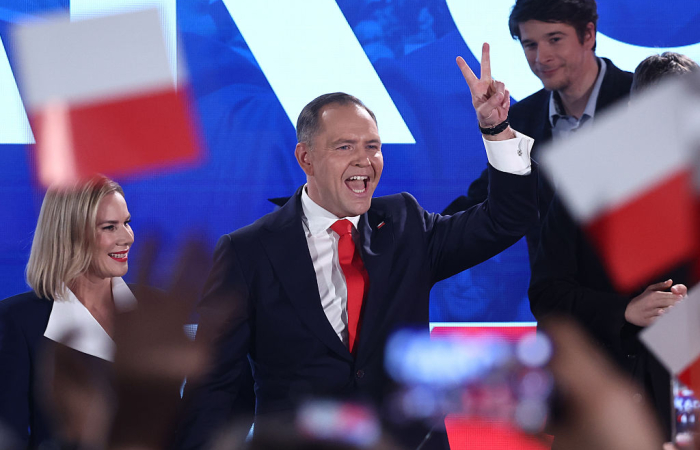
In Poland, every vote really counts. The election turned out to be an unprecedented neck-and-neck race. Conservative nationalist Karol Nawrocki won the election. With all votes counted, the politician, who is affiliated with the opposition Law and Justice (PiS) party, has been declared the winner by the Polish electoral commission.