Tension between Poland and Ukraine over proposed ban on Ukrainian nationalist flag

Relations between Warsaw and Kyiv are heading towards a rift following to a proposal by the Polish president to amend legislation banning symbols in Poland used by Ukrainian nationalists during WWII prohibiting the display of Nazi and communist flags and signs. President Karol Nawrocki said his proposed amendment to the law would lead to the banning of “Banderite symbols” such as the red-and-black flag used by the Ukrainian Insurgent Army (UPA) and the Stepan Bandera wing of the Organization of Ukrainian Nationalists (OUN). 

The UPA was responsible for the Volhynia Massacre, a series of mass killings of Poles between 1943 and 1945 in German-occupied Poland. As many as 100,000 Poles were killed in an area that is now in western Ukraine. 

Widely regarded as war criminal in Poland, Bandera is considered by many in Ukraine to be a national hero who fought for an independent Ukraine. President Nawrocki claimed this week that he believes the amendment would make it harder for Russia to sow discord between Poland and Ukraine using historical disagreements. 

He said: “In order to eliminate Russian propaganda and to place Polish-Ukrainian relations on a foundation of genuine partnership, mutual respect, and sensitivity, I believe that our draft legislation should include the clear message ‘Stop Banderism.’ 

“The Penal Code should treat Banderite symbols on the same level as those associated with German National Socialism—commonly known as Nazism—and Soviet Communism. At the same time, we should amend the Act on the Institute of National Remembrance – Commission for the Prosecution of Crimes against the Polish Nation, specifically with regard to the crimes committed by the OUN-UPA,” Nawrocki said. 

The amendment could add further pressure to Warsaw-Kyiv relations, already soured by Nawrocki’s decision on Monday 25 August to veto a bill that would have extended support for Ukrainian refugee children living in Poland. 

The veto was met with disapproval in Ukraine, prompting allegations that Nawrocki is hoping to make political capital by fueling public grievances against Ukrainians living in Poland.

An estimated 1.6 million Ukrainians moved to Poland after the war began. While they have been able to access Poland’s welfare system, they have also boosted, according to studies, the Polish economy. 

Responding to the news of the amendment, the Ukrainian government notified Warsaw that should the proposal become law it would react, the European Pravda news website reported on Monday, citing a Ukrainian diplomatic source. “We are analyzing the legal dimension of the decisions made [in Warsaw] and their possible impact on the situation of Ukrainian citizens in Poland,” the source said. 

At the same time, the source added that Kyiv is grateful to Warsaw for the support it has provided to Ukrainian citizens, and that it believes their rights will be protected to the same extent found in other European countries. But it added: “At the same time, any politicized decisions about allegedly equating Ukrainian symbols with Nazi and Communist ones may provoke an increase in negative sentiment in Ukrainian society and will require a response from Ukraine.” 

Nawrocki, a historian by background, has repeatedly said that while Poland must support Ukraine  in its struggle against Russian imperialism, it cannot be expected to come to terms with Ukraine’s veneration of an organization responsible for the deaths of thousands of Poles. He said that Warsaw’s support for Kyiv’s future NATO and EU integration should be contingent on Ukraine coming to terms with its dark past.
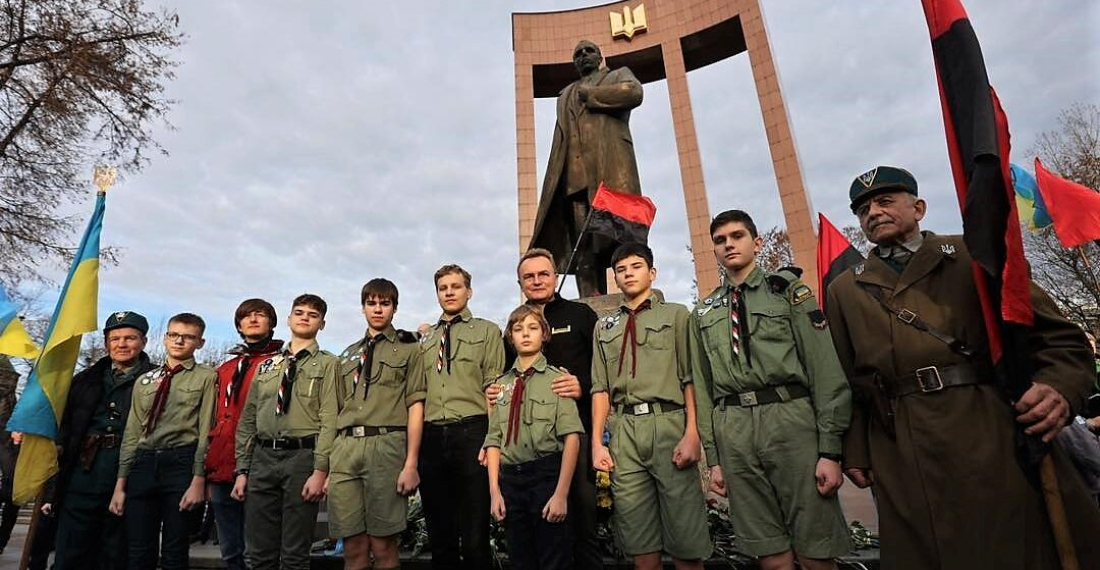
Source: commonspace.eu with TVP World and agencies. Photo: A commemoration of wartime nationalist leader Bandera, source: Андрій Садовий/Facebook

Related articles

Editor's choice
News
UAE says it will withdraw from Yemen, but division emerges in Yemeni presidential council

UAE says it will withdraw from Yemen, but division emerges in Yemeni presidential council

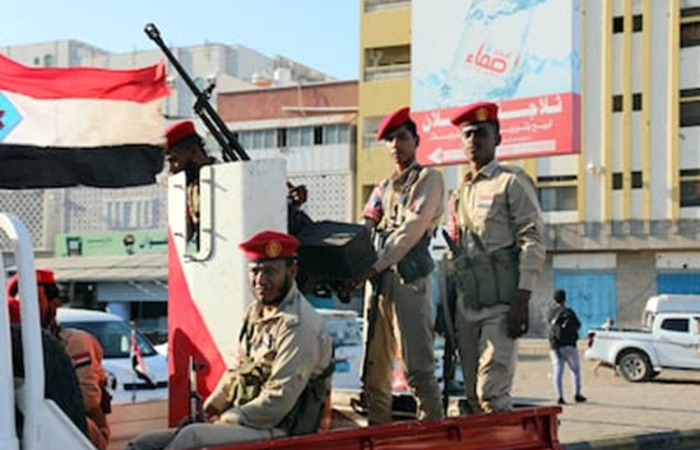
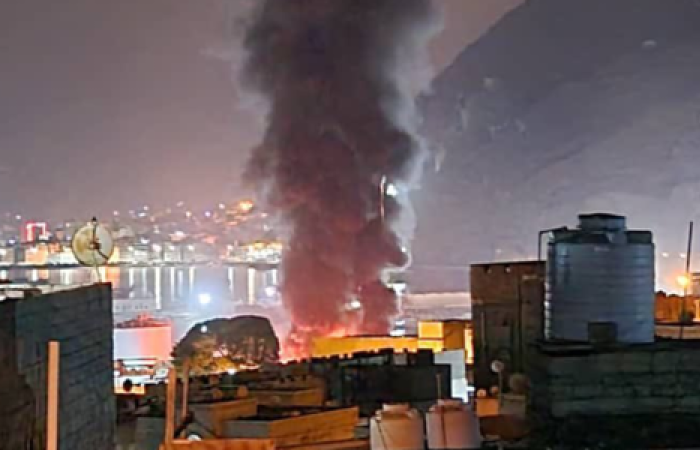
In a move seen as an attempt to de-escalate a crises with Saudi Arabia, the United Arab Emirates, on Tuesday (30th December) announced that it was heeding a call to withdraw its troops from Southern Yemen. UAE says that its presence included counter-terrorism teams that were crucial in fighting against Islamist groups. UAE sources said that parts of Yemen not controlled by the Houthis have had Al Qaeda in the Arab Peninsula (AQAP) operatives using the territory to launch attacks on Europe, the US and Middle East. UAE teams have co-ordinated with American and British special forces and intelligence. The sources added that Emirati forces and their Yemeni allies also helped reverse Houthi gains in the south. including the liberation of Aden port. The small UAE contingent has remained in place since the UAE withdrew most of its military personnel in 2019. The leading English-language newspaper in Abu Dhabi, The National, said that the main UAE force was based at Riyan Mukalla International Airport, with access to fixed-wing aircraft and helicopters, but also operated smaller contingents in the port town Balhaf and Shabwa. "It is understood it also flew a number of drones from the airbase that were able to track terrorist movements, pass information back to its allies and assisted special forces' missions." Meanwhile a division has emerged in Yemen's presidential council after four members denounced what they called the 'unilateral decisions' by the chairman. Four of Yemen’s eight Presidential Leadership Council members on Tuesday denounced an announcement by the council’s chairman accusing him of breaching the governing agreement. Tension between Yemeni leaders has been rising for weeks, underscoring the fragility of the country's already fractured political landscape and further complicating efforts to confront the Iran-backed Houthi rebels. The latest rift took an unprecedented turn on Tuesday morning, marked by a Saudi-led coalition “limited operation” striking combat vehicles Riyadh linked to the Southern Transitional Council, which has three members in the PLC. The PLC Chairman, Rashad al Alimi, on Tuesday said that he was seeking to cancel the joint defence agreement with the UAE. “What has been issued … constitutes a clear violation of the Declaration of the Transfer of Power [agreement], which explicitly stipulates that the Presidential Leadership Council is a collective body whose decisions are taken by consensus, or by majority when consensus is not possible,” the statement by the four members said. “It does not, under any circumstances, allow for unilateral decision-making on sovereign, military, or major political matters." The statement was signed by STC chief Aidarous Al Zubaidi, Faraj Al Bahsani, Tariq Saleh and Abu Zaraa al Muharrami. (click the picture to read the full article).

Popular

Editor's choice
News
UAE says it will withdraw from Yemen, but division emerges in Yemeni presidential council

UAE says it will withdraw from Yemen, but division emerges in Yemeni presidential council

In a move seen as an attempt to de-escalate a crises with Saudi Arabia, the United Arab Emirates, on Tuesday (30th December) announced that it was heeding a call to withdraw its troops from Southern Yemen. UAE says that its presence included counter-terrorism teams that were crucial in fighting against Islamist groups. UAE sources said that parts of Yemen not controlled by the Houthis have had Al Qaeda in the Arab Peninsula (AQAP) operatives using the territory to launch attacks on Europe, the US and Middle East. UAE teams have co-ordinated with American and British special forces and intelligence. The sources added that Emirati forces and their Yemeni allies also helped reverse Houthi gains in the south. including the liberation of Aden port. The small UAE contingent has remained in place since the UAE withdrew most of its military personnel in 2019. The leading English-language newspaper in Abu Dhabi, The National, said that the main UAE force was based at Riyan Mukalla International Airport, with access to fixed-wing aircraft and helicopters, but also operated smaller contingents in the port town Balhaf and Shabwa. "It is understood it also flew a number of drones from the airbase that were able to track terrorist movements, pass information back to its allies and assisted special forces' missions." Meanwhile a division has emerged in Yemen's presidential council after four members denounced what they called the 'unilateral decisions' by the chairman. Four of Yemen’s eight Presidential Leadership Council members on Tuesday denounced an announcement by the council’s chairman accusing him of breaching the governing agreement. Tension between Yemeni leaders has been rising for weeks, underscoring the fragility of the country's already fractured political landscape and further complicating efforts to confront the Iran-backed Houthi rebels. The latest rift took an unprecedented turn on Tuesday morning, marked by a Saudi-led coalition “limited operation” striking combat vehicles Riyadh linked to the Southern Transitional Council, which has three members in the PLC. The PLC Chairman, Rashad al Alimi, on Tuesday said that he was seeking to cancel the joint defence agreement with the UAE. “What has been issued … constitutes a clear violation of the Declaration of the Transfer of Power [agreement], which explicitly stipulates that the Presidential Leadership Council is a collective body whose decisions are taken by consensus, or by majority when consensus is not possible,” the statement by the four members said. “It does not, under any circumstances, allow for unilateral decision-making on sovereign, military, or major political matters." The statement was signed by STC chief Aidarous Al Zubaidi, Faraj Al Bahsani, Tariq Saleh and Abu Zaraa al Muharrami. (click the picture to read the full article).