


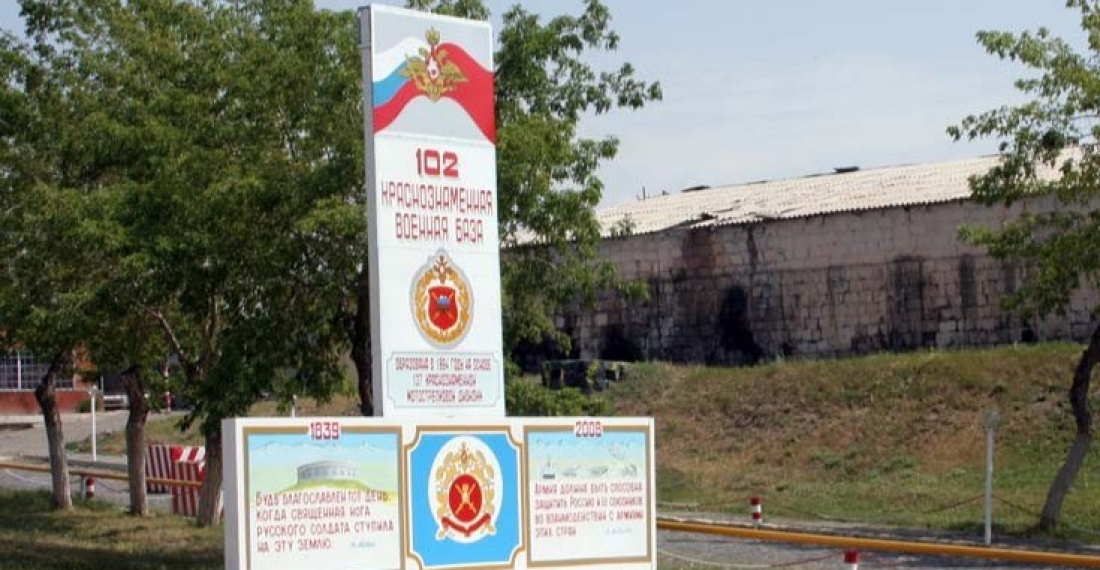
While Armenia and Azerbaijan, the two South Caucasus nations, are progressing towards a peace agreement after more than three decades of hostility, their tension with Russia is only increasing. Russia has been losing its leverage in the region for a while, but the normalization process between Armenia and Azerbaijan would put the final nail in the coffin of Russian hegemony in the region, opening it up for wider international trade connectivity. Two options lie before Russia: either to sabotage the process or to accept its consequences and explore the benefits of bilateral cooperation, working towards integrating itself into the emerging multilateral frameworks. The current signals from Russia do not indicate that the latter is an option for the Kremlin. By pressuring both nations and using different levers, Russia seemingly seeks to reassert its now‑waning hegemony in the region. In this context, the recent leak from Ukraine about the military build‑up at the Russian base in Gyumri, Armenia, is particularly meaningful. While Russia desperately needs its forces for the protracted war in Ukraine, the build‑up in Gyumri—now widely circulated in Russian and Armenian media—suggests possible large‑scale sabotage scenarios Russia might pursue in the region.
The first scenario concerns the situation inside Armenia. With declining popularity but a fierce fight against pro‑Russian actors in the country, Armenian PM Pashinyan is heading into elections next year. Without suppressing much of the opposition and lacking strong Western support—which the EU has recently hesitated to provide—the incumbent coalition might risk defeat in the upcoming elections. There is a high degree of uncertainty regarding the results, which Russia actively seeks to exploit. Should the results be inconclusive and the opposition take to the streets, creating chaos, Russia may seek to deploy its forces from Gyumri under the banner of the Collective Security Treaty Organization (CSTO) to orchestrate a regime change in Armenia. The CSTO’s involvement in regime matters already has a precedent in Kazakhstan in January 2022, when it intervened to support the incumbent government. Russia could claim Western intervention in Armenia and argue about an external threat, triggering CSTO involvement.
However, such intervention is not automatic. A request must come from the head of state. During elections, the PM remains in authority. Yet, if chaos leads to the government’s resignation under pressure or if the PM and first deputy PM are incapacitated via the Constitutional Court, a highly ambiguous political situation would emerge, placing the President—a weaker figure—under Russian pressure to request CSTO intervention. The process does not have to strictly follow the Constitution; Russia needs only to create chaos and legal ambiguity to move its forces. Moreover, Russia would also need the other CSTO member states—Belarus, Kazakhstan, Kyrgyzstan, and Tajikistan—to agree. Here, Kazakhstan’s position would be particularly significant, as the decisions of the two smaller Central Asian states usually follow its lead, while Belarus is likely to align with Russia. Minsk views CSTO intervention as a legitimate tool—possibly also useful for any future crisis in Belarus. In this scenario, Kazakhstan may face pressure alone. The other two autocrats in Central Asia might also see a benefit in strengthening the precedent of CSTO intervention. Alternatively, Russia may act under the mutual security treaty between the two sides—the Treaty on Friendship, Cooperation, and Mutual Assistance (1997). Again, there does not need to be a perfect legal basis: Russia could simply act and subsequently ask stakeholders to accept it, retroactively redressing the move and living with the violation of the legal framework. After installing a puppet regime, Russian forces could simply return to their barracks in Gyumri - a Haiti formula.
The second sabotage scenario concerns the Zangezur Corridor. By claiming foreign intervention—if Armenia agrees to lease control of the corridor to an American or Western company—and vaguely interpreting the legal basis for it, namely the CSTO treaty and the 9 November 2020 trilateral declaration (which gives control of the corridor to Russia’s FSB), Moscow could move its forces into the Syunik region. This would leave the Armenian government facing a stark choice: reject it and treat the situation as a Russian invasion—hard to endure politically—or agree to retroactively re‑dress it. Russian border guards in Syunik/Agarak were withdrawn in 2024 per Armenian government agreement, though troop command structures remain based at Gyumri. This scenario would resemble November 2020, when Russian forces deployed to Nagorno‑Karabakh almost overnight: a call from Moscow, and the troops are already on the way.
These scenarios are not unlikely simply because of the lack of a clear legal basis. As recent years have taught us, the absence of legality does not prevent Russia from brutally violating the sovereignty of nations. Moscow often chooses to fight every battle as if it were its last. Both scenarios would send a chilly message to Azerbaijan. Hence, rather than pressuring Azerbaijan—which is backed by Türkiye and is far more consolidated and resilient than Armenia—
While Armenia and Azerbaijan, the two South Caucasus nations, are progressing towards a peace agreement after more than three decades of hostility, their tension with Russia is only increasing. Russia has been losing its leverage in the region for a while, but the normalization process between Armenia and Azerbaijan would put the final nail in the coffin of Russian hegemony in the region, opening it up for wider international trade connectivity. Two options lie before Russia: either to sabotage the process or to accept its consequences and explore the benefits of bilateral cooperation, working towards integrating itself into the emerging multilateral frameworks. The current signals from Russia do not indicate that the latter is an option for the Kremlin. By pressuring both nations and using different levers, Russia seemingly seeks to reassert its now‑waning hegemony in the region. In this context, the recent leak from Ukraine about the military build‑up at the Russian base in Gyumri, Armenia, is particularly meaningful. While Russia desperately needs its forces for the protracted war in Ukraine, the build‑up in Gyumri—now widely circulated in Russian and Armenian media—suggests possible large‑scale sabotage scenarios Russia might pursue in the region.
The first scenario concerns the situation inside Armenia. With declining popularity but a fierce fight against pro‑Russian actors in the country, Armenian PM Pashinyan is heading into elections next year. Without suppressing much of the opposition and lacking strong Western support—which the EU has recently hesitated to provide—the incumbent coalition might risk defeat in the upcoming elections. There is a high degree of uncertainty regarding the results, which Russia actively seeks to exploit. Should the results be inconclusive and the opposition take to the streets, creating chaos, Russia may seek to deploy its forces from Gyumri under the banner of the Collective Security Treaty Organization (CSTO) to orchestrate a regime change in Armenia. The CSTO’s involvement in regime matters already has a precedent in Kazakhstan in January 2022, when it intervened to support the incumbent government. Russia could claim Western intervention in Armenia and argue about an external threat, triggering CSTO involvement.
However, such intervention is not automatic. A request must come from the head of state. During elections, the PM remains in authority. Yet, if chaos leads to the government’s resignation under pressure or if the PM and first deputy PM are incapacitated via the Constitutional Court, a highly ambiguous political situation would emerge, placing the President—a weaker figure—under Russian pressure to request CSTO intervention. The process does not have to strictly follow the Constitution; Russia needs only to create chaos and legal ambiguity to move its forces. Moreover, Russia would also need the other CSTO member states—Belarus, Kazakhstan, Kyrgyzstan, and Tajikistan—to agree. Here, Kazakhstan’s position would be particularly significant, as the decisions of the two smaller Central Asian states usually follow its lead, while Belarus is likely to align with Russia. Minsk views CSTO intervention as a legitimate tool—possibly also useful for any future crisis in Belarus. In this scenario, Kazakhstan may face pressure alone. The other two autocrats in Central Asia might also see a benefit in strengthening the precedent of CSTO intervention. Alternatively, Russia may act under the mutual security treaty between the two sides—the Treaty on Friendship, Cooperation, and Mutual Assistance (1997). Again, there does not need to be a perfect legal basis: Russia could simply act and subsequently ask stakeholders to accept it, retroactively redressing the move and living with the violation of the legal framework. After installing a puppet regime, Russian forces could simply return to their barracks in Gyumri - a Haiti formula.
The second sabotage scenario concerns the Zangezur Corridor. By claiming foreign intervention—if Armenia agrees to lease control of the corridor to an American or Western company—and vaguely interpreting the legal basis for it, namely the CSTO treaty and the 9 November 2020 trilateral declaration (which gives control of the corridor to Russia’s FSB), Moscow could move its forces into the Syunik region. This would leave the Armenian government facing a stark choice: reject it and treat the situation as a Russian invasion—hard to endure politically—or agree to retroactively re‑dress it. Russian border guards in Syunik/Agarak were withdrawn in 2024 per Armenian government agreement, though troop command structures remain based at Gyumri. This scenario would resemble November 2020, when Russian forces deployed to Nagorno‑Karabakh almost overnight: a call from Moscow, and the troops are already on the way.
These scenarios are not unlikely simply because of the lack of a clear legal basis. As recent years have taught us, the absence of legality does not prevent Russia from brutally violating the sovereignty of nations. Moscow often chooses to fight every battle as if it were its last. Both scenarios would send a chilly message to Azerbaijan. Hence, rather than pressuring Azerbaijan—which is backed by Türkiye and is far more consolidated and resilient than Armenia—Russia may target Armenia as the weakest link in the South Caucasus.
source: Dr Murad Nasibov is the Editor of Eurasian Geopolitics Reader and is based at Justus Liebig University Giessen in Germany. This article appeared first in Eurasian Geopolitics Reader on 6 August 2025.
photo: The Russian military base, in Gyumri, Armenia.
The views expressed in opinion pieces and commentaries do not necessarily reflect the position of commonspace.eu or its partners



