Region

Gulf and Red Sea Regions

Stories under this heading cover the Gulf and the Red Sea regions, including the Arabian Peninsula, Iran and the countries bordering the Red Sea.

Editor's choice
News
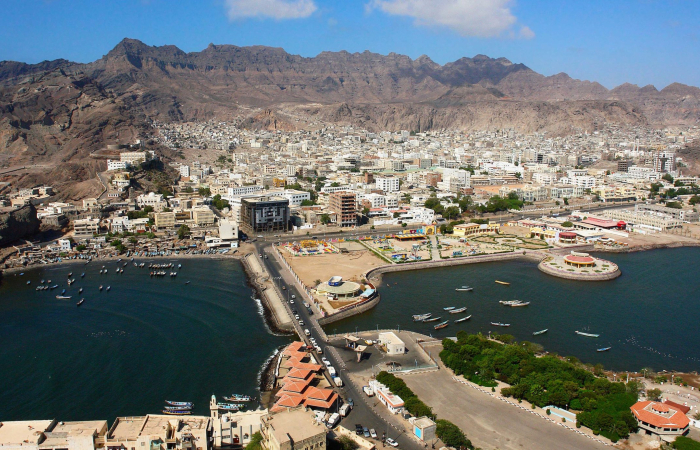
Aden under curfew, as problem in Yemen's south deepens

Aden under curfew, as problem in Yemen's south deepens

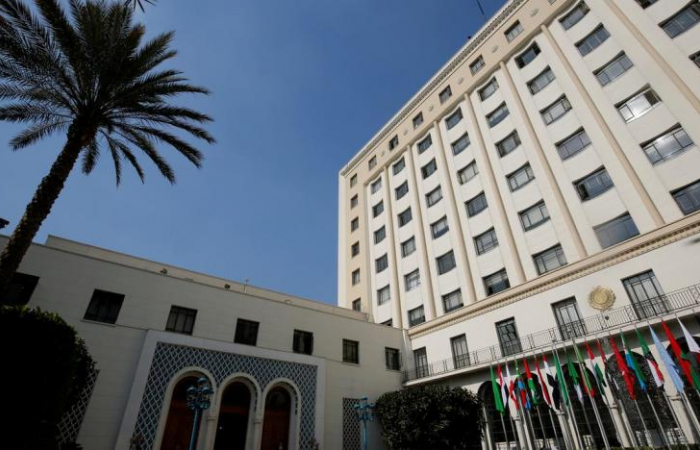
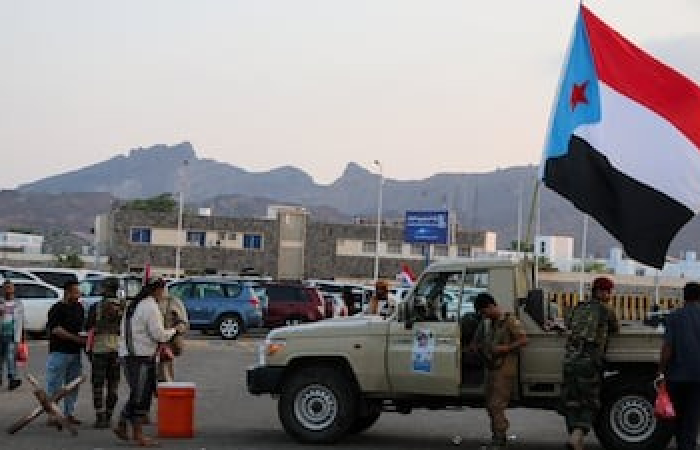
The port city of Aden, in Yemen's south, has been put under curfew, as the rift in the country between  the Saudi led coalition which  backs Yemen's presidential governing council, and the southern forces led by the Southern Transitional Council (STC), deepens. Abdul Rahman al-Mahrami, a member of the Yemeni Presidential Governing Council and commander of the al-Amalik brigades, has ordered a curfew in the temporary capital, Aden, "to maintain security". "A curfew has been imposed throughout Aden Governorate from 9:00 p.m. to 6:00 a.m., in accordance with the instructions of Commander Abdul Rahman al-Mahrami, a member of the Presidential Management Council," the statement said. It states that only security and military personnel, as well as medical and technical teams with approved permits, will be allowed to move in the area during these hours. Yemen's presidential council, which is backed by Saudi Arabia and which already is in a struggle with the Houthi Movement in the north of the country who also occupy the capital Sanaa, two days ago issued an order for the arrest of the head of the Southern Transitional Council (STC),, Aidarous al Zubaidi. The STC have wide support among people in the South, and advocate that South Yemen restores its independence. The coalition warned of further escalation in Aden, long regarded as an STC stronghold, as the Presidential Leadership Council (PLC) chief accused STC leader Aidarous Al Zubaidi of “high treason” and announced the revocation of his membership in the governing body. The moves mark a sharp escalation in tensions within the anti-Houthi camp, despite National Shield Forces, rivals of the STC and former allies, having recently retaken control of Hadhramaut and Mahra from southern fighters. The STC’s takeover of the two regions last month angered Saudi Arabia and contributed to igniting the current internal conflict. (click the picture to read more)
Filter archive

Publication date
Editor's choice
News
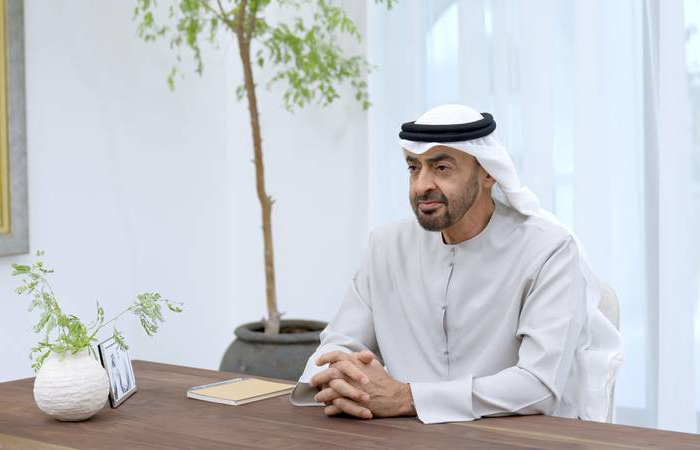
Germany seals major energy deal with the UAE

Germany seals major energy deal with the UAE

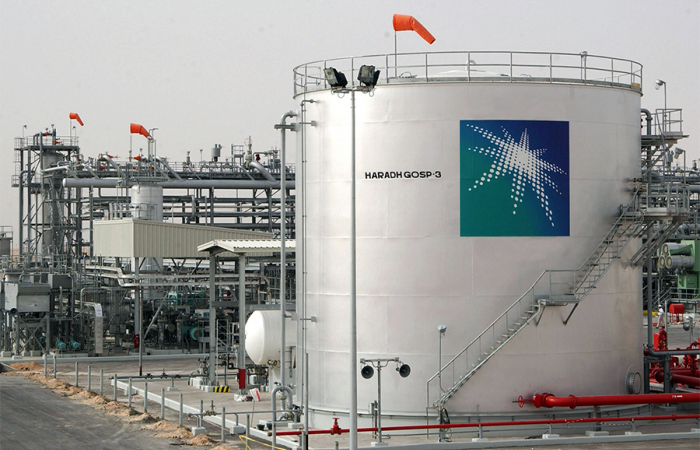
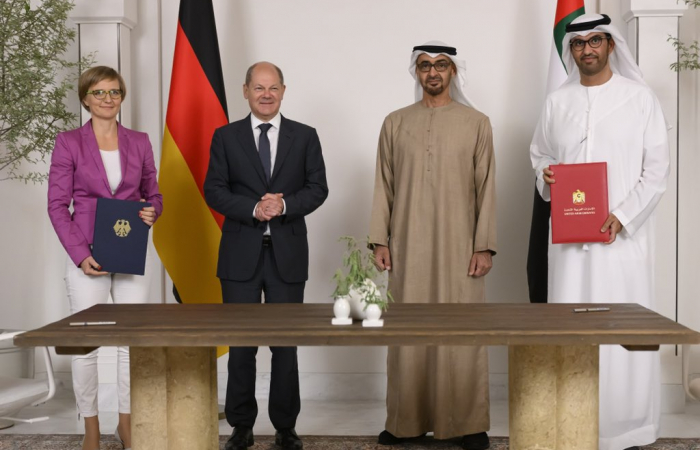
The United Arab Emirates (UAE) and Germany signed a "landmark agreement" on Sunday (25 September) aimed at accelerating joint efforts to boost energy security, decarbonisation and combat climate change. The major deal was struck in the presence of UAE President, Sheikh Mohammed bin Zayed, and German Chancellor Olaf Scholz, who is currently visiting the Emirates. The deal secures the delivery of 137,000 cubic meters of LNG to be sent to the new LNG terminal in Brunsbüttel near Hamburg in December. According to the dpa news agency, the amount included in the first delivery equates to around 0.95 billion kilowatt hours of electricity. However, the LNG deal can only make up for a small part of the 56.3 billion cubic meters of gas that Germany received from Russia in 2020.
Editor's choice
News
Kazakhstan works to expand co-operation with Gulf countries during Tokayev's visit to Saudi Arabia

Kazakhstan works to expand co-operation with Gulf countries during Tokayev's visit to Saudi Arabia

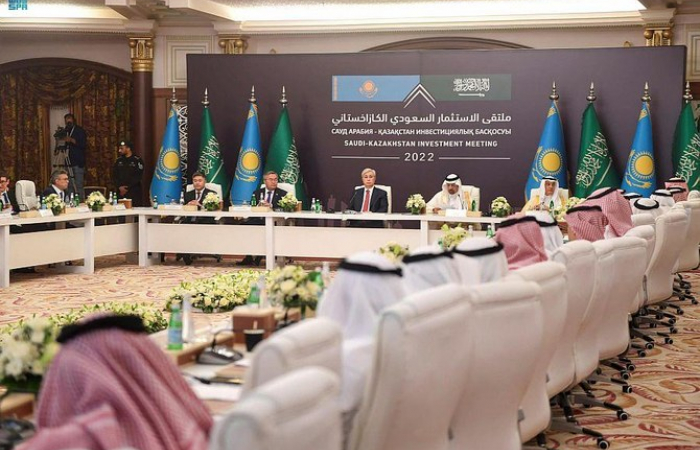
Kazakh president, Kassym Jomart Tokayev, on Sunday (24 July) concluded an official visit to Saudi Arabia during which he sought to strengthen relations with the Kingdom and other Gulf countries Saudi Arabia and Kazakhstan will enhance mutual trade and investment in several sectors, according to a joint statement carried by the Saudi Press Agency at the end of the visit. This cooperation includes areas related to petrochemicals, renewable energy, mining, agriculture, tourism, transport and logistics. Other agreements cover information technology, digital transformation, financial services and space, SPA reported. During his visit President Kassym-Jomart Tokayev held wide-ranging talks with Saudi Crown Prince Mohammed bin Salman. The two countries signed several agreements and memoranda of cooperation in sports, media, medicine and finance. The also agreed to enhance cooperation in higher education, research and innovation.
Editor's choice
News
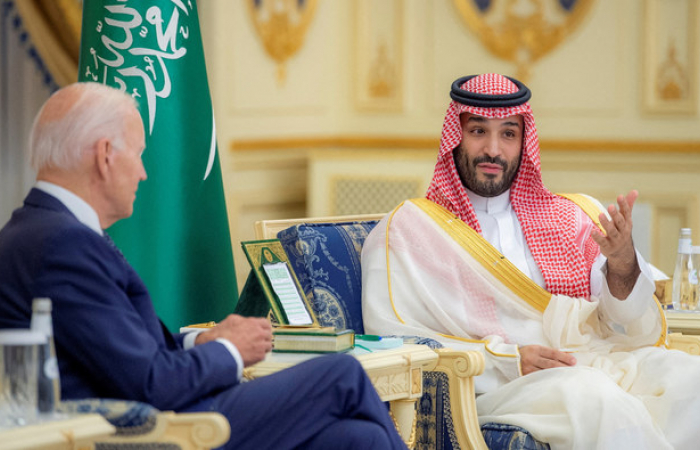
Biden's visit to Saudi Arabia opens a new era in relations

Biden's visit to Saudi Arabia opens a new era in relations

It is not a coincidence that on his first trip to the Middle East since becoming US president, Joe Biden is visiting Saudi Arabia. Together with relations with Israel, relations with the Kingdom have been the cornerstone of US policy in the region. Over the last two years these relations were tested with trust between the two sides falling to its lowest level for decades. The visit appears to have succeeded in bringing relations back to a qualitatively high level. On Friday (15 July) Biden met King Salman and Crown Prince Mohammed bin Salman. On Saturday he is due to meet with other Arab leaders at a summit that will bring together the leaders of the sic GCC countries, together with Egypt, Jordan and Iraq. A joint communique published by the Saudi Press Agency early on Saturday emphasised that the “US-Saudi partnership has been a cornerstone of regional security over decades, and affirmed that the two countries share a vision of a more secure, stable, and prosperous region, interconnected with the world,”  The document highlighted various areas of cooperation from energy security to space exploration. In the area of defense, Biden reaffirmed the US’ commitment to Saudi Arabia’s security and territorial defense, and “facilitating the Kingdom’s ability to obtain necessary capabilities to defend its people and territory against external threats” The statement said that US troops will depart from Tiran Island paving the way for it to be developed. Additionally, overflights of the Kingdom’s airspace was expanded on Friday, which the US welcomed.
Editor's choice
Opinion
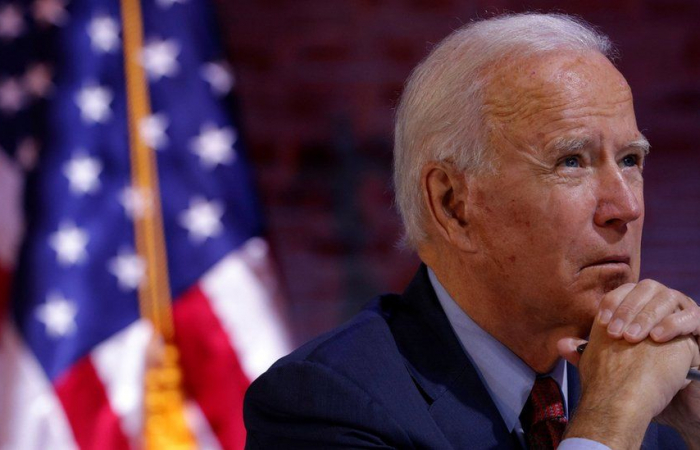
Biden's visit to Saudi Arabia will open a new era in relations with the Middle East

Biden's visit to Saudi Arabia will open a new era in relations with the Middle East

The president of the United States, Joe Biden, will this week visit the Middle East for what promises to be the launch of a new era in US relations with the region. Commonspace.eu will be following the visit and reporting on its importance. Late on Saturday, President Biden published an article on the Washington Post, outlining the reasons for his visit, and why it is so important. We reproduce it here in full. In the article, Biden argues that a more secure and integrated Middle East benefits Americans in many ways. "Its waterways are essential to global trade and the supply chains we rely on. Its energy resources are vital for mitigating the impact on global supplies of Russia’s war in Ukraine." The president states "We have to counter Russia’s aggression, put ourselves in the best possible position to outcompete China, and work for greater stability in a consequential region of the world. To do these things, we have to engage directly with countries that can impact those outcomes. Saudi Arabia is one of them, and when I meet with Saudi leaders on Friday, my aim will be to strengthen a strategic partnership going forward that’s based on mutual interests and responsibilities, while also holding true to fundamental American values."