Region

Global

Stories in this section cover various issues and stories from all around the world.

Editor's choice
News
NATO Chief says war is on Europe's doorstep, and warns against complacency

NATO Chief says war is on Europe's doorstep, and warns against complacency

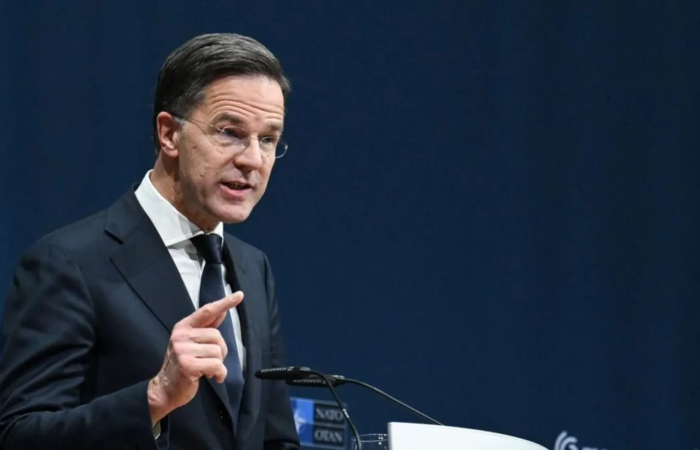
Russia could attack a Nato country within the next five years, the Secretary General of NATO, Mark Rutte, said in a stark new warning. "Nato's own defences can hold for now," Rutte warned in Berlin, but conflict was "next door" to Europe and he feared "too many are quietly complacent, and too many don't feel the urgency, too many believe that time is on our side. "Russia is already escalating its covert campaign against our societies," Rutte said in a speech in Germany. "We must be prepared for the scale of war our grandparents or great-grandparents endured." Earlier this month, Russia's President Vladimir Putin said his country was not planning to go to war with Europe, but it was ready "right now" if Europe wanted to - or started a war. But similar reassurances were given by Moscow in 2022, just before 200,000 Russian troops crossed the border and invaded Ukraine. Putin has accused European countries of hindering US efforts to bring peace in Ukraine - a reference to the role Ukraine's European allies have recently played in trying to change a US peace plan to end the war, whose initial draft was seen as favouring Russia. But Putin was not sincere, Nato's secretary-general said in the German capital, Berlin. Supporting Ukraine, he added, was a guarantee for European security. "Just imagine if Putin got his way; Ukraine under the boot of Russian occupation, his forces pressing against a longer border with Nato, and the significantly increased risk of an armed attack against us." Russia's economy has been on a war footing for more than three years now - its factories churn out ever more supplies of drones, missiles and artillery shells. According to a recent report by the Kiel Institute for the World Economy, Russia has been producing each month around 150 tanks, 550 infantry fighting vehicles, 120 Lancet drones and more than 50 artillery pieces. The UK, and most of its Western allies, are simply not anywhere near this point. Analysts say it would take years for Western Europe's factories to come close to matching Russia's mass-production of weapons. "Allied defence spending and production must rise rapidly, our armed forces must have what they need to keep us safe," the Nato chief said.
Editor's choice
News
Thai-Cambodia border clashes enter fourth day

Thai-Cambodia border clashes enter fourth day

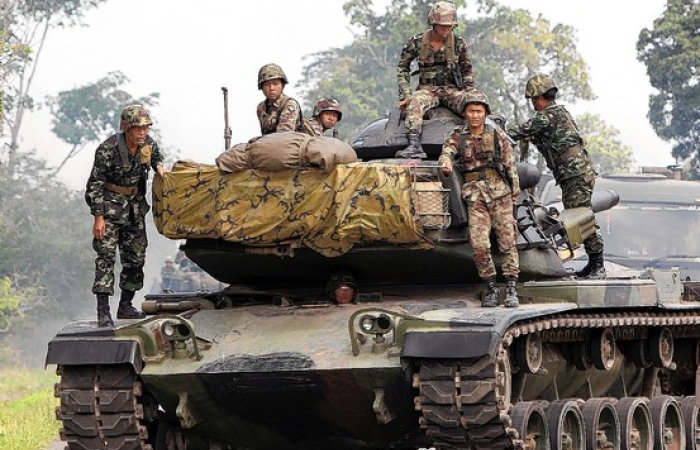
Renewed fighting between Thailand and Cambodia has entered its fourth day, with both sides accusing one another of violating international law, as they await a promised phone call from United States President Donald Trump. Cambodia’s Ministry of Defence accused Thailand’s military of carrying out numerous attacks within the country in the early hours of Thursday morning, including deploying tanks and artillery to strike targets in the country’s Pursat, Banteay Meanchey, and Oddar Meanchey provinces. In one such attack, Cambodia accused Thai soldiers of violating international humanitarian law by firing on civilians in Prey Chan village in Banteay Meanchey province. In another, it accused Thai forces of shelling “into Khnar Temple area”, and said Thai forces had also “fired artillery and support fire into the O’Smach area”. “Cambodia urges that Thailand immediately stop all hostile activities and withdraw its forces from Cambodia’s territorial integrity, and avoid acts of aggression that threaten peace and stability in the region,” the Defence Ministry said. Clashes took place on Wednesday at more than a dozen locations along the contested colonial-era demarcated 817-kilometre (508-mile) Thai-Cambodian border, with some of the most intense fighting being reported since a five-day battle in July, which saw dozens killed on both sides. Cambodia’s Ministry of the Interior said homes, schools, roads, Buddhist pagodas and ancient temples had been damaged by “Thailand’s intensified shelling and F-16 air strikes targeting villages and civilian population centres up to 30km [18.6 miles] inside Cambodian territory”. (click the image to read the full story).

Filter archive

Publication date
Editor's choice
Analysis
Isolated

Isolated

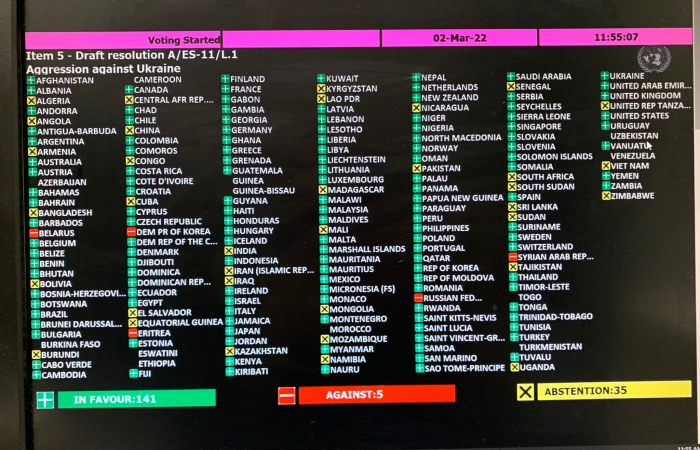
In a historic vote in the United Nations General Assembly condemning Russian aggression against Ukraine on Wednesday (2 March), Putin's Russia found itself isolated from the rest of the international community, with only North Korea, Belarus, Eritrea and Syria supporting its position in the 193 member world body. 141 countries voted for the resolution, 5 voted against and 35 abstained. 12 countries were absent. The vote was a stark revelation of Russia's isolation in the international community as it pursues its aggression against Ukraine. In a similar situation in 2014, when Russia annexed Crimea, a UN General Assembly resolution condemning the move received the support of 100 countries. This time the number was up by 41 countries, sending a resounding diplomatic message. The number of abstentions in 2014 was 58, compared to 35 this time. 24 countries were absent in 2014, this time only 12. Those supporting the Russian position in 2014 were 11, this time the number is down to 5.
Editor's choice
Commentary
A bad day for UN as Russia vetoes Security Council resolution; China, India and UAE abstain

A bad day for UN as Russia vetoes Security Council resolution; China, India and UAE abstain

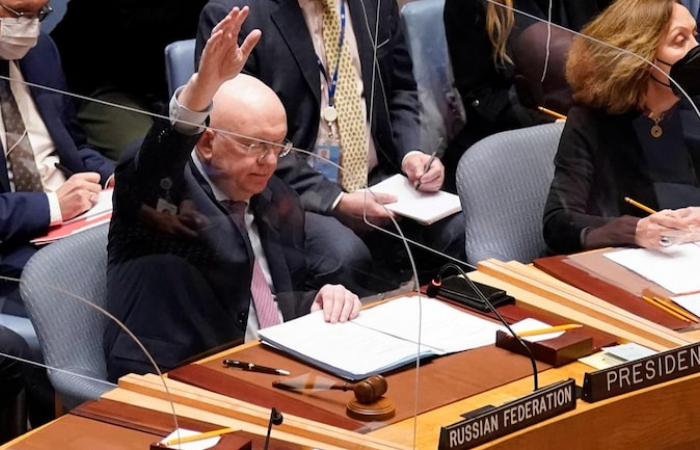
For those who are believers in multilateralism and a rules based international system last night's developments in the UN Security Council were a dark and disappointing moment. The Council considered a resolution put forward by more than sixty UN member states, which strongly condemned Russia’s invasion of Ukraine and called on Moscow to withdraw its troops immediately and provide safe access for humanitarian relief work. Russia, which has veto power as one of five permanent members of the council, voted against it and vetoed it as was expected. Eleven countries voted in favour. There was disappointment that three countries - China, India and UAE - abstained.
Editor's choice
Opinion
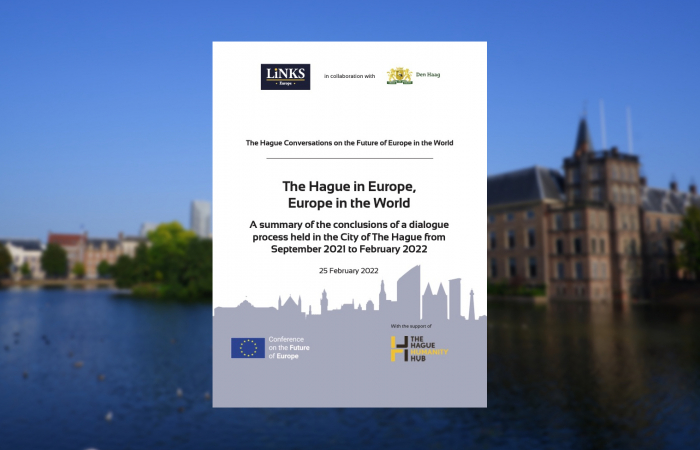
Read the report: 'The Hague in Europe, Europe in the World'

Read the report: 'The Hague in Europe, Europe in the World'

The Hague Conversations on the future of Europe in the World was a series of ten activities organised by LINKS Europe foundation, in association with the City of The Hague and with the support of the Hague Humanity Hub. The events were mostly held in person, with some also held online or in hybrid format, from September 2021 to February 2022 as part of the “Conference on the future of Europe” process. Read the full report here.
Editor's choice
News
Updated: Russia recognises Ukrainian breakaway regions as independent countries

Updated: Russia recognises Ukrainian breakaway regions as independent countries

Russia has recognised the breakaway Ukrainian regions of Donetsk and Lugansk as independent countries and signed friendship and co-operation agreements with them. Just before, Russian president Vladimir Putin in a long and agitated television address to the nation appeared to question the very existence of the Ukrainian state, lambasted the west for its policy towards Russia, accused the Ukrainian government of genocide in the Donbass region and announced the recognition of the two separatist entities.
Editor's choice
News
Putin has taken the final decision to invade Ukraine- the target is Kyiv

Putin has taken the final decision to invade Ukraine- the target is Kyiv

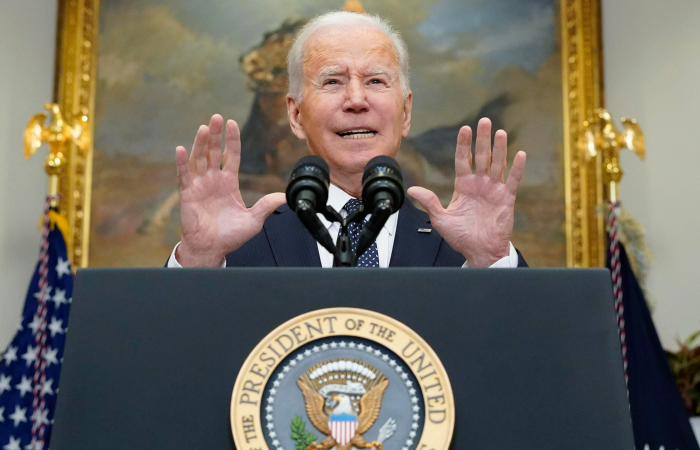
US president Joe Biden said on Friday evening (18 February) that Russian president Vladimir Putin has taken the final decision to invade Ukraine and that the objective is to occupy the Ukrainian capital, Kyiv. Speaking in a televised message from the White House, Biden said that his assessment was based on US intelligence information