


Editor's choice
Opinion
Opinion: The future of the China-US-Russia triangle after Pelosi's visit to Taiwan

Opinion: The future of the China-US-Russia triangle after Pelosi's visit to Taiwan

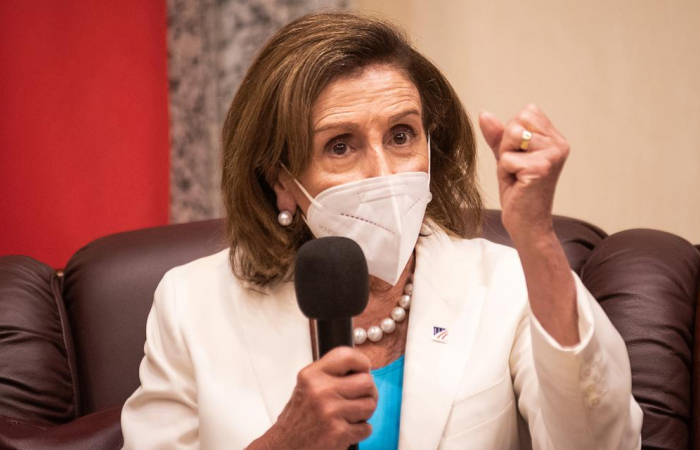
Since February 24, 2022, the international community's focus was concentrated entirely on the war in Ukraine and the growing Russia – West confrontation. It seemed that nothing could change the situation until the end of hostilities in Ukraine. However, on August 2 and 3, almost everyone’s attention shifted from Ukraine to Taiwan. As the Speaker of the US House of Representatives, Nancy Pelosi, stated her intention to visit Taiwan, up to half a million people were watching the trajectory of her plane on air flight tracking sites. The negative reaction of China, including the warning of President Xi during his conversation with President Biden that those who played with fire would be perished by it, created hype around this visit. Many were discussing the possibility of Chinese military jets closing the airspace over Taiwan and preventing Pelosi’s plane from landing in Taiwan, while some enthusiasts were even contemplating the possibility of a US-China direct military clash. As Pelosi landed in Taiwan and met with the Taiwanese President, the global social media was full of amateur assessments about the strategic victory of the US and the confirmation of the US global hegemony. However, as the dust settles down, and information noise and manipulation eventually decreases, a more serious assessment is needed to understand the real consequences of this visit.
Editor's choice
News
Israel recognises Somaliland, opening a pandora's box in Africa

Israel recognises Somaliland, opening a pandora's box in Africa

Israel ‍has recognized Somaliland as an "independent and sovereign state," Israeli Prime Minister Benjamin Netanyahu said on Friday. "Together with Foreign Minister Sa'ar and the President of the Republic of Somaliland, we signed a joint and mutual declaration," Netanyahu posted to X. "This declaration is in the spirit of the Abraham Accords signed at the initiative of President Trump," he said. In doing so, Israel became the first country to recognize the breakaway region. Somalia's Foreign Ministry denounced Israel's "deliberate attack" on its sovereignty and warned that recognizing Somaliland as an independent state would "undermine regional peace." "Illegitimate actions of this nature seriously undermine regional peace and stability, exacerbate political and security tensions," the ministry said in a statement. Egyptian Foreign Minister Badr Abdelatty said he held phone calls with his counterparts from Somalia, Turkey and Djibouti to discuss what they described as dangerous developments in the Horn of Africa, following Israel's announcement The ministers condemned Israel’s recognition of Somaliland, reaffirmed their full support for Somalia’s unity and territorial integrity, and warned that recognizing breakaway regions poses a threat to international peace and security, Egypt's Foreign Ministry said. "This initiative by Israel, which aligns with its expansionist policy and its efforts to do everything to prevent the recognition of a Palestinian state, constitutes overt interference in Somalia's domestic affairs," the Turkish Foreign Ministry said in a statement.  The African Union (AU) joined the condemnations of Israel's recognition of Somaliland.  "Any attempt to undermine the unity, sovereignty, and territorial integrity of Somalia... risks setting a dangerous precedent with far-reaching implications for peace and stability across the continent," an AU statement read. Israel said that it has now established diplomatic relations with Somaliland, and the two will soon set up embassies. commonspace.eu political editor said in a comment that by recognising Somaliland Israel has opened Africa's pandora's box. "The borders of most African countries were drawn in colonial times, and in the post-colonial period of the last seventy years, these borders have been considered sacrosanct. The two exceptions are also to be found in the Horn of Africa, where Eritrea broke away from Ethiopia and South Sudan broke away from Sudan." (click the image to read the full article).
Editor's choice
News
Zelensky to meet Trump on Sunday for crucial Ukraine talks

Zelensky to meet Trump on Sunday for crucial Ukraine talks

Ukrainian president Volodymyr Zelensky will meet with US president, Donald Trump, in Florida on Sunday (28 December) at 3.00 p.m. local time, in what many see as crucial talks on the future of Ukraine. Over the weekend, Russia has continued its attacks on  Ukraine, with the Ukranian air force warning that a drone and missile threat is in force for the entire country. Moscow currently controls about 75% of the Donetsk region, and some 99% of the neighbouring Luhansk.   Ukraine's president last met President Donald Trump at the White House in October Ukraine has sought to secure guarantees from the US as part of a peace deal, and Zelensky has suggested that a demilitarised "free economic zone" is a potential option for areas of Donbas that Russia has failed to take by force. On Friday, Zelensky told reporters that the 20-point plan was 90% complete: "Our task is to make sure everything is 100% ready." He wrote on social media: "We are not losing a single day. We have agreed on a meeting at the highest level – with President Trump in the near future. A lot can be decided before the new year." But in an interview with Politico, published on Friday, Trump said his Ukrainian counterpart "doesn't have anything until I approve it". "I think it's going to go good with him. I think it's going to go good with [Vladimir] Putin," Trump said. He also said he expects to speak with the Russian president "soon".
Editor's choice
News
Pope on Christmas Day: "Peace is a shared responsibility"

Pope on Christmas Day: "Peace is a shared responsibility"

In his Christmas address on St Peter's Square, Pope Leo XIV renewed his plea for peace, reminding the world that it is both God’s gift and humanity’s shared responsibility. Pope Leo XIV renewed his appeal for peace, dialogue, and responsibility, turning to those regions where violence and instability continue to claim innocent lives. The Pope prayed for “justice, peace, and stability for Lebanon, Palestine, Israel, and Syria,” and urged that the promise of peace rooted in righteousness be renewed. He appealed in a particular way for Ukraine, asking that “the clamor of weapons cease,” and that all those involved, with the support of the international community, find the courage to engage in “sincere, direct, and respectful dialogue.” Remembering conflicts that risk being forgotten, Pope Leo XIV expressed closeness to the victims of war and violence in Sudan, South Sudan, Mali, Burkina Faso, and the Democratic Republic of Congo, as well as to all those who suffer as a result of injustice, political instability, religious persecution, and terrorism. The Pope also prayed for Haiti, calling for an end to violence and progress along the path of peace and reconciliation. He also invoked peace for Myanmar, asking that the country be guided towards reconciliation and hope, especially for its younger generations. Turning to Latin America, he encouraged those with political responsibilities to give space to dialogue for the common good, rather than to ideological and partisan divisions. The Pope also prayed for the restoration of the "ancient friendship" between Thailand and Cambodia, and entrusted to God the peoples of South Asia and Oceania, who have been severely affected by recent natural disasters, calling for renewed commitment to assisting those who suffer.
Editor's choice
Event
Season's Greetings from commonspace.eu

Season's Greetings from commonspace.eu

The Editorial Board and contributors of commonspace.eu extend their best wishes for the festive season to all our readers and subscribers across the world. It has been our pleasure to provide you in 2025 with news, opinions and analysis. As commonspace.eu celebrates its 15th anniversary, we remain committed to continue to be a platform for diverse views and opinions, but always committed to work for peace and justice across the world.
Editor's choice
News
Trump still wants Greenland. "We have to have it", he insists.

Trump still wants Greenland. "We have to have it", he insists.

Donald Trump still wants Greenland. "We have to have it", the US president insists. He has sparked a fresh row with Denmark after appointing a special envoy to Greenland.   In response to a question from the BBC about the new role of Jeff Landry, the Republican governor of Louisiana, Trump said the US needed Greenland for "national protection" and that "we have to have it". Trump specifically mentioned Chinese and Russian ships as potential threats in the nearby seas. Greenland, home to about 57,000 people, has had extensive self-government since 1979, though defence and foreign policy remain in Danish hands. While most Greenlanders favour eventual independence from Denmark, opinion polls show overwhelming opposition to becoming part of the US. (click the image to read the full story).