Filter archive

Publication date
Authors
Editor's choice
Monday Commentary
Monday Commentary: Europe’s deadly war enters its fifth year

Monday Commentary: Europe’s deadly war enters its fifth year

This week marks the fourth anniversary of Russia’s unprovoked attack and invasion of Ukraine, sparking a deadly European war. Despite the fact that only Ukrainian soldiers are fighting the Russian aggression, this war is a European war. Its outcome will have consequences throughout the continent. This has been a deadly war. Tens of thousands of soldiers on both sides have been  killed. Hundreds of thousands of Ukrainians have been displaced. The cost of the war unleashed by Vladimir Putin, in human, social and financial terms have been enormous, and cannot be accurately calculated as long as the fighting continues. The war in Ukraine must end this year! This can only happen if there is enough pressure on Putin’s Russia. Europe must sustain and increase its support for Ukraine. Fortunately leaders of the main European governments: France, Germany, UK and Poland are convinced of the importance of this, but they need to ensure the resolve of others, and of the European public. The support of the US is essential. Trump can end the war, not by agreeing to Russia’s terms, but by increasing pressure on Russia. There is still widespread support for Ukraine in American body-politic. Now is the time to show it. Ones the fighting stops the challenging task of rebuilding Ukraine – not just the infrastructure, but also the spirit of the Ukrainian nation – starts. In this Europe must lead, and EU accession is major and essential step that must happen quickly. Ukraine is a big country, damaged by war, and the EU will not digest it easily. For Europe however this is the ultimate test which it must pass honourable. And finally, once the guns are silent, what to do with Russia. Russia is too big, too important, and too close, to be ignored. However, under Putin Russia will remain a danger for its neighbours, for Europe, and ultimately, for the world. Relations with Russia will have to be re-invented. Europe must never again deal with Russia from a position of weakness or dependence. The decision of Finland and Sweden to abandon neutrality and join NATO, after the Russian invasion of Ukraine, has shown the way. A strong Europe can open a new dialogue with Moscow. But after Ukraine, trust will take a long time to build. (click the image to read the full Monday Commentary).
Editor's choice
Monday Commentary
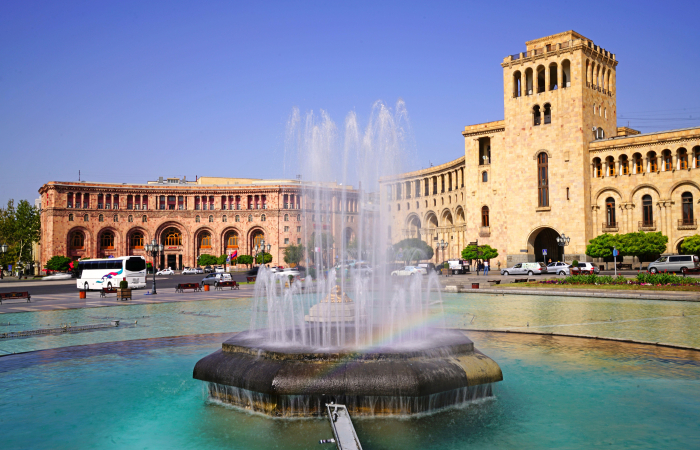
Monday Commentary: Armenians and Azerbaijanis are carving a new South Caucasus

Monday Commentary: Armenians and Azerbaijanis are carving a new South Caucasus

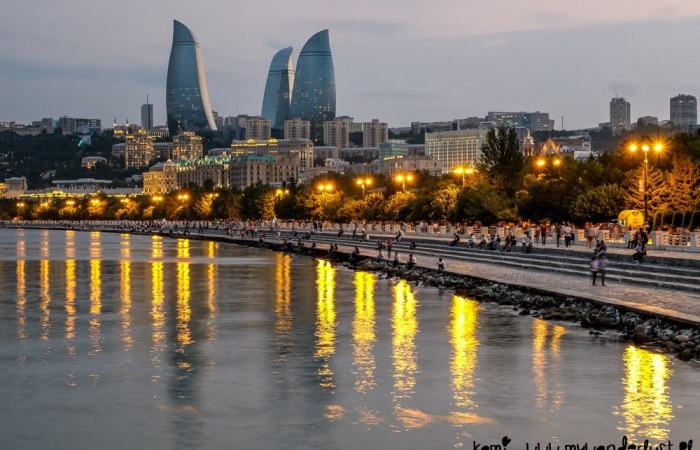
For many years, the international community was telling the governments of Armenia and Azerbaijan to prepare their populations for peace. Instead, they prepared them for war, which eventually came in 2020, followed by a period of uncertainty. In the last year the two sides turned the page. In March 2025 they agreed the elements of a peace agreement. On 8 August, at a historic meeting in the White House, this agreement was initialed. Since then, the two sides have taken huge, unprecedented steps to achieve peace and reconciliation. On 13 February, twenty Azerbaijani civil society experts walked across the border with Armenia, presented their passports at an Armenian border checkpoint and entered Armenia, to be welcomed by 20 Armenian counterparts, with who they spent the next two days discussing future regional peace and co-operation. The symbolism and importance of this event is huge. Even if you accept that this was a tightly choreographed affair, managed by the two governments, its importance is unquestionable. There will now be a “return” event. The 20 Armenians involved in the process will go to Azerbaijan. The arrival of the large Azerbaijani group in Armenia was in the framework of the “Peace Bridge”, which started taking shape in October of last year. This has two characteristics, which make it special, relevant and ground breaking. The first is that the initiative not only has government backing, but has two important “patrons” – presidential adviser in Azerbaijan, Hikmet Haciyev; and Armenian National Security Council Secretary, Armen Grigoryan. These two men did most of the heavy lifting behind the scenes to get the peace process on the right track. So there is a bit of a haze between track 1 and track 2, but in this case it is all for the better. The second important element, is that this is an all-local initiative. There is no foreign funding; no external NGO, or any other outside involvement. This is hugely significant and important. One also needs to commend the transparency of the process. The names of those participating on both sides were published.There is no conflict anymore between Armenia and Azerbaijan. Armenians and Azerbaijanis, at official level, and at civil society level, are talking directly to each other without intermediaries. This is something to be celebrated. That part of our work is done, and we should be happy and satisfied. We contributed as much as anyone so that the sides could reach this point. Now its time to move on. (click image to read the full Monday Commentary)
Editor's choice
Monday Commentary
Monday Commentary: It is time for Iran to turn the page

Monday Commentary: It is time for Iran to turn the page

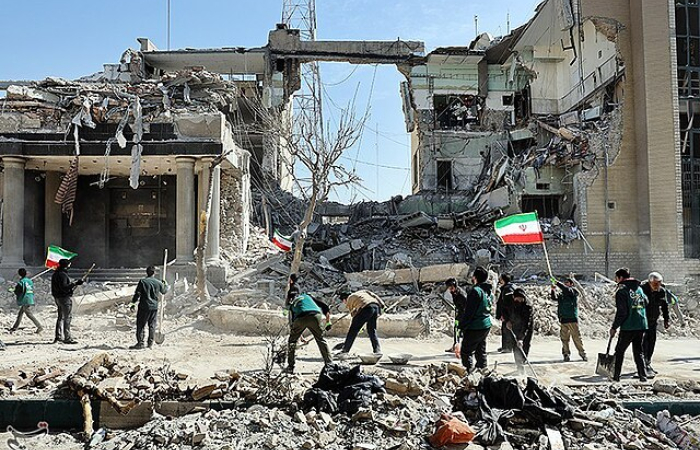
One slogan at a pro-democracy Iran rally held in Berlin, one of many that took place in Europe this weekend, caught my attention. It said “No Shah, no Mullahs”. It caught the dilemma of many Iranians, inside and outside the country, that are being forced into a false choice between the present clerical regime, and the “Shah”, the son of Mohammed Reza Pahlavi, who ruled Iran from 1941 until the 1979 revolution. For most of the time, and certainly since 1953, the Shah was absolute ruler. Mohammed Reza Pahlavi was no democrat. He ruled as an absolute dictator, with the help of a secret police that tortured and abused people. It is at best disingenuous, at worst an act of great folly and cynicism, that in the United States, the son and heir of Mohammed Reza Pahlavi is being promoted as the alternative to the clerical regime that currently rules Iran. Today Iran is also ready for change, but this change cannot be going back half a century in time. No Shah, no Mullahs, as the slogan in Berlin said. Its time for  Iran to turn the page, but this has to be done by the Iranian people in their own way. You cannot bomb a new regime to replace the present one. The Iranian system is resilient, and will not allow change imposed from outside. What will emerge will not be what Israel and the US wants, but it can be what the region needs: a peaceful, stable and prosperous Iran at peace with itself and its neighbours. Change is likely to come incrementally, and from inside the system. Many inside the system understand that change is needed. (click the image above to read Dennis Sammut's this week's Monday Commentary in full).
Editor's choice
Monday Commentary
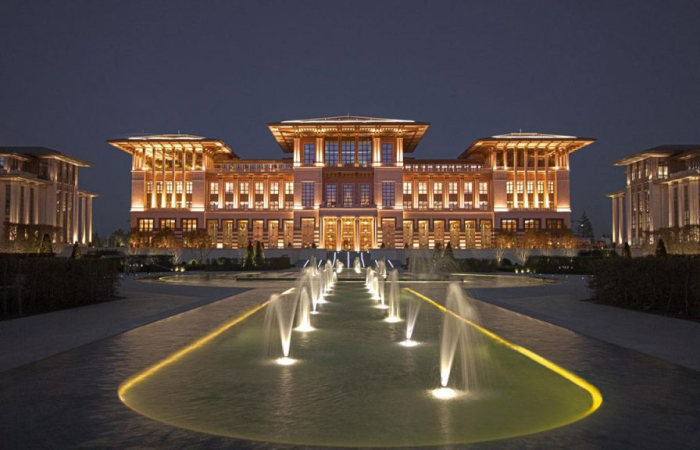
Monday Commentary: The European Political Community has the potential to respond to Europe’s changing needs in defence and security

Monday Commentary: The European Political Community has the potential to respond to Europe’s changing needs in defence and security

They say that a week is a long time in politics, and the time since the European Political Community (EPC) was established in October 2022, may now seem like an eternity. The war in Ukraine, that triggered the establishment of the EPC, drags on, and continues to define Europe. Everything else has changed. When the EPC was established, many yawned, and saw it as yet another useless talking shop. But the idea of creating a framework that brings the 27 EU member states with other European countries – 20 at the last meeting – has increasing value. The attendance of the leaders of these 20 countries: Turkiye’s Erdogan, Ukraine’s Zelensky, UK’s Starmer, and others, has made its twice yearly meetings an important occasion. It is in one area: defence and security, where the biggest need of Europe currently is, and where the biggest potential of the EPC lays. The war in Ukraine, Russia’s malign intentions, and Trump’s reset of US foreign and security policy, focused minds. Europe had been sleeping! When it woke up it did what the EU does whenever it is faced with a problem, it threw money at it, and started a defence spending spree, that was overdue, but is not by itself enough. The EU27 may be a global economic force, but on their own they lack strategic clout. But if you add with them the other European countries such as Turkiye, UK, Ukraine, and even smaller ones such as Norway and Switzerland, it becomes a completely different preposition. Under the surface, these discussions are going on even more intensively. But the European Political Community offers a space for conversations – public and private between the leaders of wider Europe. The value of the Community is therefore significant. The next EPC summit will be in Armenia on 4 May 2026. It will be important for a number of reasons: It will be a summit that should contribute to Armenia-Azerbaijan peace; it is not clear at what level will Azerbaijan participate, but for sure this will be a high level delegation. It will be the first EPC summit in Russia’s back yard – Armenia is still a member of the EAEU, and even if only on paper, of CSTO. The summit will take place on the eve of crucial parliamentary elections in Armenia that will determine the fate of the country and the region. But in the background will be the issue of how wider Europe can work together on defence and security. This will take time – probably not less than a decade – but the work has started, and the EPC summit in Armenia will contribute to it. (click the image above to read the full Monday Commentary).
Editor's choice
Analysis
Briefing: In the Gulf, the British “peace” ended sixty years ago, but the Saudi “peace” has not yet replaced it

Briefing: In the Gulf, the British “peace” ended sixty years ago, but the Saudi “peace” has not yet replaced it

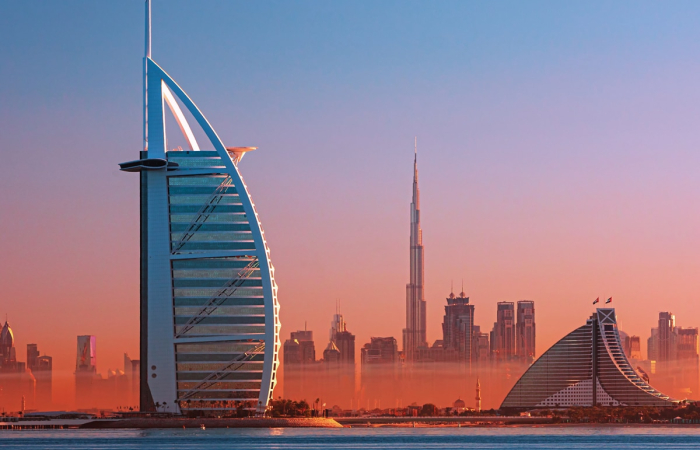
Relations between the Kingdom of Saudi Arabia and the United Arab Emirates have in the last decade, been competitive. Led by two ambitious but visionary men – both named Mohammed: MBS – Mohammed bin Salman, the Crown Prince of Saudi Arabia; and MBZ – Mohammed bin Zayed, the Ruler of Abu Dhabi and president of the Emirates, the two Gulf neighbours embraced many aspects of modernity, and moved hurriedly to turn their countries into global vanguards", writes Dennis Sammut, in this Briefing for Arabia Concise. "Yet up to now, competition was kept within bounds. They cooperated closely in areas of security and presented a united front. They were on the same side when they confronted Qatar and in their opposition to the Houthis' takeover of Yemen. Yet problems had been brewing under the surface for a while, and in the last month they burst into the open." The relations between Saudi Arabia and the United Arab Emirates (UAE) have been increasingly strained as a result of the different approaches of the two countries towards Yemen. The problems between Saudi Arabia and the Emirates are not new. The Kingdom was never happy with the existence of the smaller states on the Arabian peninsula, which, for most of the 20th century, had British “protection”. But the wisdom of MBZ’s father, Sheikh Zayed, the founder of the UAE, and the caution of MBS's uncles, who ruled Saudi Arabia, generally managed the problems outside the public eye. When the British peace ended abruptly in the 1960’s – the British ran out of money – many thought that the Saudi peace would replace it. Sixty years later, it still has not. not only in monetary terms, but also diplomatically. Saudi “Peace” may be tempting, but it comes at a price. The UAE remains vulnerable because of its size, demography and geography; Its wealth may protect it for a while, but it has its limits. The decision of the UAE to break ranks and recognise Israel may have endeared it to the United States. But many inside, as much as outside the country, are not convinced. (You can read the full Briefing by clicking the image above)
Editor's choice
Monday Commentary
Monday Commentary: Donald Trump’s useless prattle hurts people, and spoils decades-long relations

Monday Commentary: Donald Trump’s useless prattle hurts people, and spoils decades-long relations

Donald Trump talks a lot. Speech is his weapon of choice, and attack is his strategy. Dangerous stuff if you happen to be the president of the United States, and have a huge and well-equipped military machine at your disposal in case you want to put words in action. But it does not require a shot to be fired for a lot of people to get hurt, and for relations built over decades to be spoilt. Trump was is Davos last week. His speech was, as expected, controversial. But it was what he said after his return that caused a stir. In an interview with Fox News on Thursday, Trump said of Nato troops: "We've never needed them. We have never really asked anything of them. "They'll say they sent some troops to Afghanistan... and they did, they stayed a little back, a little off the front lines.” In 2005, I took a sabbatical from my NGO work to go and work for six months with the United Nations in Afghanistan. I was part of a five-person team that was to help set up the new Afghan Parliament. My office in Kabul was in Wazir Akbar Khan District, a stone throw away from the British Embassy.  It was as safe as could be in Afghanistan at the time. But, in fact, nowhere was safe. The Serena Hotel, where I used to go every Friday for coffee was bombed soon after, leaving many dead. Every time you left Afghanistan you were glad you were still alive. More than 3,500 coalition soldiers died, about two-thirds of them Americans, as of 2021 when the US withdrew from the country. The UK suffered the second-highest number of military deaths in the conflict behind the US, which saw 2,461 fatalities. Most of the 457 British troops who died serving in Afghanistan over a period of nearly 20 years were killed in Helmand - the scene of the heaviest fighting. Hundreds more suffered injuries and lost limbs. Trump’s insult to the dead, wounded and others who served in Afghanistan will not be forgotten easily. The US will find this out when it needs allies to support it, as it will sooner or later. The NATO alliance was already rattled by Trumps attempts to absorb Greenland, part of the Kingdom of Denmark, a NATO ally. But all the shenanigans around Greenland will blur into insignificance when compared to the insult to thousands of war dead and veterans. The bad taste will linger for a long time and spoils relations that have been built over decades. (click the picture to read the Monday Commentary in full).
Editor's choice
Monday Commentary
Monday Commentary: The situation around Greenland brings out the best of Europe, and the worst of Trump‘s United States

Monday Commentary: The situation around Greenland brings out the best of Europe, and the worst of Trump‘s United States

Donald Trump continues to claim Greenland, not on the basis of any legal, historical or moral reason, but just because, as he says, “we must have it”. Greenland is a self-governing territory, part of the Kingdom of Denmark which has three constituent parts: mainland Denmark, Greenland and the Faroe Islands. Copenhagen is responsible for Greenland’s defence and foreign affairs. Trump’s claim is so absurd, that initially it was not taken seriously. It was dismissed as another of Trump’s rants, soon to be forgotten. But on Friday (16 January), the president of the United States imposed from 1 February, 10% additional tariffs on eight European  countries that had dared question his claim: Denmark, Norway, Finland, Sweden, France, Germany, Netherlands and UK; with a threat that the extra tariffs  would increase to 25% on 1 June. Unfortunately, what may first appear to be a Lillipudian soap opera, is in fact a major international crises. Whatever happens now, transatlantic relations will never be the same again. Trust is broken, and the damage will be difficult to repair, even long after Trump has left the White House. Europe must now wake up to reality, and responsibility. NATO needs to change if it is to survive, depending less on the US, and being more agile. Trump’s Greenland threats have poisoned US-Europe relations, but they have also shown the meaning of the word solidarity, not only within the EU, but also with non-EU European countries such as UK and Norway, as well as with Canada. From every crises, an opportunity arises. (click the picture to read the full commentary).
Editor's choice
Monday Commentary
Monday Commentary: 2025 was a momentous year for the South Caucasus

Monday Commentary: 2025 was a momentous year for the South Caucasus

The year 2025 has ended up being a momentous year for the South Caucasus, writes Dennis Sammut in his Monday Commentary. Armenia-Azerbaijan relations have been redefined, with consequences for the whole region and beyond. That huge development overshadowed key moments in the domestic trajectory of the two countries, which however have deep consequences for the two countries, and even beyond. It has also been a tumultuous year for Georgia too. The country has been gripped in a political crisis throughout 2025, with no obvious end in sight. Whatever the domestic arguments, on the international stage Georgia is today a shadow of what it used to be until recently. It not only has lost the chance of joining the European Union any time soon, but it has also lost its position as the leading South Caucasus country. Today, in the new reality of the region, it lags as a tired third. Important as 2025 was, it ended with a lot of unfinished business. So 2026 will also be crucial for the three countries. Since regaining its statehood in 1991 after the dissolution of the Soviet Union, Armenia-Azerbaijan relations have been defined by war. The two fought open wars, wars of attrition, and propaganda wars, incessantly. Tens of thousands of people lost their lives, and hundreds of thousands were displaced. Many had lost hope that the two could try the alternative – i.e. peaceful co-existence. Yet in 2025 they were proven wrong.
Editor's choice
Monday Commentary
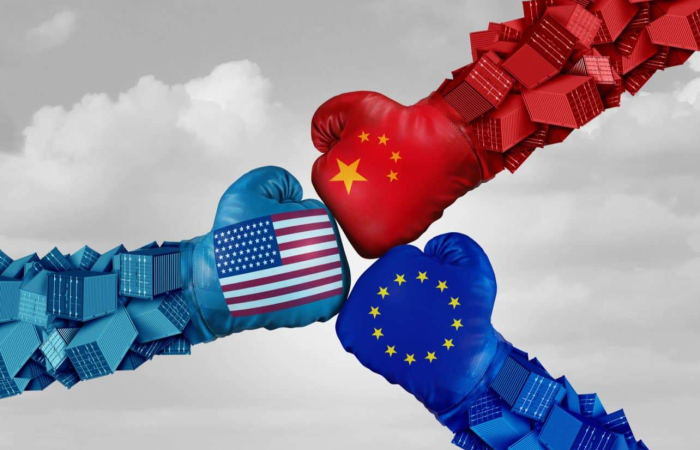
Monday Commentary: Multilateralism remains the best option, but the rules have changed

Monday Commentary: Multilateralism remains the best option, but the rules have changed

To listen to world leaders speaking these days, one would think that the world has embraced multilateralism, as the guiding principle in international relations. From Brussels to Beijing the concept is lauded, often to distinguish countries or groups of countries from Trumpian America, which has turned multilateralism into a bogey, and often a punching bag. But a closer look indicates that many countries are talking at cross-purposes.  At one end you have the European Union, itself a quintessential multilateralist project grouping 27  member states, some of whom had spent the last century fighting each other. At the other extreme, there is China, a country with great ambitions, and a great discourse that accompanies these ambitions, who however presents itself as the self-proclaimed leader of the global south. Put simply, multilateralism is when a group of countries agree to pursue a common goal in cooperation, and based on equality. On the European continent, multilateralism was for fifty years the way the continent conducted business, and two organisations became a clear expression of this multilateralist path: the European Union (EU), and the Organisation for Security and Co-operation in Europe (OSCE). They both operate by consensus. Beyond the continent, on a global level, the UN is in crisis. It will take a lot of time, effort, and money, to fix it. Three countries can help, or they can make matters worse: the US, Russia, and China. Trumpian America does not like the UN and has turned its back on multilateralism. The shameful US national security strategy creates a wedge between the US and Europe and sets a narrow vision of the world. Trump described the document as a "roadmap" to ensure the US remains "the greatest and most successful nation in human history". Russia is today in no position to counterbalance the US position, even if it wants to. So, its role in the future world order will be one of an opportunistic spoiler. China is another matter. It has the ambition to be a superpower and global player. It has good connections with the global south, although its claim of leadership is often overstated, and it pays lip service to multilateralism. It needs to be engaged, but with caution. Attempts at multilateral initiatives in the South, for example BRICS, are increasingly dysfunctional. Yet, multilateralism remains the best option for addressing the future. Some of the world's problems, such as climate change, simply cannot be tackled by one country, or one country working alone. But most of the institutions are greatly in need of an overhaul. The European Union must take the lead. It must also engage with China on a case-by-case, topic-by-topic basis. This will be a long and laborious process. But the rules of the game, and the assumptions that underpinned them, have changed, or at best are being challenged. It is time for a global rethink. (Click the image to read the full Monday Commentary).