Filter archive

Publication date
Editor's choice
Monday Commentary
Monday Commentary: Despite the bleakness of the current situation, the Gulf must prepare for tomorrow

Monday Commentary: Despite the bleakness of the current situation, the Gulf must prepare for tomorrow

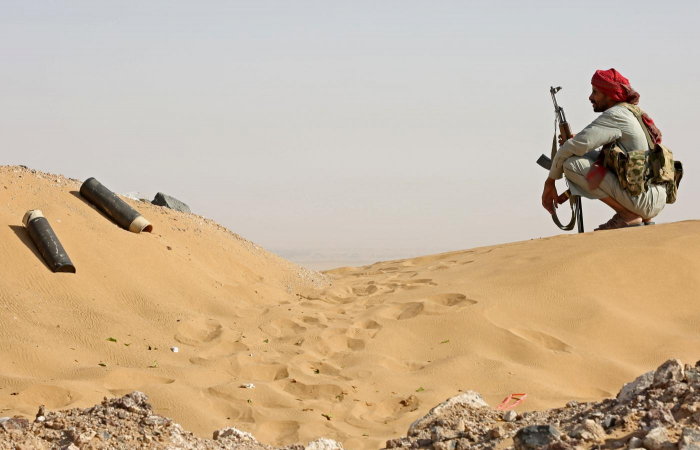
The six Gulf countries members of the Gulf Co-operation Council (GCC), namely Bahrain, Kuwait, Qatar, Oman, Saudi Arabia, and the United Arab Emirates (UAE), have been caught in the war waged by the United States and Israel against Iran since 28 February. Ostensibly, because they host US military facilities, they were relentlessly attacked by Iran in the period before the two-week cease fire, announced a week ago. The Gulf countries have not retaliated, but they made strong requests to Iran to desist. They were very supportive of the efforts to end the conflict, especially the talks hosted by Pakistan in Islamabad over the weekend. The 21 hours of talks were intense, but according to all accounts unsuccessful. But this was the first direct contact at a high political level between Iran and the US since the 1979 Iranian revolution, so their importance should not be underestimated either. The opening of the Strait of Hormuz for unimpeded movement of shipping is a top priority. In resolving this issue the GCC countries must be involved directly. For the six GCC countries the conflict in Iran is not only unwelcome. They tried to stop the war from starting. They face a serious problem, which is not yet existential, but may well change their way of life forever. But, despite the bleakness of the current situation, the Gulf must prepare for tomorrow. Three areas are of importance: Defence and Security; Foreign Policy and National Cohesion. Developing a new security architecture for the Gulf is a long term, ten-year, project. It should not be rushed but neither should complacency be allowed. Thinking and discussion on these issues must start now. This is a testing time for the six GCC countries, but they have internal resilience, and enough financial cushion to weather the storm. And I am sure they also have the creativity and the will to reconstruct, and reconstruct better. (click the picture to read the Commentary in full)
Editor's choice
GULF CRISIS
Iran and US meet in Islamabad, but no deal is agreed

Iran and US meet in Islamabad, but no deal is agreed

The United States and Iran met at the highest level since the 1979 Iranian revolution in talks in Pakistan on Saturday, 11  April, but were unable to reach an agreement on the issues between them. US-Iran peace talks have failed, US Vice President JD Vance announced in Islamabad, after more than 20 hours of talks with Iranian officials at the Serena Hotel in the Pakistani capital. “The bad news,” he said, “is we have not reached an agreement. We just could not get to a situation where the Iranians would accept our terms.” Announcing he would depart Pakistan, Mr Vance said his team was leaving Iran with “a very simple proposal” – “our final and best offer. We’ll see if the Iranians accept it”. A statement by the Iranian Foreign Ministry released on social media just before Mr Vance spoke did not announce the talks had broken down or reference Washington’s “final offer” directly, but called on Washington to refrain from “excessive demands and unlawful requests”. Less than an hour after he spoke, Mr Vance boarded Air Force Two, the vice-presidential jet, and departed Islamabad for Washington. The sense of exhaustion and disappointment in Islamabad – among both sides, their hosts and observers – has been palpable. Almost immediately after Mr Vance left Pakistan, Iranian state media began quoting Iranian delegation sources saying the US side was “looking for an excuse to leave”. (click the picture to read more).
Editor's choice
News
"Peace Bridge" between Armenia and Azerbaijan takes next step

"Peace Bridge" between Armenia and Azerbaijan takes next step

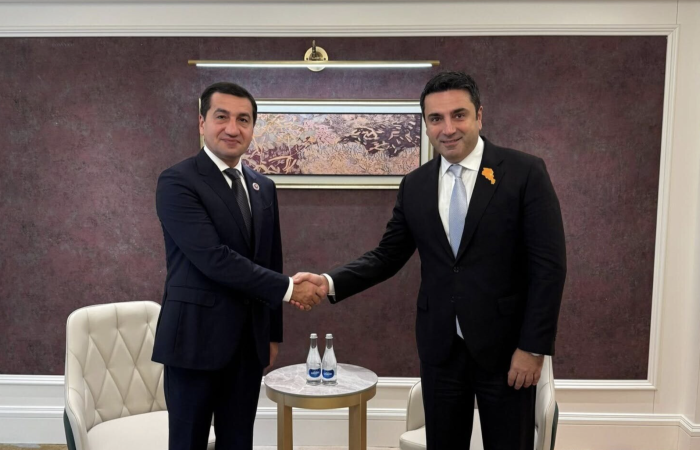
From 10 to 12 April 2026, within the framework of the “Peace Bridge” Initiative, another bilateral roundtable with the participation of representatives of Azerbaijani and Armenian civil society is taking place, this time in Azerbaijan. "Peace Bridge" was launched in November 2025 with the support of the governments of Armenia and Azerbaijan, to foster dialogue and direct engagement between civil society representatives from Azerbaijan and Armenia. On Friday, 10 April, an Armenian group arrived in Azerbaijan via the land border, crossing through a formally delimited and demarcated section and undergoing all relevant border and passport control procedures.  According to the website of the Armenian public broadcaster, 1lurer.am, this weekend's meeting  includes discussions on the current state of the peace process; the activities undertaken by participants in the “Peace Bridge” Initiative in their respective countries and the results of those efforts; as well as the situation in the region. The meeting agenda also includes separate sessions devoted to efforts to advance peace at the societal level and to increase trust during the next stages of the peace process. (click picture to read the news item in full)