Filter archive

Publication date
Editor's choice
Opinion
Opinion: The future of the China-US-Russia triangle after Pelosi's visit to Taiwan

Opinion: The future of the China-US-Russia triangle after Pelosi's visit to Taiwan

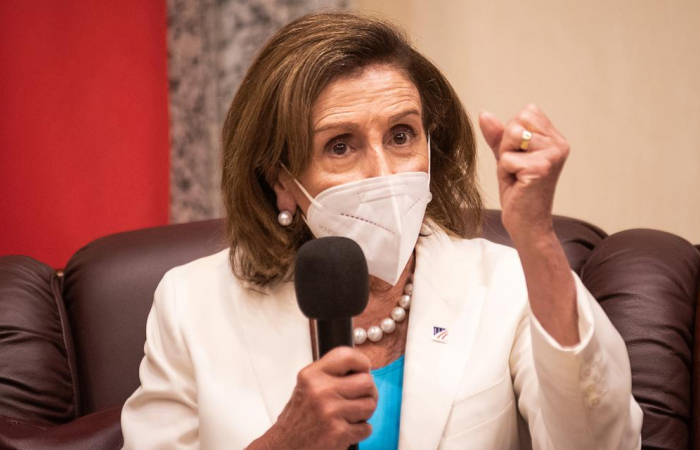
Since February 24, 2022, the international community's focus was concentrated entirely on the war in Ukraine and the growing Russia – West confrontation. It seemed that nothing could change the situation until the end of hostilities in Ukraine. However, on August 2 and 3, almost everyone’s attention shifted from Ukraine to Taiwan. As the Speaker of the US House of Representatives, Nancy Pelosi, stated her intention to visit Taiwan, up to half a million people were watching the trajectory of her plane on air flight tracking sites. The negative reaction of China, including the warning of President Xi during his conversation with President Biden that those who played with fire would be perished by it, created hype around this visit. Many were discussing the possibility of Chinese military jets closing the airspace over Taiwan and preventing Pelosi’s plane from landing in Taiwan, while some enthusiasts were even contemplating the possibility of a US-China direct military clash. As Pelosi landed in Taiwan and met with the Taiwanese President, the global social media was full of amateur assessments about the strategic victory of the US and the confirmation of the US global hegemony. However, as the dust settles down, and information noise and manipulation eventually decreases, a more serious assessment is needed to understand the real consequences of this visit.
Editor's choice
GULF CRISIS
Quadrilateral foreign ministers meeting in Pakistan set the tone for future US-Iran  talks

Quadrilateral foreign ministers meeting in Pakistan set the tone for future US-Iran talks

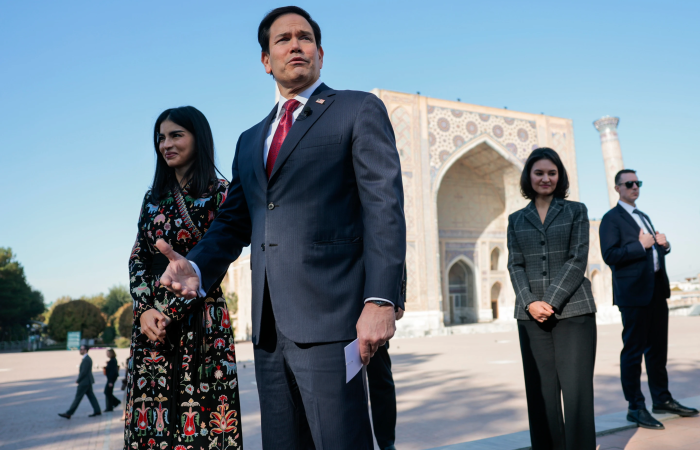
The Foreign Ministers of Türkiye, Egypt, Saudi Arabia and Pakistan met for the second time this month in the new quadrilateral format. The aim  of the meeting was primarily to support Pakistan's efforts to initiate US-Iran talks. The first meeting was held in Riyadh on March 19. Pakistani Deputy Prime Minister and Foreign Minister Ishaq Dar on Sunday (29 March) said both the United States and Iran had expressed confidence in Pakistan to facilitate talks aimed at ending the ongoing United States-Israeli war on Iran, following “very productive consultations” among Pakistan, Saudi Arabia, Türkiye and Egypt amid the rapidly escalating Middle East conflict. Speaking in a televised address after the high-level quadrilateral meeting in Islamabad, attended by the foreign ministers of Saudi Arabia, Türkiye and Egypt, Dar described the consultations as “candid, constructive and focused on exploring pathways to de-escalation.” Dar said the four foreign ministers held an in-depth discussion on the evolving regional situation and deliberated on “possible ways to bring an early and permanent end to the war in the region.” He noted that all participants expressed deep concern over the devastating human and economic toll of the conflict. “We agreed that this war is not in favour of anyone and would only lead to death and destruction. The unity of the Muslim Ummah in these challenging times is of utmost importance,” he added. Dar said he also briefed the visiting  ministers on the prospects of potential US-Iran talks in Islamabad. “The visiting foreign ministers expressed their fullest support to this initiative,” he said, adding that the participants reaffirmed unity to contain the situation, reduce risks of further military escalation, and create conditions for structured negotiations. “The foreign ministers advocated dialogue and diplomacy as the only viable pathway to prevent conflict and promote regional peace and harmony. They also called for upholding the principles of the United Nations Charter, including respect for sovereignty and territorial integrity of all states,” he said. He further said the four countries agreed to strengthen mutual cooperation and decided to constitute a committee comprising senior officials from their respective foreign ministries to work out modalities for future coordination through consensus. (Click the picture to read the full story)
Editor's choice
News
Zelensky of Arabia

Zelensky of Arabia

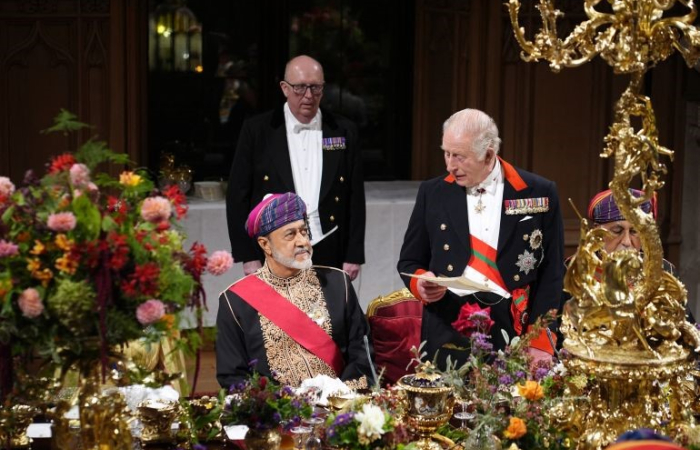
Ukrainian president, Volodomyr Zelensky, has just ended a tour to some of the Arab monarchies of the Gulf, during which he visited Saudi Arabia, the United Arab Emirates and Qatar. For the past four years the Gulf countries have been lukewarm in their support for Ukraine, as it fought off an unprovoked Russian invasion. In these four years a steadfast Ukraine has developed the skills, and the equipment, to resist the continuous attack by Russian drones, most of which provided by Iran. Now the Arab Gulf states unexpectedly find themselves fighting off a similar threat, as Iran fires drones and missiles at them as it widens the conflict started by the US and Israel four weeks ago. Ukraine's experience and equipment are now desperately needed by the Arab Gulf countries. During the trip Zelensky managed to convince his Arab hosts to turn the page. He offered them Ukraine's equipment and expertise in their present predicament. His offer was gladly accepted. Two hundred Ukrainian advisors are already in the region. The Gulf countries will buy Ukrainian equipment and expertise. This is not just a transactional step. It is an important shift that will have long term implications. Ukraine is set to become a long term  strategic partner of Ukraine, as the sides agree on joint long term co-operation in anti-drone technology. The visit of Zelensky to the Arab Gulf monarchies further isolates Russia, and especially the Russian approach to Ukraine. It also cements a relationship that is important for both Ukraine and the GCC.
Editor's choice
Analysis
Report highlights how a venerable international institution established after WWII grapples to be "wired for purpose"

Report highlights how a venerable international institution established after WWII grapples to be "wired for purpose"

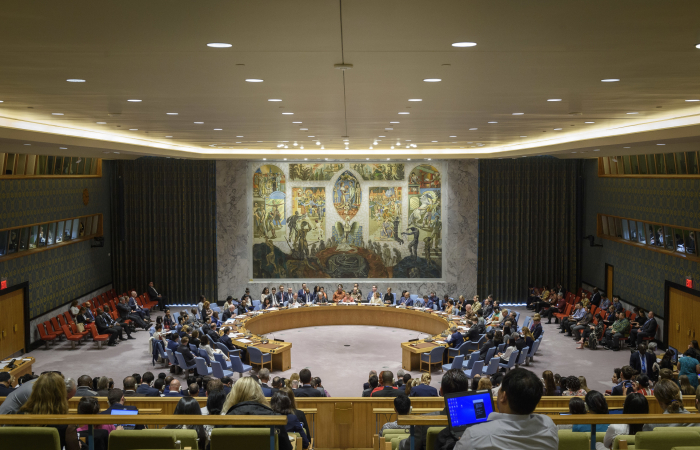
Maintaining International Peace and Security in the Age of Rapid Technological Change: Is the Security Council Wired for Purpose? New research analysis by "Security Council Report" discusses the question. Rapid advances in information and communications technology (ICTs), artificial intelligence (AI), and other new and emerging technologies are reshaping the parameters of international peace and security, influencing both the nature of conflict and the means by which it is prevented and managed. As technological convergence accelerates, risks are becoming more complex, interconnected, and difficult to anticipate. The implications of technological change are increasingly visible across issues already before the Security Council, including counter-terrorism, the protection of civilians, sanctions, peacekeeping, and women, peace and security. Yet Council engagement remains limited, fragmented, and politically contested, even as these technologies become more consequential for international peace and security. This report examines how the Security Council has engaged with ICTs, AI, and other new and emerging technologies, and considers how that engagement might be strengthened within its existing mandate and in complementarity with broader UN processes. It analyses the Charter foundations for Council action, traces the evolution of Council practice, maps the intersections between technological developments and existing agenda items, examines the political divisions that have constrained a more systematic approach, and sets out options for action by Council members, the wider UN membership, the Secretariat, and non-governmental organisations and the private sector. It argues that, as technological change increasingly shapes the risks and opportunities confronting international peace and security, the Council will need to engage with these issues more systematically if it is to fulfil its responsibilities effectively. (click the picture to read the report)