


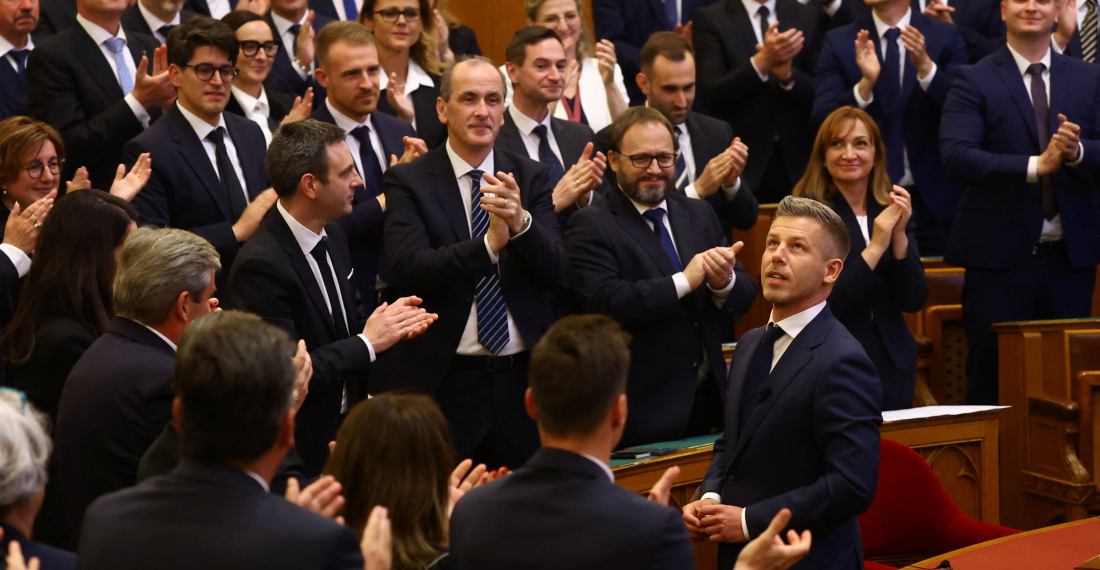
On Saturday (9 May), Péter Magyar was sworn in as Hungary’s prime minister ending Viktor Orbán’s tenure. Magyar’s opposition Tisza party won a landslide victory in Hungary’s parliamentary elections last month.
During Saturday’s ceremony, Magyar invited people to join him to “write Hungarian history” together and “step through the gate of regime change”.
“Today, every freedom-loving person in the world wants to be a little Hungarian,” he said.
“You have taught the country and the world that it is the most ordinary, flesh-and-blood people that can defeat the most vicious tyranny,” Magyar added, speaking to tens of thousands of supporters.
Magyar vowed to seek justice against “Orbán’s associates and the elite”, and reiterated his earlier calls for Orbán-era appointees to resign, asking them to do so by the end of the month.
He pledged to build a more inclusive Hungary, one free of Orbán’s populist nationalist influence.
The new parliament marks the first time since the country’s democratisation in 1990 that Orbán will not sit in parliament.
Note to our audience: For commonspace.eu, Anna Szedlacsek, Junior Research Assistant at LINKS Europe Foundation, assesses Magyar's challenges ahead. Her op-ed argues that Hungary’s post-Orbán transition will depend not only on Magyar’s political will, but on whether he can reform a captured state without reproducing the same concentration of power. Read it here.
Source: commonspace.eu with The Guardian



