


Islamist militants kill 21 in a raid in Niger

At least 21 people, including two policemen, were killed, and several others wounded on Wednesday  (16 March) in an attack by suspected Islamist militants on a bus and a truck in the Tillabéri region of southwestern Niger, security sources told AFP on Thursday.

The mayor of the town of Tera near the Niger border with Burkina Faso stated that the attack was carried out by gunmen on motorbikes who had forced a bus and a truck to stop. The attackers then forced the passengers out of the vehicle, pretending it was a simple identity check and started firing at them. Out of the 21 reported dead, two of them, the two occupants of the truck carrying fruit and vegetables, were burnt alive by the Islamist insurgents.

The attack's survivors and the wounded were evacuated to the capital Niamey for medical treatment, according to the same local source.

This new double attack in the district of Téra, less than 10 kilometres from the border with Burkina Faso, is yet another example of the instability of the Tillabéri region, and of the so-called "three borders" zone between Niger, Burkina Faso, and Mali.

The immense region of Tillabéri in Niger, with a territory larger than Portugal with its 100,000km2 located in the tri-border area, has had to face repeated deadly attacks by various terrorist groups since 2017.

These groups are primarily the Islamic State in the Greater Sahara (ISGS) in the west, and Boko Haram and the Islamic State West Africa Province (ISWAP) in the south-east, bordering Nigeria. Yet the islamist militants could also be linked to al-Qaeda.

The Government of Niger, the world's poorest country according to the UN's Human Development Index, has launched large-scale free distribution and promotional sales of cereals to farmers affected by a serious food crisis caused by attacks and drought.

Niger, and particularly its region Tillabéri, is suffering from the difficulty its neighbour Mali has had in containing the assaults of terrorist groups on its territory since 2012, assaults that have since spread to Burkina Faso and Niger.

It is in this key region of Tillabéri, given its geographical position, that part of the French Barkhane and European Takuba armed forces could be redeployed after their forced withdrawal from Mali.

At the end of February, Niger's president, Mohamed Bazoum, announced that he had begun "discussions" with jihadists as part of "the search for peace"

Sources: CommonSpace.eu with BBC (London), TV5 Monde (Paris), The Guardian (London) and other media outlets
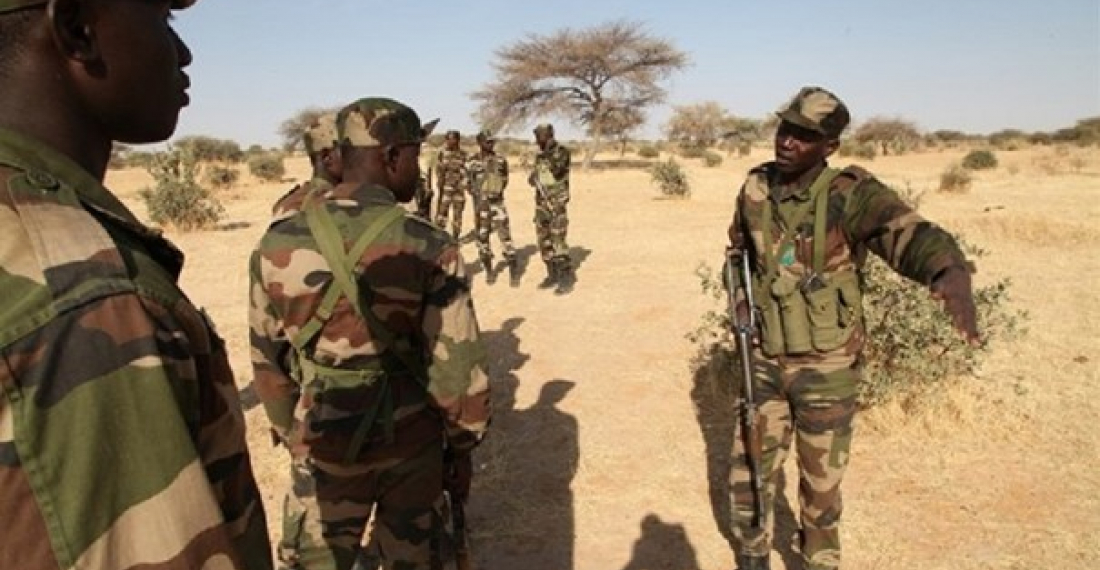
Picture: Nigerien soldiers mobilised in the anti-terrorist struggle; Twitter: @beninwebtv
 

Related articles

Editor's choice
News
Borrell tells the European Parliament that the situation in Afghanistan was critical, but the EU will remain engaged

Borrell tells the European Parliament that the situation in Afghanistan was critical, but the EU will remain engaged

Borrell underlined that the European Union will make every effort to support the peace process and to remain a committed partner to the Afghan people. "Of course, we will have to take into account the evolving situation, but disengagement is not an option.  We are clear on that: there is no alternative to a negotiated political settlement, through inclusive peace talks.
Editor's choice
News
Germany accuses Russia of cyberattacks and disinformation campaign

Germany accuses Russia of cyberattacks and disinformation campaign

The German government holds Russia responsible for a cyberattack on German air traffic control, and for targeted disinformation campaigns before the last federal election. According to the German Foreign Office in Berlin, the incidents could be clearly attributed to the Russian military intelligence service, the GRU. In response, the Russian ambassador to Berlin was summoned to the Foreign Ministry. "We have been observing a massive increase in threatening hybrid activities by Russia for some time now," a spokesperson for the Foreign Ministry stated. These range from disinformation campaigns and espionage to cyberattacks and sabotage attempts. The aim is to divide society, sow distrust, and undermine confidence in democratic institutions. The spokesperson added that with these actions, Russia is "very concretely threatening our security, not only through its war of aggression against Ukraine, but also here in Germany."  The Foreign Ministry spokesperson explained that the cyberattack on air traffic control in August 2024 was clearly attributed to the hacker collective "APT28," known as "Fancy Bear," and to the responsibility of the Russian military intelligence service, the GRU. Furthermore, it could now be "conclusively stated" that Russia had attempted "to influence and destabilize both the last Federal election and the ongoing internal affairs of the Federal Republic of Germany." There was "absolutely irrefutable evidence" for this". The so-called "Storm 1516" campaign, which has been running since 2024, is allegedly backed by "reliable information" that the Moscow-based think tank "Center for Geopolitical Expertise" is behind it. The Center is also said to be supported by Russian military intelligence. Its primary aim is to influence democratic elections in the West. (Click the image to read more).

Popular

Editor's choice
News
Germany accuses Russia of cyberattacks and disinformation campaign

Germany accuses Russia of cyberattacks and disinformation campaign

The German government holds Russia responsible for a cyberattack on German air traffic control, and for targeted disinformation campaigns before the last federal election. According to the German Foreign Office in Berlin, the incidents could be clearly attributed to the Russian military intelligence service, the GRU. In response, the Russian ambassador to Berlin was summoned to the Foreign Ministry. "We have been observing a massive increase in threatening hybrid activities by Russia for some time now," a spokesperson for the Foreign Ministry stated. These range from disinformation campaigns and espionage to cyberattacks and sabotage attempts. The aim is to divide society, sow distrust, and undermine confidence in democratic institutions. The spokesperson added that with these actions, Russia is "very concretely threatening our security, not only through its war of aggression against Ukraine, but also here in Germany."  The Foreign Ministry spokesperson explained that the cyberattack on air traffic control in August 2024 was clearly attributed to the hacker collective "APT28," known as "Fancy Bear," and to the responsibility of the Russian military intelligence service, the GRU. Furthermore, it could now be "conclusively stated" that Russia had attempted "to influence and destabilize both the last Federal election and the ongoing internal affairs of the Federal Republic of Germany." There was "absolutely irrefutable evidence" for this". The so-called "Storm 1516" campaign, which has been running since 2024, is allegedly backed by "reliable information" that the Moscow-based think tank "Center for Geopolitical Expertise" is behind it. The Center is also said to be supported by Russian military intelligence. Its primary aim is to influence democratic elections in the West. (Click the image to read more).

