


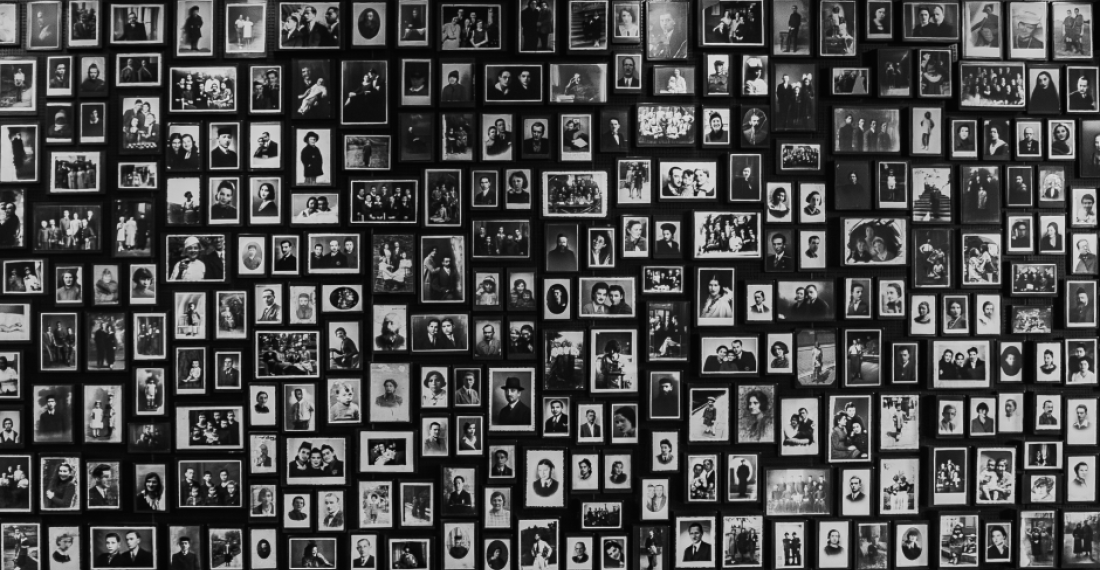
Global leaders and Auschwitz survivors commemorate 80th anniversary of camp's liberation

A solemn ceremony marking the 80th anniversary of the Nazi Auschwitz death camp’s liberation was attended by global leaders on Monday. The ceremony at the site of the camp, which Nazi Germany set up in occupied Poland during World War II to murder European Jews on a huge scale, was attended by German Chancellor Olaf Scholz, Ukrainian President Volodymyr Zelenskyy, King Charles, French President Emmanuel Macron, Polish President Andrzej Duda and many other leaders. The International Holocaust Remembrance Day commemorates the date when the Nazi Germany-run concentration camp in the Polish town of Oswięcim was liberated by advancing forces of the USSR in 1945.

The Nazis invaded Poland in September 1939 and later converted Auschwitz, an army barracks, into camps. Among them, Auschwitz I and Auschwitz II-Birkenau remained one of its major facilities as eventually it came up as part of the Final Solution, the plan for the genocide of Jews.

Leaders did not make speeches but rather listened for perhaps the last time to those who suffered and witnessed at first hand one of humanity's greatest atrocities. Israel, founded for Jews in the shadow of the Holocaust, sent Education Minister Yoav Kisch. "We see in the modern world today a great increase in antisemitism, and it was antisemitism that led to the Holocaust," said Marian Turski, 98, who was sent to Auschwitz in 1944 and survived the westward "death march" to Buchenwald in 1945. "Let's not be afraid to convince ourselves that we can solve problems between neighbours."

Retired physician Leon Weintraub, 99, who was separated from his family and sent to Auschwitz in 1944, warned of the dangers of intolerance. "I ask you to multiply your efforts to counteract the views whose effects we are commemorating today," he said. Retired pharmacist Janina Iwanska, a Polish Catholic, said that "80 years after the liberation, the world is again in crisis". "Our Jewish-Christian values have been overshadowed worldwide by prejudice, fear, suspicion and extremism," she said. "And the rampant antisemitism that is spreading among the nations is shocking".

Antisemitic incidents have surged along with protests against Israel in many parts of Europe, North America and Australia since Israel launched its assault on the Palestinian enclave of the Gaza Strip after attacks on Israel by Hamas militants on 7 October 2023. Before the ceremony, which took place in a tent built over the gate to the former Auschwitz II-Birkenau camp, leaders stressed how important it was to preserve the memory of the Holocaust. "The act of remembering the evils of the past remains a vital task, and in so doing we inform our present and shape our future," King Charles said during a visit to the Jewish Community Centre in Krakow.

More than 1.1 million people, mostly Jews, perished in gas chambers or from starvation, cold and disease at Auschwitz, where most had been brought in freight wagons, packed like livestock. More than three million of Poland's 3.2 million Jews were murdered by the Nazis. In all, between 1941 and 1945, Nazi Germany and its collaborators systematically murdered six million Jews across German-occupied Europe, along with gypsies, sexual minorities, disabled people and others who offended Nazi ideas of racial superiority.

Source: commonspace.eu with agencies
Photo:Black-and-white photographs of Holocaust victims displayed in the Auschwitz concentration camp in Poland. (Shutterstock/Vedat Kandemir)
 

Related articles

Editor's choice
News
Borrell tells the European Parliament that the situation in Afghanistan was critical, but the EU will remain engaged

Borrell tells the European Parliament that the situation in Afghanistan was critical, but the EU will remain engaged

Borrell underlined that the European Union will make every effort to support the peace process and to remain a committed partner to the Afghan people. "Of course, we will have to take into account the evolving situation, but disengagement is not an option.  We are clear on that: there is no alternative to a negotiated political settlement, through inclusive peace talks.
Editor's choice
News
NATO Chief says war is on Europe's doorstep, and warns against complacency

NATO Chief says war is on Europe's doorstep, and warns against complacency

Russia could attack a NATO country within the next five years, the Secretary General of NATO, Mark Rutte, said in a stark new warning. "NATO's own defences can hold for now," Rutte warned in Berlin, but conflict was "next door" to Europe, and he feared "too many are quietly complacent, and too many don't feel the urgency, too many believe that time is on our side. "Russia is already escalating its covert campaign against our societies," Rutte said in a speech in Germany. "We must be prepared for the scale of war our grandparents or great-grandparents endured." Earlier this month, Russia's President Vladimir Putin said his country was not planning to go to war with Europe, but it was ready "right now" if Europe wanted to - or started a war. But similar reassurances were given by Moscow in 2022, just before 200,000 Russian troops crossed the border and invaded Ukraine. Putin has accused European countries of hindering US efforts to bring peace in Ukraine - a reference to the role Ukraine's European allies have recently played in trying to change a US peace plan to end the war, whose initial draft was seen as favouring Russia. But Putin was not sincere, Nato's secretary-general said in the German capital, Berlin. Supporting Ukraine, he added, was a guarantee for European security. "Just imagine if Putin got his way; Ukraine under the boot of Russian occupation, his forces pressing against a longer border with Nato, and the significantly increased risk of an armed attack against us." Russia's economy has been on a war footing for more than three years now - its factories churn out ever more supplies of drones, missiles and artillery shells. According to a recent report by the Kiel Institute for the World Economy, Russia has been producing each month around 150 tanks, 550 infantry fighting vehicles, 120 Lancet drones and more than 50 artillery pieces. The UK, and most of its Western allies, are simply not anywhere near this point. Analysts say it would take years for Western Europe's factories to come close to matching Russia's mass-production of weapons. "Allied defence spending and production must rise rapidly, our armed forces must have what they need to keep us safe," the Nato chief said.

Popular

Editor's choice
News
NATO Chief says war is on Europe's doorstep, and warns against complacency

NATO Chief says war is on Europe's doorstep, and warns against complacency

Russia could attack a NATO country within the next five years, the Secretary General of NATO, Mark Rutte, said in a stark new warning. "NATO's own defences can hold for now," Rutte warned in Berlin, but conflict was "next door" to Europe, and he feared "too many are quietly complacent, and too many don't feel the urgency, too many believe that time is on our side. "Russia is already escalating its covert campaign against our societies," Rutte said in a speech in Germany. "We must be prepared for the scale of war our grandparents or great-grandparents endured." Earlier this month, Russia's President Vladimir Putin said his country was not planning to go to war with Europe, but it was ready "right now" if Europe wanted to - or started a war. But similar reassurances were given by Moscow in 2022, just before 200,000 Russian troops crossed the border and invaded Ukraine. Putin has accused European countries of hindering US efforts to bring peace in Ukraine - a reference to the role Ukraine's European allies have recently played in trying to change a US peace plan to end the war, whose initial draft was seen as favouring Russia. But Putin was not sincere, Nato's secretary-general said in the German capital, Berlin. Supporting Ukraine, he added, was a guarantee for European security. "Just imagine if Putin got his way; Ukraine under the boot of Russian occupation, his forces pressing against a longer border with Nato, and the significantly increased risk of an armed attack against us." Russia's economy has been on a war footing for more than three years now - its factories churn out ever more supplies of drones, missiles and artillery shells. According to a recent report by the Kiel Institute for the World Economy, Russia has been producing each month around 150 tanks, 550 infantry fighting vehicles, 120 Lancet drones and more than 50 artillery pieces. The UK, and most of its Western allies, are simply not anywhere near this point. Analysts say it would take years for Western Europe's factories to come close to matching Russia's mass-production of weapons. "Allied defence spending and production must rise rapidly, our armed forces must have what they need to keep us safe," the Nato chief said.

