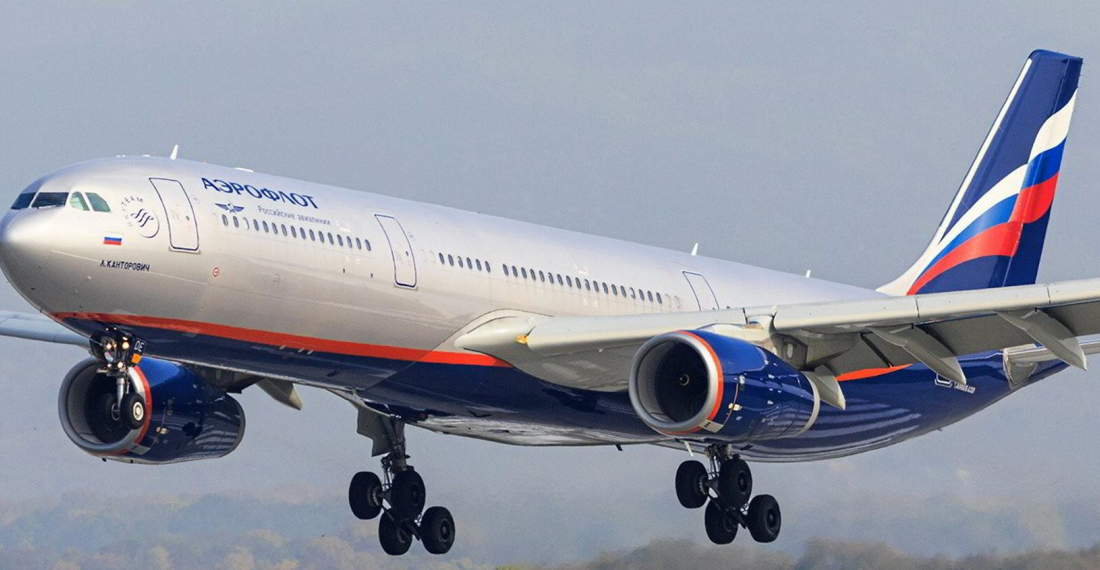
International sanctions on Russian aviation are causing chaos for Central Asian countries. Citizens stuck in Russia are finding it hard to return home after the Russian Federal Air Transport Agency recommended that domestic airlines with foreign-leased aircraft suspend flights overseas.
After Russia invaded Ukraine, Western Countries began applying harsh sanctions on Russia in several areas. One of the sectors targeted was the aviation sector. On 27 February, the EU banned all Russian planes, both commercial and private, from entering EU airspace. The EU also banned the sale of aircraft and parts to Russian companies. The sanctions have caused a major crisis for Russian aviation. According to Reuters, 777 out of 980 planes in Russia are leased.
The tough sanctions led to Rosaviatsiya, the Federal Air Transport Agency of Russia, recommending on 5 March that all domestic airlines with foreign-leased aircraft suspend flights abroad from 8 March due to the fear of those planes being impounded. The announcement came after leasing companies AerCap and Air Lease requested that Russia return all leased planes and asked governments of all countries to return the relevant aircrafts. Aeroplanes manufactured in Russia did not receive the same recommendation from Rosaviatsiya. Aeroflot, the flag carrier of Russia, announced that they were suspending all international flights citing "circumstances that hinder operating flights." S7, Russia’s largest private airline, made a similar announcement.
The impact of the sanctions on the aviation sector is having far-reaching consequences for countries in Central Asia. A spokesman for the Uzbek Ministry of Transport told RFE/RL Ozodlik programme that the leasing companies' request for all countries to give back planes has put countries in Central Asia in a tricky situation. The spokesman said that there is a Russian-leased aeroplane in Tajikistan but officials in Dushanbe are afraid to seize it, underlining the difficult position Central Asian countries find themselves in.
2.2 Million Uzbek citizens live within the Russian Federation and remittances from Uzbek migrants in Russia constitute 12% of National GDP. Regular flights from Russia to Uzbekistan have been cancelled, Smartavia and iFly, two Russian carriers, have suspended all flights to Uzbekistan and flights that are still operating have more than doubled in price. As an aviation specialist for Uzbekistan said, “After the sanctions, not a single such aircraft landed on the territory of Uzbekistan. The reason is very simple - they remained uninsured.” Uninsured aircraft are prohibited from flying. Millions of migrants are now left without a crucial air bridge to their homeland. International sanctions on finance are already causing currency crises in Kazakhstan and Kyrgyzstan. The impact of sanctions on the aviation sector further highlights the cost of Russian actions in the Central Asian region.
Sources: CommonSpace.eu with RFE/RL Ozodlik (Prague), Reuters (London), and other media agencies
Picture: Aeroflot aircraft takes off (Fedor Leukhin/Creative Commons)