


Bonn Dialogue Meeting calls for the theme "Climate Change, Peace and Security" to be included in the agenda of COP29

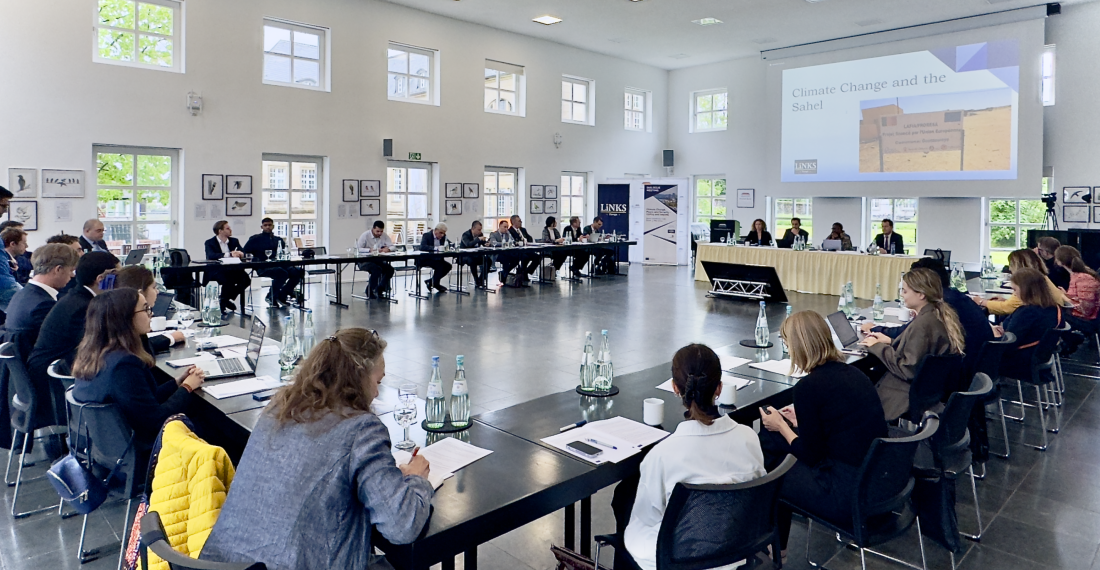
A dialogue meeting on the topic: “Climate Change Peace and Security – COP 29 and Beyond” was held at the Bonn University Club in Bonn, Germany, on Friday, 3 May 2024. Representatives of various state-parties to the Climate Convention and of the UN Climate Secretariat, joined participants from around 30 academic institutions, think tanks and civil society organisations to review the work done on this topic at COP28 in Dubai in December and chart a way forward for ensuring the continuation of the process at the COP29 meeting in Baku in November.

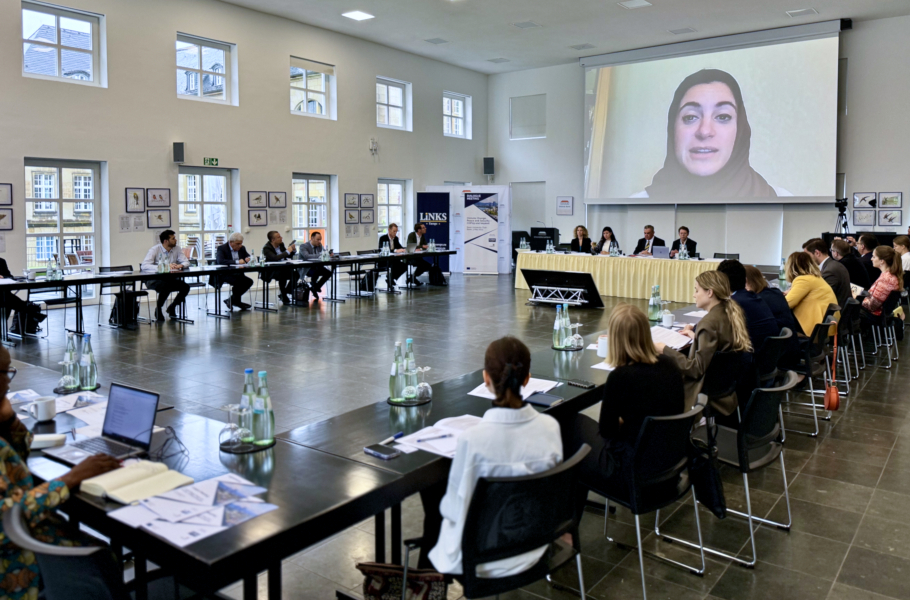
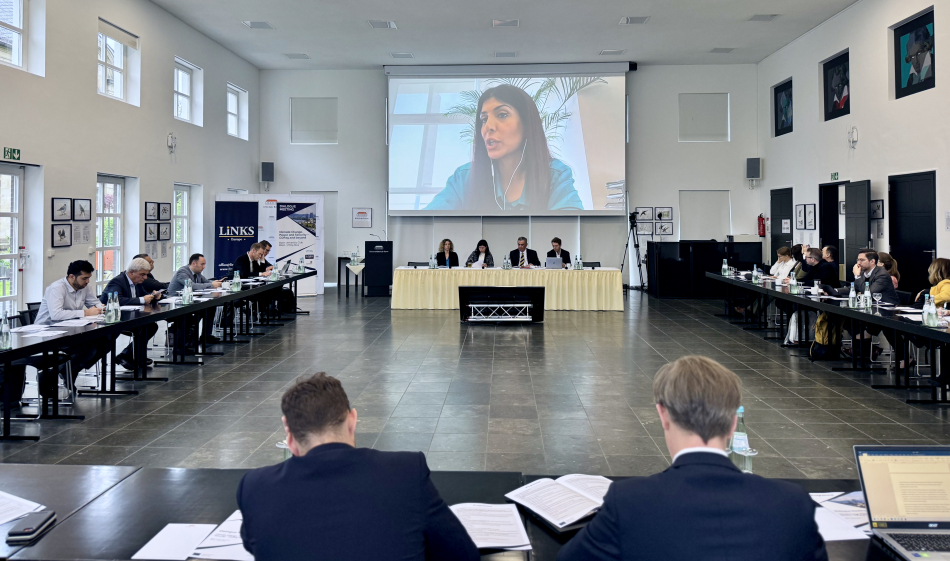
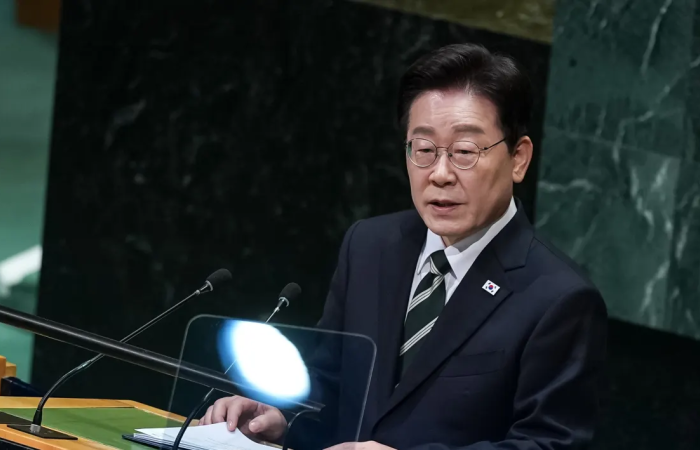
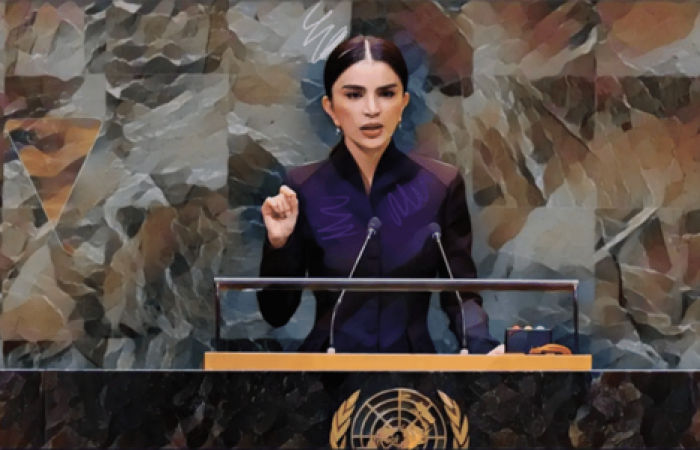
At the opening session, the meeting was addressed by HE Hana al Hashemi, the United Arab Emirates COP28 Chief negotiator, HE Nigar Arpadarai, the UN High-Level Champion for COP29 in Azerbaijan, and Mr Markus Hicken, Director for Energy Foreign Policy, Climate and Security at the German Federal Foreign Office. Also speaking at the opening session was Ms Maria Paloma Noriega Jalil, representing the UN Climate Secretariat. There followed an intensive one-day of discussions on the current state of the COP process, and the ongoing debate on the nexus of Climate Change, Peace and Security within the COP process. The meeting was addressed by world-class experts from leading think tanks and academic institutions, including Chatham House, the German Council on Foreign Relations, ADELPHI, the School of Oriental and African Studies in London, Heidelberg University, The Hertie School in Berlin, amongst others.
Image
Keynote Guest speakers, H.E. Hana al Hashimi, COP28 UAE Chief Negotiator
Keynote Guest speaker, H.E. Hana al Hashimi, COP28 UAE Chief Negotiator
Image
Keynote Guest speaker, H.E. Nigar Arpadarai, UN Climate Change High-Level Champion for COP29

The meeting positively assessed the steps taken in COP28 in Dubai in December, including the inclusion of climate change, peace and security as a theme of the meeting, the holding for the first time of a day on peace in the deliberations, and the “COP28 Declaration on Climate, Relief, Recovery and Peace”. It was felt that it was important that this momentum will not be lost, and similar actions are also included as part of the COP29 meeting in Baku in November. Whilst it was recognised that the nexus between Climate Change Peace and Security was now widely recognised internationally, inserting this in the COP process remained an issue under discussion.

During the meeting three aspects of the Climate Change, Peace and Security agenda were highlighted, namely water scarcity; food insecurity; and landmine contamination and environmental degradation resulting from conflict. Participants called on the State Parties to the Climate Convention meeting in the context of COP 29 to ensure proper discussion and action on these themes that affect millions of people and thousands of communities across the world.
Image
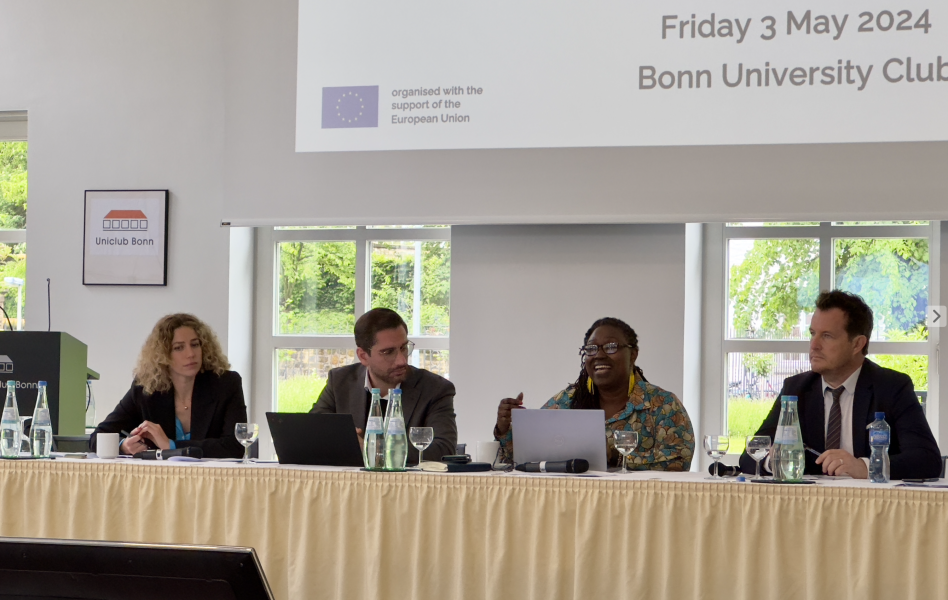
Panel discussion with the participation of Dr Sarah Njeri (School of Oriental and African Studies); Dr Tobias Zumbragel (CARPO, Bonn); Marc Limon (Universal Rights Group)
Panel discussion with the participation of Dr Sarah Njeri (School of Oriental and African Studies); Dr Tobias Zumbragel (CARPO, Bonn); Marc Limon (Universal Rights Group). Chaired by Isabelle McRae (Restart Initiative).

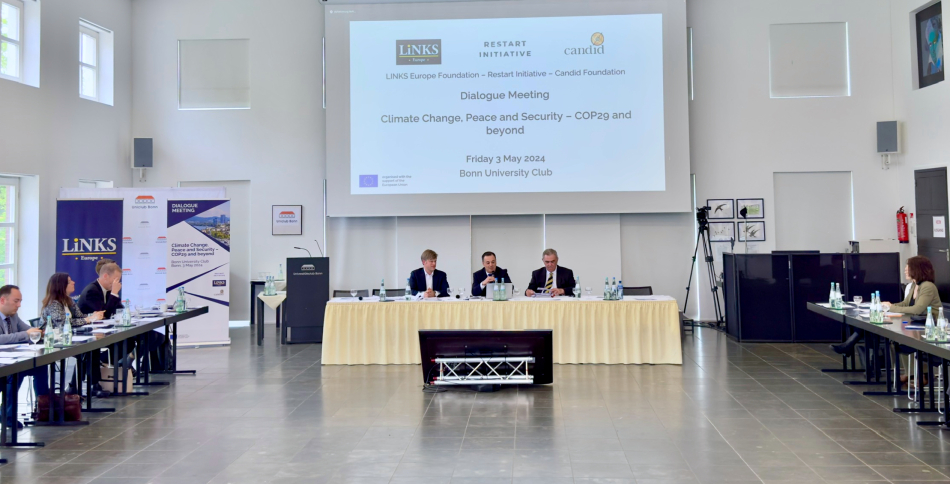
In his concluding remarks at the end of the dialogue meeting, HE Ambassador Elshad Iskanderov, advisor to the COP 29 presidency, said that Azerbaijan was positive to the idea of having Climate Change Peace and Security as a theme at COP29. Ambassador Iskanderov reminded that the decision to hold COP29 in Baku was taken unanimously, and was an unprecedented confidence-building measure in the context of the South Caucasus.  Azerbaijan wanted to build on what had already been achieved in Dubai. He said that these decisions did not depend on Azerbaijan alone since COP was a multilateral process where the 198 state parties had the final say. Ambassador Iskanderov underlined the readiness of the Azerbaijani COP29 presidency to continue the dialogue on this issue with academia, think tanks and civil society as the preparations for COP 29 progress. He highlighted the fact that the discussion needs to focus not only on the potential that climate change will fuel more conflict and insecurity, but also on the impact of conflicts on climate change and environmental degradation.
Image
CONCLUDING REMARKS, H.E. AMBASSADOR ELSHAD ISKANDEROV (COP29 AZERBAIJANI PRESIDENCY)
CONCLUDING REMARKS, H.E. AMBASSADOR ELSHAD ISKANDEROV (COP29 AZERBAIJANI PRESIDENCY) 

Concluding the Bonn Dialogue Meeting, Dr Dennis Sammut, Director of LINKS Europe Foundation, who together with Candid Foundation and ReStart Initiative hosted the Bonn event, said that a lot of work needs to be done between now and November, and particularly the dialogue with the COP Troika countries, the UN Climate Secretariat and interested state parties needs to be continued and intensified. As a concrete step, LINKS Europe will set up an ad hoc working group with other interested non-state actors, to ensure that the conversation continues, and tangible results are achieved.
The Bonn Dialogue Meeting "Climate Change, Peace and Security - COP29 and beyond was organised by LINKS Europe Foundation, Candid Foundation and ReStart Initiative, with the support of the European Union.
You may read or download a compendium of the event here
You may read or download the summary of proceedings of the event here
For more information about the event please contact Maximiliaan van Lange at LINKS Europe (maximiliaan@links-europe.eu)

Related articles

Editor's choice
News
Key European countries back Denmark in the face of Trump's continuing insistence on taking over Greenland

Key European countries back Denmark in the face of Trump's continuing insistence on taking over Greenland

 Six major European countries have declared their support to Denmark following renewed insistence by the US that it must have control over Greenland. "Greenland belongs to its people, and only Denmark and Greenland can decide on matters concerning their relations," said the leaders of the UK, France, Germany, Italy, Poland, and Spain, in a joint statement, issued on Tuesday (6 January), together with Denmark. On Sunday, Donald Trump said the US "needed" Greenland - a semi-autonomous region of fellow Nato member Denmark - for security reasons. He has refused to rule out the use of force to take control of the territory, and Danish Prime Minister Mette Frederiksen warned on Monday that an attack by the US would spell the end of Nato. The issue of Greenland's future resurfaced in the wake of the US military intervention in Venezuela, during which elite troops went in to seize the country's President Nicolás Maduro and take him to face drugs and weapons charges in New York. Following the raid, Trump said the US would "run" Venezuela for an unspecified period of time. He also said the US was returning to an 1823 policy of US supremacy in its sphere of influence in the Western hemisphere - and he warned a number of countries the US could turn its attention to them. The US military raid in Venezuela has reignited fears that the US may consider using force to secure control of Greenland. A day after the raid, Katie Miller - the wife of one of Trump's senior aides - posted on social media a map of Greenland in the colours of the American flag, alongside the word "SOON". On Monday, her husband Stephen Miller said it was "the formal position of the US government that Greenland should be part of the US". In an interview with CNN, he also said the US "is the power of Nato. For the US to secure the Arctic region, to protect and defend Nato and Nato interests, obviously Greenland should be part of the US." Asked repeatedly whether the US would rule out using force to annex it, Miller responded: "Nobody's going to fight the US over the future of Greenland." Stressing they were as keen as the US in Arctic security, the seven European signatories of Tuesday's joint statement said this must be achieved by Nato allies, including the US "collectively" - whilst "upholding the principles of the UN Charter, including sovereignty, territorial integrity and the inviolability of borders". Greenland's Prime Minister Jens-Frederik Nielsen welcomed the statement and called for "respectful dialogue". "The dialogue must take place with respect for the fact that Greenland's status is rooted in international law and the principle of territorial integrity," Nielsen said. Trump has claimed that making Greenland part of the US would serve American security interests due to its strategic location and its abundance of minerals critical to high-tech sectors. Greenland, which has a population of 57,000 people, has had extensive self-government since 1979, though defence and foreign policy remain in Danish hands. While most Greenlanders favour eventual independence from Denmark, opinion polls show overwhelming opposition to becoming part of the US.

Popular

