Follow all the build up to Sunday's European Grand Prix in Baku, Azerbaijan. If you have feedback or suggestions, please send us a Facebook message. All times GMT +4 (Baku time).
18.55 The final rankings, as Nico Rosberg increases his Championship lead to 24 points.

18.50 Irish F1 personality Eddie Jordan is now interviewing Nico Rosberg as well as the second place finisher, Sebastian Vettel, and Sergio Perez, who came third.
18.45 The German national nathem plays on the podium after Nico Rosberg wins the Baku Grand Prix. President Ilham Aliyev, accompanied by his wife, hands him the trophy.
18.40 After Rosberg came Vettel, Perez and Raikkonen, with Hamilton in fifth.
18.37 The chequered flag waves as Nico Rosberg wins the first ever Grand Prix in Baku.
18.35 Nico Rosberg is comfortably ahead in the Baku Grand Prix. Lewis Hamilton is some way behind.
18.25 Team Mercedes confirm Lewis Hamilton has remedied a technical fault. The British driver now registers his fastest lap of the race.
18.22 A lap chart from www.twitter.com/f1, after the first 36 laps

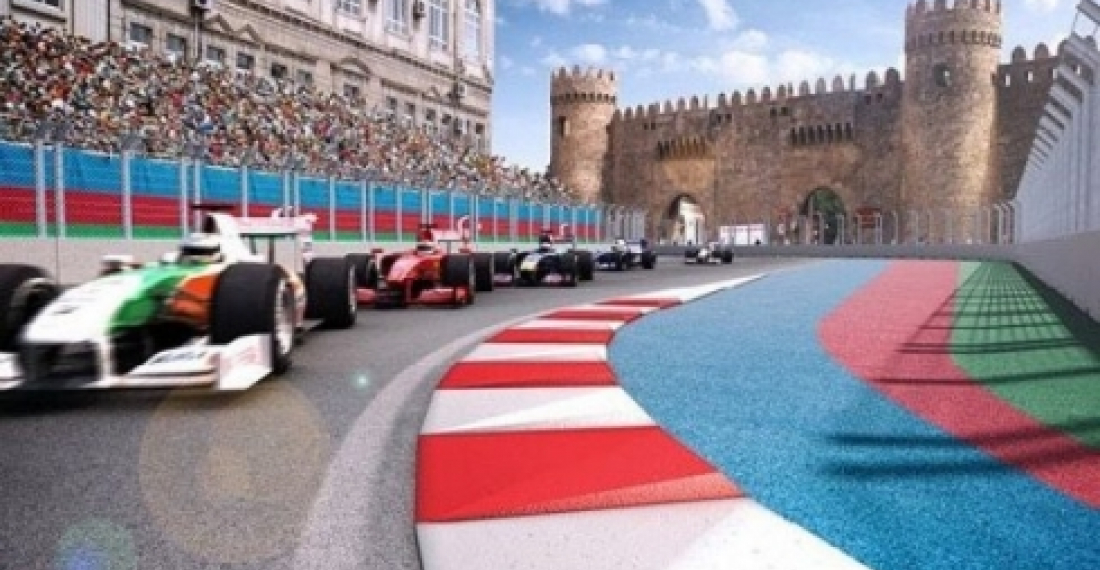
18.10 Cars racing through Baku's old town.

17.55 With thirty laps gone, drivers are looking cautious, and there have been no major crashes. Rosberg is leading comfortably.
17.50 We are now at the half way stage in the inaugural Baku Grand Prix, with 26 out of 51 laps completed.

17.40 So far there has only been one retirement - Daniil Kvyat. Nico Rosberg is still comfortably in the lead.
17.35 The sun is shining in Baku as the city holds its first ever Grand Prix. Nico Rosberg is still comfortably in the lead, but Lewis Hamilton is working his way up the grid.

17.23 Lewis Hamilton overtakes Valtteri Bottas to reach 4th place.
17.21 Nico Rosberg's chalks up his fastest lap on 1.49:930.
17.18 Lewis Hamilton has now advanced significantly from his position in 10th on the grid after crashing during qualifying. He is up to 5th place on the 9th lap.
17.14 Nico Rosberg is comfortably ahead so far in Baku.
17.10

17.04 Despite the narrow corners on Baku, especially the 15th corner which several drivers have crashed on during qualifying and practice, the first lap takes place without incident. The drivers are looking cautious.
17.00 The cars are lining up in Baku for the start of the inaugural Baku Grand Prix.
16.27 An interesting twist to the opening ceremony, social media is buzzing with the news that all the hostesses are Russian. Not sure if Azerbaijani women will be pleased with this or jealous.
15.51 The opening ceremony of the Baku F1 grand Prix has started.


14.25: The most common description, being used by journalists and visitors, of the historical centre of Baku as a backdrop to the F1 Grand Prix is "stunning".
13.07: One of the surprises of the race so far has been the rather poor performace of Lewis Hamilton. Hamilton said his error-strewn qualifying session at the Grand Prix of Europe was the worst of his career.
He will start 10th, with Mercedes team-mate Nico Rosberg on pole, after crashing out following a series of mistakes through the hour-long session. The Briton, 31, told BBC Sport: "Not a good day for me. Probably the worst session I've ever had in qualifying." Hamilton, who is defending the drivers' title, said he would "have to think about" what had gone wrong.
12.15: There has been some controversy around the Baku Grand prix, with some criticising the government for spending resources on this presige sports event. The Azerbaijani President however justified the government decision in a speech on Friday. President Aliev said that the Grand Prix had a global audience of one and a half billion people. The President said prestigious events like the Grand prix help to make Azerbaijan a popular tourist destination and tourists coming to Azerbaijan see the reality of the country for themselves. "The basis of all our success is the unity of our citizens" said President Aliyev stressing that Azerbaijan is multiethnic and representatives of all nationalities are actively involved in the development of the country.
12.00: Good Morning and welcome to the third and last day of our live blog following events around the Formula 1 Baku Grand prix. Today is the climax of the event with the main race scheduled for later this afternoon. 11 Teams with two drivers each will compete in the event.
This live blog is now closed. Follow the action for Sunday's Baku Grand Prix, 1400-1600, here on Commonspace. Here are some pictures of today's qualifying rounds, courtesy of Getty Images and Rex Images.


18.20 - The full standings for Sunday's race, after Rosberg takes pole position and Hamilton crashed:

18.10 - Nico Rosberg will take pole position at the Baku Grand Prix on Sunday. Lewis Hamilton, his fierce Mercedes rival, crashed and will now start the race in 10th.

17.40 - More drivers are eliminated after the second qualfying round, with Rosberg still leading. Full rankings courtesy of www.twitter.com/F1:

17.20 - After the first qualifying round, the drivers to miss out are Haryanto, Wehrlein, Button, Ericsson, Magnussen, Palmer. Rosberg is leading, with Hamilton second. Full rankings courtesy of www.twitter.com/F1:

17.00 - The first qualifying round gets underway.
15.30 - Lewis Hamilton has beaten Nico Roberg in the final practice round in Baku.
14.25 - The third and final practice round is underway in Baku.

14.15 - The weather in Baku ahead of the qualifying round later today is hot and sunny, with blue skies.

14.10 - The National Automobile Club of Azerbaijan (AMAK) will run a 'road safety in practice' day tomorrow, the day of the main Grand Prix. This will include speeches and discussions about road safety in the country and world wide. Nigar Jamal, who won the Eurovision song contest for Azerbaijan in 2011. The Eastern Alliance for Safe and Sustainable Transport, an NGO, is also involved in the events. Azerbaijan has been criticised in the lead up to the Grand Prix for its poor record on road safety.
13.50 - Italian driver Antonio Giovinazzi of the Prema Racing team won the first GP2 race in Baku. Russian driver Sergey Sirotkin of ART Grand Prix came second, followed by Raffaele Marcello from the Russian Time team.
13.30 - Website Meydan.TV has criticised the expense cost of tickets for the Baku Grand Prix:
"Economist Natiq Jafarli laments that few Bakuvians will be able to afford to join the spectacle of Formula 1 – and even doubts the appeal for foreigners. “The tickets are so expensive that it would be absurd to expect tourists to come.”
According to the official website, the cheapest Formula 1 ticket available is 147 AZ (89 EUR), while the most expensive is an eye-watering 990 AZN (595 EUR). This “budget” option, which does not provide access to any of the grandstands, costs more than the official “minimum monthly cost of living” for an adult in Azerbaijan, which national law has set at 136 AZN (82 EUR).
Natiq Jafarli says that the organizers probably set the ticket prices with foreign visitors’ wallets in mind. He believes that due to the high prices, “There will be few visitors. The annual salaries of doctors, teachers, and engineers could never support such extravagance. I can’t believe that locals would save up for months just to attend the races for a few days. Perhaps if the event involved a number of different sports, people might be more interested. But these prices are simply absurd for normal Azerbaijani citizens.”
12.10 - There were major issues with the track in the qualifying circuits in Baku yesterday. Metal kerbs, rather than the rubber usually used, caused damaged to cars' tyres. Track architect said changes would be made before the qualifying round today. "We will have a look at it later. We have all night to solve it," he told BBC Sport yesterday.
11.05 - Reigning F1 champion Lewis Hamilton spoke positively about the Baku track after practice yesterday.
"It has a combination of corners like Monaco and you really have to commit to corners with barriers on the exit, which is really tricky. I had my heart in my mouth. It is a real challenge to be on the limit."
11.00 - Welcome to another day's coverage of the European Grand Prix in Baku, one of the biggest ever events held in the Caucasus. Nico Rosberg and Lewis Hamilton got the quickest lap times in yesterday's practice circuits. Today, the important action begins at 5pm with qualifying.
18.45 - This live blog is now closed. Join us tomorrow for the latest on the first qualifying round.
18.45 - A comment from the Commonspace political editor:
"For Azerbaijan the Formula 1 is not simply a sport event but also an opportunity to showcase the country to the outside world. Azerbaijan has in recent years invested money and effort in big international events such as the Eurovision Song festival and the 1st European Games. Some inside and outside the country have criticised the Azerbaijan Government for spending resources on such prestige events.
"However for many Azerbaijanis these events are a cause for national pride and they consider them as an important part of the country's state-building process. Some of the criticism is justified, but nonetheless one has to say that the fact that Azerbaijan has organised very well these large international events is also a sign of how far the country has moved on from the dark days immediately following independence when all the institutions of the country were in disarray."
18.40 - At the end of the second practice session, the familiar duo of Lewis Hamilton and Nico Rosberg are leading. Image courtesy of www.twitter.com/f1.

18.10 - A picture of the race from Baku's old town.

17.40 - At the halfway stage in the second qualifying stage, Lewis Hamilton and Nico Rosberg, the two championship leaders, are the two quickest drivers.
17.00 - After hasty repairs to the track, the second qualifying round gets underway.
16.35 The start of the second practice round has been delayed, because the kerbs in Baku have been damaging drivers' tyres. Workers are attempting to resolve the issue. Kerbs on Formula 1 tracks are normally rubber, but in Baku they are metal.
15.45 - Here is what the official website of the Baku City Circuit has to say:
"The 2016 Formula 1 Grand Prix of Europe is scheduled for the weekend of 17-19 June, 2016. Baku City Circuit will be the second longest F1 track, with a length slightly over six kilometers.
The specially constructed street circuit will see F1 cars race around the stunning downtown area of Baku, incorporating its UNESCO-protected old city – Icheri Sheher historical-architectural reserve - as well as its modern skyline and beautiful Caspian Sea promenade.
Hermann Tilke, the architect behind most new Formula 1 tracks, designed the layout of the circuit.
Baku City Circuit loops around the central and the most picturesque streets of Baku. When it came to selecting the perfect route for the race, the organizers decided to emphasize the panoramic view of the city. Another interesting fact is that the cars will race in an anti-clockwise direction. Overall 30,000 spectators are expected to watch the race live from grandstands located at different parts of the circuit. The length of the widest part of the track is 13m, and the narrowest width is 7.6m between the 7th and 8th turns, which are situated along Icheri Sheher (Inner City)."
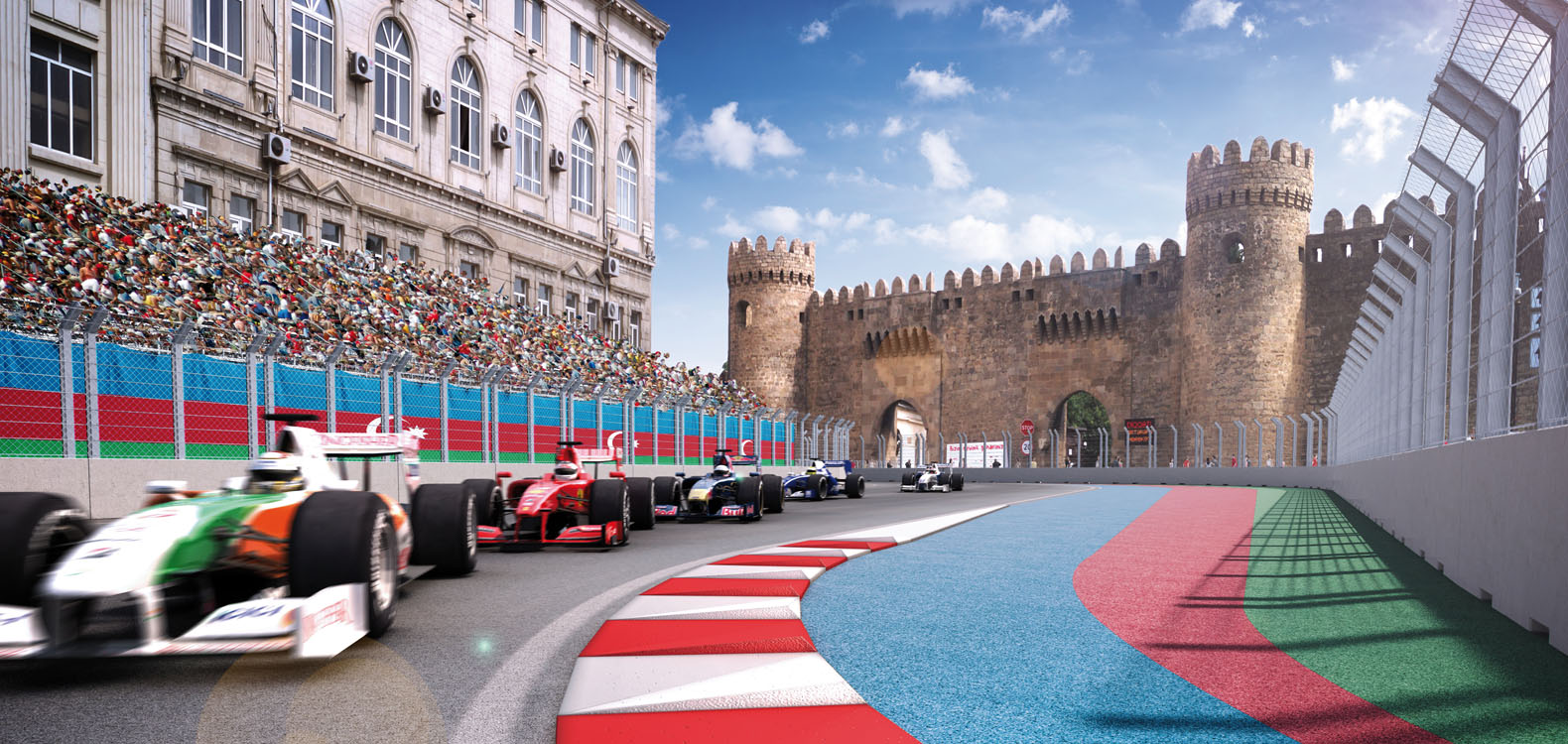
15.40 - Maydan TV has criticised some of the recent architectural developments in Baku.
"A walk through Icheri Sheher - round the 15th century Shirvanshah Palace, past the 9/10th century Maiden’s Tower, by the hamams and the caravanserais - is a series of encounters with Azerbaijan’s rich cultural and architectural heritage. Within the 12th century walls of the Inner City (as it translates from the Azerbaijani) are the traces of the city’s Zoroastrian, Sassanian, Arabic, Persian, Shirvani, Ottoman, and Russian presences.
These ancient streets tell the story of Baku’s past. But in the past few years, a new, pernicious narrative has emerged, threatening to destroy the historical and cultural integrity of a site that has been inhabited since the Palaeolithic period.
The recent Cabinet decision to revoke the protected status of a number of historical buildings is indicative of the state’s dereliction of duty when it comes to the protection of culturally important areas. The removal the site from UNESCO’s List of World Heritage in Danger in 2009 may have been premature. The UNESCO page on Icheri Sheher still notes the need to ensure that the site ‘does not become a small island within high-rise developments’. Baku’s construction boom - fuelled by now-declining oil and gas revenues – threatens to encroach on the views from Icheri Shehar – which should, under basic conservation principles, be protected. This is part of what Imranova fears. She asks, “Will tourists come to see 30-floor skyscrapers?!”.
15.35 - A simulation of the Baku circuit can be viewed here. The tight corners through the old town can be viewed from 45 seconds.
15.30 - Trend.AZ is reporting comments by Azerbaijani president Ilham Aliyev today in a meeting with a representative from the Parliamentary Assembly for the Council of Europe:
"President Aliyev, saying Baku is a new city on the map of Formula 1, expressed confidence that the race will be interesting for visitors and will create good opportunities for them to better familiarize themselves with the country and get more information about development processes in Azerbaijan."
15.20 - This graphic from BBC Sport shows the circuit. The long straight section, and the tight turns going through Baku's Old Town, have caught the attention of commentators before the race.

15.15 - Amnesty International has criticised the human rights situation in Azerbaijan, and called upon Formula One to pressure the government.
“The arrival of Formula One in Baku must not steer attention away from the Azerbaijani authorities’ human rights crackdown," said Kerry Moscogiuri, director of campaigns.
“Behind the glitz the authorities are locking up their critics, have shut down NGOs and arrested or harassed their leaders. The recent release of some of those jailed on trumped-up charges should not fool anyone into thinking that the wind in Baku is blowing in a different direction.
15.00 - Lewis Hamilton of Mercedes, reigning Formula One champion, has topped the first practice round in Baku, 0.377 seconds ahead of Nico Rosberg.
14.45 - Here is a picture of a car passing through Baku's old town on a practice circuit:

14.40 - A comment from the Commonspace political editor:
"For Azerbaijan the Formula 1 is not simply a sport event but also an opportunity to showcase the country to the outside world. Azerbaijan has in recent years invested money and effort in big international events such as the Eurovision Song festival and the 1st European Games. Some inside and outside the country have criticised the Azerbaijan Government for spending resources on such prestige events.
"However for many Azerbaijanis these events are a cause for national pride and they consider them as an important part of the country's state-building process. Some of the criticism is justified, but nonetheless one has to say that the fact that Azerbaijan has organised very well these large international events is also a sign of how far the country has moved on from the dark days immediately following independence when all the institutions of the country were in disarray."
13.45 - Meydan TV, an Azerbaijani channel, is presenting an alternative view of the event.
"Journalists took to the streets and asked pedestrians how they felt about the F1 races in Baku. Some responded positively to the event, citing Azerbaijan’s need to make itself known to the outside world and the boost to tourism in the country.
"Others expressed their anger and disappointment in the government's decision to waste the public's time and money on such an event, that has brought unnecessary disruption to the city's transportation and economic livelihood. Many felt that hosting the event was inappropriate, given the current economic crisis in Azerbaijan and the double devaluation of the nation's currency in the past year and a half."
13.35 - The first practice laps are underway in Baku, with the air temperature 27 degrees. So far Valtteri Bottas has had the best lap time - 1:47.707 - with Lewis Hamilton and Nico Rosberg slightly behind.
13.10 - What does the Baku track's architect have to say about the circuit?
“We have created a challenging street circuit, in terms of engineering and design, and one that thrives on Baku’s very attractive urban atmosphere and its great combination of the historic city centre, the beautiful seaside promenade and the city’s impressive modern style," - Herman Tiilke.
12.45 - The last time Baku held a major sporting event was last June, when the European Games were held in the city. You can read what our political editor had say about the Games here:
"The Games have been a success for Azerbaijan despite some controversy that surrounded them. The Games had been overly politicised by both the Azerbaijan Government and its opponents. In the end however the Olympic spirit prevailed throughout the seveteen days of the games, and the spirit of friendship was also reflected in the closing ceremony.
"There will remain questions about whether Azerbaijan should have spent so much money on a prestige event when it has still a number of big challenges within its society that it needs to tackle. However a nation does not exist only on bread, and considering that Azerbaijan was only a couple of decades ago a nation broken by war, strife and economic collapse, the Games signify a new national confidence."
12.10 - Jenson Button, one of the most respected figures in Formula One, has expressed safety concerns about the track in Baku.
“Maybe the circuit was supposed to be the other way around. It is just how it is. It is a shame because a lot of the circuit is good and you look at the condition of everything, it does look very good. I do like the layout, it is exciting in some places. But some things look like they need to be addressed. The bit I don’t like is a few corners," said Button, director of the Grand Prix Drivers’ Association.
“We work so hard on safety, improving circuits all the time and we come here and we have corners like T3, T7 and T14 that don’t have any run-off at all. Turn 7 has three Tecpro barriers and then a concrete barrier at the edge of the circuit. There is not much you can do because there is a building in the way. It is a shame really.”
11.50 - German Nico Rosberg is going for his first ever Championship, after finishing second for the last two years.

11.10 - Where do things stand at the moment?
| 1 |
Nico Rosberg |
Mercedes |
4 |
116 |
| 2 |
Lewis Hamilton |
Mercedes |
2 |
107 |
| 3 |
Sebastian Vettel |
Ferrari |
0 |
78 |
| 4 |
Daniel Ricciardo |
Red Bull |
0 |
72 |
| 5 |
Kimi Raikkonen |
Ferrari |
0 |
69 |
| 6 |
Max Verstappen |
Red Bull |
1 |
50 |
| 7 |
Valtteri Bottas |
Williams |
0 |
44 |
| 8 |
Felipe Massa |
Williams |
0 |
37 |
| 9 |
Sergio Perez |
Force India |
0 |
24 |
| 10 |
Daniil Kvyat |
Toro Rosso |
0 |
22 |
With four wins, Nico Rosberg is narrowly ahead of his Mercedes teammate Lewis Hamilton.
10.00 - Baku is getting ready for its first ever Grand Prix, in one of the biggest sporting events ever held in the Caucasus. You can follow all the action here on Commonspace.