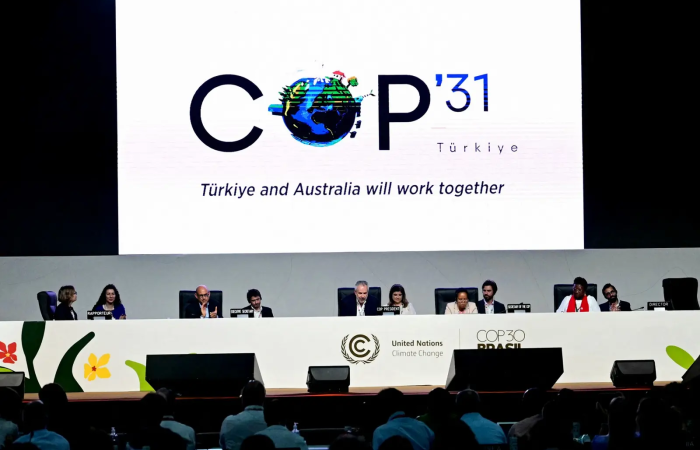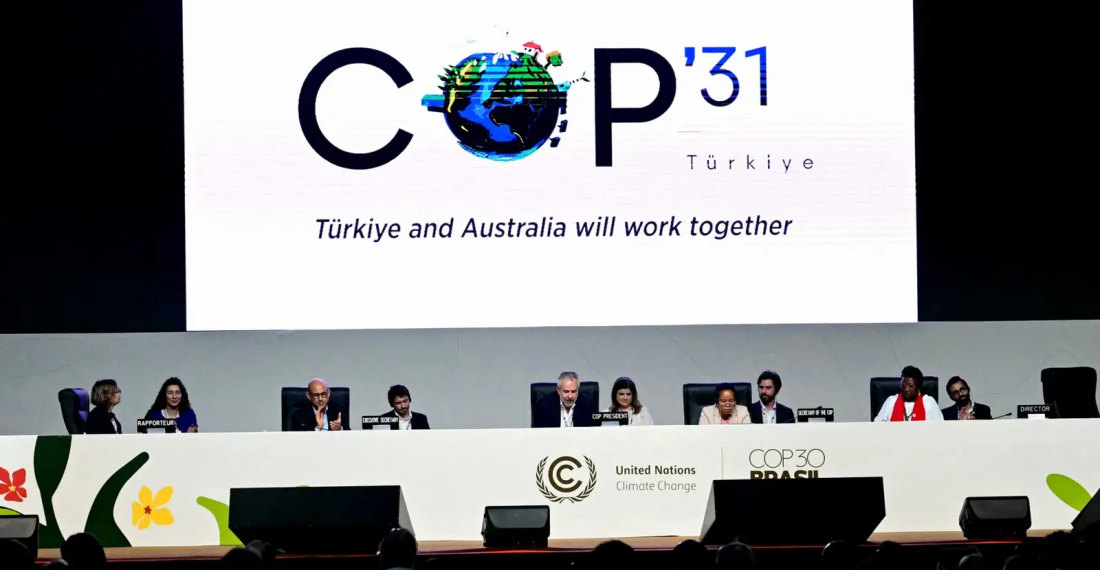
The first day of the COP31 climate summit in Antalya, Türkiye, on 9 November 2026, saw governments, businesses and financial institutions announce new commitments to accelerate electrification, while UN leaders called for concrete progress towards transitioning away from fossil fuels.
The Global Electrification Initiative, aiming to increase electricity’s share of final energy consumption from approximately 23% to 35% by 2035, is one of the key focuses of the COP31 Presidency. Since July, the project has secured the backing of 180 companies, representing $1.69 trillion in annual revenues, including Volvo, Uber, IKEA and Siemens. COP31 President Murat Kurum argued that electrification was essential to strengthening energy security, reducing emissions and supporting economic growth, particularly amid the vulnerability exposed by dependence on imported fossil fuels.
Investment commitments were also strengthened. The Utilities for Net Zero Alliance (UNEZA) announced that its members would increase annual investment in electricity grids, renewable energy and storage to at least $156 billion. The alliance also reported constructing more than 21,000 kilometres of new electricity grids in 2025, a 50% increase compared with the previous year. Meanwhile, 13 green freight corridors covering more than 29,000 kilometres are now under development across six continents, exceeding the initiative's original target of ten routes by 2026.
The summit also saw the launch of the Electrify Now Finance Coalition, intended to mobilise investment for electrification projects in developing economies, with the World Bank and African Development Bank serving as its inaugural co-chairs in 2027.
Alongside these developments, the transition away from fossil fuels emerged as a central political issue. UN Secretary-General António Guterres urged Türkiye and Australia, the summit's co-hosts, to continue developing the roadmap introduced by Brazil, the host of COP30 in 2025, for transitioning away from fossil fuels, despite the initiative not being included on COP31's official agenda. He called on participants to move towards organising, financing and implementing the transition. UN climate chief Simon Stiell similarly argued that Antalya should accelerate the roadmap's implementation.
However, Türkiye's own fossil fuel ambitions highlighted the tensions surrounding the negotiations. The same day, in an X post, President Recep Tayyip Erdoğan announced the discovery of two new oilfields in the Gabar mountains, with an estimated potential of 135 million barrels. Production in began in October, and the new fields are expected to increase oil output by 30% in the region referred to as “the capital of oil”, according to a separate statement made by Erdoğan after his cabinet meeting.
Finally, a scientific assessment presented at the summit found that global carbon dioxide emissions from fossil fuels are expected to remain broadly stable in 2026, representing a projected decline of 0.4% compared with 2025. Researchers cautioned that this modest reduction could be temporary, particularly as emissions from deforestation and land-use changes continue to rise.
Source: Report compiled for commonspace.eu by Anna Szedlacsek with with The Climate Watch (Dhaka), The Guardian (London), and United Nations Framework Convention on Climate Change (Bonn).