|
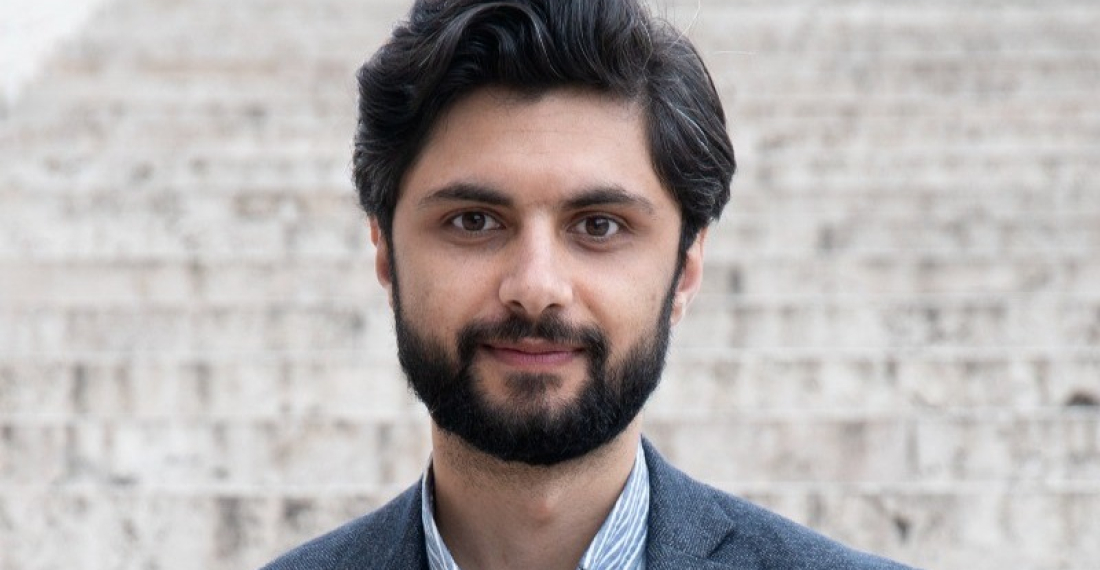
This commentary was prepared by Mr Narek Sukiasyan for the 11th issue of the Armenia Election Monitor 2026 newsletter. On June 7, Armenians will head to the polls for the first time in almost a decade to vote in a regular, not snap, Parliamentary election. The stakes could not be higher. If victorious, the incumbent Prime Minister Nikol Pashinyan will become the longest-serving head of government in Armenia’s independent history, provided he serves the full 5-year term. Standing in his way is a fragmented but determined opposition, led since half a year ago by Samvel Karapetyan and his Strong Armenia party. While reliable polls indicate that the opposition remains at a significant distance from outright victory, their best bet lies in the post-election coalition of several opposition parties. This is often referred to as the "Gyumri-2" scenario— mimicking the successful manoeuvre pulled off in the second-largest city last year, where the coming together of the opposition forces overtook Civil Contract, which failed to secure a majority. This outcome, however, is far from guaranteed on June 7. The Contenders: The ruling party approaches the new term with a surprisingly strong position. Surprisingly, because for Armenians security remains the number one priority, however, during its term, Armenians were involuntarily displaced from Karabakh, and the largest-ever human and territorial losses occurred concerning the sovereign Republic of Armenia. Four factors may explain why – against these odds – the Civil Contract maintains a wide lead over the opposition. After those losses, a Peace Agreement was initialled with Azerbaijan, and though not final yet, in an unprecedented manner, no combat losses were registered in over a year. For Armenians, this is very important. The second reason is socio-economic – introduction of universal health care, increase of pensions in the lead-up to elections (widely criticized) and massive – for Armenian low expectations – infrastructure investments that send an image of progress and of the country heading in the right direction. In recent years, Armenians have turned very pro-Western, and the government's efforts in that direction are valued by the voters. And last, but arguably one of the most important reasons for the ruling party’s survivability is who the opposition is – former presidents and their associates who can compete in their anti-ratings only against each other. As long as they present the main challenge and alternative to the incumbents, the chances that voters will tolerate the wrongdoings of the Civil Contract remain high. The largest opposition force is led by Samvel Karapetyan – a citizen of Armenia, Russia, and Cyprus from the top 60 of Russian Forbes. Holding other passports deprives him of the right to be a candidate, which pushes his nephew to lead the party established only months ago. Samvel Karapetyan’s activation in politics came as a response to his detention after the businessman was alleged with an attempted coup. He was detained and then moved under house arrest after his statement almost a year ago at the peak of the church-ruling party conflict. He said that if the politicians did not solve the issue, “we will engage [in the process] our way”. In a Putin-Pashinyan bilateral in early April, the Russian president raised the issue of access for pro-Russian candidates to the elections. Later statements from the Kremlin made Moscow’s favourites more explicit. Though set to have the second largest fraction in the Parliament, polls put it several-folds behind the ruling party. Former president Robert Kocharyan’s Armenia alliance faces a steep 8% threshold, while local populist oligarch Gagik Tsarukyan’s Prosperous Armenia needs 4% of the votes to participate in the distribution of mandates in the 9th convocation of Armenia’s National Assembly. Observers are on the fence about whether both can jump over this fence. Nevertheless, Armenia’s electoral system anyhow reserves seats for a third party if only two forces pass the threshold. While wild cards should not be ruled out, the remaining 14 parties are expected to collectively secure around 15–20% of the votes. Just as in 2021, these votes will not find representation in Parliament but will mean larger proportions of seats for bigger parties once the threshold is applied. Consequently, even a modest surplus in majority votes for Civil Contract might result in a constitutional majority—a coveted prize the ruling party actively aspires to secure. In 2021, with 54% of the votes, Civil Contract secured a two-thirds majority due to almost 20% of the votes that did not enter the parliament. Pashinyan needs this majority to trigger a referendum to modify the unfavorable rules and thresholds that currently govern referendums and then, through it, to adopt a new Constitution for the Third Republic (effectively turning it into a Fourth). While the Prime Minister presents this new constitution as a vehicle for a new identity and raison d'état in line with his ideology of "New Armenia," the domestic debate over it is deeply polarized. The ideology is to recalibrate Armenian identity from national to civic. The highly politicized and rushed campaign for this, however, makes it a major irritant. Not denying this endogenous motivation, the move is also unmistakably forced by Azerbaijan's demand to remove references to Karabakh as a precondition to seal the Peace Agreement initialled under Donald Trump's mediation last August. The most “trusted” politician according to polls is no one. And this has been the case since Armenia’s defeat in the 2020 Second Karabakh War that shattered public hopes and optimism garnered from the days of the 2018 Velvet Revolution. Due to deep polarization, the political landscape is dominated by the forces of Nikol Pashinyan and the former presidents. While Samvel Karapetyan’s party attempts discursive distancing from them, the associations are unavoidable due to a rich record of political connections and family ties. What cramps them even closer together is how these are all seen as Russia’s favorites to replace Pashinyan. The Campaign: Both poles are engaged in fearmongering of their electorates. The ruling party promises war with Azerbaijan if they lose; the opposition – an economic war with Russia. The direct or indirect propaganda of both mirrors a number that has gained a mythical meaning in this campaign – 300.000. The opposition drums the threat of 300.000 Azerbaijanis to populate Armenia in case of Civil Contract’s victory, while the counter propaganda alarms the mobilization of 300.000 Armenians to fight in Donbas if the opposition wins. All is accompanied by very graphic AI content. Hate speech is plenty, too. Grotesque accusations of treason by the opposition are met by threats against them and their supporters, verbal harassment, and stigmatization of displaced Armenians from Karabakh by the prime minister. Beyond the issues of campaign finance transparency widely reported by independent observers, the most staggering violations are the alleged vote buying by dozens of people connected to or representing the Strong Armenia party. Hybrid attacks and FIMI have become the order of the day, while the reports by the State Revenue Committee on cases of large amounts of undeclared cash being brought to Armenia from Russia have become frequent. In the case of the ruling party, the most outrageous instance of the campaign is the unleashing of the Prime Minister against a refugee activist, Artur Osipyan. After challenging Pashinyan in an argument during a rally, Osipyan was charged with hooliganism and detained. The case is considered politically motivated across a wide spectrum of the democratic civil society, which has never spoken in such a united voice on any domestic topic in recent years. Osipyan’s hunger strike in detention makes the situation even more alarming, not only from a democratic but also a humanitarian point of view. On the positive side, many unknowns about the next parliament’s composition reveal an extent of electoral competition absent many thousand kilometres in all directions of the horizon. Though the ever-changing electoral rules and the novelty of Armenia’s Parliamentary system still require massive efforts of voter education, the discussions about the thresholds, mandate distribution formulas, coalition-making, small parties and more are important signs of voter socialization. The unprecedented number of TV debates among the leading representatives of the contenders may bring Armenia closer to a culture of deliberative democracy, if only those are held with less hate speech and personal attacks. What is also remarkable about the June 7 poll is the level of geopoliticization – both homegrown and from abroad. Unfortunately, the topics of security and foreign policy are too often uttered in reductionist and populist terms – who will save or destroy Armenia? This is set to be a long-term trend due to the increasingly fragmented world order that superimposes this agenda so deeply that even local elections of a village mayor in Armenia are already deeply soaked in debates about the world order, geopolitics, and great powers. Russia is the biggest loser of this new trend, as the exclusively pro-Russian foreign policy receives only a single-digit percentage support among the voters. The implications of that can also be seen in the rhetoric of the opposition parties, who avoid being associated as pro-Russian, endorse the Trump-backed deals albeit with reservations, and invite cooperation with all, including Western powers. On the other hand, while the holding of the European Political Community summit in Yerevan and Emanual Macron’s visit projected the maximum dosage of an implicit endorsement of the ruling party, Donald Trump did not shy away from dedicating a long post of endorsement to Pashinyan on his Truth Social. Conclusion: June 7 will not simply decide who governs Armenia for the next five years — it will signal what kind of country Armenia is becoming. The vote arrives at a moment of rare openness: a peace deal within reach, albeit fragile and conditional, a constitutional overhaul on the table, and a public still searching for leadership it can trust. Whatever the outcome, governing a society this divided and this geopolitically exposed will demand far more than a parliamentary majority. Source: Mr Narek Sukiasyan is a researcher specializing in Armenia's foreign and security policy, with a particular focus on Armenia–Russia relations and regional geopolitics. His work focuses on foreign policy analysis, security dynamics in the South Caucasus, and Armenia's evolving regional and international partnerships. His LinkedIn can be found here. |
Commentary
Armenia goes to the polls, searching for a way forward