Theme

Diplomacy

Editor's choice
News
Germany accuses Russia of cyberattacks and disinformation campaign

Germany accuses Russia of cyberattacks and disinformation campaign

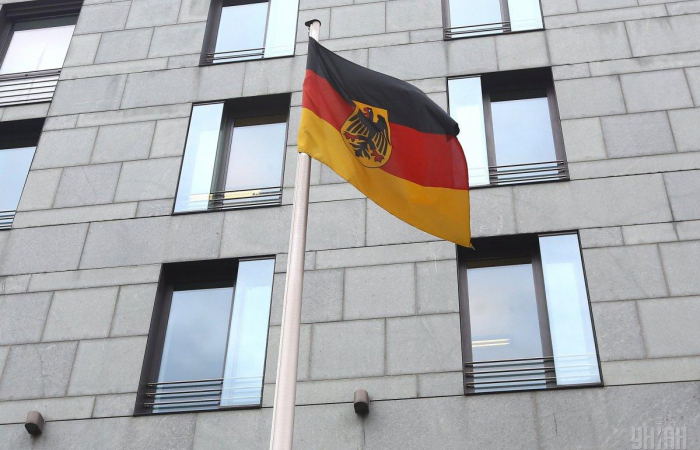
The German government holds Russia responsible for a cyberattack on German air traffic control, and for targeted disinformation campaigns before the last federal election. According to the German Foreign Office in Berlin, the incidents could be clearly attributed to the Russian military intelligence service, the GRU. In response, the Russian ambassador to Berlin was summoned to the Foreign Ministry. "We have been observing a massive increase in threatening hybrid activities by Russia for some time now," a spokesperson for the Foreign Ministry stated. These range from disinformation campaigns and espionage to cyberattacks and sabotage attempts. The aim is to divide society, sow distrust, and undermine confidence in democratic institutions. The spokesperson added that with these actions, Russia is "very concretely threatening our security, not only through its war of aggression against Ukraine, but also here in Germany."  The Foreign Ministry spokesperson explained that the cyberattack on air traffic control in August 2024 was clearly attributed to the hacker collective "APT28," known as "Fancy Bear," and to the responsibility of the Russian military intelligence service, the GRU. Furthermore, it could now be "conclusively stated" that Russia had attempted "to influence and destabilize both the last Federal election and the ongoing internal affairs of the Federal Republic of Germany." There was "absolutely irrefutable evidence" for this". The so-called "Storm 1516" campaign, which has been running since 2024, is allegedly backed by "reliable information" that the Moscow-based think tank "Center for Geopolitical Expertise" is behind it. The Center is also said to be supported by Russian military intelligence. Its primary aim is to influence democratic elections in the West. (Click the image to read more).
Editor's choice
Opinion
Opinion: A sustainable peace requires consistent long-term European involvement

Opinion: A sustainable peace requires consistent long-term European involvement

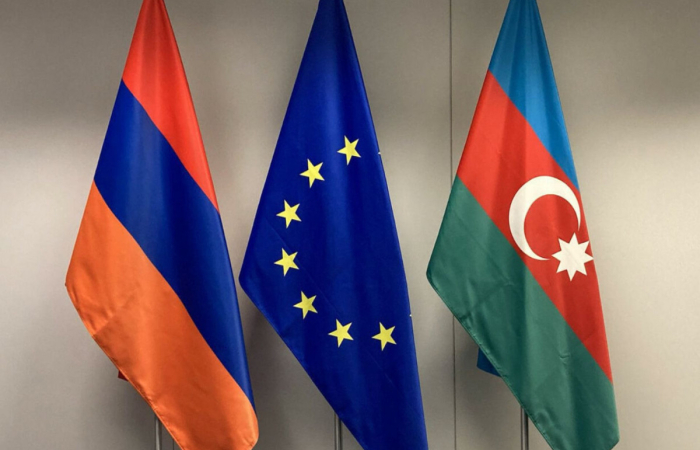
There is no denying that the EU, especially key member states acting in support, helped bring Baku and Yerevan closer to the Washington Declaration of August 8, 2025. But a declaration is not a treaty. Turning principles into a peace deal and eventually to a sustainable peace requires consistent long-term European involvement, writes Yalchin Mammadov in this-op-ed for commonspace.eu Before facilitating trust between Armenia and Azerbaijan, the EU is first expected to address its own credibility gap with Baku. A more balanced approach—such as including Azerbaijan, alongside Armenia, in the European Peace Facility—could be a useful first step. Diplomats can negotiate peace; societies must build peace. In this context, the EU can do what it does the best: long-term societal engagement. By expanding youth and academic exchange programmes, investing in cross-border civil society initiatives, and fostering people-to-people cooperation, Brussels can help shape a new generation equipped to sustain peace beyond political cycles. Such tools are slow and unglamorous, but if ignored, even the strongest treaty risks collapse. And obviously, these aspects require two-way engagement and genuine willingness by both governments to facilitate contact. If Brussels wants to remain influential, it needs to replace outdated one-size-fits-all policies with ambitious, interest-driven and differentiated approaches. Without a clear regional strategy, which appears to be the current situation, the South Caucasus will continue to sit at the margins of Europe’s security architecture—leaving space for other powers to take the lead. (You can read the op-ed in full by clicking the image.)

Filter archive

Publication date
Editor's choice
News
African Union expresses concern over US president's new travel ban

African Union expresses concern over US president's new travel ban

On Wednesday (4 June), US President Donald Trump signed a new travel ban affecting 12 countries, including seven in Africa: Chad, the Republic of the Congo, Equatorial Guinea, Eritrea, Libya, Somalia and Sudan. Burundi, Sierra Leone and Togo also face partial restrictions. President Trump justified the ban as a national security measure aimed at protecting the United States from foreign threats. The ban is set to take effect on Monday (9 June).
Editor's choice
News
White House confirms Trump's attendance at NATO summit in The Hague

White House confirms Trump's attendance at NATO summit in The Hague

US President Donald Trump will attend the NATO summit in The Hague later this month, the White House announced on Tuesday evening (3 June). Trump had previously left it unclear whether he would attend the conference of the Western military alliance in the Netherlands. However, he had informed Prime Minister Dick Schoof (now outgoing) of his attendance, which the Dutch government had previously announced.
Editor's choice
Monday Commentary
Monday Commentary: The 21st century is Asia’s moment, but for many Asian countries this moment is full of perils

Monday Commentary: The 21st century is Asia’s moment, but for many Asian countries this moment is full of perils

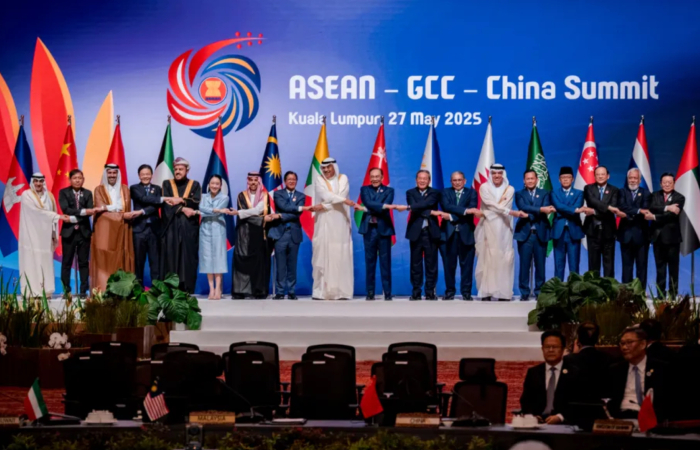
China wants to be first in the world, but its first stop is Asia. While the rest of the world debates and sometimes agonises over whether and how to engage with China, Asian countries have no choice but to engage. And in most cases, they will have to do so on China's terms. Most countries have to play a balancing game, but China is taking no chances. Chinese leader Xi Jinping's recent trip to Southeast Asia in April was a case in point. Another was the China-GCC-ASEAN summit in Kuala Lumpur on 28 May, attended by Chinese Premier Li Qiang and the leaders of the six Gulf monarchies and the ten ASEAN countries.
Editor's choice
News
Israel accepts US proposal for temporary Gaza ceasefire

Israel accepts US proposal for temporary Gaza ceasefire

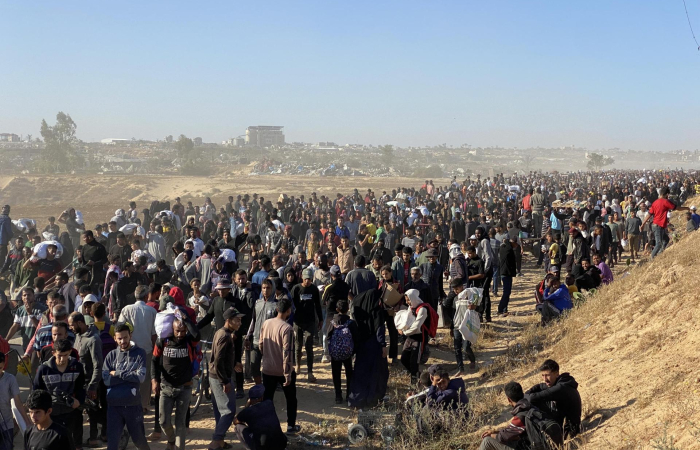
Israel has accepted a new U.S. proposal for a temporary ceasefire with Hamas, the White House said on Thursday. White House press secretary Karoline Leavitt told reporters that Israel “backed and supported” the new proposal. Hamas officials gave the Israeli-approved draft a cool response, but said they wanted to study the proposal more closely before giving a formal answer.
Editor's choice
Opinion
Russia Aims to Strengthen Armenia Ties Amid Stagnating Relations with Azerbaijan

Russia Aims to Strengthen Armenia Ties Amid Stagnating Relations with Azerbaijan

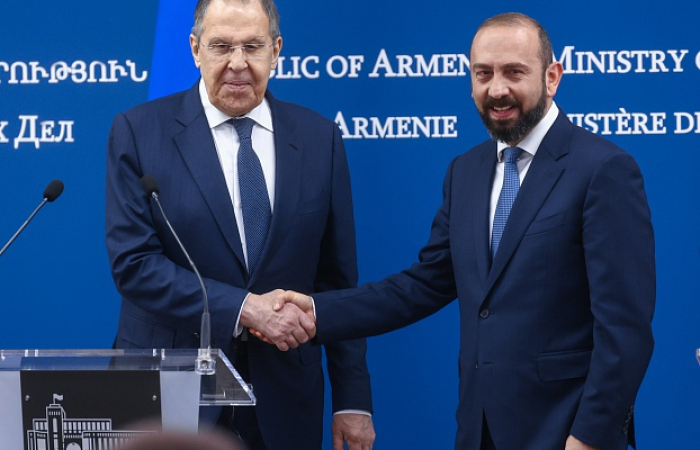
On May 20–21, 2025, Russian Foreign Minister Sergei Lavrov’s visit to Yerevan marked a significant moment in the evolving dynamics of Armenia–Russia relations, signaling Moscow’s intent to stabilize and reinforce ties with its long-standing ally in the South Caucasus. Set against the backdrop of deteriorating Russia–Azerbaijan relations following the tragic crash of an Azerbaijani airliner plane on December 25, 2024, the visit highlighted Russia’s delicate balancing act in a region where its influence is increasingly contested. Lavrov’s talks with Armenian leaders focused on reaffirming bilateral commitments within the frameworks of the Collective Security Treaty Organization (CSTO) and the Eurasian Economic Union (EAEU).
Editor's choice
News
US intelligence report highlights Russian influence over Georgia

US intelligence report highlights Russian influence over Georgia

Following the parliamentary elections of October 2024, the ruling Georgian Dream party created favourable conditions for the growth of Russian influence in the region according to the annual report of the US Defense Intelligence Agency (DIA) that has just been presented to the US Congress. The report says Moscow is almost certainly seeking to bring Georgia back into its sphere of influence and has already made progress through internal political developments in the country.
Editor's choice
News
Syria and Israel in direct talks focused on security

Syria and Israel in direct talks focused on security

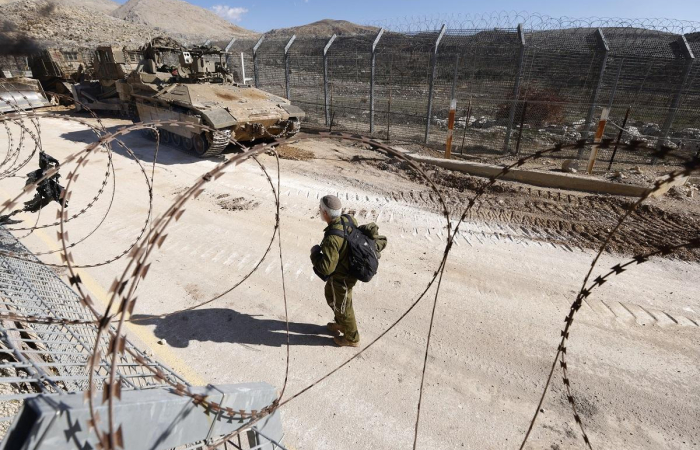
Israel and Syria are in direct contact and have in recent weeks held face-to-face meetings aimed at calming tensions and preventing conflict in the border region between the two longtime foes, according to an exclusive Reuters report. The contacts mark a significant development in ties between states that have been on opposite sides of conflict in the Middle East for decades, as the U.S. encourages the new Islamist rulers in Damascus to establish relations with Israel and Israel eases its bombardment of Syria.