Theme

Diplomacy

Editor's choice
Monday Commentary
Monday Commentary: Europe still needs the OSCE

Monday Commentary: Europe still needs the OSCE

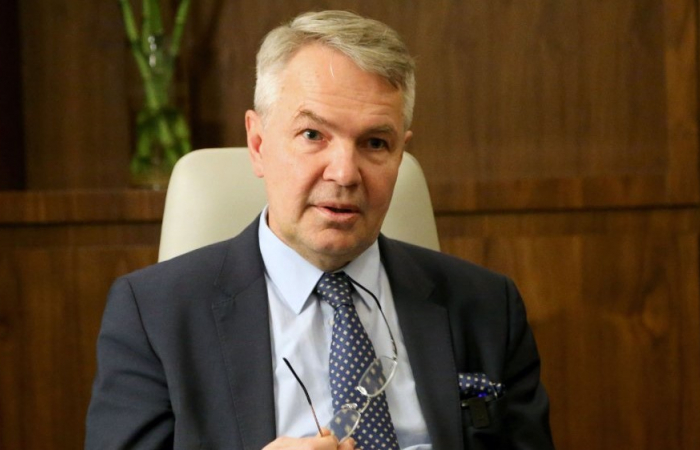
The Ministerial Council of the Organisation for Security and Co-operation in Europe (OSCE) will have its annual meeting in Vienna on 4-5 December. Foreign Ministers from the 57 member states, which also include the United States and Canada, and the Central Asian republics, and 11 partner countries, will congregate to discuss the future of European Security at a time when many believe that war in Europe over the next decade is likely. Ukraine is just a rehearsal for Russia’s ultimate ambitions. British diplomacy used to describe the OSCE as “the organization to manage Russia”. It has not done a good job of that, but this task remains paramount. The Ministerial Council will be the last major business of this year’s chairmanship, Finland, and will launch the new Chairmanship for 2026, Switzerland. The OSCE has been moribund for some time, and Russia’s invasion of Ukraine in February 2022, nearly ended it. But Europe still needs the OSCE, and there is hope that it will take a new lease of life in 2026. Switzerland has held the Chairmanship of the OSCE twice before, successfully. It has the experience, a wide network of embassies, and an able team in Bern, to successfully start what is likely to be a long and laborious journey. The new Chairman-in-office is Swiss Federal Foreign Minister Councillor, Ignazio Cassis. Cassis is also the current Vice President of the Swiss Confederation, and is fluent in Italian, English, German and French. Quite unusual also is the fact that currently the General Secretary of the OSCE is a Turk. Feridun Sinirlioğlu is an experienced Turkish diplomat, who has held the position for a year. Between them, Cassis and Sinirlioğlu will have to craft out the new OSCE, but in the end, it will largely depend on the will of the member states, including Russia. A new, reborn, OSCE, must understand that its core task remains European peace and security. It should resist the temptation of “looking busy” with a lot of secondary things. After peace and security return to Europe, it can consider other tasks. But we are far away from that yet. (Click the image to read the full commentary)
Editor's choice
News
Pope's visit to Türkiye and Lebanon has a strong ecumenical character, and places interreligious dialogue at its centre

Pope's visit to Türkiye and Lebanon has a strong ecumenical character, and places interreligious dialogue at its centre

Pope Leo XIV has begun the first overseas trip of his pontificate, a six-day visit to Türkiye and Lebanon, which started yesterday (27 November) and ends on Tuesday (2 December). According to Vatican Radio, the visit "carries a strong ecumenical character and places interreligious dialogue at its centre. It will also be a moment of closeness to Christian communities and local populations across the region".   During nearly a week in the region, Pope Leo XIV will meet civil and religious authorities, visit mosques and ancient churches, pray at Beirut’s port in memory of the victims of the 2020 explosion, and hold private meetings with Presidents Recep Tayyip Erdoğan and Joseph Aoun.   A highlight of the visit will be a visit to Nicaea, where the Pope will mark the anniversary of the Council of Nicaea. Christians of many traditions recognise the Council of Nicaea as a foundation of shared faith. One of the most anticipated moments will be the Pope’s encounter with Lebanese youth in Bkerké, at the Maronite Patriarchate, a meeting expected to carry strong messages of hope in the Jubilee Year. A central event will be the ecumenical celebration in İznik, where the Pope and Ecumenical Patriarch Bartholomew will walk together toward the ruins of the Basilica of St Neophytos. The prayer, held before icons of Christ and the Council, will conclude with the lighting of a candle—a symbolic gesture of unity. The journey will also highlight interreligious engagement.   Memorable moments are expected throughout the trip: a wreath at Atatürk’s mausoleum, prayer inside the Blue Mosque, Mass at Istanbul’s Volkswagen Arena, the planting of a cedar at the presidential palace in Beirut, and prayer at the tomb of St Charbel in Lebanon. The Vatican said that "Pope Leo XIV’s pilgrimage to Türkiye and Lebanon aims to offer a voice of peace, unity, and hope at the heart of the Middle East."

Filter archive

Publication date
Editor's choice
News
Washington supports Morocco-Polisario talks

Washington supports Morocco-Polisario talks

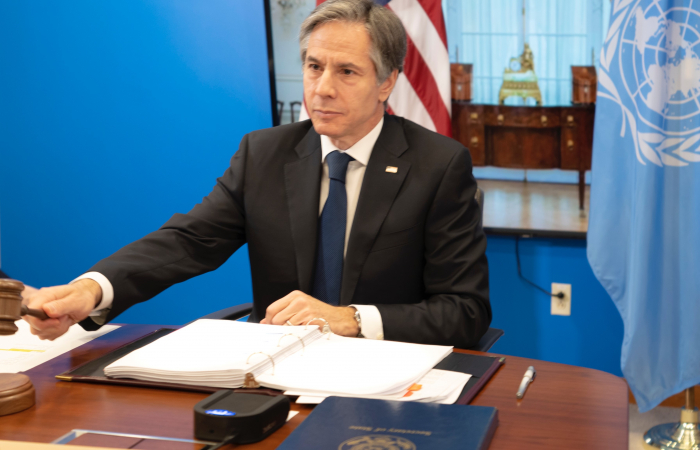
The new United States Administration has finally clarified its position on the conflict in Western Sahara between Morocco and the Sahrawi movement, the Polisario Front. US Secretary of State Antony Blinken earlier this week emphasised US support for political negotiations between Morocco and the Polisario over the future of the territory.
Editor's choice
News
Nuclear deal with Iran faces another hurdle

Nuclear deal with Iran faces another hurdle

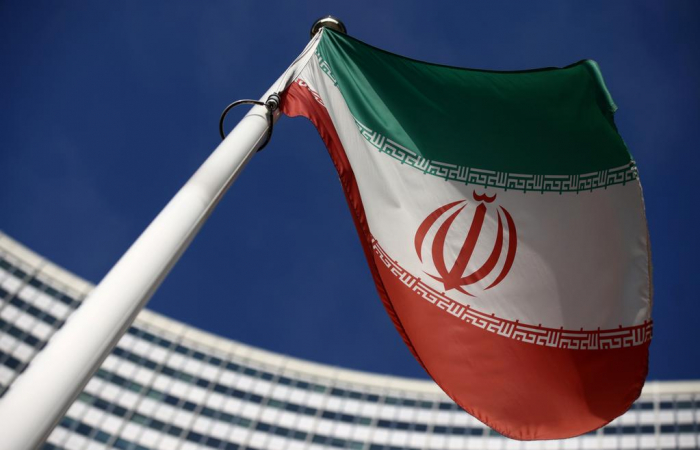
Efforts to resume compliance with the 2015 Iran nuclear deal have stalled. Axios reports that Iran has rejected a US proposal that includes steps to release Iranian funds in South Korea in exchange for Iran backing down on some steps to reduce compliance with the nuclear deal, including reducing uranium enrichment.
Editor's choice
News
Geneva meeting gives particular focus on non-use of force and international security arrangements

Geneva meeting gives particular focus on non-use of force and international security arrangements

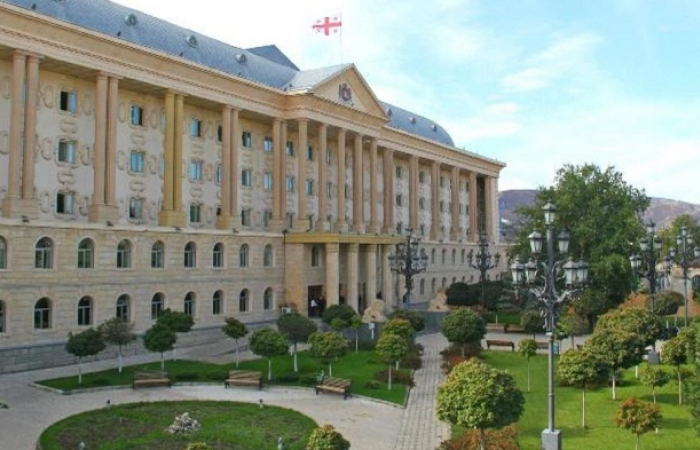
The discussions between Georgia, Russia and other parties in the aftermath of the 2008 Georgia-Russia War resumed in Geneva this week where the 52nd round of the Geneva International Discussions were held. The talks were mediated by the three co-chairs of the process representing the EU, the OSCE and the UN.
Editor's choice
News
Saudi Arabia proposes peace initiative for Yemen

Saudi Arabia proposes peace initiative for Yemen

In line with the regional and international efforts to bring peace to Yemen, Saudi Arabia’ foreign minister, Faisal bin Farhan Al-Saud, announced yesterday an initiative to end the war in Yemen. The initiative comes at a tense time for the Saudis as the Houthis upscale their attacks on vital energy and logistics infrastructure in the Kingdom. In Yemen itself, no side is winning in the multiple front lines across Yemen and the ramifications on the populations could not be worse.
Editor's choice
News
Progress in inter-Arab dialogue after AlUla declaration

Progress in inter-Arab dialogue after AlUla declaration

Saudi Arabia and Egypt have started addressing outstanding issues with Qatar as they rebuild relations with the Gulf state. Riyadh and Cairo have taken a more pragmatic approach towards Qatar, and have moved faster than the UAE and Bahrain in resuming diplomatic relations with Doha, according to Reuters.