Theme

Conflict and Peace

Stories related to violent conflicts, diplomatic tensions, and conflict prevention, mediation and resolution.

Editor's choice
News
NATO Chief says war is on Europe's doorstep, and warns against complacency

NATO Chief says war is on Europe's doorstep, and warns against complacency

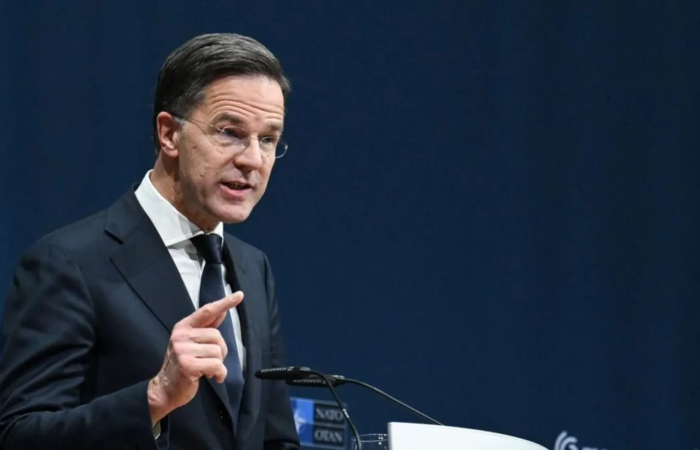
Russia could attack a NATO country within the next five years, the Secretary General of NATO, Mark Rutte, said in a stark new warning. "NATO's own defences can hold for now," Rutte warned in Berlin, but conflict was "next door" to Europe, and he feared "too many are quietly complacent, and too many don't feel the urgency, too many believe that time is on our side. "Russia is already escalating its covert campaign against our societies," Rutte said in a speech in Germany. "We must be prepared for the scale of war our grandparents or great-grandparents endured." Earlier this month, Russia's President Vladimir Putin said his country was not planning to go to war with Europe, but it was ready "right now" if Europe wanted to - or started a war. But similar reassurances were given by Moscow in 2022, just before 200,000 Russian troops crossed the border and invaded Ukraine. Putin has accused European countries of hindering US efforts to bring peace in Ukraine - a reference to the role Ukraine's European allies have recently played in trying to change a US peace plan to end the war, whose initial draft was seen as favouring Russia. But Putin was not sincere, Nato's secretary-general said in the German capital, Berlin. Supporting Ukraine, he added, was a guarantee for European security. "Just imagine if Putin got his way; Ukraine under the boot of Russian occupation, his forces pressing against a longer border with Nato, and the significantly increased risk of an armed attack against us." Russia's economy has been on a war footing for more than three years now - its factories churn out ever more supplies of drones, missiles and artillery shells. According to a recent report by the Kiel Institute for the World Economy, Russia has been producing each month around 150 tanks, 550 infantry fighting vehicles, 120 Lancet drones and more than 50 artillery pieces. The UK, and most of its Western allies, are simply not anywhere near this point. Analysts say it would take years for Western Europe's factories to come close to matching Russia's mass-production of weapons. "Allied defence spending and production must rise rapidly, our armed forces must have what they need to keep us safe," the Nato chief said.
Editor's choice
News
Thai-Cambodia border clashes enter fourth day

Thai-Cambodia border clashes enter fourth day

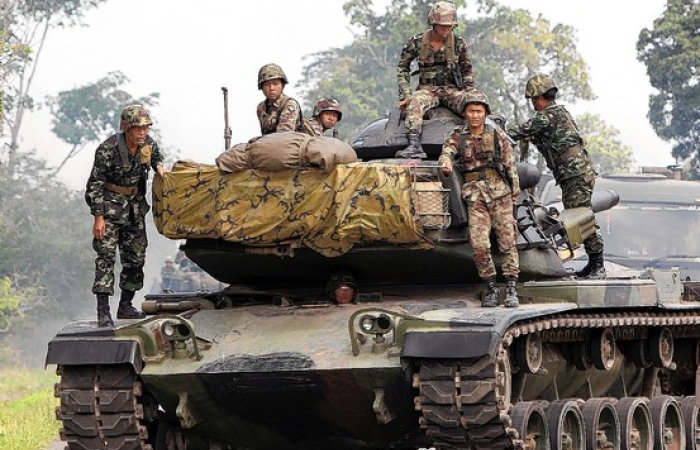
Renewed fighting between Thailand and Cambodia has entered its fourth day, with both sides accusing one another of violating international law, as they await a promised phone call from United States President Donald Trump. Cambodia’s Ministry of Defence accused Thailand’s military of carrying out numerous attacks within the country in the early hours of Thursday morning, including deploying tanks and artillery to strike targets in the country’s Pursat, Banteay Meanchey, and Oddar Meanchey provinces. In one such attack, Cambodia accused Thai soldiers of violating international humanitarian law by firing on civilians in Prey Chan village in Banteay Meanchey province. In another, it accused Thai forces of shelling “into Khnar Temple area”, and said Thai forces had also “fired artillery and support fire into the O’Smach area”. “Cambodia urges that Thailand immediately stop all hostile activities and withdraw its forces from Cambodia’s territorial integrity, and avoid acts of aggression that threaten peace and stability in the region,” the Defence Ministry said. Clashes took place on Wednesday at more than a dozen locations along the contested colonial-era demarcated 817-kilometre (508-mile) Thai-Cambodian border, with some of the most intense fighting being reported since a five-day battle in July, which saw dozens killed on both sides. Cambodia’s Ministry of the Interior said homes, schools, roads, Buddhist pagodas and ancient temples had been damaged by “Thailand’s intensified shelling and F-16 air strikes targeting villages and civilian population centres up to 30km [18.6 miles] inside Cambodian territory”. (click the image to read the full story).

Filter archive

Publication date
Editor's choice
Interview
Interview: Armenian Prime Minister Nikol Pashinyan discusses the prospects of a peace treaty with Azerbaijan

Interview: Armenian Prime Minister Nikol Pashinyan discusses the prospects of a peace treaty with Azerbaijan

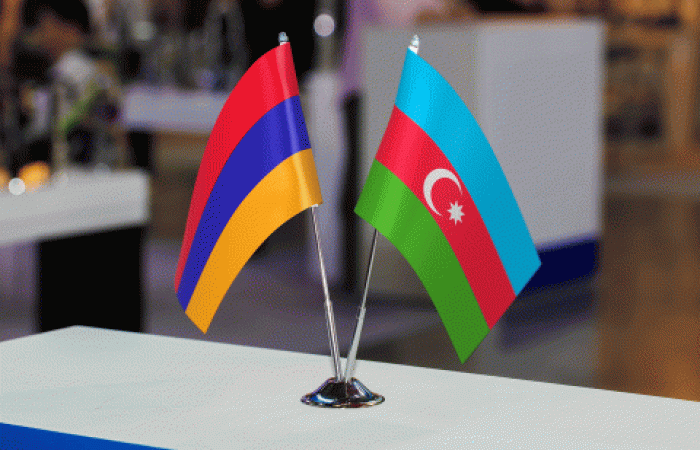
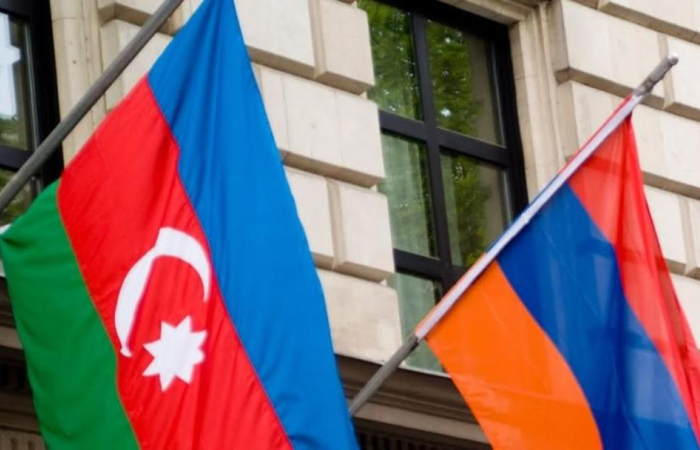
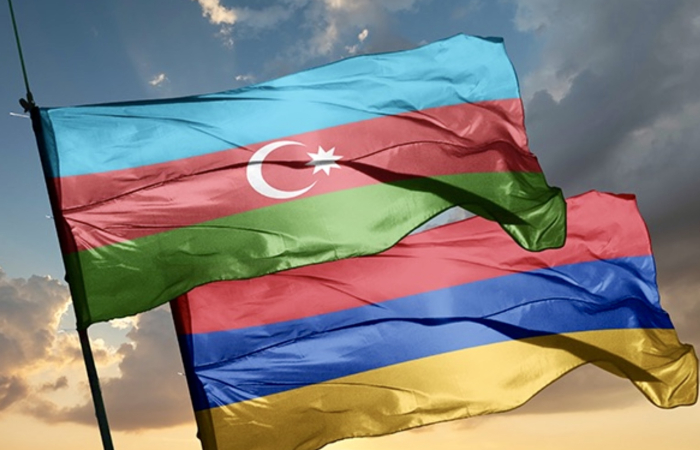
In an interview with Armenpress Armenian Prime Minister Nikol Pashinyan discussed a number of critical aspects of the pending peace treaty with Azerbaijan. In his view, the Armenia-Azerbaijan peace treaty would gain superior legal force over Armenian laws and the topic of territorial demands would be closed forever. Prime Minister Pashinyan stated that the same would happen in Azerbaijan meaning that the signing of the peace treaty would practically dispel the concerns of both Armenia and Azerbaijan particularly in relation to their respective constitutions. The Prime Minister also noted that Armenia was not engaged in an arms race with any country but was acquiring armaments exclusively for defending Armenia’s borders and territorial integrity.
Editor's choice
Interview
Armenian Prime Minister Nikol Pashinyan discusses the prospects of a peace treaty with Azerbaijan

Armenian Prime Minister Nikol Pashinyan discusses the prospects of a peace treaty with Azerbaijan

In an interview with Armenpress Armenian Prime Minister Nikol Pashinyan discussed a number of critical aspects of the pending peace treaty with Azerbaijan. In his view, the Armenia-Azerbaijan peace treaty would gain superior legal force over Armenian laws and the topic of territorial demands would be closed forever. Prime Minister Pashinyan stated that the same would happen in Azerbaijan meaning that the signing of the peace treaty would practically dispel the concerns of both Armenia and Azerbaijan particularly in relation to their respective constitutions. The Prime Minister also noted that Armenia was not engaged in an arms race with any country but was acquiring armaments exclusively for defending Armenia’s borders and territorial integrity.
Editor's choice
Interview
Armenian Prime Minister Nikol Pashinyan discusses the prospects of a peace treaty with Azerbaijan

Armenian Prime Minister Nikol Pashinyan discusses the prospects of a peace treaty with Azerbaijan

In an interview with Armenpress Armenian Prime Minister Nikol Pashinyan discussed a number of critical aspects of the pending peace treaty with Azerbaijan. In his view, the Armenia-Azerbaijan peace treaty would gain superior legal force over Armenian laws and the topic of territorial demands would be closed forever. Prime Minister Pashinyan stated that the same would happen in Azerbaijan meaning that the signing of the peace treaty would practically dispel the concerns of both Armenia and Azerbaijan particularly in relation to their respective constitutions. The Prime Minister also noted that Armenia was not engaged in an arms race with any country but was acquiring armaments exclusively for defending Armenia’s borders and territorial integrity.
Editor's choice
Opinion
Opinion: Breaking the Present Deadlock in the Armenia-Azerbaijan Peace Process Will Remain a Formidable Task in 2025

Opinion: Breaking the Present Deadlock in the Armenia-Azerbaijan Peace Process Will Remain a Formidable Task in 2025

On 10 December, the Center for Analysis of International Relations (AIR Center), a Baku-based political think tank closely affiliated with the Azerbaijani government, held a high-level international conference titled “The Main Obstacle to a Peace Agreement Between Azerbaijan and Armenia.” The conference identified the territorial claims in Armenia’s constitution against Azerbaijan as the primary obstacle to peace.
Editor's choice
Analysis
Analysis: Armenia–Azerbaijan Relations in 2024: Fragile Progress and an Uncertain Future

Analysis: Armenia–Azerbaijan Relations in 2024: Fragile Progress and an Uncertain Future

The negotiation process between Armenia and Azerbaijan since 2022 has followed a recurring pattern: initial optimism for a peace agreement to be signed by year’s end, followed by disappointment as talks falter. The year 2024 was no exception, beginning with hopeful developments and concluding with unresolved disputes. In December 2023, Armenia and Azerbaijan signed a joint declaration in which Armenia supported Azerbaijan’s bid to host the COP29 climate summit in November 2024, and Azerbaijan released 32 Armenian prisoners of war. This gesture set a positive tone, with COP29 serving as an informal deadline for a peace agreement.
Editor's choice
Opinion
Opinion: Is Trump’s Re-Election Good News for Azerbaijan-U.S. relations?

Opinion: Is Trump’s Re-Election Good News for Azerbaijan-U.S. relations?

On 5 December, the Azerbaijani Press Agency (APA) in reference to “diplomatic sources” reported that Azerbaijan’s Foreign Minister rejected a United States-initiated meeting with his Armenian counterpart on the sidelines of the 31st meeting of the OSCE Council of Foreign Ministers in Malta. According to the agency, the reason behind Azerbaijan’s refusal was related to the “insistence” of the United States’ Secretary Antony Blinken to mediate between the two South Caucasian ministers. Citing the overall “unjust and biased policy” of the Biden administration towards Azerbaijan, the diplomatic source of the agency stated that “for this reason, Azerbaijan does not want the U.S. to participate in the peace agenda at all and does not consider it appropriate”.
Editor's choice
Opinion
Opinion: The Armenia-Azerbaijan Conflict Has Changed. So Must Civil Society

Opinion: The Armenia-Azerbaijan Conflict Has Changed. So Must Civil Society

Four years after the Second Karabakh War, civil society initiatives between Armenian and Azerbaijan remain arguably less impactful than ever before. On the surface, they appear few and far between, but many are often held in secret. The reason given is often security but that argument is no longer as credible as it was before. Indeed, nearly all projects that do exist remain largely untouched and unhindered. Instead, mirroring the situation before 2020, many Armenian practitioners refused to meet with their Azerbaijani counterparts, especially while Baku still held prisoners and other detainees from the war. That number is significantly less now. Time has passed and there may finally be the realisation that dialogue is the only way forward.
Editor's choice
Opinion
Opinion: An incomplete treaty between Baku and Yerevan will not bring peace

Opinion: An incomplete treaty between Baku and Yerevan will not bring peace

Over the past two years, numerous unofficial deadlines have been set for signing the Armenia-Azerbaijan peace treaty. Until the end of last year, the people of both countries held their breath in anticipation of a breakthrough, encouraged by officials on both sides who deemed an agreement possible. Later, there was significant optimism that the two former adversaries might reach a deal during the United Nations Climate Conference (COP29) which was held on November 11-24 in Baku.
Editor's choice
Opinion
Opinion: Uncertain times for Azerbaijan and Armenia relations

Opinion: Uncertain times for Azerbaijan and Armenia relations

The recent BRICS summit held on 22-24 October in the Russian city of Kazan, featured the first talks in the last few months between the Azerbaijani and Armenian leadership. The countries were represented by President Aliyev and Prime Minister Pashinyan as well as the foreign ministers, Bayramov and Mirzoyan. Pashinyan declared that at the moment “all the matters of principles have been addressed and resolved” by the draft treaty, although Armenia’s chief diplomat Mirzoyan toned his statement a bit down, claiming that the document “is at least 80-90% agreed upon”.