Opinion: Is Trump’s Re-Election Good News for Azerbaijan-U.S. relations?

On 5 December, the Azerbaijani Press Agency (APA) in reference to “diplomatic sources” reported that Azerbaijan’s Foreign Minister rejected a United States-initiated meeting with his Armenian counterpart on the sidelines of the 31st meeting of the OSCE Council of Foreign Ministers in Malta. According to the agency, the reason behind Azerbaijan’s refusal was related to the “insistence” of the United States Secretary Antony Blinken to mediate between the two South Caucasian ministers. Citing the overall “unjust and biased policy” of the Biden administration towards Azerbaijan, the diplomatic source of the agency stated that “for this reason, Azerbaijan does not want the U.S. to participate in the peace agenda at all and does not consider it appropriate”.

This has been the first such instance that Azerbaijan rejected the mediation effort of the United States in the country’s peace process with Armenia. Previously, Azerbaijan took part in the US-mediated meetings, which were beneficial to the peace process. This raises questions about the reasons behind Azerbaijan’s disappointment with the Biden administration and whether the upcoming Trump presidency would be good news for United States - Azerbaijan relations.

Azerbaijan complained about the transactional character of U.S. foreign policy

The relations between Baku and Washington have been negatively affected by a number of developments over the past year. However, the re-imposition of the sanctions under the 907 amendment of the Freedom Support Act of 1992 by the Biden administration was perhaps the most significant blow to the bilateral relations between the two sides. This amendment, adopted on 24 October 1992, bars the United States from assisting Azerbaijan unless Baku takes “demonstrable steps to cease all blockades and other offensive uses of force against Armenia and Nagorno-Karabakh”. As a reminder, this legislative move was adopted at the time when the territory of Azerbaijan was under attack from Armenia, and subsequently occupied, yet, American lawmakers, under the influence of the Armenian lobby, punished the victim of the aggression. The United States has granted annual waivers for this amendment since 2002. That year, Baku permitted Washington to use its territory to supply U.S. troops in Afghanistan. 

In November last year, U.S. Assistant Secretary of State James O’Brien announced that the United States cancelled this waiver as part of the measures taken by the United States against Azerbaijan in response to the lack of progress in the peace talks. He said that “we don’t anticipate submitting a waiver until such time as we see a real improvement in the situation”.

This happened exactly a year after the ending of the U.S. operation in Afghanistan which manifested that the United States no longer needed Azerbaijan’s assistance. The Azerbaijani Foreign Ministry responded that “it turns out that the U.S. side has always considered the support of Azerbaijan as occasional, while it should be remembered that history has always repeated itself.”

Against this backdrop, there was no “progress” in the Armenia-Azerbaijan peace process in a way that would have met what O’Brien portrayed as a condition to reintroduce the 907 waivers. Baku unequivocally declared that Azerbaijan will not sign a peace agreement with Armenia until Yerevan removed the territorial claims against Azerbaijan from its constitution. In parallel, the calls for more sanctions and pressure against Azerbaijan were heard from multiple sources largely driven by pro-Armenian political groups.

In July of this year, Azerbaijan’s President Ilham Aliyev voiced his frustration with the challenges in United States - Azerbaijan relations, criticizing the Biden administration for making what he described as “unrealistic demands” from Azerbaijan. His remarks followed a statement from James O’Brien, who stated that the U.S. wanted the Zangezur corridor to be opened without Russian involvement, aiming to reduce Central Asia’s reliance on Russia and China. Azerbaijan, traditionally focused on maintaining a balanced relationship with major powers and pursuing multilateralism, is hesitant to engage in such risky ventures. It is clear that the opposite would dangerously place Azerbaijan in direct confrontation with Russia and China, threatening the country's security.

The expectation regarding the upcoming Trump presidency

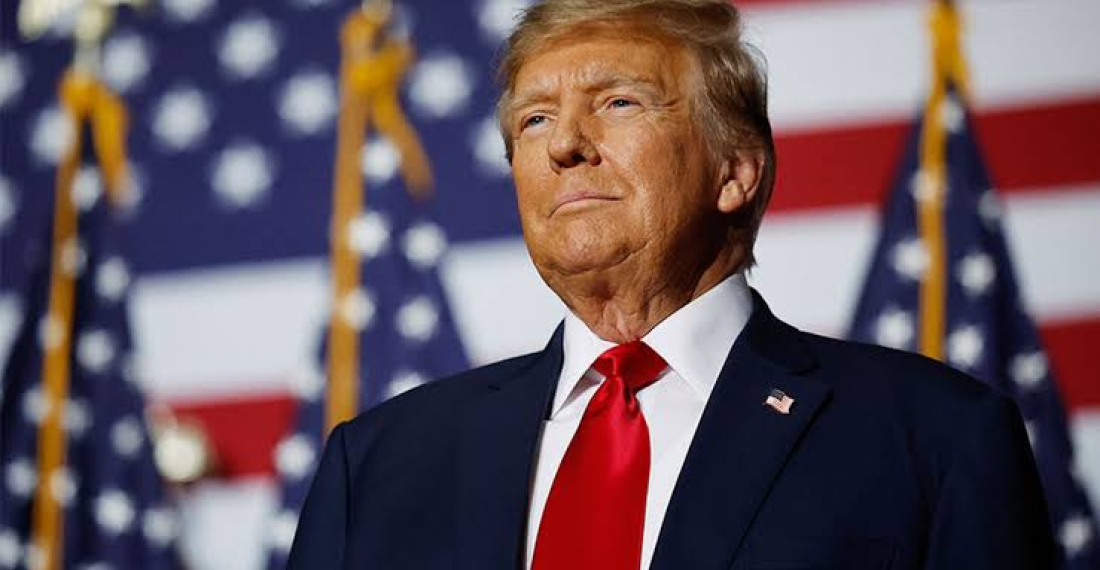
Many observers around the world are contemplating how Donald Trump's second presidential term will impact critical global issues. The Russia-Ukraine war, the instability in the Middle East, the intensifying confrontation with China, etc. are some of the issues where the decisions of the new administration may introduce new dynamics. President-elect Trump has consistently criticized the Biden administration for his failures in foreign policy. The country’s relations with Azerbaijan and its overall role in the South Caucasus are amongst the areas in which the Biden administration was not so successful.

President Aliyev, during his aforementioned July speech when he criticized the transactional character of U.S. foreign policy, said his government could get along better with the Republican presidents. “Of course, if you look at the development of our relationship, particularly the visible aspects, of course, with the Republican administration, our relations have always been much more productive, fruitful, and result-oriented”, he stated.

Hence, there is optimism in Baku that the United States - Azerbaijan relationship will return to a more constructive and cooperative path under Trump’s presidency. However, this optimism must be tempered by the understanding that the global landscape, especially in the South Caucasus, is highly volatile, and even a change in the U.S. leadership may not guarantee an immediate improvement. Nonetheless, it is a fact that close cooperation between Baku and Washington has always been mutually beneficial and aligned with the best interests of both sides. Therefore, in any case, both Azerbaijan and the United States must seize the opportunity presented by the leadership transition in the latter to rebuild their partnership, grounded in mutual interests and pragmatic diplomacy.

Source: Dr Vasif Huseynov, is a Senior Advisor at the Center of Analysis of International Relations (AIR Center) and Adjunct Lecturer at Khazar University in Baku, Azerbaijan.

The views expressed in opinion pieces and commentaries do not necessarily reflect the position of commonspace.eu or its partners

 

Latest

Editor's choice
Monday Commentary
Monday Commentary: PEACE IN OUR TIME?

Monday Commentary: PEACE IN OUR TIME?

Making peace between Armenia and Azerbaijan was never going to be simple, nor easy, nor quick. It is taking time, writes Dennis Sammut in this Monday Commentary. “There is a sense of realism coming from the leaders of the two countries – President Ilham Aliyev of Azerbaijan and prime minister Nikol Pashinyan of Armenia, that frankly, is necessary and welcome”, he writes. At a time when conflicts are raging all over the world – from Ukraine to the Gulf, from Africa to South Asia, the prospect that Armenia and Azerbaijan had finally, after decades of conflict that left thousands of dead and many more displaced, decided on embarking on a journey of peace was welcomed. Peace between Armenia and Azerbaijan can be top-down up to a point. Both leaders have spent political capital preparing for a peace deal. But both are aware that their people are not ready for peace yet. In fact, in Armenia, most of the elite are negative toward a peace deal with Azerbaijan. Pashinyan needs time to persuade his countryfolk. That is why 2031 is realistic. Ilham Aliyev runs a tighter shop, but he is also not immune to public opinion. Every time someone hits a landmine in Karabakh, which unfortunately happens often, peace comes into question. Which is why Aliyev chooses to sound hardline, more often than not. In pursuing the peace agenda, both Aliyev and Pashinyan need to proceed cautiously. But they are right in making peace the central issue in their agenda. It is the main issue, and the one that will define them in history. So forward, cautiously but resolutely! In pursuing the peace agenda, Aliyev and Pashinyan need to be supported clearly and unambiguously. There are too many people in Baku and Yerevan who are sitting on the sides, waiting. The international community is not doing enough. It is time to be counted. Otherwise, the spoilers will win, and the region will go back to its bad habits. (Click the image to read the full commentary).
Editor's choice
News
UN Security Council Presidential Statement on the Role of Diplomacy during Active Hostilities

UN Security Council Presidential Statement on the Role of Diplomacy during Active Hostilities

The United Nations Security Council is today expected to adopt a presidential statement on the role of diplomacy during active hostilities. The draft text, which was authored by Pakistan, underscores the importance of maintaining diplomatic engagement even after the outbreak of armed conflict, with a view to containing escalation, facilitating cessations of hostilities and ceasefires, and creating conditions conducive to peaceful political settlements. Resolution 2788 of 22 July 2025, which was initiated by Pakistan, reaffirmed the Council’s commitment to the peaceful settlement of disputes under Chapter VI of the UN Charter. A year later, on 23 July, the Council convened an open debate to review the resolution’s implementation and examine ways of making more effective use of the peaceful dispute settlement tools available under Chapter VI.   The draft presidential statement builds on previous Council products, such as resolution 2788, but it is the first to focus specifically on the role of diplomacy in containing and de-escalating active hostilities. Since the open debate in July, Council members have continued to call for intensified efforts towards de-escalation and dialogue, although differences persist over how proactively the Council should promote mediation and other peaceful means of dispute settlement, particularly in situations where the consent of the parties is contested. In his statement opening the general debate of the 81st session of the General Assembly on 22 September, Secretary-General António Guterres highlighted the devastating consequences of ongoing conflicts in Ukraine, Sudan, and the Middle East, warning that these and other crises illustrate what happens when “force outpaces diplomacy” and stressing the urgency of sustained diplomatic engagement. The negotiations on the draft presidential statement do not appear to have been particularly contentious, although Council members expressed differing views on some elements of the text. Pakistan circulated the initial draft to Council members on 14 October. Following informal consultations with Council members to address comments on the initial draft, Pakistan circulated a first revised draft on 23 October, incorporating several proposed amendments. On 29 October, Pakistan circulated a second revised draft, which it placed under silence procedure until the following day (30 October). After the US broke silence, a third revised draft was circulated on 3 November and placed under silence procedure until this morning (4 November). The draft subsequently passed silence. The agreed presidential statement emphasises the importance of maintaining direct and indirect channels of communication between parties to armed conflict to reduce the risk of miscalculation and create opportunities for sustained political engagement. (click image to read more)

Popular

Editor's choice
Monday Commentary
Monday Commentary: European-Azerbaijan relations need an intensive and multifaceted dialogue that is frank and honest

Monday Commentary: European-Azerbaijan relations need an intensive and multifaceted dialogue that is frank and honest

Last week I visited Baku, Azerbaijan. My visit was relatively short, but very intensive, and had many meetings with stakeholders and colleagues. When I arrived in Baku first time in 1996,  Azerbaijan was a different country: weak, poor, and shaken by defeat in war. For thirty year the Karabakh issue dominated the agenda: the political agenda but also the popular mindset. Now, thirty years later, Azerbaijan has returned to Karabakh, and peace with Armenia is on the horizon. It is a new era for Armenia-Azerbaijan relations, for the South Caucasus, but also for Europe.  But we cannot be complacent: the Peace agreement has been initialed but not signed; borders remain closed; TRIPP is ambitious but remains an idea; and there are spoilers who want to turn the clock back. We must not allow them, and in this Europe and Azerbaijan must work together. Europe’ vanguard organization is the European Union – it is a free union of 27 member states; it is a strong global economic force, and increasingly a diplomatic and military force too. But it remains “work in progress” and can often appear dysfunctional. It often lacks collective and institutional memory. In its dealings with Azerbaijan the EU has made many mistakes – not least opening the delegation here late – in 2008. It sometimes appears condescending. Some utterances from the European Parliament and from some quarters in some member states are not understandable even for me. They irritate the Azerbaijanis, but serve no other purpose But Azerbaijan has also not handled relations with the EU well. It has failed to respond when the hand of friendship reached out; and it confused irritating actions, sometimes by well-meaning people; sometimes by outright spoilers, with strategic action. In short, EU-Azerbaijan relations have suffered from a lack of proper dialogue. This dialogue must be frank, honest and multi-faceted involving different segments of society on both sides.   Is Azerbaijan Europe? When Azerbaijan applied to join the Council of Europe in the 1990s, there were some who opposed, saying this was not Europe. I was one of the people who argued that Armenia and Azerbaijan may be on the periphery of the continent geographically, but were European in essence. Certainly their elites. During the discussion on 4 September in Baku, my friend Farhad Mammedov, mentioned that Azerbaijan is not interested in joining the EU, and was now close to the Central Asian countries in the 5 plus 1 format. Neither things mean that Azerbaijan is not Europe. There are several European countries that are not in the EU, and do not want to be, for example Norway and Switzerland. Iceland has recently voted to stay out of the EU. The UK was a member and left. Europe is bigger than the EU, and the holding of the European Political Community summit in Baku in 2027 proves that. Despite all the rhetoric, I never heard the president of Azerbaijan  saying that Azerbaijan is not Europe, nor have I heard any European president say it either. Not wanting to join the EU and forging close relations with neighbouring regions does not make Azerbaijan any less European. It is only logical that when Europeans talk to Azerbaijan they talk like family. The conversation is often frank. It must also be honest, and Europeans need always to remember this too. A frank, honest and multi-faceted dialogue A frank, honest and multifaceted dialogue will contribute to relations between Azerbaijan and the rest of Europe: it will avoid misperception, which unfortunately is very common on both sides; it will provide a forum where problems can be discussed and resolved, and it will increase mutual trust, so that together common problems can be addressed. (click image to read the full Monday Commentary)
Editor's choice
Monday Commentary
Monday Commentary: “The barren rocks of Aden” and “These lands of Yemen are so ruthless”

Monday Commentary: “The barren rocks of Aden” and “These lands of Yemen are so ruthless”

There are two early 20th-century tunes that mark foreign attempts to occupy and “pacify” Yemen. The Scottish tune “The barren rocks of Aden” marks the mobilisation of Highland soldiers, enlisted to be deployed to the Yemeni port of Aden, that in 1837 became the last colony to be incorporated into the British Empire. The tune talks of the harshness of the terrain, but is celebratory, It was even played as a farewell tune to Sir William Luce at the parade in Sharjah celebrating his end as “British Viceroy” in the Middle East in 1966. The second tune is an Anatolian lament. As Ilker Sezer reminded us this weekend, in his weekly feature on “Turkiye Today”, it “mourns the tragic fate of Ottoman soldiers dispatched to the harsh, remote deserts of Yemen during the fall of the empire, young men who marched away from their villages and never returned home. Most of their names, and numbers, were never recorded. Yet, their fate left a mark on the Turkish psyche.” Subsequent invaders have discovered that Yemen is a grave that cannot be overcome by the strength of modern technology, and that whilst Yemeni society is splintered and divided, building a reliable alliance with Yemeni factions is difficult. These are the harsh lessons facing Saudi Arabia, as the Kingdom faces its biggest challenge in its modern history. The leadership of the Kingdom now has to respond decisively. At stake is their very credibility. This is likely to be a long and messy conflict. Saudi military objectives need to be focused: to box in the Houthis rather than destroy them. This is likely to include: (a) regaining territory lost on the Red Sea coast; (b) control over Bab el Mandeb Strait; (c) some kind of cordon sanitaire on the Saudi-Yemeni border; and if things go well (d) the capture of Sanaa. All this would not eliminate the Houthi problem, but it will contain it. In the end the Saudis will have to continue managing Yemen with a mixture of carrot and stick. For the moment, the stick is likely, but the carrot cannot be forgotten either. (click the image to read the Monday Commentary in full)