Region

Türkiye and the Levant

Stories under this heading cover Türkiye as well as the Levant – a large area in the Eastern Mediterranean region of Western Asia, consisting of Syria, Lebanon, Jordan, Israel and Palestine.

Editor's choice
News
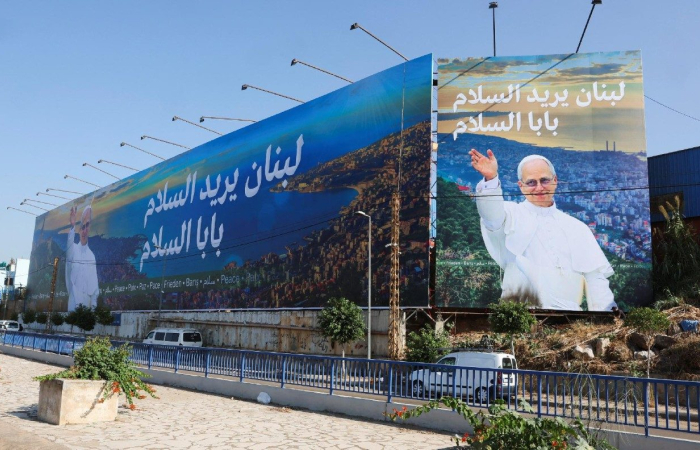
Pope's visit to Türkiye and Lebanon has a strong ecumenical character, and places interreligious dialogue at its centre

Pope's visit to Türkiye and Lebanon has a strong ecumenical character, and places interreligious dialogue at its centre

Pope Leo XIV has begun the first overseas trip of his pontificate, a six-day visit to Türkiye and Lebanon, which started yesterday (27 November) and ends on Tuesday (2 December). According to Vatican Radio, the visit "carries a strong ecumenical character and places interreligious dialogue at its centre. It will also be a moment of closeness to Christian communities and local populations across the region".   During nearly a week in the region, Pope Leo XIV will meet civil and religious authorities, visit mosques and ancient churches, pray at Beirut’s port in memory of the victims of the 2020 explosion, and hold private meetings with Presidents Recep Tayyip Erdoğan and Joseph Aoun.   A highlight of the visit will be a visit to Nicaea, where the Pope will mark the anniversary of the Council of Nicaea. Christians of many traditions recognise the Council of Nicaea as a foundation of shared faith. One of the most anticipated moments will be the Pope’s encounter with Lebanese youth in Bkerké, at the Maronite Patriarchate, a meeting expected to carry strong messages of hope in the Jubilee Year. A central event will be the ecumenical celebration in İznik, where the Pope and Ecumenical Patriarch Bartholomew will walk together toward the ruins of the Basilica of St Neophytos. The prayer, held before icons of Christ and the Council, will conclude with the lighting of a candle—a symbolic gesture of unity. The journey will also highlight interreligious engagement.   Memorable moments are expected throughout the trip: a wreath at Atatürk’s mausoleum, prayer inside the Blue Mosque, Mass at Istanbul’s Volkswagen Arena, the planting of a cedar at the presidential palace in Beirut, and prayer at the tomb of St Charbel in Lebanon. The Vatican said that "Pope Leo XIV’s pilgrimage to Türkiye and Lebanon aims to offer a voice of peace, unity, and hope at the heart of the Middle East."
Editor's choice
News
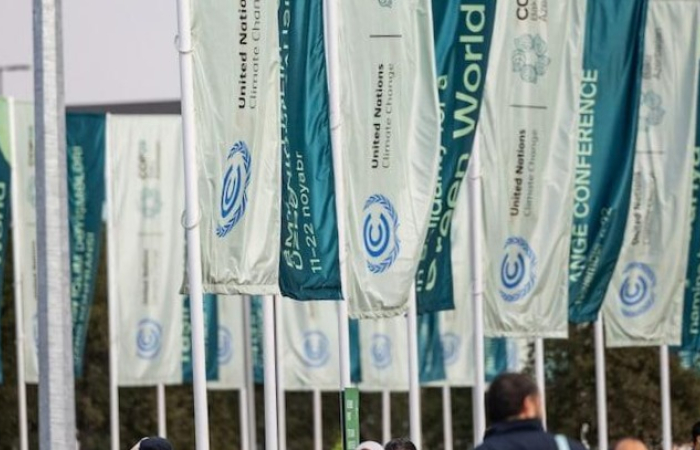
Turkiye to host COP31 in 2026

Turkiye to host COP31 in 2026

A consensus has emerged during COP 30, currently being held in Belan, Brazil, that COP 31 will be held in the Turkish city of Antalya, in 2026. In 2026 Turkiye will host another global event, the NATO leaders summit. Turkiye is set to host COP31 after reaching compromise with Australia.  The COP31 climate meeting is now expected to be held in Turkey after Australia dropped its bid to host the annual event. Under the UN rules, the right to host the COP in 2026 falls to a group of countries made up of Western Europe, Australia and others. A consensus must be reached but neither country had been willing to concede. Australia has now agreed to support the Turkish bid in return for their minister chairing the talks following negotiations at COP30, currently being held in Brazil. This unusual arrangement has taken observers by surprise. It is normal for a COP president to be from the host country and how this new partnership will work in practice remains to be seen. Australian Prime Minister Anthony Albanese has called the compromise with Turkey an "outstanding result" in an interview with the Australian Broadcasting Corporation (ABC), noting Pacific issues would be "front and centre". He added that he had spoken to Papua New Guinea Prime Minister James Marape and Prime Minister Rabuka of Fiji. There will be relief among countries currently meeting at COP30 in the Brazilian city of Belém that a compromise has been reached as the lack of agreement on the venue was becoming an embarrassment for the UN.

Filter archive

Publication date
Editor's choice
News
Armenia "ready" to open border with Turkey, more aid passes through, FMs meet in Ankara

Armenia "ready" to open border with Turkey, more aid passes through, FMs meet in Ankara

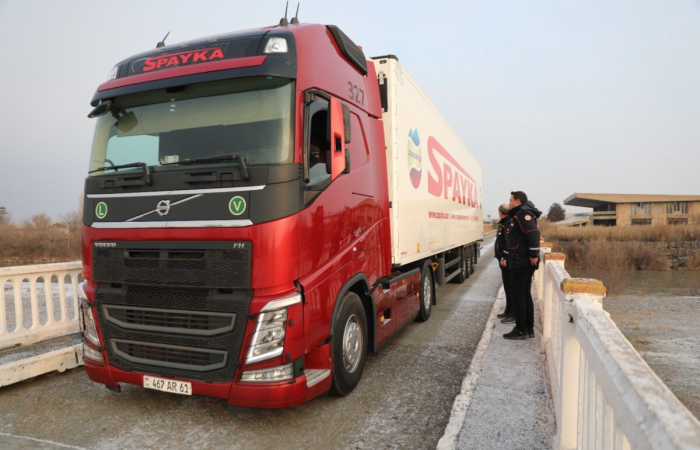
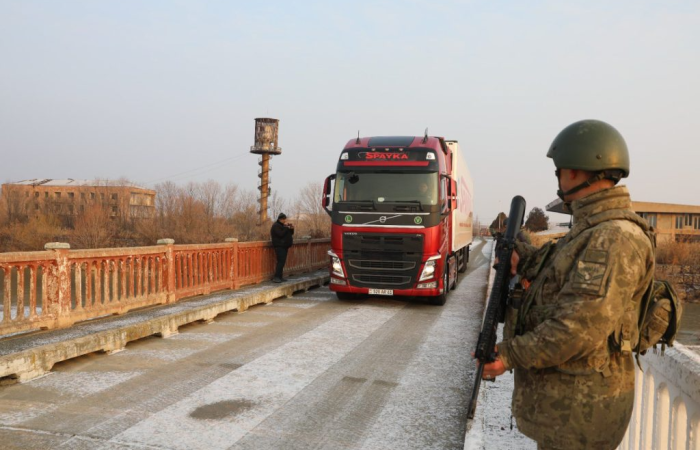
The Secretary of Armenia’s Security Council Armen Grigoryan has told journalists at a briefing on Tuesday (14 February) that Armenia is "ready"  for opening of the shared border with Turkey and normalisation of relations any time. "The Armenian and Turkish sides are holding discussions on the issue and will continue the discussions, hoping that it will take place as soon as possible," Grigoryan said. He added that an agreement on opening the border for nationals of third countries had indeed been reached last year between Armenia and Turkey, but said that no timeframe was discussed. The agreement was struck in July 2022, but changes on the ground have not yet materialised. Tweeting early in the morning on Wednesday, the Spokesperson for the Armenian Ministry of Foreign Affairs Vahan Hunanyan announced, "Armenia continues sending humanitarian aid to earthquake-affected regions. Late last night, trucks loaded with the second batch of humanitarian aid crossed the Armenian-Turkish border through the Margara bridge."
Editor's choice
News
Turkey-Armenia border opens for the first time in 30 years for earthquake aid

Turkey-Armenia border opens for the first time in 30 years for earthquake aid

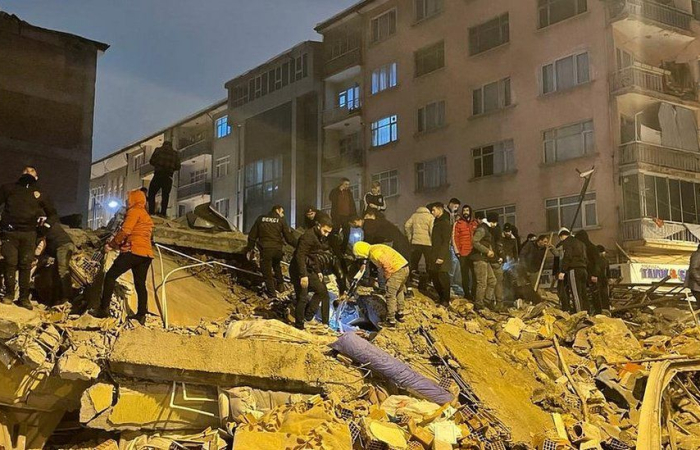
The Margara-Alican border bridge connecting Armenia and Turkey has been opened to allow five Armenian aid trucks to pass to the Turkish regions affected by the magnitude 7.8 earthquake on Monday (6 February). It is the first time the Turkey-Armenia border has been opened in 30 years. "Trucks with humanitarian aid have crossed the Margara bridge on the border and are on their way to the earthquake-stricken region," Vahan Hunanyan, a spokesperson for Armenia’s Foreign Ministry, wrote on Twitter. Serdar Kılıç, Ankara’s special envoy to Yerevan, hailed the arrival of the aid trucks, writing on Twitter that he "will always remember the generous aid sent by the people of Armenia to help alleviate the sufferings of our people in the earthquake-striken region in Türkiye." The bridge, which connects the village of Margara in Armenia with the village of Alican in Turkey, had been closed since 1993, when Turkey closed its borders with Armenia in protest at the First Karabakh War.
Editor's choice
Opinion
Opinion: Sweden must re-evaluate its internal and external relations before NATO accession can become reality

Opinion: Sweden must re-evaluate its internal and external relations before NATO accession can become reality

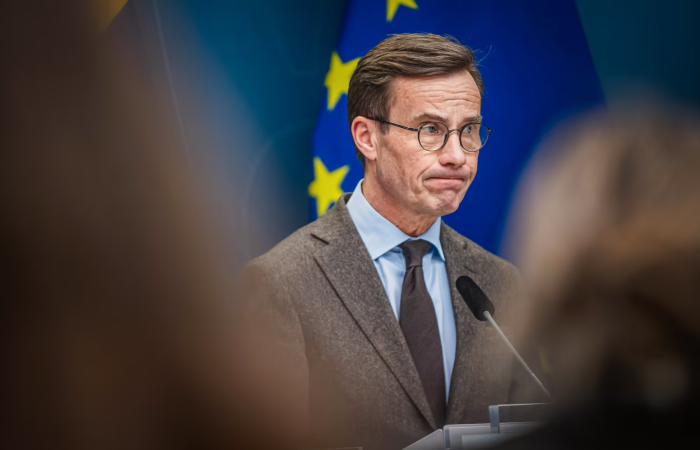
Given the increasingly uncertain political climate in which Swedish Prime Minister Ulf Kristersson finds himself, Sweden requires an internal and external positional re-evaluation in order to finalise its accession to NATO, writes Alfred Stranne in this op-ed for commonspace.eu. Meanwhile, Sweden needs to understand the increasing anger coming from Ankara, which is severely hindering its progression towards becoming a member of the alliance. Meanwhile, Sweden must also look within NATO itself to seek support in reassuring Ankara that Sweden will be a significant security provider for the alliance, providing added benefits for Ankara as well. This would repair Sweden’s relations with Turkey and reassure Ankara that despite the ideological and religious differences between Kristersson and Erdogan, Sweden and Turkey have common interests in seeking regional peace and stability.
Editor's choice
News
Violence rocks the Holy Land

Violence rocks the Holy Land

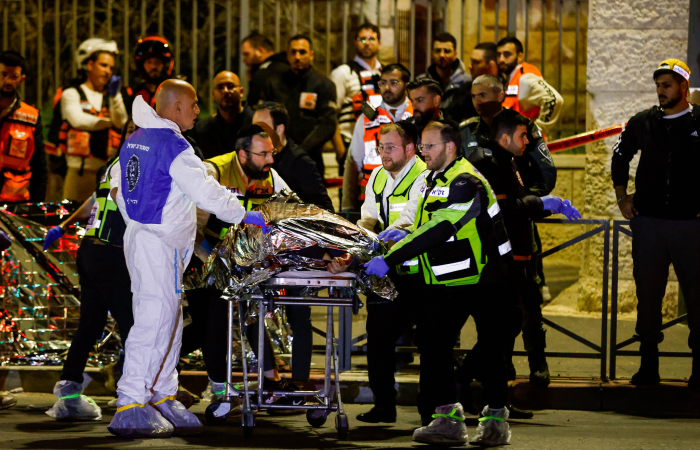
Violence in Jerusalem, in Israel and in the Palestinian territories over the last days  has shaken the fragile peace in the Holy Land once more, despite calls for restraint by the international community. On Saturday (28 January), an assailant shot and wounded two people in east Jerusalem, Israeli medics said, hours after a Palestinian gunman killed seven outside a synagogue in one of the deadliest such attacks in years. Prime Minister Benjamin Netanyahu said on Saturday that Israel's response to an attack by a Palestinian gunman attack that killed seven people on the outskirts of Jerusalem will be "strong, swift and precise" . The mass shooting unfolded as a 21-year-old resident of Israeli-annexed east Jerusalem drove up to the synagogue in the Neve Yaakov neighborhood and opened fire during the Jewish Sabbath. The bloodshed, which unfolded on International Holocaust Remembrance Day, marked another dramatic escalation in the Israeli-Palestinian conflict. Nine people had been killed Thursday in what Israel described as a “counter-terrorism” operation in the Jenin refugee camp. It was one of the deadliest Israeli army raids in the occupied West Bank since the second intifada, or Palestinian uprising, of 2000 to 2005. Israel said Islamic Jihad operatives were the target. Islamic Jihad and Hamas both vowed to retaliate, later firing several rockets at Israeli territory. Most of the rockets were intercepted by Israeli air defenses. The military responded with strikes on Hamas targets in Gaza. There were no injuries reported on either side, but Gaza’s armed groups vowed further action. After the synagogue shooting, Hamas spokesman Hazem Qassem said the attack proved “the resistance knows how to find the appropriate response” to Israeli “crimes.” At least 26 Israelis and 200 Palestinians were killed across Israel and the Palestinian territories in 2022, the majority in the West Bank, according to an AFP tally from official sources.
Editor's choice
News
Turkey rules out support for Sweden NATO bid after Stockholm protests

Turkey rules out support for Sweden NATO bid after Stockholm protests

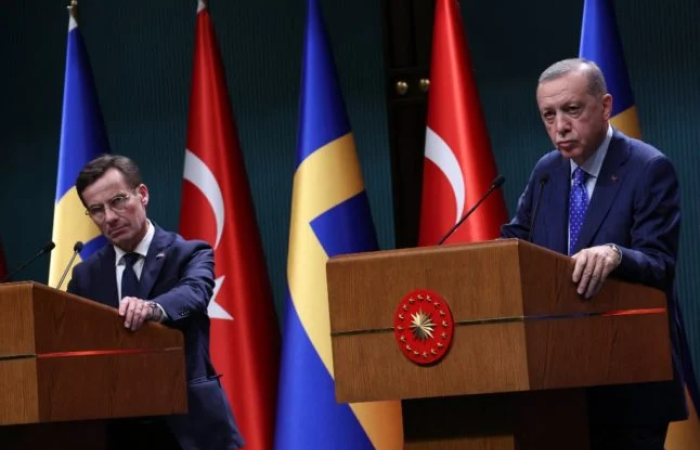
The President of Turkey, Recep Tayyip Erdogan, has said that Sweden should not expect support from Ankara over its bid to join NATO following protests in Stockholm at the weekend. Surrounded by police for his protection, on Saturday (21 January) Danish-Swedish, far-right, anti-Islam activist Rasmus Paludan burned the Quran outside the Turkish Embassy in Stockholm while making disparaging remarks about immigrants and Islam. This incensed President Erdogan who criticised the Swedish authorities for letting the stunt happen. “It is clear that those who allowed such vileness to take place in front of our embassy can no longer expect any charity from us regarding their NATO membership application,” Erdogan said on Monday (23 January). Another bone of contention between Sweden and Turkey regarding the former's accession to NATO concerns the Kurdish question. Later on Saturday following Paludan's stunt, there was a pro-Kurdish demonstration in Stockholm where flags of various Kurdish groups were waved, including that of the Kurdish Workers' Party, or the PKK. The PKK has waged a decades-long insurgency in Turkey, and although it is considered a terrorist group by Turkey, the United States and the European Union, its symbols are not banned in Sweden.
Editor's choice
News
Shock after Irish peacekeeper killed in Lebanon

Shock after Irish peacekeeper killed in Lebanon

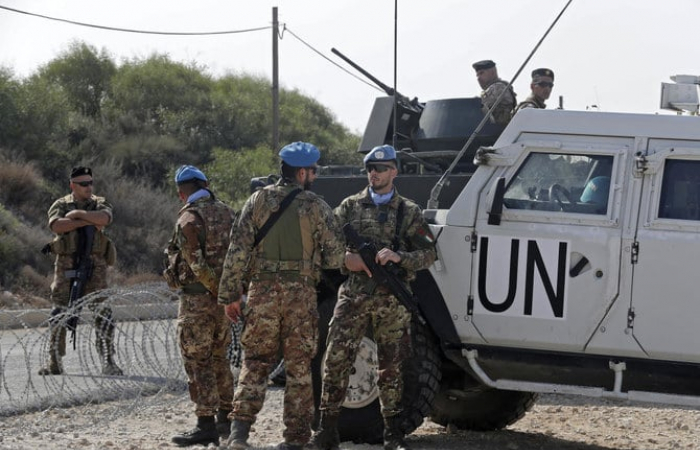
An Irish soldier was shot and killed on a UN peacekeeping mission in Lebanon and a second was in a critical condition after a “hostile” crowd surrounded their armored vehicle, Ireland’s defense minister said on Thursday. Irish peacekeepers have been in Lebanon since 1978 and it is the first Irish fatality there in two decades. “We’re all very shocked and deeply saddened, it is a reminder to us of the extraordinary sacrifices that our peacekeepers make on a constant basis,” Irish Prime Minister Micheál Martin told reporters in Brussels. The Irish soldiers, part of the United Nations Interim Forces in Lebanon (UNIFIL), were on what Simon Coveney, who is also Ireland’s foreign minister, said was considered a standard run from UNIFIL’s area of operations in south Lebanon to Beirut when the incident happened in Al-Aqbieh late on Wednesday “The two armored vehicles effectively got separated. One of them got surrounded by a hostile mob, I think that’s the only way you could describe them, and shots were fired. Unfortunately, one of our peacekeepers was killed,” Coveney told Irish national broadcaster RTE.
Editor's choice
News
Türkiye warned Greece to stop militarizing the Aegean islands

Türkiye warned Greece to stop militarizing the Aegean islands

Türkiye's Foreign Minister Mevlüt Çavuşoğlu has warned Greece on Tuesday (6 December) to stop militarizing the Aegean islands, or Ankara “will take the necessary steps on the ground.” He said Türkiye had sent a letter to the United Nations in July 2021 laying out its arguments against Athens, which he said had violated the agreements of Lausanne and Paris. Greece denied these accusations, saying it has not provoked its neighbour nor amassed a large landing fleet on its shores.