Region

Türkiye and the Levant

Stories under this heading cover Türkiye as well as the Levant – a large area in the Eastern Mediterranean region of Western Asia, consisting of Syria, Lebanon, Jordan, Israel and Palestine.

Editor's choice
News
Pope's visit to Türkiye and Lebanon has a strong ecumenical character, and places interreligious dialogue at its centre

Pope's visit to Türkiye and Lebanon has a strong ecumenical character, and places interreligious dialogue at its centre

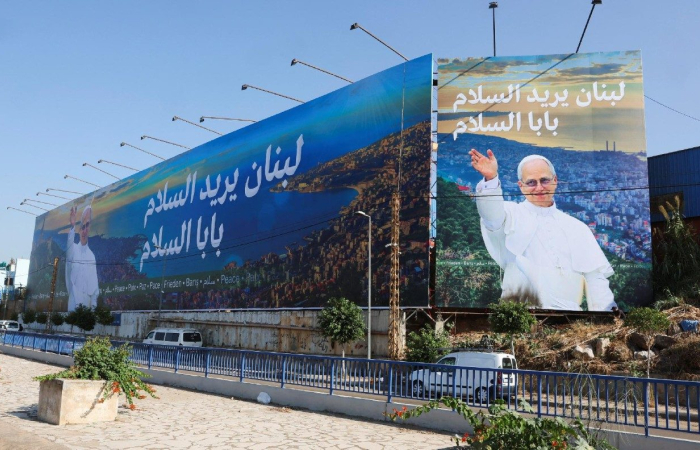
Pope Leo XIV has begun the first overseas trip of his pontificate, a six-day visit to Türkiye and Lebanon, which started yesterday (27 November) and ends on Tuesday (2 December). According to Vatican Radio, the visit "carries a strong ecumenical character and places interreligious dialogue at its centre. It will also be a moment of closeness to Christian communities and local populations across the region".   During nearly a week in the region, Pope Leo XIV will meet civil and religious authorities, visit mosques and ancient churches, pray at Beirut’s port in memory of the victims of the 2020 explosion, and hold private meetings with Presidents Recep Tayyip Erdoğan and Joseph Aoun.   A highlight of the visit will be a visit to Nicaea, where the Pope will mark the anniversary of the Council of Nicaea. Christians of many traditions recognise the Council of Nicaea as a foundation of shared faith. One of the most anticipated moments will be the Pope’s encounter with Lebanese youth in Bkerké, at the Maronite Patriarchate, a meeting expected to carry strong messages of hope in the Jubilee Year. A central event will be the ecumenical celebration in İznik, where the Pope and Ecumenical Patriarch Bartholomew will walk together toward the ruins of the Basilica of St Neophytos. The prayer, held before icons of Christ and the Council, will conclude with the lighting of a candle—a symbolic gesture of unity. The journey will also highlight interreligious engagement.   Memorable moments are expected throughout the trip: a wreath at Atatürk’s mausoleum, prayer inside the Blue Mosque, Mass at Istanbul’s Volkswagen Arena, the planting of a cedar at the presidential palace in Beirut, and prayer at the tomb of St Charbel in Lebanon. The Vatican said that "Pope Leo XIV’s pilgrimage to Türkiye and Lebanon aims to offer a voice of peace, unity, and hope at the heart of the Middle East."
Editor's choice
News
Turkiye to host COP31 in 2026

Turkiye to host COP31 in 2026

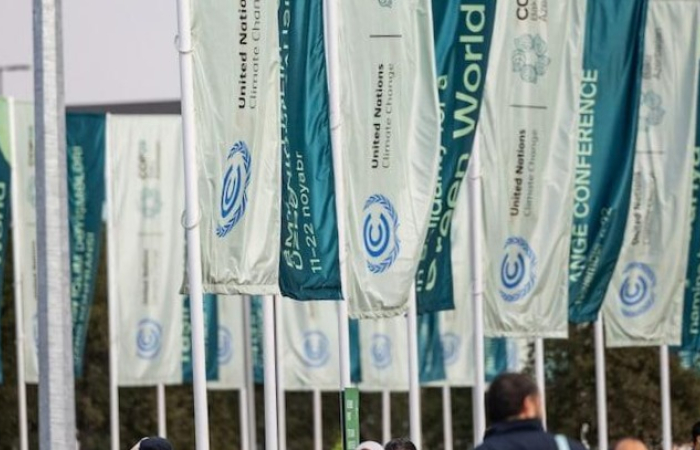
A consensus has emerged during COP 30, currently being held in Belan, Brazil, that COP 31 will be held in the Turkish city of Antalya, in 2026. In 2026 Turkiye will host another global event, the NATO leaders summit. Turkiye is set to host COP31 after reaching compromise with Australia.  The COP31 climate meeting is now expected to be held in Turkey after Australia dropped its bid to host the annual event. Under the UN rules, the right to host the COP in 2026 falls to a group of countries made up of Western Europe, Australia and others. A consensus must be reached but neither country had been willing to concede. Australia has now agreed to support the Turkish bid in return for their minister chairing the talks following negotiations at COP30, currently being held in Brazil. This unusual arrangement has taken observers by surprise. It is normal for a COP president to be from the host country and how this new partnership will work in practice remains to be seen. Australian Prime Minister Anthony Albanese has called the compromise with Turkey an "outstanding result" in an interview with the Australian Broadcasting Corporation (ABC), noting Pacific issues would be "front and centre". He added that he had spoken to Papua New Guinea Prime Minister James Marape and Prime Minister Rabuka of Fiji. There will be relief among countries currently meeting at COP30 in the Brazilian city of Belém that a compromise has been reached as the lack of agreement on the venue was becoming an embarrassment for the UN.

Filter archive

Publication date
Editor's choice
News
Mass protests in Israel after PM fires defence minister

Mass protests in Israel after PM fires defence minister

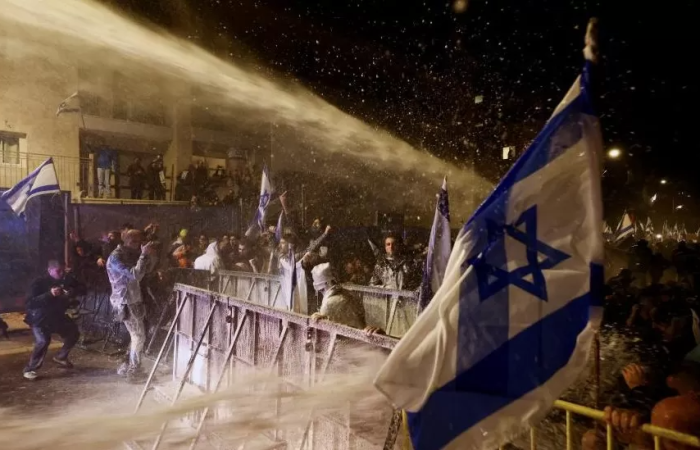
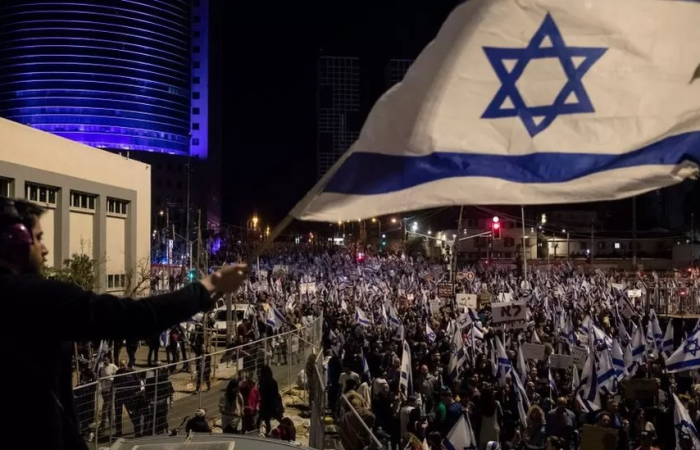
Last night (26-27 March) saw massive protests in Israel after Prime Minister Benjamin Netanyahu fired his defence minister after he spoke out against controversial judicial reform plans that have led to weeks of protests. Gallant had voiced concerns that the divisions in society being caused by the proposed legislation were hurting morale in the military and emboldening Israel’s enemies across the region. "I see how the source of our strength is being eroded," Gallant said. This led to Netanyahu removing him from his position, saying that "he doesn’t have any faith in him anymore and therefore he is fired." Meanwhile Israel's President Isaac Herzog addressed Netanyahu, tweeting, "For the sake of the unity of the people of Israel, for the sake of the responsibility we are obliged to, I call on you to stop the legislative process immediately." The judicial reform plans announced on 4 January would give parliament the authority to override Supreme Court decisions with a basic majority. The plans would also make it very difficult for the courts to declare a prime minister unfit for office and remove them for the courts.
Editor's choice
News
Organization of Turkic States convenes in Ankara to discuss disaster preparation and humanitarian relief

Organization of Turkic States convenes in Ankara to discuss disaster preparation and humanitarian relief

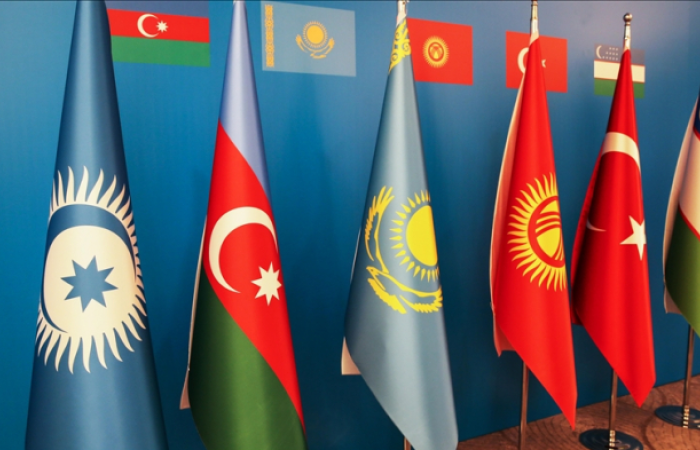
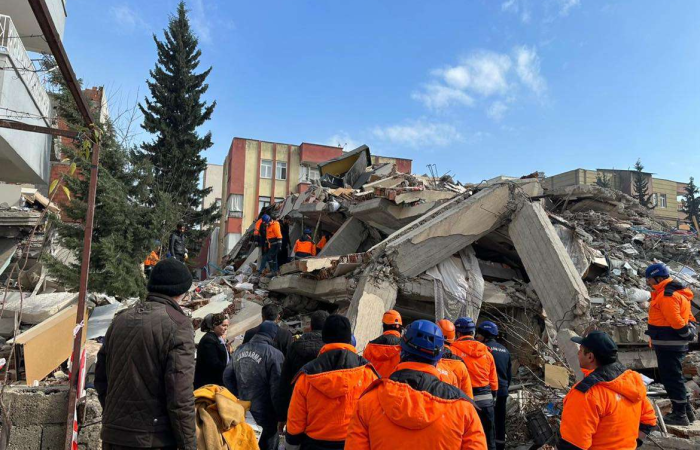
Today on Thursday (16 March), the Organization of Turkic States (OTS) will meet in the Turkish capital of Ankara to discuss regional disaster preparation, joint humanitarian relief, and the interoperability of Turkic State disaster responses. The meeting comes some six weeks after a devasting earthquake in Turkey and Syria that has killed over 50,000 people. Established in 2009 as the Cooperation Council of Turkic Speaking States, the OTS is an intergovernmental organisation that has as its "overarching aim" the promotion of "comprehensive cooperation among Turkic States". It has five member states - Azerbaijan, Kazakhstan, Kyrgyzstan, Turkey and Uzbekistan - as well as three observer states, namely Turkmenistan, Hungary and the internationally unrecognised Turkish Republic of Northern Cyrpus. The precise theme of Thursday's extraordinary summit is "Disaster-Emergency Management and Humanitarian Assistance". Among those attending the summit are President Ilham Aliyev of Azerbaijan, Kazakh President Kassym-Jomart Tokayev, Kyrgyz President Sadyr Japarov, and Uzbek President Shavkat Mirziyoyev.
Editor's choice
News
Turkish opposition nominate Kemal Kilicdaroglu to challenge Erdogan

Turkish opposition nominate Kemal Kilicdaroglu to challenge Erdogan

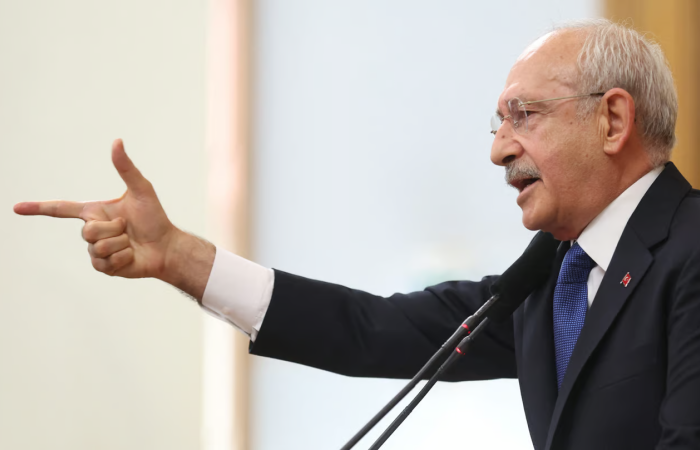
After weeks of fierce negotiations between an alliance of six opposition parties from across the political spectrum, the so-called "Table of Six" officially nominated Kemal Kilicdaroglu on Monday (6 March) as their candidate to challenge incumbent Recep Tayyip Erdogan in May's presidential elections. Kilicdaroglu, who has led the center-left Republican People's Party for over a decade, is an understated 74-year-old former bureaucrat from the country's social security authority. There has been some criticism that he lacks the flair and charisma needed to topple Erdogan's populism after 20 years of rule. In speech in Ankara announcing his nomination, Kilicdaroglu said that the opposition coalition would "run the country in consultation and agreement with one another". The group has pledged to reverse many of the changes that Erdogan has brought about since becoming prime minister in 2003, including returning the country to a parliamentary system.
Editor's choice
Commentary
It took an earthquake to jolt Armenia-Turkey relations out of decades of animosity

It took an earthquake to jolt Armenia-Turkey relations out of decades of animosity

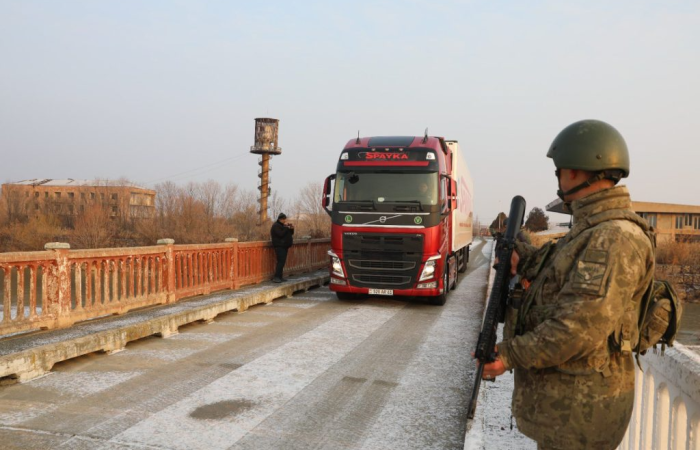
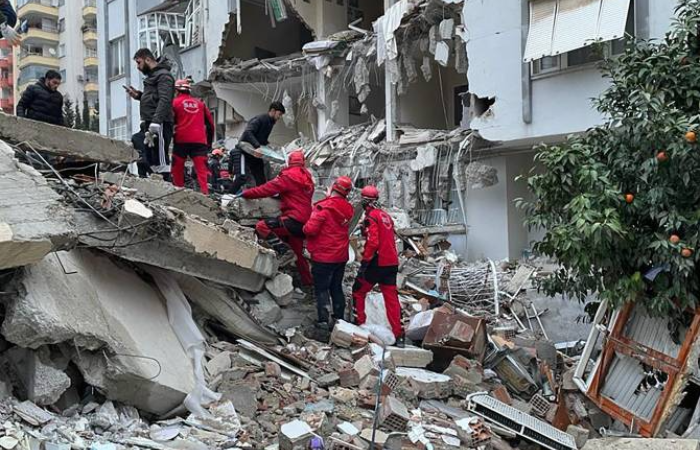
The earthquake that hit Turkey and parts of Syria on 6 February was a massive tragedy. As of Thursday (16 February) it has left nearly fifty thousand people dead, many tens of thousands injured and millions affected directly or indirectly. The world rallied around the beleaguered communities, putting aside political differences and diplomatic obstacles. The impact of the earthquake on Turkey was enormous. Ten out of eighty one Turkish provinces were affected, and some Turkish towns were wiped away almost completely. Humanitarian aid started pouring into Turkey from every part of the world. The contribution of one small neighbouring country was particularly significant, not only as part of the humanitarian effort, but also for its political and diplomatic symbolism. Armenia and Turkey have had a difficult relationship for decades. The two neighbouring countries do not have diplomatic relations. Their borders are closed. Recent attempts to normalise relations appeared to be moving at very slow speed – both sides having to manoeuvre around many sensitive issues, and a heavy baggage of history. It took an earthquake to jolt relations out of decades of animosity.
Editor's choice
News
Turkish and Armenian foreign ministers meet in Ankara, agree to expedite work to open border

Turkish and Armenian foreign ministers meet in Ankara, agree to expedite work to open border

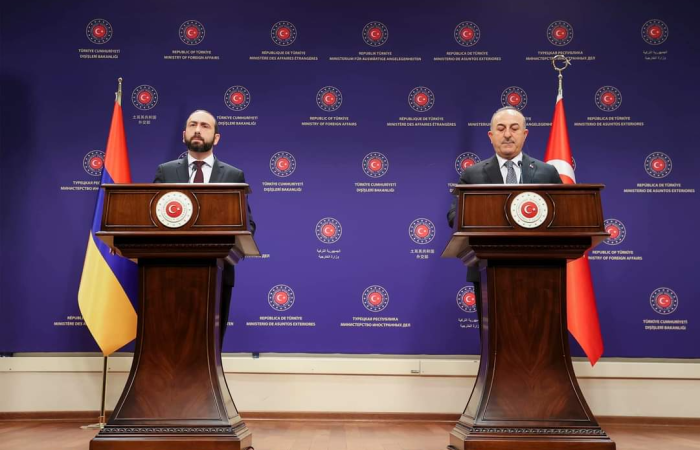
The Turkish and Armenian foreign ministers Mevlut Cavusoglu and Ararat Mirzoyan have met in the Turkish capital of Ankara on Wednesday (15 February). The meeting followed an announcement from Armenian officials that a second Armenian aid convoy crossed the land border into Turkey late on Tuesday after the devastating 6 February earthquake which has killed over 40,000 people across Turkey and Syria. The meeting is being seen as a major development in the normalisation of ties between the two countries who do not enjoy any formal diplomatic relations and who remain divided over a number of issues. Mirzoyan expressed his "condolences to the families of the many thousands of victims of the devastating earthquake, the people and government of Turkey, and I wish swift recovery to all those injured." Recalling the 1988 Spitak earthquake in Armenia that killed over 20,000 people, Mirzoyan said, "I believe that the international community must not remain indifferent towards any humanitarian crisis happening anywhere around the globe. And it was by this very principle that immediately after the devastating earthquake the government of Armenia made a decision to send rescuers and humanitarian aid to Turkey."