Opinion: Sweden must re-evaluate its internal and external relations before NATO accession can become reality

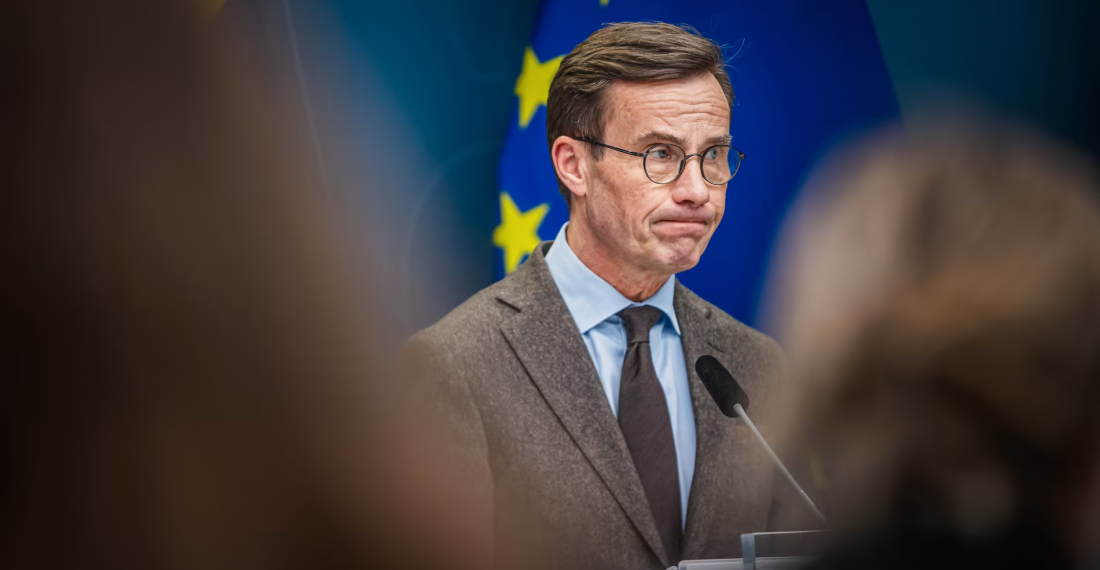
Given the increasingly uncertain political climate in which Swedish Prime Minister Ulf Kristersson finds himself, Sweden requires an internal and external positional re-evaluation in order to finalise its accession to NATO, writes Alfred Stranne in this op-ed for commonspace.eu. Meanwhile, Sweden needs to understand the increasing anger coming from Ankara, which is severely hindering its progression towards becoming a member of the alliance.

Following the Russian re-invasion of Ukraine in February 2022, former Swedish Prime Minister Magdalena Andersson was given two choices. On one hand, she could refrain from becoming involved in the conflict in order to maintain Sweden’s 200-year-long military neutrality, while potentially exposing Sweden to future Russian aggression. On the other hand, she could abandon Sweden’s military neutrality by seeking membership in NATO, which would allow Sweden to fall back on Article V of the alliance if Russia attacked Sweden. Eventually, in May 2022, the decision was made that Sweden and Finland would submit a joint application for NATO, and the process had begun. 

Many countries quickly signed off on Swedish accession, based on a widespread agreement that Sweden would be a net provider to the alliance through its strong air force and history in dealing with Russian aggression in its backyard. However, Turkey has been increasingly reluctant to accept Sweden’s NATO membership, demanding that Sweden extradite a large number of alleged militants of the Kurdish Workers’ Party, the PKK, in order to prosecute them for terrorism charges. As the PKK is not classified as a terrorist organisation in Sweden, it has become a destination for many members of the PKK to travel to in order to avoid prosecution.

Despite the generally open Swedish attitude towards the PKK, however, Sweden agreed to initiate the extradition of alleged PKK militiamen to Turkey in the summer of 2022, with hopes that it would help Sweden become a member of NATO. This then sparked protests among both the Kurdish and general population in Sweden, where many started questioning whether the country is reshaping its attitudes toward the PKK in order to be granted membership into NATO.

Anger from Ankara doesn't stop at the PKK

Other events have also angered Ankara, further complicating Sweden’s accession to NATO. In January 2023, a doll resembling Turkish President Recep Tayyip Erdogan was hung from its feet outside the town hall in Stockholm, as a protest against the undemocratic values Erdogan is asserting on Sweden in exchange for NATO membership. The same month, Danish-Swedish politician Rasmus Paludan, who leads the Danish political party Stram Kurs, (or Hard Line), conducted a burning of the Quran outside the Turkish embassy in Stockholm. The stunt was enabled through financial support from Swedish journalist Chang Frick, who has alleged connections to the Kremlin and strong affiliations with the Sweden Democrat party, Sweden’s right-most political party. Following Paludan’s protest, Erdogan took a firm stance against Swedish accession to NATO, saying that as long as burning the Quran remains lawful in Sweden, it will not become a member of NATO.

Kristersson also finds himself in a tricky situation domestically, having lost the 2022 parliamentary election to the left-wing Social Democrats, but still managing to cobble together a majority right-wing-bloc government reliant on the Sweden Democrats. Their party leader Jimmie Åkesson called Turkish President Erdogan an Islamist dictator earlier this year, and he has also been banned from entering Turkey since 2020 after handing out flyers to refugees passing through Turkey that they should avoid coming to Sweden because it was supposedly full. Similarly, the Chair of the Justice Committee Richard Jomshof, also from the Sweden Democrats, has asserted that if burning the Quran sparks anger, someone should burn a hundred more.

Sweden can go down one of two roads, but must decide which one to take

Fundamentally, Sweden has two roads to take in the matter. Firstly, Prime Minister Kristersson can keep folding to Erdogan’s increasingly undemocratic demands, which will necessitate a re-evaluation of Sweden’s constitutional values. This is highly unlikely because Sweden prides itself on its strong constitutional rights, and because a constitutional re-evaluation would severely undermine Sweden’s sovereignty and self-determination. Alternatively, Sweden can try to seek common ground with Erdogan, re-assert Sweden’s position as a potential security provider for NATO by demonstrating not only its sophisticated aerial and naval capabilities, but also highlight its historical experiences with Russia that will benefit the entirety of NATO, including Turkey.

Ultimately, Sweden must find a way to prevent anti-NATO forces from complicating its relationship with Turkey and accession into NATO. And, if Kristersson wishes entry into the alliance in the near future, he will need to re-evaluate his relationship with Åkesson and the Sweden Democrats more generally.

Kristersson and his government need to choose which road to take, and soon. Sweden can either seek to re-evaluate its constitutional rights and freedoms which will be a significant step backward for Sweden’s open and democratic attitudes towards fundamental human rights; or Sweden can seek to find common ground with Erdogan by re-establishing its relationship with Turkey and re-evaluating the Moderate Party’s internal position vis-a-vis the Sweden Democrats. 

Meanwhile, Sweden must also look within NATO itself to seek support in reassuring Ankara that Sweden will be a significant security provider for the alliance, providing added benefits for Ankara as well. This would repair Sweden’s relations with Turkey and reassure Ankara that despite the ideological and religious differences between Kristersson and Erdogan, Sweden and Turkey have common interests in seeking regional peace and stability.

source: Alfred Stranne is a Junior Research Associate at LINKS Europe and commonspace.eu
photo: 
Stina Stjernkvist, Svenska Dagbladet
The views expressed in opinion pieces and commentaries do not necessarily reflect the position of commonspace.eu or its partners.
       

Related articles

Editor's choice
News
Germany accuses Russia of cyberattacks and disinformation campaign

Germany accuses Russia of cyberattacks and disinformation campaign

The German government holds Russia responsible for a cyberattack on German air traffic control, and for targeted disinformation campaigns before the last federal election. According to the German Foreign Office in Berlin, the incidents could be clearly attributed to the Russian military intelligence service, the GRU. In response, the Russian ambassador to Berlin was summoned to the Foreign Ministry. "We have been observing a massive increase in threatening hybrid activities by Russia for some time now," a spokesperson for the Foreign Ministry stated. These range from disinformation campaigns and espionage to cyberattacks and sabotage attempts. The aim is to divide society, sow distrust, and undermine confidence in democratic institutions. The spokesperson added that with these actions, Russia is "very concretely threatening our security, not only through its war of aggression against Ukraine, but also here in Germany."  The Foreign Ministry spokesperson explained that the cyberattack on air traffic control in August 2024 was clearly attributed to the hacker collective "APT28," known as "Fancy Bear," and to the responsibility of the Russian military intelligence service, the GRU. Furthermore, it could now be "conclusively stated" that Russia had attempted "to influence and destabilize both the last Federal election and the ongoing internal affairs of the Federal Republic of Germany." There was "absolutely irrefutable evidence" for this". The so-called "Storm 1516" campaign, which has been running since 2024, is allegedly backed by "reliable information" that the Moscow-based think tank "Center for Geopolitical Expertise" is behind it. The Center is also said to be supported by Russian military intelligence. Its primary aim is to influence democratic elections in the West. (Click the image to read more).
Editor's choice
News
NATO Chief says war is on Europe's doorstep, and warns against complacency

NATO Chief says war is on Europe's doorstep, and warns against complacency

Russia could attack a NATO country within the next five years, the Secretary General of NATO, Mark Rutte, said in a stark new warning. "NATO's own defences can hold for now," Rutte warned in Berlin, but conflict was "next door" to Europe, and he feared "too many are quietly complacent, and too many don't feel the urgency, too many believe that time is on our side. "Russia is already escalating its covert campaign against our societies," Rutte said in a speech in Germany. "We must be prepared for the scale of war our grandparents or great-grandparents endured." Earlier this month, Russia's President Vladimir Putin said his country was not planning to go to war with Europe, but it was ready "right now" if Europe wanted to - or started a war. But similar reassurances were given by Moscow in 2022, just before 200,000 Russian troops crossed the border and invaded Ukraine. Putin has accused European countries of hindering US efforts to bring peace in Ukraine - a reference to the role Ukraine's European allies have recently played in trying to change a US peace plan to end the war, whose initial draft was seen as favouring Russia. But Putin was not sincere, Nato's secretary-general said in the German capital, Berlin. Supporting Ukraine, he added, was a guarantee for European security. "Just imagine if Putin got his way; Ukraine under the boot of Russian occupation, his forces pressing against a longer border with Nato, and the significantly increased risk of an armed attack against us." Russia's economy has been on a war footing for more than three years now - its factories churn out ever more supplies of drones, missiles and artillery shells. According to a recent report by the Kiel Institute for the World Economy, Russia has been producing each month around 150 tanks, 550 infantry fighting vehicles, 120 Lancet drones and more than 50 artillery pieces. The UK, and most of its Western allies, are simply not anywhere near this point. Analysts say it would take years for Western Europe's factories to come close to matching Russia's mass-production of weapons. "Allied defence spending and production must rise rapidly, our armed forces must have what they need to keep us safe," the Nato chief said.

Popular

Editor's choice
News
Germany accuses Russia of cyberattacks and disinformation campaign

Germany accuses Russia of cyberattacks and disinformation campaign

The German government holds Russia responsible for a cyberattack on German air traffic control, and for targeted disinformation campaigns before the last federal election. According to the German Foreign Office in Berlin, the incidents could be clearly attributed to the Russian military intelligence service, the GRU. In response, the Russian ambassador to Berlin was summoned to the Foreign Ministry. "We have been observing a massive increase in threatening hybrid activities by Russia for some time now," a spokesperson for the Foreign Ministry stated. These range from disinformation campaigns and espionage to cyberattacks and sabotage attempts. The aim is to divide society, sow distrust, and undermine confidence in democratic institutions. The spokesperson added that with these actions, Russia is "very concretely threatening our security, not only through its war of aggression against Ukraine, but also here in Germany."  The Foreign Ministry spokesperson explained that the cyberattack on air traffic control in August 2024 was clearly attributed to the hacker collective "APT28," known as "Fancy Bear," and to the responsibility of the Russian military intelligence service, the GRU. Furthermore, it could now be "conclusively stated" that Russia had attempted "to influence and destabilize both the last Federal election and the ongoing internal affairs of the Federal Republic of Germany." There was "absolutely irrefutable evidence" for this". The so-called "Storm 1516" campaign, which has been running since 2024, is allegedly backed by "reliable information" that the Moscow-based think tank "Center for Geopolitical Expertise" is behind it. The Center is also said to be supported by Russian military intelligence. Its primary aim is to influence democratic elections in the West. (Click the image to read more).