Region

South Caucasus

The South Caucasus – a region encompassing Armenia, Azerbaijan and Georgia - is one of strategic importance, not only for adjacent countries, such as Turkiye, Russia, Iran and the Central Asian states, but also for neighbours such as the European Union and the GCC states, and globally for the United States, India, China, Pakistan and Japan.

commonspace.eu team brings decades of experience of working in the South Caucasus and we are pleased to share our insights with our loyal readers through the website, and the sister newsletter, Caucasus Concise.

Editor's choice
Monday Commentary
Monday Commentary: 2025 was a momentous year for the South Caucasus

Monday Commentary: 2025 was a momentous year for the South Caucasus

The year 2025 has ended up being a momentous year for the South Caucasus, writes Dennis Sammut in his Monday Commentary. Armenia-Azerbaijan relations have been redefined, with consequences for the whole region and beyond. That huge development overshadowed key moments in the domestic trajectory of the two countries, which however have deep consequences for the two countries, and even beyond. It has also been a tumultuous year for Georgia too. The country has been gripped in a political crisis throughout 2025, with no obvious end in sight. Whatever the domestic arguments, on the international stage Georgia is today a shadow of what it used to be until recently. It not only has lost the chance of joining the European Union any time soon, but it has also lost its position as the leading South Caucasus country. Today, in the new reality of the region, it lags as a tired third. Important as 2025 was, it ended with a lot of unfinished business. So 2026 will also be crucial for the three countries. Since regaining its statehood in 1991 after the dissolution of the Soviet Union, Armenia-Azerbaijan relations have been defined by war. The two fought open wars, wars of attrition, and propaganda wars, incessantly. Tens of thousands of people lost their lives, and hundreds of thousands were displaced. Many had lost hope that the two could try the alternative – i.e. peaceful co-existence. Yet in 2025 they were proven wrong.
Editor's choice
Opinion
Opinion: A sustainable peace requires consistent long-term European involvement

Opinion: A sustainable peace requires consistent long-term European involvement

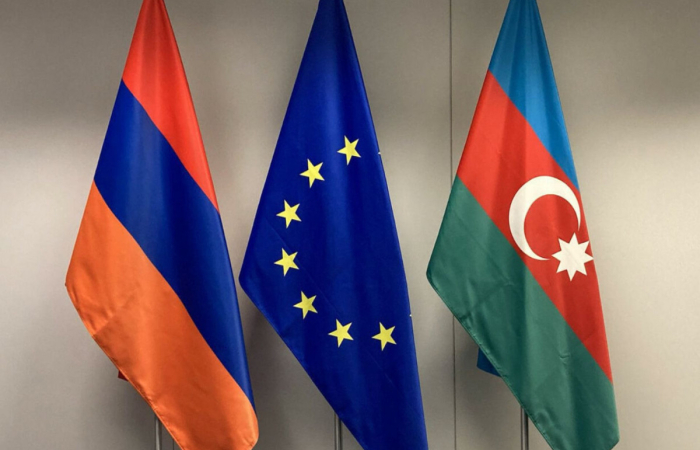
There is no denying that the EU, especially key member states acting in support, helped bring Baku and Yerevan closer to the Washington Declaration of August 8, 2025. But a declaration is not a treaty. Turning principles into a peace deal and eventually to a sustainable peace requires consistent long-term European involvement, writes Yalchin Mammadov in this-op-ed for commonspace.eu Before facilitating trust between Armenia and Azerbaijan, the EU is first expected to address its own credibility gap with Baku. A more balanced approach—such as including Azerbaijan, alongside Armenia, in the European Peace Facility—could be a useful first step. Diplomats can negotiate peace; societies must build peace. In this context, the EU can do what it does the best: long-term societal engagement. By expanding youth and academic exchange programmes, investing in cross-border civil society initiatives, and fostering people-to-people cooperation, Brussels can help shape a new generation equipped to sustain peace beyond political cycles. Such tools are slow and unglamorous, but if ignored, even the strongest treaty risks collapse. And obviously, these aspects require two-way engagement and genuine willingness by both governments to facilitate contact. If Brussels wants to remain influential, it needs to replace outdated one-size-fits-all policies with ambitious, interest-driven and differentiated approaches. Without a clear regional strategy, which appears to be the current situation, the South Caucasus will continue to sit at the margins of Europe’s security architecture—leaving space for other powers to take the lead. (You can read the op-ed in full by clicking the image.)

Filter archive

Publication date
Editor's choice
News
Armenia aims to become tech hub of South Caucasus with new AI data factory

Armenia aims to become tech hub of South Caucasus with new AI data factory

Armenia is set to host its own artificial intelligence data factory, with the project valued at $500 million and scheduled to begin operations in 2026. This investment initiative is being jointly implemented by Firebird, the Armenian government, and NVIDIA, JAMnews has reported. “FirebirdCloudAI is Armenia’s largest and most important tech investment the country’s ‘Stargate’. The idea was born when Jensen Huang, co-founder and CEO of NVIDIA, visited Yerevan in 2023. Today, it’s becoming reality. The AI factory, equipped with thousands of Blackwell GPUs, will spark innovation across Armenia,” Prime Minister Nikol Pashinyan wrote on X.
Editor's choice
Monday Commentary
Monday Commentary: The Georgians are still waiting for the man on the white horse!

Monday Commentary: The Georgians are still waiting for the man on the white horse!

The political crises in Georgia that started after disputed parliamentary elections at the end of last year, shows no sign of easing. The government, formed by the ruling Georgian Dream party, appears exhausted. Its strategy of wearing out the opposition failed. It is now increasingly resorting to repression. Many opposition activists have been arrested, and the Government keeps introducing laws and administrative measures that are meant to tighten its control of the country, but in practice increase the resolve of its opponents. The Georgian Dream government is at a dead end.
Editor's choice
Opinion
Armenia and Azerbaijan Dialogue in the context of the European Political Community

Armenia and Azerbaijan Dialogue in the context of the European Political Community

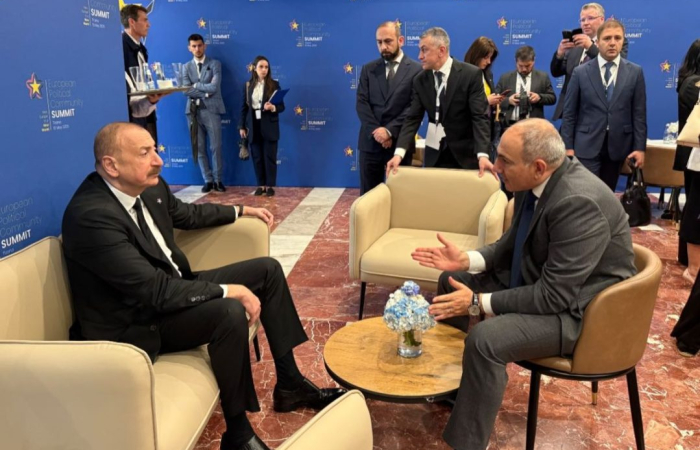
The latest European Political Community summit held in Tirana in May this year, featured Azerbaijan’s President Aliyev at a time when Baku’s period of bad blood with Brussels seems to be over and Europe once again is viewed as a constructive partner. It is not a coincidence that Aliyev briefly met Pashinyan in Tirana for the first time in months and even had a seemingly friendly conversation with French President Macron despite the two countries’ intense feud.
Editor's choice
Opinion
Pashinyan Targets Remnants of Old Regime as Election Showdown Looms

Pashinyan Targets Remnants of Old Regime as Election Showdown Looms

For over a week now, the Armenian public has been subjected to another unedifying spectacle between the country’s political and spiritual leadership. Tirades posted on social media by Prime Minister Nikol Pashinyan targeting Armenian Catholicos Karekin II, who he accuses of fathering at least one child despite an oath of celibacy, have been incendiary. The allegation is not new. Armenian media even named an alleged daughter back in 2013. However, Pashinyan’s wife, Anna Hakobyan, further ratcheted up tensions by referring to some members of the clergy as paedophiles while not presenting any evidence.
Editor's choice
Opinion
The Organization of Turkic States Is Emerging as a Key Geopolitical Actor in Eurasia

The Organization of Turkic States Is Emerging as a Key Geopolitical Actor in Eurasia

The Informal Summit of the Organization of Turkic States (OTS), held on May 20-21, 2025, in Budapest, Hungary, marked a significant milestone in the organisation’s growing geopolitical influence. Hosted by Hungarian Prime Minister Viktor Orbán, the summit brought together leaders from Azerbaijan, Kazakhstan, Kyrgyzstan, Türkiye, and Uzbekistan, alongside observer states Hungary, Turkmenistan, and the Turkish Republic of Northern Cyprus. This gathering, the first OTS summit hosted by an observer state, underscored Hungary’s role as a bridge between the Turkic world and Europe, reflecting the theme “Meeting Point of East and West.”