Region

Russia

Stories under this heading cover Russia, as well as countries in the eastern part of the European continent, such as Belarus, Ukraine, and Moldova.

Editor's choice
News
UN General Assembly demands that Russia returns Ukrainian children

UN General Assembly demands that Russia returns Ukrainian children

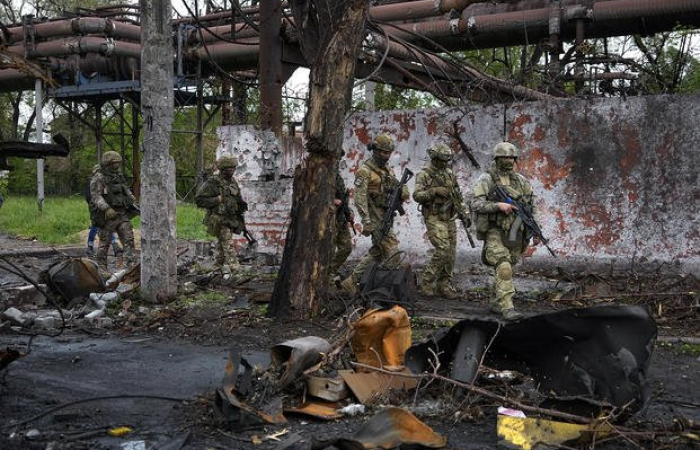
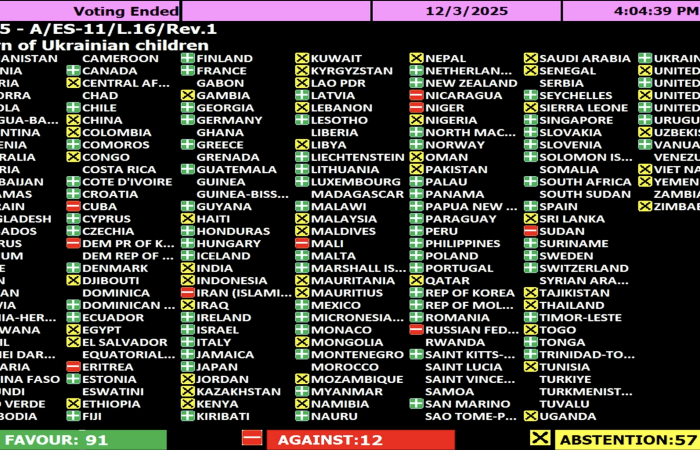
The UN General Assembly, in a vote on Wednesday (3 December) overwhelmingly voted in favour of a resolution demanding that Russia returns Ukrainian children kidnapped since the start of the Russian invasion in February 2022. 91 countries voted in favour of the resolution, 12 voted against, and 57 countries abstained or were not present. Russia and Belarus were joined by ten countries in voting against the resolution, namely, Iran, Cuba, Nicaragua, Burundi, Burkina Faso, Niger, Mali, Democratic Republic of Congo, Sudan, and Eritrea. From the South Caucasus, Georgia voted in favour of the resolution, but Armenia and Azerbaijan abstained, as did Turkiye and the five Central Asian republics. Also abstaining were the six Gulf monarchies and most Arab countries. The resolution calls for the immediate return of Ukrainian children who were deported to Russia. The Ukrainian government says more than 19,000 children have been taken away from Russian-occupied areas and elsewhere since Moscow's invasion began in February of 2022. The draft resolution submitted on Wednesday demands that Russia "ensure the immediate, safe and unconditional return" of the children. (Read more by clicking the image)
Editor's choice
News
EU imposes more sanctions on Russia but fails to reach agreement on using Russian assets

EU imposes more sanctions on Russia but fails to reach agreement on using Russian assets

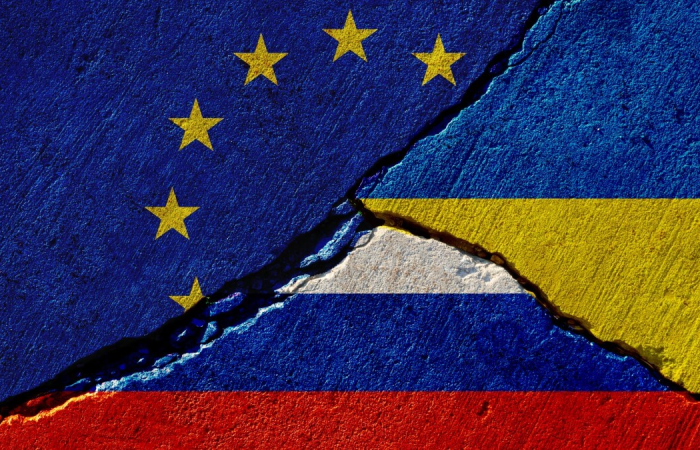
The European Union on Thursday 23 October applied more economic sanctions on Russia, adding to U.S. President Donald Trump’s new punitive measures the previous day against the Russian oil industry. However, EU leaders meeting in Brussels have so far failed to reach a deal on using Russian frozen assets. European capitals were hoping to convince Belgium, which houses the international deposit organisation Euroclear and is worried about legal repercussions, that a reparation loan from the funds is workable. Most of the €200 billion in Russian central bank assets frozen by the EU are held in Euroclear. However, Belgian Prime Minister Bart De Wever has so far been skeptical, reiterating during the European Council meeting on Thursday that certain conditions must first be met before a €140 billion loan can be given to Ukraine using Russia’s frozen assets. Russian officials and state media dismissed the new Western measures, saying they are largely ineffective.

Filter archive

Publication date
Editor's choice
Editorial
Our War

Our War

One year has passed since Vladimir Putin’s Russia attacked Ukraine, plunging Europe into a war that has already claimed the lives of tens of thousands, and devastated a whole country. Putin expected Ukraine to fall into his lap within hours. It didn’t. It resisted heroically. He also expected Europe, the United States and the rest of the international community to give a muddled response, and for things to be back to business as usual within weeks. It did not happen. The response of Europe, the United States and similarly minded countries was fast, resolute and robust. Having grossly miscalculated, Putin had two choices: to admit his mistake and recalibrate, or, to persist, and to keep digging despite the fact that he was clearly in a hole. Most countries have internal corrective systems that in such situations keep leaders in check. In Russia no such systems exist. So Putin keeps digging himself into a hole by threatening to escalate. What has been clear from day one, is that this is not simply Ukraine’s war. Countries can have disputes, and sometimes they also go to war with each other. Usually the world stands by and tries to bring the belligerents to the negotiating table and to restore peace.
Editor's choice
Interview
Samantha Smith's Group: the global volunteer movement uniting Ukrainians and Russians through English

Samantha Smith's Group: the global volunteer movement uniting Ukrainians and Russians through English

On 24 February 2022, in the town of Kostyantynivka in Ukraine’s eastern Donetsk oblast, Anastasiia woke up at 4am to the sound of explosions. Not in her town, but about 30km away. When the first explosion hit she did not understand what was going on, but once the second explosion hit she rushed to her parents’ room and told them that the war had started. Originally conceived as a protest, Samantha Smith’s Group has evolved into a herculean effort run by a tight-knit, principled and dedicated group of individuals committed to making a very genuine difference to Ukrainians whose lives have been turned upside down by Russia’s invasion of their country. However, although the teachers come from all over the world, from Canada to New Zealand, from the UK to Costa Rica, as well as Ukraine and Belarus, the majority of volunteers teaching English to Ukrainians in Samantha Smith’s Group are actually from Russia.
Editor's choice
News
Putin announces withdrawal from New Start treaty in State of the Nation speech

Putin announces withdrawal from New Start treaty in State of the Nation speech

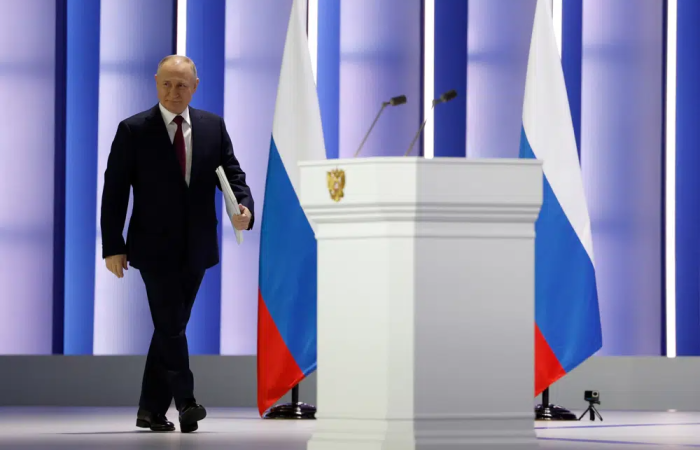
Russian President Vladimir Putin has delivered long-delayed State of the Nation speech on Tuesday (21 February), in which he has announced that Russia will withdraw from the New Start arms reduction treaty with the US. Speaking for nearly two hours, the Russian President repeated many arguments with which observers have become all too familiar over the previous months and years, especially since the start of the full-scale Russian invasion of Ukraine on 24 February last year. Throughout his address, Putin continued to blame Ukraine and the West for the war, despite it being Moscow that launched a full-scale invasion that is believed to have had capturing Kyiv within three days as one of its main goals. He again characterised the Ukrainian government as a "neo-Nazi regime", a claim which he has often repeated to justify his "special military operation". One of the biggest announcements coming from his speech was that Russia would pull out of the New Start strategic arms reduction treaty with the US, adding that Russia needs to be ready to test nuclear weapons if the US does so first.
Editor's choice
News
Russia may have lost up to 200,000 troops, according to UK intelligence

Russia may have lost up to 200,000 troops, according to UK intelligence

In a security briefing on the Russia-Ukraine war released on Friday (17 February), the UK Ministry of Defence has announced that they believe that Russia may have lost anywhere between 175,000 and 200,000 soldiers since the 24 February 2022. This figure includes regular soldiers from the Russian Armed Forces and private military contractors from the likes of the Wagner group. The briefing adds that the number of killed could be anywhere between 40,000 and 60,000, and that the casualty rate has significantly increased since Vladimir Putin announced his 'partial mobilisation' in September 2022. It goes on to say that by modern standards, "these figures represent a high ratio of personnel killed compared to those wounded", adding that the casualty rate has likely been exacerbated by "extremely rudimentary medical provision across much of the force". Finally, the briefing writes that Wagner forces have deployed large numbers of convict recruits, who have probably seen a casualty rate of up to 50%.
Editor's choice
News
Russia launches another wave of missile strikes on Ukraine after very heavy losses

Russia launches another wave of missile strikes on Ukraine after very heavy losses

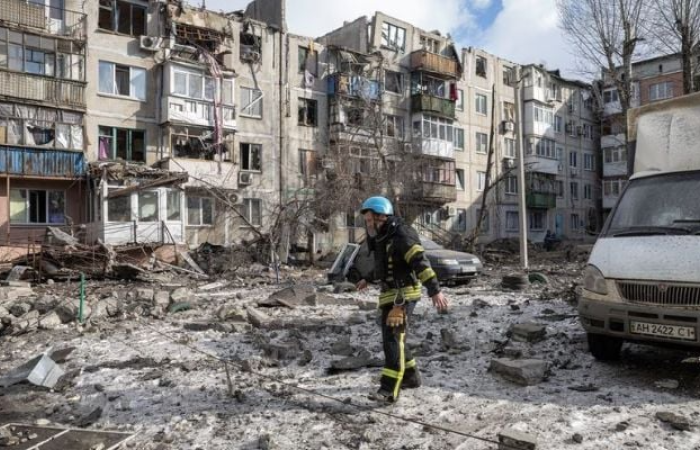
Russia has unleashed a 15th wave of missile strikes against Ukraine overnight on Thursday (16 February) after reportedly sustaining very heavy losses in Ukraine's eastern Donbas region. According to the Commander-in-Chief of Ukraine's armed forces Valery Zaluzhny, overnight Russia launched 36 air and sea-based cruise, guided air-to-surface, and anti-ship missiles. He added that 16 of them were shot down by Ukrainian air defence. In a post on Telegram on Thursday morning, Ukraine's Deputy Defence Minister Hanna Maliar said, "the situation [in the East] is tense. Yes, it is difficult for us. But our fighters are not allowing the enemy to achieve their goals and are inflicting very serious losses." The latest wave of strikes comes after the military think tank, The Institute for Strategic Studies, suggests that Moscow's has lost as much as 50% of its pre-invasion fleet of modern T-72B3 and T-72B3M main battle tanks. Meanwhile, the UK Defence Secretary Ben Wallace has suggested that as many as two-thirds of Russia's tanks could be either "destroyed or broken". Speaking to the BBC on Wednesday (15 February), Mr Wallace added that they believe that as much as 97% of Russia's entire army are now in Ukraine.