Region

Russia

Stories under this heading cover Russia, as well as countries in the eastern part of the European continent, such as Belarus, Ukraine, and Moldova.

Editor's choice
News
UN General Assembly demands that Russia returns Ukrainian children

UN General Assembly demands that Russia returns Ukrainian children

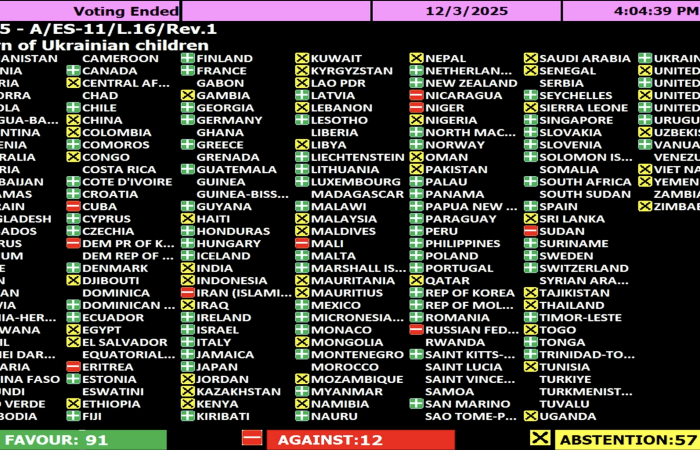
The UN General Assembly, in a vote on Wednesday (3 December) overwhelmingly voted in favour of a resolution demanding that Russia returns Ukrainian children kidnapped since the start of the Russian invasion in February 2022. 91 countries voted in favour of the resolution, 12 voted against, and 57 countries abstained or were not present. Russia and Belarus were joined by ten countries in voting against the resolution, namely, Iran, Cuba, Nicaragua, Burundi, Burkina Faso, Niger, Mali, Democratic Republic of Congo, Sudan, and Eritrea. From the South Caucasus, Georgia voted in favour of the resolution, but Armenia and Azerbaijan abstained, as did Turkiye and the five Central Asian republics. Also abstaining were the six Gulf monarchies and most Arab countries. The resolution calls for the immediate return of Ukrainian children who were deported to Russia. The Ukrainian government says more than 19,000 children have been taken away from Russian-occupied areas and elsewhere since Moscow's invasion began in February of 2022. The draft resolution submitted on Wednesday demands that Russia "ensure the immediate, safe and unconditional return" of the children. (Read more by clicking the image)
Editor's choice
News
EU imposes more sanctions on Russia but fails to reach agreement on using Russian assets

EU imposes more sanctions on Russia but fails to reach agreement on using Russian assets

The European Union on Thursday 23 October applied more economic sanctions on Russia, adding to U.S. President Donald Trump’s new punitive measures the previous day against the Russian oil industry. However, EU leaders meeting in Brussels have so far failed to reach a deal on using Russian frozen assets. European capitals were hoping to convince Belgium, which houses the international deposit organisation Euroclear and is worried about legal repercussions, that a reparation loan from the funds is workable. Most of the €200 billion in Russian central bank assets frozen by the EU are held in Euroclear. However, Belgian Prime Minister Bart De Wever has so far been skeptical, reiterating during the European Council meeting on Thursday that certain conditions must first be met before a €140 billion loan can be given to Ukraine using Russia’s frozen assets. Russian officials and state media dismissed the new Western measures, saying they are largely ineffective.

Filter archive

Publication date
Editor's choice
News
EU extends sanctions on Russia for another six months

EU extends sanctions on Russia for another six months

The European Council has announced that it will extend sanctions on Russia for another six months, until 15 September 2023. In a statement released on Monday (13 March), the Council announced: "The existing restrictive measures provide for travel restrictions for natural persons, the freezing of assets, and a ban on making funds or other economic resources available to the listed individuals and entities. Sanctions will continue to apply to 1,473 individuals and 205 entities, many of which are targeted in response to Russia’s ongoing unjustified and unprovoked military aggression against Ukraine."The statement continued: "After 24 February 2022, in response to Russia’s military aggression against Ukraine, the EU massively expanded sanctions against Russia with the aim of significantly weakening Russia's economic base, depriving it of critical technologies and markets, and significantly curtailing its ability to wage war."
Editor's choice
News
Wagner troops try to break into central Bakhmut but suffer "significant" losses

Wagner troops try to break into central Bakhmut but suffer "significant" losses

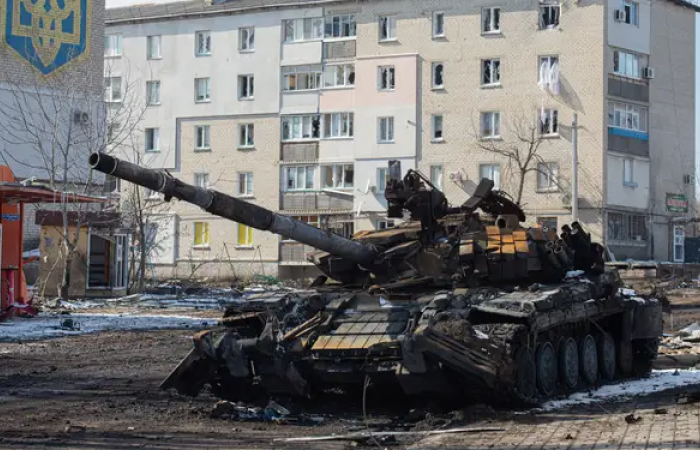
Oleksandr Syrskyi, the commander of Ukraine's Ground Forces, has said in the morning of Monday (13 March) that fighting around the Ukrainian town of Bakhmut - an industrial town with a pre-war population of some 70,000 - remains "difficult" as assault units of the Russian Kremlin-backed mercenary group Wagner continue trying to break through Ukrainian defense lines and advance to the central areas of the city. Quoted by the Ukrainian defense ministry's media center, Syrskyi said "in fierce battles, our defenders inflict significant losses on the enemy. All enemy attempts to capture the city are repelled by artillery, tanks, and other firepower." Russia, and in large part Wagner, has been trying to take Bakhmut for some seven months. In recent weeks Russian and Wagner forces have slowly advanced towards the town and have reportedly partially encircled it. Last week Ukraine is understood to have partially withdrawn to west of the Bakhmutka river that divides Bakhmut, and now marks the front line.
Editor's choice
News
Ukraine likely conducting limited tactical withdrawal from Bakhmut, Russia still deploying 60-year-old tanks

Ukraine likely conducting limited tactical withdrawal from Bakhmut, Russia still deploying 60-year-old tanks

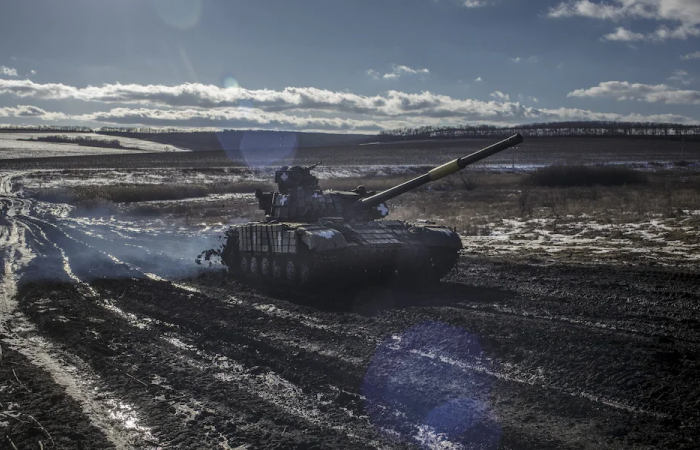
Ukrainian forces are likely conducting a "limited tactical withdrawal" from Bakhmut, said the Institute for the Study of War in its latest update of the Russia-Ukraine war on Monday (6 March). They did also caution, however, that it is too early to tell if Ukraine is considering a complete withdrawal from the city. Quoting a Ukrainian serviceman, the ISW also reported that, as of 4 March, Russian forces had not yet crossed the Bakhmuta River into central Bakhmut. Russian military bloggers have also claimed the Wagner Group had pushed Ukrainian positions back to central Bakhmut, according to the ISW. Amid the increased fighting along the frontline in eastern Ukraine, the UK Ministry of Defence reported in its intelligence update on 6 March that Russia "has continued to respond to heavy armoured vehicle losses by deploying 60-year-old T-62 main battle tanks".
Editor's choice
News
Blinken and Lavrov meet in India for first time since full-scale Ukraine invasion

Blinken and Lavrov meet in India for first time since full-scale Ukraine invasion

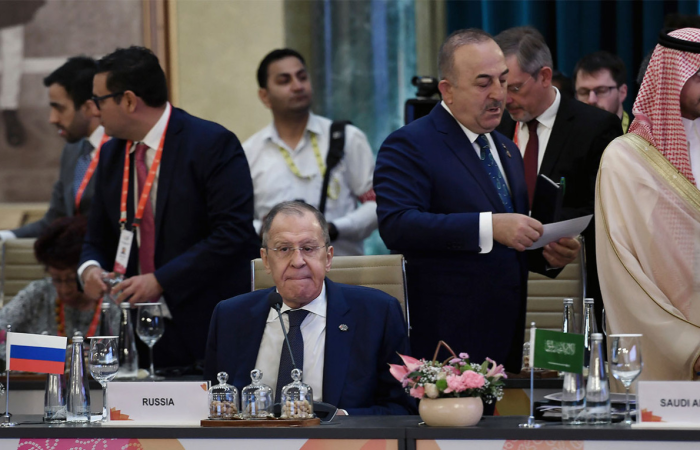
Yesterday, on Thursday (2 March) the US Secretary of State Antony Blinken met Russian Foreign Minister Sergei Lavrov for the first time since the beginning of Russia’s full-scale invasion of Ukraine, over one year ago. Taking place in the Indian capital New Delhi, sources report that the two spoke "on the move" for only ten minutes, and apparently not much resulted from it. Blinken reiterated US support for Ukraine, and pressed the Kremlin to reverse their decision to pull out of the 2010 START treaty on nuclear proliferation. In remarks released after his address at the closed-door meeting of foreign ministers, Antony Blinken said, "we must continue to call on Russia to end its war of aggression and withdraw from Ukraine for the sake of international peace and economic stability". According to reports from the American side, Blinken also brought up the case of the former American soldier Paul Whelan, who in 2020 was sentenced to 16 years hard labour after being convicted of spying by Russian authorities.
Editor's choice
News
Warmer weather could help Ukraine in Bakhmut as Kyiv claims 150,000 Russian troop losses

Warmer weather could help Ukraine in Bakhmut as Kyiv claims 150,000 Russian troop losses

In its latest intelligence briefing on the Russian invasion of Ukraine on Thursday (2 March), the UK Ministry of Defence has suggested that warmer weather around Bakhmut - the eastern Ukrainian town with a pre-war population of 70,000 that Russia has been trying to capture for months - may help the Ukrainians in their defence. In the briefing, the UK Ministry of Defence wrote, "as Ukrainian forces continue their defence of Bakhmut, Donetsk Oblast, rising temperatures are now creating the muddy conditions [...] limiting cross country movement (CCM)." "Poor CCM typically provides some military advantage to defending forces," the briefing adds. The UK Ministry of Defence also note that daytime temperatures around Bakhmut have risen to above freezing, and warmer than average forecasts over the next weeks will also likely decrease CCM. "It is almost certain that by late-March, CCM will be at its worst following the final thaw. This will add further friction to ground operations and hamper the off-road movement of heavier armoured vehicles, especially over churned-up ground in the Bakhmut sector."
Editor's choice
News
Ukraine repels 60 Russian attacks in 24 hours as Bakhmut situation deteriorates

Ukraine repels 60 Russian attacks in 24 hours as Bakhmut situation deteriorates

The Ukrainian military repelled 60 Russian attacks in five areas over the past 24 hours in northeastern and eastern Ukraine, the General Staff of Ukraine's Armed Forces reported in its morning update on Tuesday (28 February). Ukraine repelled the attacks near Kupyansk in eastern Kharkiv Oblast as well as Lyman, Bakhmut, Adviika, and Shakhtarsk in Donetsk Oblast, where Russia is concentrating its main offensive efforts, according to the General Staff. Russian troops reportedly carried out eight missile attacks, 32 air strikes, and launched more than 85 attacks using multiple launch rocket systems  between 27 and 28 February, the statement said. Meanwhile, in his daily address on the evening of 27 February, Ukrainian President Volodymyr Zelensky said that the situation in the Bakhmut direction is "getting more and more difficult". He added that Russia "is constantly destroying everything that can be used to protect our positions, to gain a foothold and ensure defense". The commander of Ukraine's ground forces, Col Gen Oleksandr Syrskyi, has said the situation around Bakhmut is "extremely tense". Russia has been trying to take the medium-sized industrial town with a pre-war population of roughly 70,000 for over six months, and has long been a location where the front line has been the most active.