Region

Global

Stories in this section cover various issues and stories from all around the world.

Editor's choice
Monday Commentary
Monday Commentary: Europe still needs the OSCE

Monday Commentary: Europe still needs the OSCE

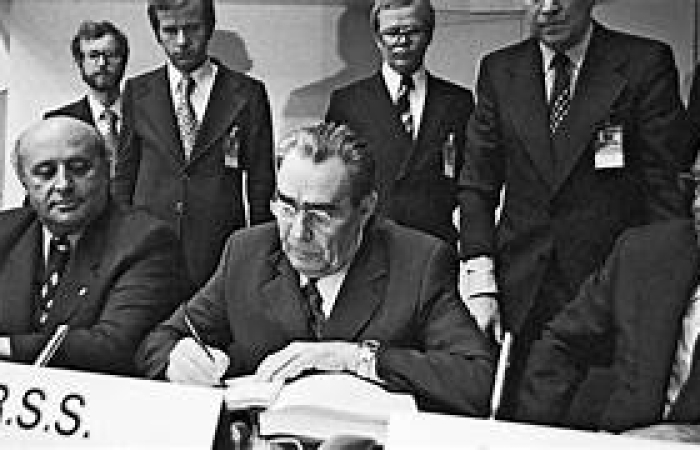
The Ministerial Council of the Organisation for Security and Co-operation in Europe (OSCE) will have its annual meeting in Vienna on 4-5 December. Foreign Ministers from the 57 member states, which also include the United States and Canada, and the Central Asian republics, and 11 partner countries, will congregate to discuss the future of European Security at a time when many believe that war in Europe over the next decade is likely. Ukraine is just a rehearsal for Russia’s ultimate ambitions. British diplomacy used to describe the OSCE as “the organization to manage Russia”. It has not done a good job of that, but this task remains paramount. The Ministerial Council will be the last major business of this year’s chairmanship, Finland, and will launch the new Chairmanship for 2026, Switzerland. The OSCE has been moribund for some time, and Russia’s invasion of Ukraine in February 2022, nearly ended it. But Europe still needs the OSCE, and there is hope that it will take a new lease of life in 2026. Switzerland has held the Chairmanship of the OSCE twice before, successfully. It has the experience, a wide network of embassies, and an able team in Bern, to successfully start what is likely to be a long and laborious journey. The new Chairman-in-office is Swiss Federal Foreign Minister Councillor, Ignazio Cassis. Cassis is also the current Vice President of the Swiss Confederation, and is fluent in Italian, English, German and French. Quite unusual also is the fact that currently the General Secretary of the OSCE is a Turk. Feridun Sinirlioğlu is an experienced Turkish diplomat, who has held the position for a year. Between them, Cassis and Sinirlioğlu will have to craft out the new OSCE, but in the end, it will largely depend on the will of the member states, including Russia. A new, reborn, OSCE, must understand that its core task remains European peace and security. It should resist the temptation of “looking busy” with a lot of secondary things. After peace and security return to Europe, it can consider other tasks. But we are far away from that yet. (Click the image to read the full commentary)
Editor's choice
News
Pope's visit to Türkiye and Lebanon has a strong ecumenical character, and places interreligious dialogue at its centre

Pope's visit to Türkiye and Lebanon has a strong ecumenical character, and places interreligious dialogue at its centre

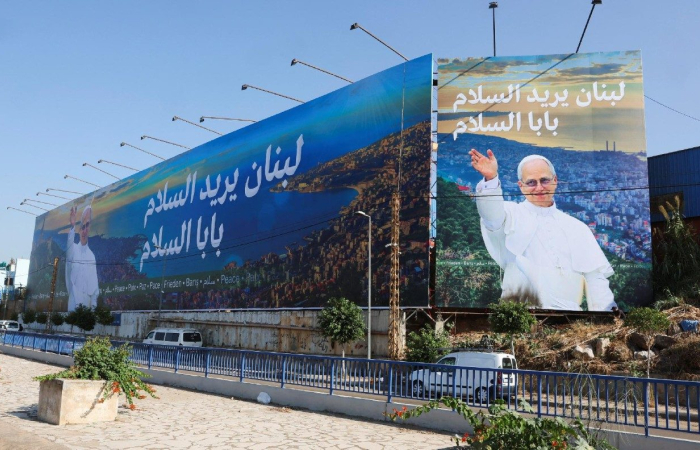
Pope Leo XIV has begun the first overseas trip of his pontificate, a six-day visit to Türkiye and Lebanon, which started yesterday (27 November) and ends on Tuesday (2 December). According to Vatican Radio, the visit "carries a strong ecumenical character and places interreligious dialogue at its centre. It will also be a moment of closeness to Christian communities and local populations across the region".   During nearly a week in the region, Pope Leo XIV will meet civil and religious authorities, visit mosques and ancient churches, pray at Beirut’s port in memory of the victims of the 2020 explosion, and hold private meetings with Presidents Recep Tayyip Erdoğan and Joseph Aoun.   A highlight of the visit will be a visit to Nicaea, where the Pope will mark the anniversary of the Council of Nicaea. Christians of many traditions recognise the Council of Nicaea as a foundation of shared faith. One of the most anticipated moments will be the Pope’s encounter with Lebanese youth in Bkerké, at the Maronite Patriarchate, a meeting expected to carry strong messages of hope in the Jubilee Year. A central event will be the ecumenical celebration in İznik, where the Pope and Ecumenical Patriarch Bartholomew will walk together toward the ruins of the Basilica of St Neophytos. The prayer, held before icons of Christ and the Council, will conclude with the lighting of a candle—a symbolic gesture of unity. The journey will also highlight interreligious engagement.   Memorable moments are expected throughout the trip: a wreath at Atatürk’s mausoleum, prayer inside the Blue Mosque, Mass at Istanbul’s Volkswagen Arena, the planting of a cedar at the presidential palace in Beirut, and prayer at the tomb of St Charbel in Lebanon. The Vatican said that "Pope Leo XIV’s pilgrimage to Türkiye and Lebanon aims to offer a voice of peace, unity, and hope at the heart of the Middle East."

Filter archive

Publication date
Editor's choice
Monday Commentary
Monday Commentary: The 21st century is Asia’s moment, but for many Asian countries this moment is full of perils

Monday Commentary: The 21st century is Asia’s moment, but for many Asian countries this moment is full of perils

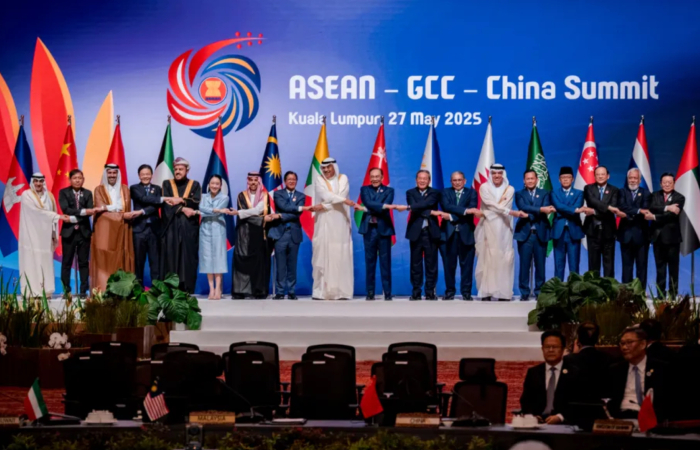
China wants to be first in the world, but its first stop is Asia. While the rest of the world debates and sometimes agonises over whether and how to engage with China, Asian countries have no choice but to engage. And in most cases, they will have to do so on China's terms. Most countries have to play a balancing game, but China is taking no chances. Chinese leader Xi Jinping's recent trip to Southeast Asia in April was a case in point. Another was the China-GCC-ASEAN summit in Kuala Lumpur on 28 May, attended by Chinese Premier Li Qiang and the leaders of the six Gulf monarchies and the ten ASEAN countries.
Editor's choice
News
Close race in Presidential election that may determine Poland’s future direction

Close race in Presidential election that may determine Poland’s future direction

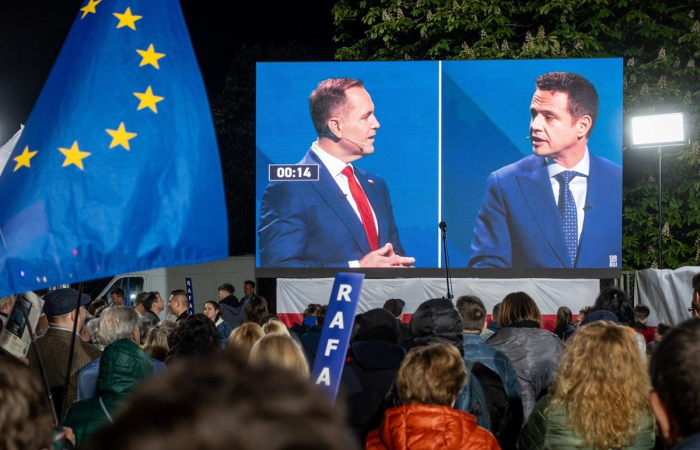
Poland’s presidential election has come down to an ideological choice between a liberal pro-European versus a nationalist conservative. They are polling so close that the outcome is impossible to predict in the run-off round on Sunday 1st June. The contest has international implications with US President Donald Trump throwing his weight behind the nationalist candidate, Karol Nawrocki, dangling the prospect of closer military ties if Poles choose him over liberal Warsaw Mayor Rafał Trzaskowski.
Editor's choice
News
Israel accepts US proposal for temporary Gaza ceasefire

Israel accepts US proposal for temporary Gaza ceasefire

Israel has accepted a new U.S. proposal for a temporary ceasefire with Hamas, the White House said on Thursday. White House press secretary Karoline Leavitt told reporters that Israel “backed and supported” the new proposal. Hamas officials gave the Israeli-approved draft a cool response, but said they wanted to study the proposal more closely before giving a formal answer.
Editor's choice
News
Syria and Israel in direct talks focused on security

Syria and Israel in direct talks focused on security

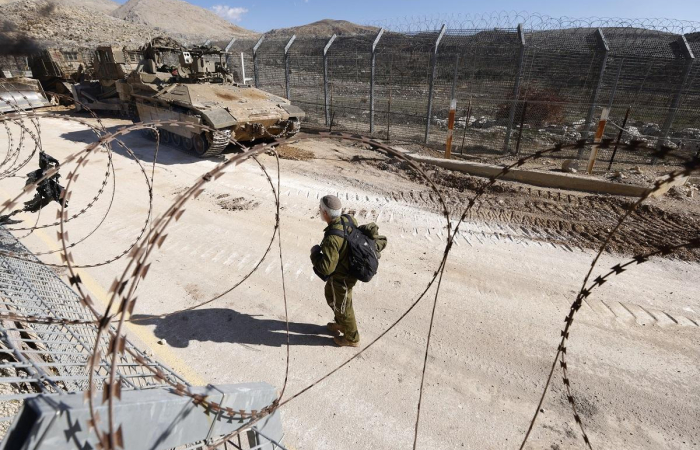
Israel and Syria are in direct contact and have in recent weeks held face-to-face meetings aimed at calming tensions and preventing conflict in the border region between the two longtime foes, according to an exclusive Reuters report. The contacts mark a significant development in ties between states that have been on opposite sides of conflict in the Middle East for decades, as the U.S. encourages the new Islamist rulers in Damascus to establish relations with Israel and Israel eases its bombardment of Syria.
Editor's choice
News
Russia, Ukraine complete record prisoner exchange amidst Russian barrage of drones against Ukraine

Russia, Ukraine complete record prisoner exchange amidst Russian barrage of drones against Ukraine

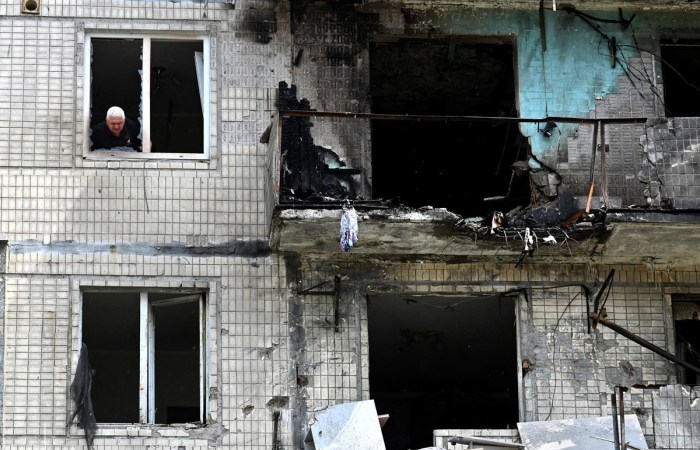
Russia announced on Sunday it had exchanged another 303 Ukrainian prisoners of war for the same number of Russian soldiers held by Kyiv, the last phase of the largest-ever such swap between the warring countries. Russia and Ukraine have over three days "carried out the exchange of 1,000 people for 1,000 people", the defence ministry said. Meanwhile,  US President Donald Trump called his Russian counterpart Vladimir Putin "crazy" on Sunday after Moscow launched a deadly barrage of drones against Ukraine.
Editor's choice
Monday Commentary
The tragedy in Gaza will haunt the West for a long time to come

The tragedy in Gaza will haunt the West for a long time to come

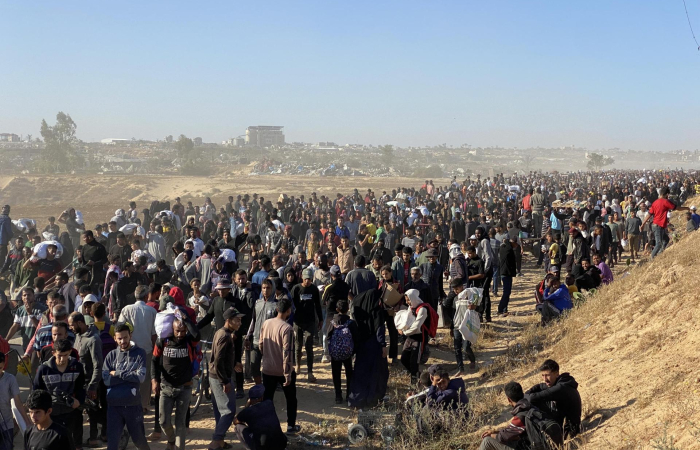
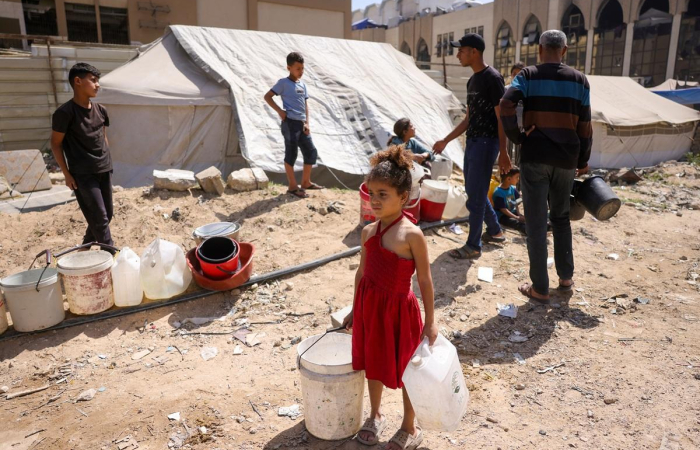
In the last few days, the EU and the UK took the first public steps to censure Israel for its actions in Gaza. It was done ever so gently that one could not be blamed for not noticing, but politically it was a seismic step taken after much consideration and soul-searching, and it will have long-term implications. But for many, it is too little, too late. Gaza is a tragedy that the West has been unable to prevent. It will haunt the West, particularly Europe for a long time to come.
Editor's choice
News
Trump recommends 50% tariff on the European Union, starting 1st June

Trump recommends 50% tariff on the European Union, starting 1st June

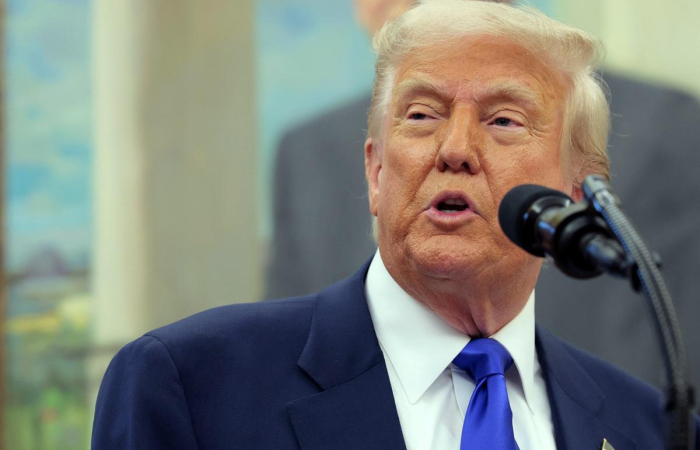
US President Donald Trump on Friday said he is “recommending a straight 50% Tariff on the European Union” after complaining that trade negotiations have stalled. The steep new import duties would start on 1st June, Trump wrote on Truth Social. The EU “has been very difficult to deal with,” Trump wrote. “Our discussions with them are going nowhere!”
Editor's choice
Monday Commentary
Controlling the narrative

Controlling the narrative

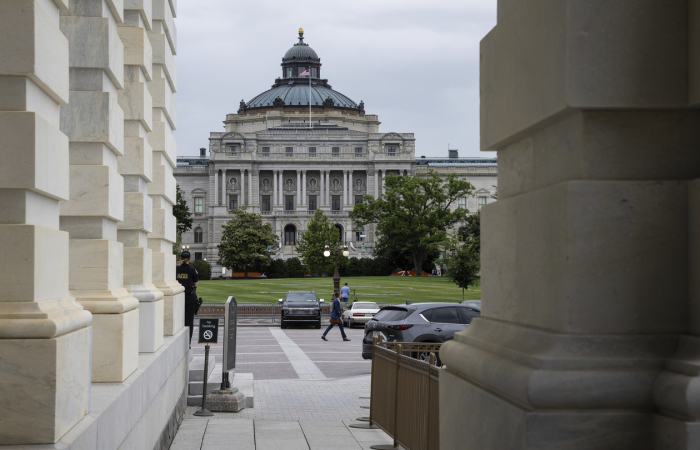
Donald Trump’s second presidency in the United States has been marked by a series of outrageous statements and actions that have gripped world attention. Some, like the demand that Canada becomes the 51st state, will never happen, others, like the threat to invade Greenland, are unlikely to happen and, on some, President Trump will change his mind, as he often does. Regardless, they provide a distraction to other acts that, whilst equally outrageous, received less attention, even if they form part of Trump’s core strategy. In this category, one can put the dismissal of Carla Hayden as the Librarian of Congress and Colleen Shogan as Archivist of the United States. Their replacement with Trump loyalists is a signal of Trump’s determination to control the narrative about his presidency, define what is truth and what is a lie, and make sure future generations will depend on a doctored history.