US threatens to give up mediation efforts unless Russia and Ukraine put forward "concrete proposals”

Secretary of State Marco Rubio warned on Tuesday that the United States would give up on mediation unless Russia and Ukraine put forward "concrete proposals," as US patience wanes on an early priority for Donald Trump. The US president had vowed to end the war in his first 24 hours back in the White House but, as Trump celebrates 100 days in office, Rubio has suggested the administration could soon turn attention to other issues.

"We are now at a time where concrete proposals need to be delivered by the two parties on how to end this conflict," State Department spokesperson Tammy Bruce told reporters, in what she said was a message from Rubio. "If there is not progress, we will step back as mediators in this process." She said it would ultimately be up to Trump to decide whether to move ahead on diplomacy.

The president suggested on Tuesday that his Russian counterpart Vladimir Putin still wants to negotiate a peace agreement with Ukraine. Asked in an interview with ABC television if Putin wants peace, Trump said: "I think he does." Putin recently proposed a three-day ceasefire around Moscow's commemorations next week for the 80th anniversary of the end of World War II. But he has rebuffed a Ukrainian-backed US call for a 30-day ceasefire.

The United States wants "not a three-day moment so you can celebrate something else - a complete, durable ceasefire and an end to the conflict," Bruce said. It remains unclear if Rubio is actually ready to turn the page or is seeking to pressure the two countries.

The United States has already put together a framework proposal which Ukrainians feel bows to Russian demands. Trump has suggested an official recognition of Russia's takeover in 2014 of Crimea, an annexation rejected by nearly all the world, in addition to land swaps. "We all want this war to end in a fair way - with no rewards for Putin, especially no land," Ukrainian President Volodymyr Zelensky told an event in Poland by videoconference on Tuesday.

Russia has also not moved on the proposal, with many experts believing Moscow now sees an upper hand - on the battlefield and diplomatically, with Trump eager to reconcile.Russia's ambassador to the United Nations, Vassily Nebenzia, sought to blame Zelensky and said that Russia would keep speaking with the United States. Zelensky "is bent on escalating the conflict. He's recklessly rejecting the United States' balanced peace proposals," Nebenzia told a UN Security Council meeting.

US diplomat John Kelley told the session that both sides would benefit from working off the US framework and condemned Russian strikes into Ukraine. "Right now, Russia has a great opportunity to achieve a durable peace," Kelley said.

Trump, criticising his predecessor Joe Biden for shunning Putin over the February 2022 invasion, reached out by telephone to the Russian leader and has sent his business friend turned globe-trotting ambassador Steve Witkoff to see him.

Trump, in turn berated Zelensky in a February 28 White House meeting. He and Vice President JD Vance accused the wartime leader of ingratitude for US weapons sent under Biden. Ukraine quickly tried to make amends by backing US diplomatic efforts and pursuing a deal in which the United States would control much of the country's mineral wealth.
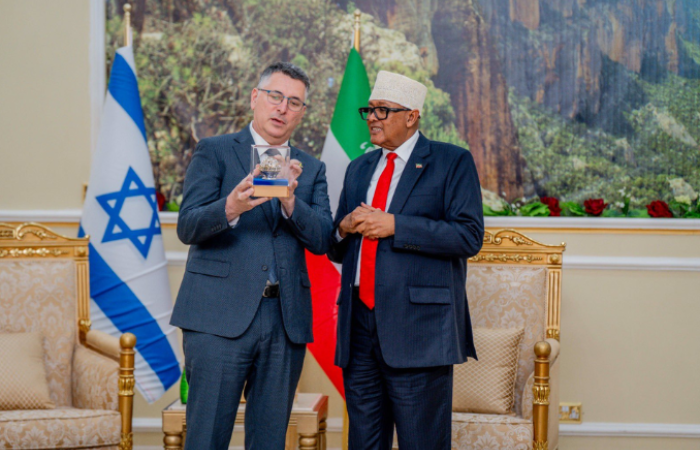
Source: commonspace.eu with agencies. Photo: AFP - US Secretary of State Marco Rubio and President Donald Trump

Related articles

Editor's choice
News
Borrell tells the European Parliament that the situation in Afghanistan was critical, but the EU will remain engaged

Borrell tells the European Parliament that the situation in Afghanistan was critical, but the EU will remain engaged

Borrell underlined that the European Union will make every effort to support the peace process and to remain a committed partner to the Afghan people. "Of course, we will have to take into account the evolving situation, but disengagement is not an option.  We are clear on that: there is no alternative to a negotiated political settlement, through inclusive peace talks.
Editor's choice
News
NATO Chief says war is on Europe's doorstep, and warns against complacency

NATO Chief says war is on Europe's doorstep, and warns against complacency

Russia could attack a Nato country within the next five years, the Secretary General of NATO, Mark Rutte, said in a stark new warning. "Nato's own defences can hold for now," Rutte warned in Berlin, but conflict was "next door" to Europe and he feared "too many are quietly complacent, and too many don't feel the urgency, too many believe that time is on our side. "Russia is already escalating its covert campaign against our societies," Rutte said in a speech in Germany. "We must be prepared for the scale of war our grandparents or great-grandparents endured." Earlier this month, Russia's President Vladimir Putin said his country was not planning to go to war with Europe, but it was ready "right now" if Europe wanted to - or started a war. But similar reassurances were given by Moscow in 2022, just before 200,000 Russian troops crossed the border and invaded Ukraine. Putin has accused European countries of hindering US efforts to bring peace in Ukraine - a reference to the role Ukraine's European allies have recently played in trying to change a US peace plan to end the war, whose initial draft was seen as favouring Russia. But Putin was not sincere, Nato's secretary-general said in the German capital, Berlin. Supporting Ukraine, he added, was a guarantee for European security. "Just imagine if Putin got his way; Ukraine under the boot of Russian occupation, his forces pressing against a longer border with Nato, and the significantly increased risk of an armed attack against us." Russia's economy has been on a war footing for more than three years now - its factories churn out ever more supplies of drones, missiles and artillery shells. According to a recent report by the Kiel Institute for the World Economy, Russia has been producing each month around 150 tanks, 550 infantry fighting vehicles, 120 Lancet drones and more than 50 artillery pieces. The UK, and most of its Western allies, are simply not anywhere near this point. Analysts say it would take years for Western Europe's factories to come close to matching Russia's mass-production of weapons. "Allied defence spending and production must rise rapidly, our armed forces must have what they need to keep us safe," the Nato chief said.

Popular

Editor's choice
News
NATO Chief says war is on Europe's doorstep, and warns against complacency

NATO Chief says war is on Europe's doorstep, and warns against complacency

Russia could attack a Nato country within the next five years, the Secretary General of NATO, Mark Rutte, said in a stark new warning. "Nato's own defences can hold for now," Rutte warned in Berlin, but conflict was "next door" to Europe and he feared "too many are quietly complacent, and too many don't feel the urgency, too many believe that time is on our side. "Russia is already escalating its covert campaign against our societies," Rutte said in a speech in Germany. "We must be prepared for the scale of war our grandparents or great-grandparents endured." Earlier this month, Russia's President Vladimir Putin said his country was not planning to go to war with Europe, but it was ready "right now" if Europe wanted to - or started a war. But similar reassurances were given by Moscow in 2022, just before 200,000 Russian troops crossed the border and invaded Ukraine. Putin has accused European countries of hindering US efforts to bring peace in Ukraine - a reference to the role Ukraine's European allies have recently played in trying to change a US peace plan to end the war, whose initial draft was seen as favouring Russia. But Putin was not sincere, Nato's secretary-general said in the German capital, Berlin. Supporting Ukraine, he added, was a guarantee for European security. "Just imagine if Putin got his way; Ukraine under the boot of Russian occupation, his forces pressing against a longer border with Nato, and the significantly increased risk of an armed attack against us." Russia's economy has been on a war footing for more than three years now - its factories churn out ever more supplies of drones, missiles and artillery shells. According to a recent report by the Kiel Institute for the World Economy, Russia has been producing each month around 150 tanks, 550 infantry fighting vehicles, 120 Lancet drones and more than 50 artillery pieces. The UK, and most of its Western allies, are simply not anywhere near this point. Analysts say it would take years for Western Europe's factories to come close to matching Russia's mass-production of weapons. "Allied defence spending and production must rise rapidly, our armed forces must have what they need to keep us safe," the Nato chief said.