The United States and Ukraine have signed a minerals deal after a two-month delay, in what President Donald Trump's administration called a new form of US commitment to Kyiv after the end of military aid. Ukraine said it secured key interests after protracted negotiations, including full sovereignty over its own rare earths, which are vital for new technologies and largely untapped. Trump had initially demanded rights to Ukraine's mineral wealth as compensation for US weapons sent under former president Joe Biden after Russia invaded just over three years ago.
After initial hesitation, Ukraine has accepted a minerals accord as a way to secure long-term investment by the United States, as Trump tries to drastically scale back US security commitments around the world. Announcing the deal in Washington, Treasury Secretary Scott Bessent said it showed "both sides' commitment to lasting peace and prosperity in Ukraine." "This agreement signals clearly to Russia that the Trump administration is committed to a peace process centred on a free, sovereign and prosperous Ukraine over the long term," Bessent said.
"And to be clear, no state or person who financed or supplied the Russian war machine will be allowed to benefit from the reconstruction of Ukraine." The Treasury statement notably mentioned Russia's "full-scale invasion" of Ukraine - diverging from the Trump administration's usual formulation of a "conflict" for which Kyiv bears a large degree of responsibility.
In Kyiv, Prime Minister Denys Shmygal said the agreement was "good, equal and beneficial." Shmygal said the two countries would establish a Reconstruction Investment Fund with each side having equal voting rights, and Ukraine would retain "full control over its subsoil, infrastructure and natural resources."
Meeting a key concern for Kyiv, he said Ukraine would not be asked to pay back any "debt" for billions of dollars in US support since Russia invaded in February 2022. "The fund's profits will be reinvested exclusively in Ukraine," he said. Ukrainian Economy Minister Yulia Svyrydenko said the deal would finance mineral and oil, and gas projects as well as "related infrastructure or processing."
Trump had originally sought $500 billion in mineral wealth -- around four times what the United States has contributed to Ukraine since the war. Trump has baulked at offering security guarantees to Ukraine and has rejected its aspiration to join NATO.
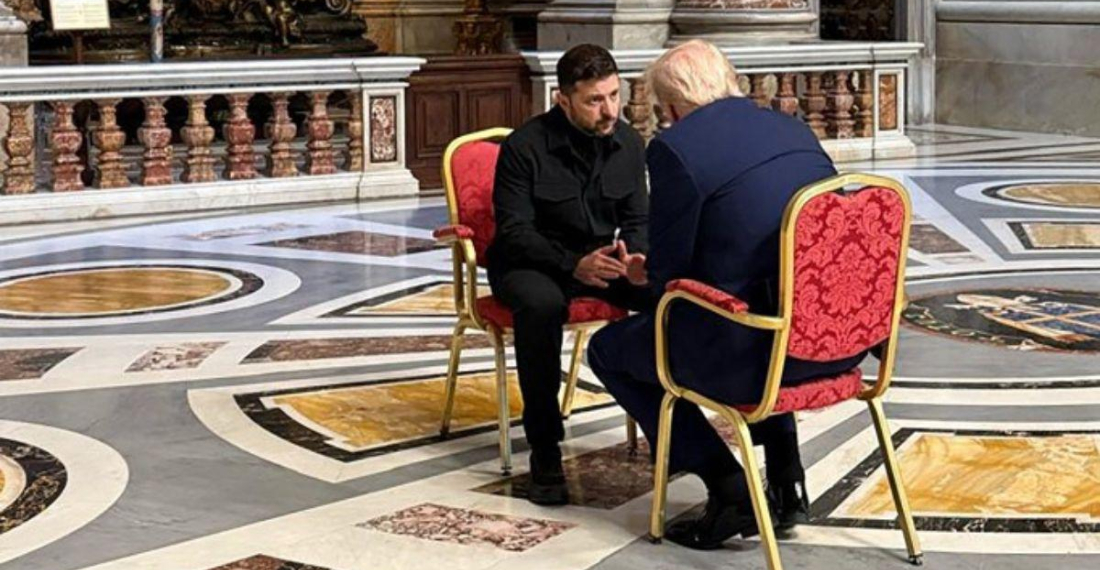
But he said on Wednesday that a US presence on the ground would benefit Ukraine. "The American presence will, I think, keep a lot of bad actors out of the country or certainly out of the area where we're doing the digging," Trump said at a cabinet meeting. Speaking later at a town hall with NewsNation, Trump said he told Ukrainian President Volodymyr Zelensky during a recent meeting at the Vatican that signing the deal would be a "very good thing" because "Russia is much bigger and much stronger." Asked whether the minerals deal is going to "inhibit" Russian leader Vladimir Putin, Trump said: "well, it could".
Calling the agreement "Trump's extortion of Ukraine deal," US Congressman Gregory Meeks, ranking Democrat on the House Foreign Affairs Committee, said Trump should now focus his efforts on pressuring Putin rather than "fixating" on Zelensky and Ukraine.
Ukraine holds some five per cent of the world's mineral resources and rare earths, according to various estimates. But work has not yet started on tapping many of the resources, and many sites are in territory now controlled by Russian forces. Notably, Ukraine has around 20 per cent of the world's graphite, an essential material for electric batteries, according to France's Bureau of Geological and Mining Research. Ukraine is also a major producer of manganese and titanium, and says it possesses the largest lithium deposits in Europe