Region

EU plus

Stories in this section cover the EU-27 countries plus the UK, Norway, Switzerland, Iceland, Liechtenstein, Monaco, Andorra and the Balkan Countries (Albania, Serbia, Montenegro, Bosnia-Herzegovina, Kosovo, North Macedonia).

Editor's choice
Opinion
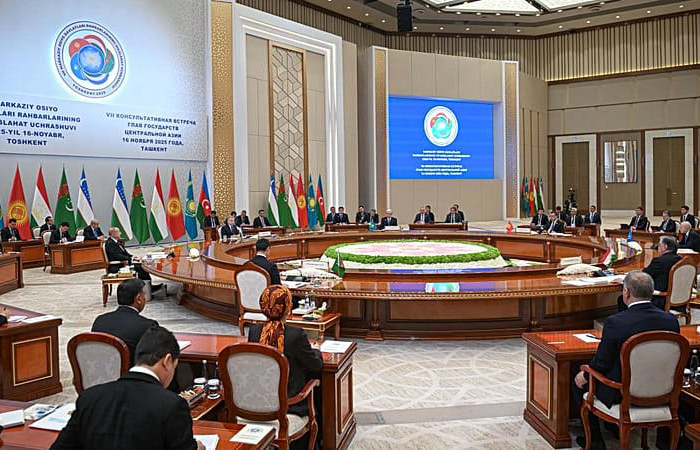
Opinion: The European Union must recognise that the C5 have now become the C6

Opinion: The European Union must recognise that the C5 have now become the C6

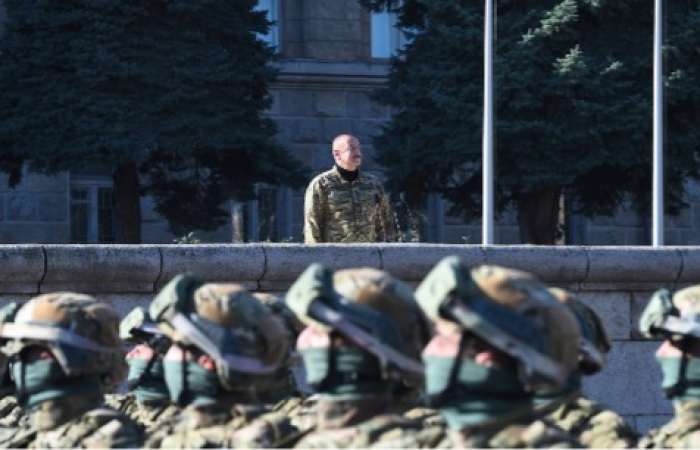
In recent years, Eurasia has undergone a structural transformation in how regions connect, trade, and cooperate. The combination of geopolitical shocks, disrupted supply chains, and the search for secure east–west routes has elevated the importance of the Trans-Caspian space. The states of Central Asia, once constrained by geography, have taken unprecedented steps to strengthen regional coordination, modernize infrastructure, and integrate more closely with Europe. Meanwhile, Azerbaijan has rapidly emerged as an indispensable connector linking Central Asia with the South Caucasus, Türkiye, and European markets. This new reality was formally acknowledged in November 2025 when Azerbaijan was unanimously welcomed as a full participant in the Consultative Meeting of Central Asian Heads of State in Tashkent. What had long been a C5 grouping transformed into a C6, marking a historic moment: the Caspian was no longer a frontier separating two regions but the center of a unified geopolitical and geo-economic space. President Ilham Aliyev described this alignment as the emergence of “a single geopolitical and geo-economic region,” while President Shavkat Mirziyoyev called Azerbaijan’s inclusion “historic” and proposed transforming the consultative platform into a structured regional institution capable of shaping security, economic, environmental, and digital policy. The Caspian is no longer a boundary; it is the heart of an integrated region. The transformation of the EU and U.S. C5+1 formats into C6+1 is the logical next step to ensure that both sides of the Caspian advance together – coherently, strategically, and with shared purpose. (click the image to read the full op-ed).

Filter archive

Publication date
Editor's choice
Editorial
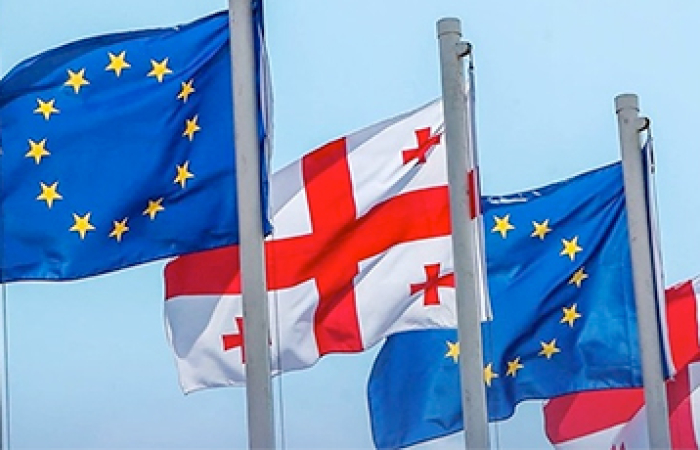
Editorial: EU decision to grant Georgia "candidate status" overshadowed by controversy in Brussels over Ukraine

Editorial: EU decision to grant Georgia "candidate status" overshadowed by controversy in Brussels over Ukraine

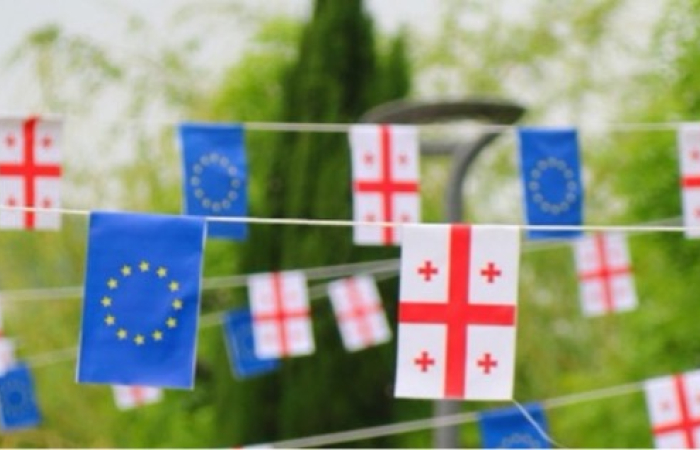
If one had said it even as recently as 2021, that by the end of 2023 Georgia would be given "candidate status" for EU membership, hardly anyone would have believed it. Yet it happened yesterday, when the member states gathered in the European Council in Brussels took the historic decision to open accession talks with Ukraine and Moldova and grant candidate status to Georgia. The immediate impact of this decision will be minimal - some consider the step as more symbolic than tangible, but soon, the impact of the prospect of a South Caucasus country becoming an EU member will sink in, with huge implications. Of course, it is the events around Ukraine starting with the Russian invasion in February 2022, that changed all the certainties. And it was also Ukraine that dominated the news yesterday. The decision to open accession negotiations with Ukraine and Moldova will also have tremendous implications. Perhaps appropriately it was taken in somewhat dramatic circumstances, after Hungary tried to oppose it. Hungarian prime minister, Viktor Orban, left the meeting of the European Council to enable the decision to be adopted unanimously by the remaining 26 member states. There remains a decision on the issue of a substantial aid package to Ukraine, which has been left for another meeting in January. What now for Georgia? In Georgia everyone is trying to take credit for the "candidate status" decision. Good thing because everyone can now feel to be a stakeholder in the journey that needs to follow. No doubt, in the style of Georgian politics, the journey will be  adventurous and sometimes hazardous. But the new status is good news for Georgia. It will help stabilise the political situation, and contribute towards economic success. The decision also brings the EU firmly in the South Caucasus. Those who very disingenuously in the last year or so have been talking about keeping the South Caucasus cosy in a 3 plus 3  format - ie with Russia, Iran and Turkey together with Armenia, Azerbaijan and Georgia, now need to think again. The South Caucasus is Europe and Europe should be a partner in its future. But that is for later. For today, it is congratulations Georgia, and to all those Georgians who for decades worked for this development to be possible.
Editor's choice
News
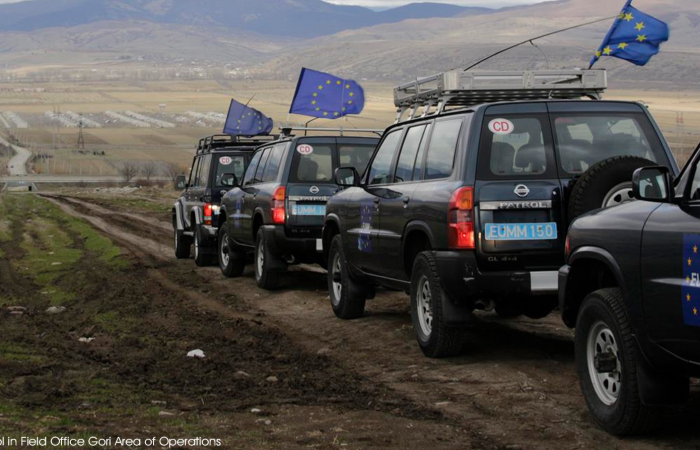
EU to increase the size of its monitoring mission in Armenia from 138 to 209 members

EU to increase the size of its monitoring mission in Armenia from 138 to 209 members

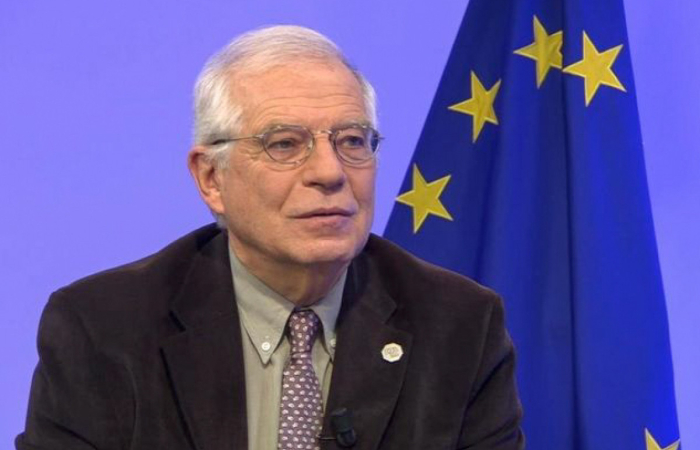
The foreign ministers of the 27 EU member-states, meeting in the framework of the Foreign Affairs Council, on Monday (11 December) agreed to increase the size of the EU Mission in Armenia from 138 to 209. This was announced by the High Representative for Foreign and Security Policy, Josep Borrell in a briefing after the session of the Council in Brussels. Borrell told journalists, "You know that we are currently working on strengthening our relations with Armenia. I see that Armenia clearly sees the benefits of increasing cooperation with us, and we are ready to respond positively." Borrell referred to the ongoing efforts to normalise Armenia-Azerbaijan relations, stating:  "We believe that there is a historic chance to achieve peace in the region. It is an opportunity. We are committed to continue our support to these efforts – by working together with both Armenia and Azerbaijan. The fact that we have decided to increase by such an important number our staff on this mission shows our clear commitment to the stability in the border between Armenia and Azerbaijan and [is] an important contribution to the peace efforts." The Foreign Affairs Council also held an informal exchange of views with the Armenian Foreign Minister, Ararat Mirzoyan at the start of its proceedings. During the day, Borrell also held a meeting with the Foreign Minister of Azerbaijan, Jeyhun Bayramov. Azerbaijan has criticised the fact that only the Armenian Foreign Minister was invited to exchange views with the Foreign Affairs Council, and that no similar invitation was extended to his Azerbaijani counterpart.
Editor's choice
News
European Commission launches a Global Alliance to Counter Migrant Smuggling

European Commission launches a Global Alliance to Counter Migrant Smuggling

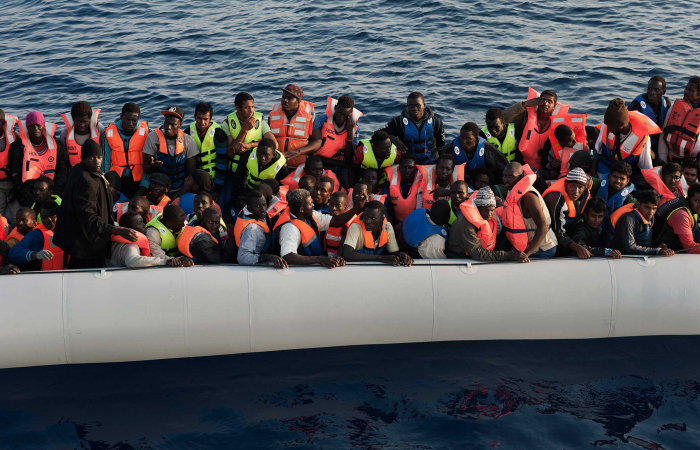
Criminal networks take advantage of people's desperation, and this abuse often leads to loss of life. Migrant smugglers squeezing hundreds of people onto unseaworthy boats, resulted in a staggering humanitarian toll of over 28 000 people having drowned or missing in the Mediterranean Sea since 2014. The main beneficiaries are the criminals, the smuggling networks in countries of origin, transit and destination. The current legislative framework is the Facilitators Package from 2002. Under the Facilitators Package, any person who intentionally assists the unauthorised entry, transit, or residence of a non-EU national into the EU, or, for financial gain, to reside there is to be sanctioned unless they are doing so for humanitarian reasons. On Tuesday (28 November), the European Commission proposed new legislation to prevent and fight migrant smuggling. The Commission has also launched a Call to Action for a Global Alliance to Counter Migrant Smuggling, at an International Conference hosted this week in Brussels. The Commission will ensure that the Global Alliance to Counter Migrant Smuggling will work at bilateral and multilateral level as well as through the work of the UNODC. Regular stocktaking at political level will be ensured, with the first event taking place in Copenhagen in the spring 2024. The Conference will be the first such opportunity to take stock of the achievements of the Global Alliance. Migrant smuggling is a criminal activity that disrespects human life and the dignity of people in the pursuit of financial or other material benefits. Smuggling networks make substantial profits from their criminal activities, ranging between EUR 4.7 – 6 billion worldwide annually.  The modi operandi of smuggling networks change rapidly, adapting to circumstances and responses by national authorities. This is why the Commission is increasing its efforts to tackle this crime at a global scale.
Editor's choice
News
Borrell briefs EU colleagues after damage limitation trip to Middle East

Borrell briefs EU colleagues after damage limitation trip to Middle East

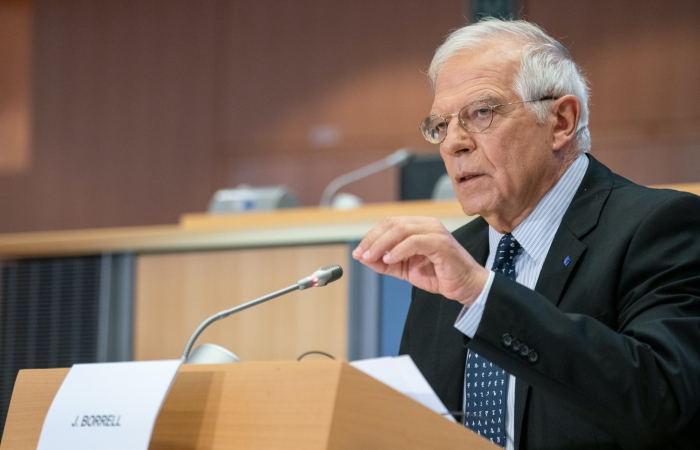
The foreign ministers of the 27 EU member states held an informal video conference on Monday (20 January) to hear from the EU High Representative for foreign and security policy, Josep Borrell, the results of his recent visit to the Middle East. Borrell travelled to Israel, Palestine, Bahrain, Saudi Arabia, Qatar, and Jordan from 16-20 November. A statement from his office in Brussels at the start of the visit said that “the visit will take place against the background of the war against Hamas and the deepening humanitarian crisis in Gaza, following the 7 October Hamas terrorist attacks against Israel, and in the context of EU’s regional outreach, following-up to the latest European Council and Foreign Affairs Council.”Since the Gaza crisis erupted in October, the European Union has appeared to be confused and undecided.  Deep divisions in the position of many of the member states became evident in somewhat contradictory statements by leaders of the various EU institutions in the early days of the crisis, with some rushing to express solidarity with Israel, whilst others reminding of the long-suffering of the Palestinian people. The problem became more acute as the humanitarian crisis in Gaza escalated sharply following the launch of an Israeli military offensive. The divisions within the EU reached a climax at a vote at the UN General Assembly session on 28 October with some EU members voting for and others against a resolution on Gaza, whilst others simply abstained. Many saw this as a low point in the process of developing a “common foreign and security policy” for the EU, whilst others contemplated the damage that current EU positions were having on future relations with Arab and Muslim countries. The situation improved somehow following a meeting of the Foreign Affairs Council, where some sort of compromise position emerged. Borrell is constrained in having to reflect not only his position, and that of the European External Action Service, which he leads, but also the view of all the other European institutions and all the 27 member states. No mean task. None of them however appear to fully comprehend the sense of anger and frustration in the Arab and Muslim world at ongoing events in Gaza. As one young Arab commentator put it, the time the EU spoke from the moral high ground has gone, and will not come back. If the EU wants to communicate with the Arab and Muslim world in the future it has to find a new language. Borrell has taken a step in this direction through his visit and his op-eds, but it is just a small step in what promises to be a long and unpleasant journey.
Editor's choice
Commentary
Commentary: EU muddles along in its relations with the South Caucasus

Commentary: EU muddles along in its relations with the South Caucasus

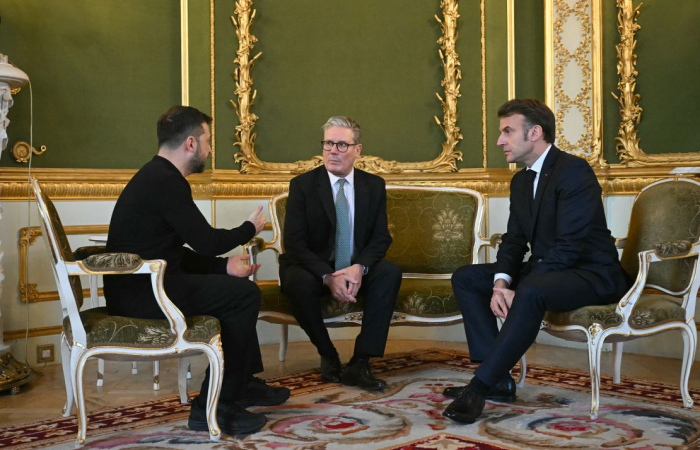
It has been a roller-coaster sort of week for EU relations with the South Caucasus. It started on Wednesday (8 November), with the decision of the European Commission to recommend that Georgia be recognized as a Candidate Country, opening the way for eventual membership. By Tuesday, (14 November) the Foreign Affairs Council was considering providing military assistance to Armenia through possible assistance from the European Peace Facility. In the days in-between relations between the EU and Azerbaijan appeared to have dipped to their lowest point in a decade, with Azerbaijan accusing the EU of inciting separatism. Except that on Wednesday (15 November), the Azerbaijani presidential foreign policy aide surfaced in Brussels where he was told that Azerbaijan was an important partner for the EU in the South Caucasus and that the EU will continue to support the Armenia-Azerbaijan normalisation process to advance a peaceful and prosperous South Caucasus. One would like to think that all this was part of some grand strategy. Russian foreign minister Sergei Lavrov seems to think so, accusing the EU of trying to oust Russia out of the South Caucasus (and Central Asia). But a closer look at this week’s events suggest that the EU is doing, what it often does: muddling along, reacting to events and situations rather than fulfilling some grand strategy. This is risky, and the EU needs to develop a strategic framework for dealing with the South Caucasus. There is an urgent need for the European Union to develop a strategic perspective towards the region that is based on realism, and that has enough support from different stakeholders – Commission, Member States; Parliament – for it to be credible. Developing a comprehensive EU strategy will take time and will require an alignment of different views and interests that may take months, if not years, to achieve. In the meantime however, the EU should have the ambition to publish by early Spring 2024 a short but ambitious statement of intent with its vision for the region that may provide a framework around which different ad hoc policies and initiatives can be organized. The first half of 2024 may offer a window of opportunity for this to happen.
Editor's choice
News
EU is worried about Armenia

EU is worried about Armenia

The European Union is increasingly worried about Armenia, and attempts to destabilise it both internally and externally. The matter was discussed by the foreign ministers of the 27 member states meeting in Brussels in the format of the Foreign Affairs Council on Monday (14 November). Briefing journalists after the meeting, EU High Representative, Josep Borrell said "The October European Council discussed how to strengthen our cooperation with Armenia and support its democratically elected authorities, its resilience, its security and the continuation of reforms in the country. We decided to beef up our mission in Armenia: more observers and more patrols in sensitive areas of the border.   And we will explore a possible support to Armenia under the European Peace Facility and options for visa-liberalisation for Armenia.  We have to be very much vigilant for any attempts of destabilisation of Armenia, internally and externally. And our message to Azerbaijan has been clear: any violation of Armenia’s territorial integrity will be unacceptable and would have severe consequences for the quality of our relations.   We call for the resumption of negotiations between Armenia and Azerbaijan and on the work done by the President of the [European] Council [Charles Michel]. We need a peace treaty to be concluded and we are committed to continue our mediation role.   We decided to invite the Armenian Foreign Minister [Ararat Mirzoyan] to join us in the margins of the next, maybe the next, Foreign Affairs Council, it has to be decided - but an upcoming Foreign Affairs Council." In a statement this morning the Azerbaijani Ministry of Foreign Affairs rejected Borrell's statement and accused the EU of inciting separatism.
Editor's choice
News
European Commission recommends opening EU membership talks with Ukraine and Moldova and  proposes to grant Georgia EU candidate status

European Commission recommends opening EU membership talks with Ukraine and Moldova and proposes to grant Georgia EU candidate status

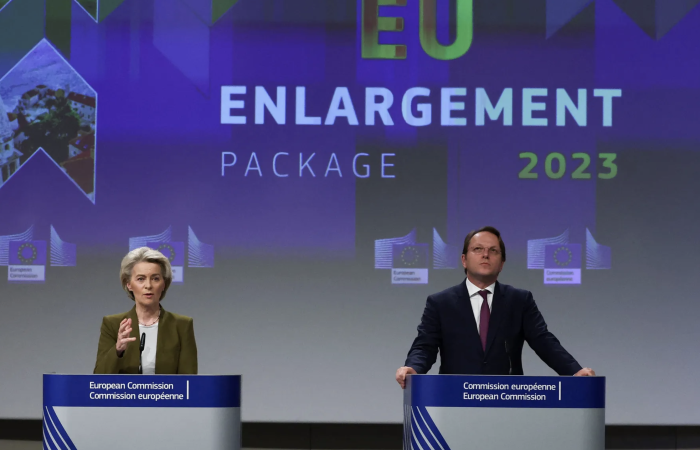
The European Commission has taken a step towards the enlargement of the European Union by recommending the opening of formal EU membership talks with Ukraine and Moldova. The Commission's endorsement is significant as it could lead to Ukraine, currently in conflict with Russia, joining the EU. However, both Ukraine and Moldova will be required to accelerate their internal reforms to meet EU standards. The EU had previously recognised Ukraine as a potential candidate, and this latest development is a continuation of that process. Moldova is on a similar path. The recommendations are part of the EU's routine assessment of potential new members to ensure they are in line with EU rules and values. The final decision on this matter will be taken by EU leaders at a summit in Brussels in December. In the wider context of the enlargement strategy, the Commission has also suggested that Georgia could be granted candidate status if it implements certain reforms. The commission statement says: Georgia has taken steps to strengthen engagement with the EU and increased pace of reforms in the recent months. To address the twelve priorities identified in the Commission Opinion on its membership application, Georgia has adopted legislative acts and policy actions on gender equality, on fighting violence against women and organised crime, as well as on taking into account European Court of Human Rights judgments. A judicial reform has been brought forward although a holistic reform of the High Council of Justice is still needed. Georgia has shared laws as well as its action plan for deoligarchisation with the Venice Commission for an opinion. A strategy on the protection of human rights was adopted and an action plan is being elaborated. A memorandum of cooperation with civil society representatives was concluded. Building a strong cross-party political consensus would contribute to addressing polarisation and accelerate its European path. The Commission has also proposed steps for six Western Balkan countries that want to join the EU, with Bosnia and Herzegovina mentioned as a potential candidate for negotiations "once the necessary degree of compliance with the membership criteria is achieved".