Editorial: EU decision to grant Georgia "candidate status" overshadowed by controversy in Brussels over Ukraine

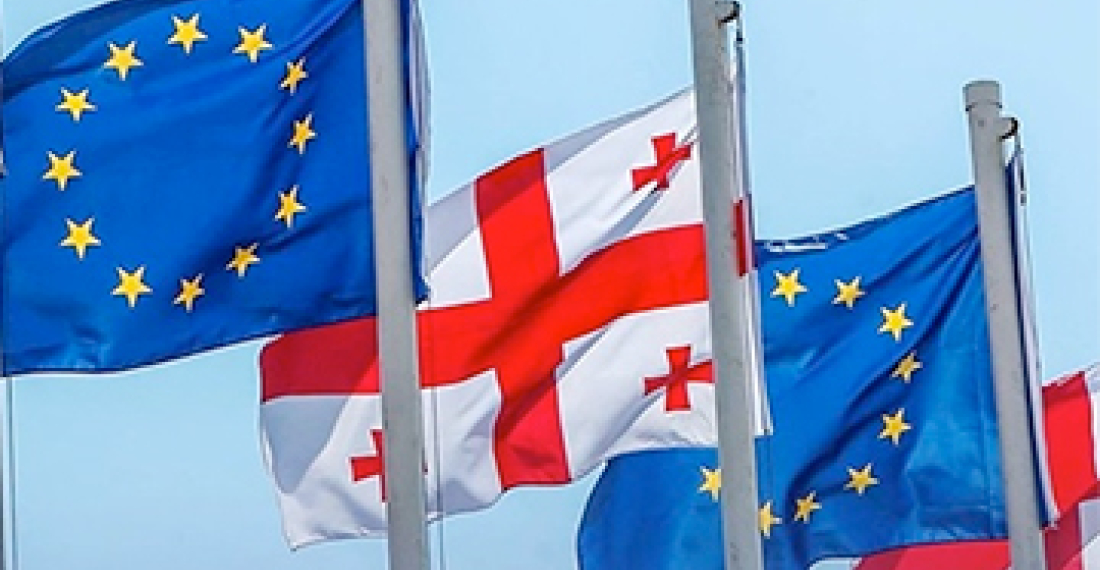
If one had said it even as recently as 2021, that by the end of 2023 Georgia would be given "candidate status" for EU membership, hardly anyone would have believed it. Yet it happened yesterday, when the member states gathered in the European Council in Brussels took the historic decision to open accession talks with Ukraine and Moldova and grant candidate status to Georgia. The immediate impact of this decision will be minimal - some consider the step as more symbolic than tangible, but soon, the impact of the prospect of a South Caucasus country becoming an EU member will sink in, with huge implications.

Of course, it is the events around Ukraine starting with the Russian invasion in February 2022, that changed all the certainties. And it was also Ukraine that dominated the news yesterday. The decision to open accession negotiations with Ukraine and Moldova will also have tremendous implications. Perhaps appropriately it was taken in somewhat dramatic circumstances, after Hungary tried to oppose it. Hungarian prime minister, Viktor Orban, left the meeting of the European Council to enable the decision to be adopted unanimously by the remaining 26 member states. There remains a decision on the issue of a substantial aid package to Ukraine, which has been left for another meeting in January.

What now for Georgia?

In Georgia everyone is trying to take credit for the "candidate status" decision. Good thing because everyone can now feel to be a stakeholder in the journey that needs to follow. No doubt, in the style of Georgian politics, the journey will be  adventurous and sometimes hazardous. But the new status is good news for Georgia. It will help stabilise the political situation, and contribute towards economic success.

The decision also brings the EU firmly in the South Caucasus. Those who very disingenuously in the last year or so have been talking about keeping the South Caucasus cosy in a 3 plus 3  format - ie with Russia, Iran and Turkey together with Armenia, Azerbaijan and Georgia, now need to think again. The South Caucasus is Europe and Europe should be a partner in its future.

But that is for later. For today, it is congratulations Georgia, and to all those Georgians who for decades worked for this development to be possible.

This is an editorial comment from commonspace.eu

Related articles

Editor's choice
News
Borrell tells the European Parliament that the situation in Afghanistan was critical, but the EU will remain engaged

Borrell tells the European Parliament that the situation in Afghanistan was critical, but the EU will remain engaged

Borrell underlined that the European Union will make every effort to support the peace process and to remain a committed partner to the Afghan people. "Of course, we will have to take into account the evolving situation, but disengagement is not an option.  We are clear on that: there is no alternative to a negotiated political settlement, through inclusive peace talks.
Editor's choice
News
Germany accuses Russia of cyberattacks and disinformation campaign

Germany accuses Russia of cyberattacks and disinformation campaign

The German government holds Russia responsible for a cyberattack on German air traffic control, and for targeted disinformation campaigns before the last federal election. According to the German Foreign Office in Berlin, the incidents could be clearly attributed to the Russian military intelligence service, the GRU. In response, the Russian ambassador to Berlin was summoned to the Foreign Ministry. "We have been observing a massive increase in threatening hybrid activities by Russia for some time now," a spokesperson for the Foreign Ministry stated. These range from disinformation campaigns and espionage to cyberattacks and sabotage attempts. The aim is to divide society, sow distrust, and undermine confidence in democratic institutions. The spokesperson added that with these actions, Russia is "very concretely threatening our security, not only through its war of aggression against Ukraine, but also here in Germany."  The Foreign Ministry spokesperson explained that the cyberattack on air traffic control in August 2024 was clearly attributed to the hacker collective "APT28," known as "Fancy Bear," and to the responsibility of the Russian military intelligence service, the GRU. Furthermore, it could now be "conclusively stated" that Russia had attempted "to influence and destabilize both the last Federal election and the ongoing internal affairs of the Federal Republic of Germany." There was "absolutely irrefutable evidence" for this". The so-called "Storm 1516" campaign, which has been running since 2024, is allegedly backed by "reliable information" that the Moscow-based think tank "Center for Geopolitical Expertise" is behind it. The Center is also said to be supported by Russian military intelligence. Its primary aim is to influence democratic elections in the West. (Click the image to read more).

Popular

Editor's choice
News
Germany accuses Russia of cyberattacks and disinformation campaign

Germany accuses Russia of cyberattacks and disinformation campaign

The German government holds Russia responsible for a cyberattack on German air traffic control, and for targeted disinformation campaigns before the last federal election. According to the German Foreign Office in Berlin, the incidents could be clearly attributed to the Russian military intelligence service, the GRU. In response, the Russian ambassador to Berlin was summoned to the Foreign Ministry. "We have been observing a massive increase in threatening hybrid activities by Russia for some time now," a spokesperson for the Foreign Ministry stated. These range from disinformation campaigns and espionage to cyberattacks and sabotage attempts. The aim is to divide society, sow distrust, and undermine confidence in democratic institutions. The spokesperson added that with these actions, Russia is "very concretely threatening our security, not only through its war of aggression against Ukraine, but also here in Germany."  The Foreign Ministry spokesperson explained that the cyberattack on air traffic control in August 2024 was clearly attributed to the hacker collective "APT28," known as "Fancy Bear," and to the responsibility of the Russian military intelligence service, the GRU. Furthermore, it could now be "conclusively stated" that Russia had attempted "to influence and destabilize both the last Federal election and the ongoing internal affairs of the Federal Republic of Germany." There was "absolutely irrefutable evidence" for this". The so-called "Storm 1516" campaign, which has been running since 2024, is allegedly backed by "reliable information" that the Moscow-based think tank "Center for Geopolitical Expertise" is behind it. The Center is also said to be supported by Russian military intelligence. Its primary aim is to influence democratic elections in the West. (Click the image to read more).