Region

EU plus

Stories in this section cover the EU-27 countries plus the UK, Norway, Switzerland, Iceland, Liechtenstein, Monaco, Andorra and the Balkan Countries (Albania, Serbia, Montenegro, Bosnia-Herzegovina, Kosovo, North Macedonia).

Editor's choice
Opinion
Opinion: The European Union must recognise that the C5 have now become the C6

Opinion: The European Union must recognise that the C5 have now become the C6

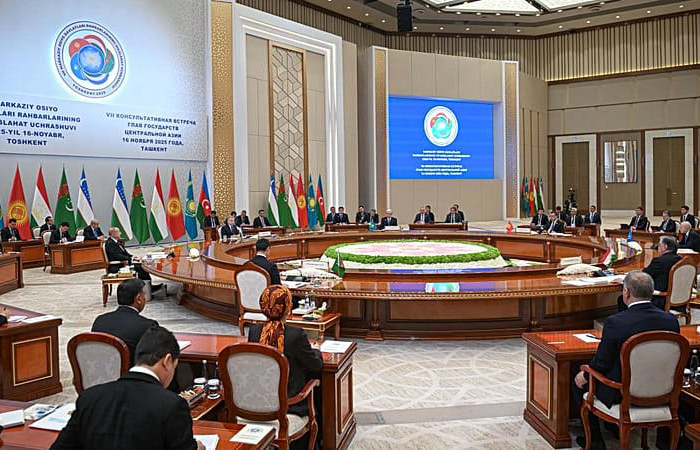
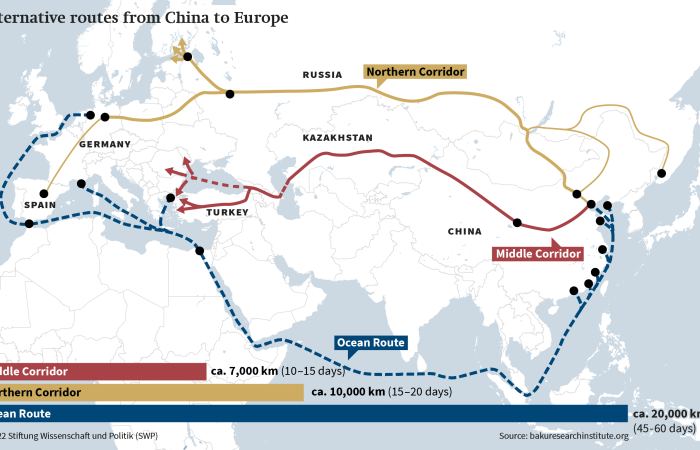
In recent years, Eurasia has undergone a structural transformation in how regions connect, trade, and cooperate. The combination of geopolitical shocks, disrupted supply chains, and the search for secure east–west routes has elevated the importance of the Trans-Caspian space. The states of Central Asia, once constrained by geography, have taken unprecedented steps to strengthen regional coordination, modernize infrastructure, and integrate more closely with Europe. Meanwhile, Azerbaijan has rapidly emerged as an indispensable connector linking Central Asia with the South Caucasus, Türkiye, and European markets. This new reality was formally acknowledged in November 2025 when Azerbaijan was unanimously welcomed as a full participant in the Consultative Meeting of Central Asian Heads of State in Tashkent. What had long been a C5 grouping transformed into a C6, marking a historic moment: the Caspian was no longer a frontier separating two regions but the center of a unified geopolitical and geo-economic space. President Ilham Aliyev described this alignment as the emergence of “a single geopolitical and geo-economic region,” while President Shavkat Mirziyoyev called Azerbaijan’s inclusion “historic” and proposed transforming the consultative platform into a structured regional institution capable of shaping security, economic, environmental, and digital policy. The Caspian is no longer a boundary; it is the heart of an integrated region. The transformation of the EU and U.S. C5+1 formats into C6+1 is the logical next step to ensure that both sides of the Caspian advance together – coherently, strategically, and with shared purpose. (click the image to read the full op-ed).
Filter archive

Publication date
Editor's choice
Opinion
Opinion: Committing to doing what it takes for Ukraine to achieve victory

Opinion: Committing to doing what it takes for Ukraine to achieve victory

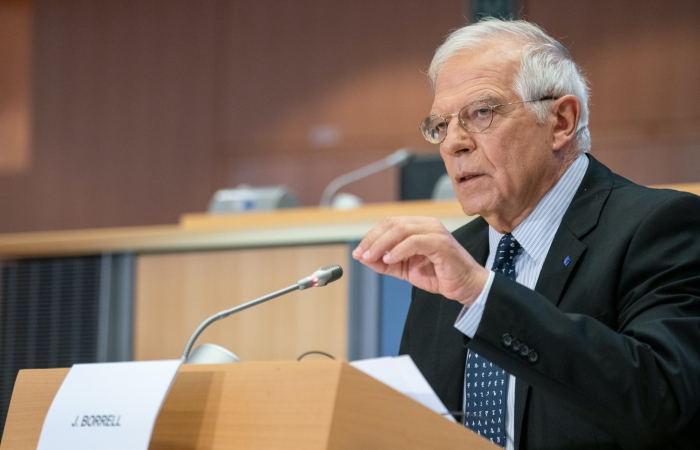
2024 started with an unprecedented number of Russian drones and ballistic missiles raining down on Ukraine. In this op-ed published this week on various media outlets, the European Union's High Representative for Foreign and Security Policy, Josep Borrell, argues that Ukraine prevailing against the Russian aggression is the best security guarantee for Europe and that a paradigm shift is needed from supporting Ukraine for 'as long as it takes' to committing to 'what it takes' for Ukraine to achieve victory. Borrell argues that we must intensify our efforts to win the race against time with Putin’s Russia. "We cannot allow him to prevail. Our own security is at stake. Should Putin’s strategy prove successful, it would embolden Russia and other autocracies to pursue their imperialist agendas. We must at any cost prevent a world where might makes right, where powerful countries change borders at will, and the weak fall prey to the strong. Allowing such a scenario would cast a long shadow over our future for decades to come. Ukraine prevailing against the Russian aggression is the best security guarantee for Europe. A Russia that learnt to stay within its borders will lessen pressure on its neighbours, ease Ukraine’s path to EU membership and allow Europe and the world to shift attention to the many other challenges that need solving. With our assistance, Ukraine can consign Russia’s imperial ambitions to the pages of history. This must guide our actions and thinking."
Editor's choice
News
Sweden one step closer to joining NATO

Sweden one step closer to joining NATO

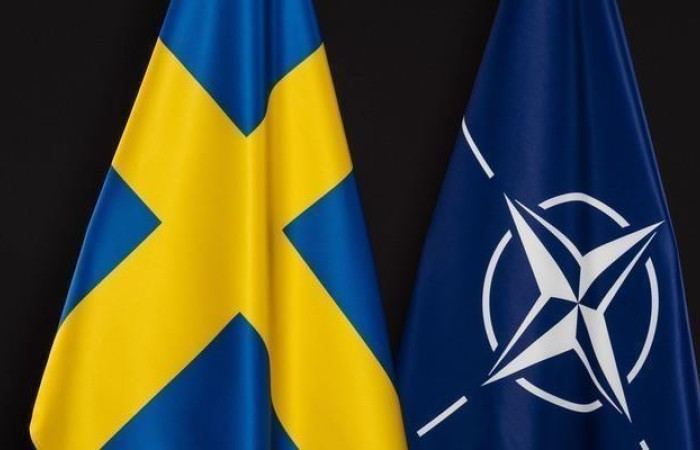
The Turkish Grand National Assembly (Parliament), on Tuesday, 23 January, ratified the agreement on Swedish membership of NATO, bringing the Scandinavian country one step closer to fulfilling its historic decision to abandon its decades-long neutrality and join the military alliance in the face of Russian aggression against Ukraine, and the threat that poses to the European security order. The ratification was adopted by the national assembly in a vote of 287 to 55. President Recep Tayyip Erdoğan is now expected to sign the accession agreement. formalising the process of Turkish ratification. All members of NATO have to approve the addition of new members to the organisation. The only remaining NATO country to finalise the ratification process is Hungary  “Today we are one step closer to becoming a full member of NATO,” tweeted Swedish Prime Minister Ulf Kristersson. On Tuesday, Hungarian Prime Minister Viktor Orbán reached out to Kristersson, asking him to come down to Budapest and negotiate about the NATO bid, an idea swiftly rejected by Swedish Foreign Minister Tobias Billström.
Editor's choice
News
Fascist salute rattles Italian politics

Fascist salute rattles Italian politics

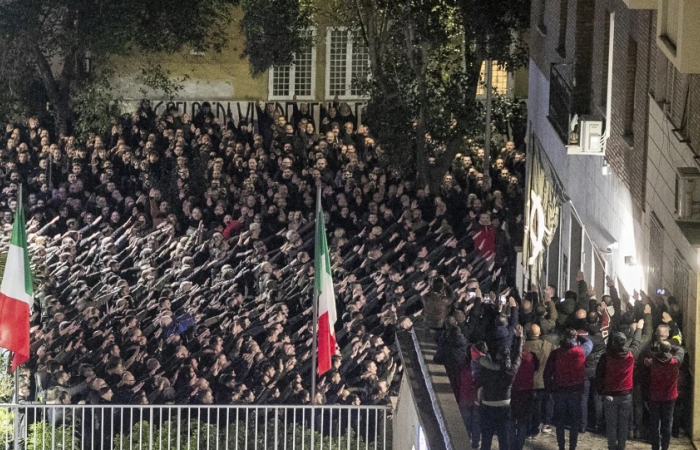
The sight of hundreds of men giving the fascist salute of raised arm during a commemoration in Rome on Sunday (7 January) has sent waves through the Italian political scene. The men were part of a larger crowd taking part in an annual commemoration for three far-right activists who were killed in the 1970s, allegedly by far-left militants. In a video that went viral on social media, rows of black-clad men can be seen extending their right arms. They are also heard shouting "Presenti", in response to the rallying cry "For all fallen comrades!" - a slogan typical of the Italian far-right. The rally is held every year to commemorate the 1978 killings of three teenage activists from the youth wing of the far-right Italian Social Movement (MSI). Two were shot dead by suspected far-left militants outside MSI headquarters on Via Acca Larentia in Rome, while the third was killed by police in riots that followed the shooting. No-one was ever prosecuted for the killings, which have become widely known as the "Acca Larentia massacre". Sunday night's scenes have been condemned by parties across the political spectrum. It has however once more opened a divide in Italian politics that has not been properly healed since the end of World War II.
Editor's choice
News
Borrell holds talks with Saudi leaders

Borrell holds talks with Saudi leaders

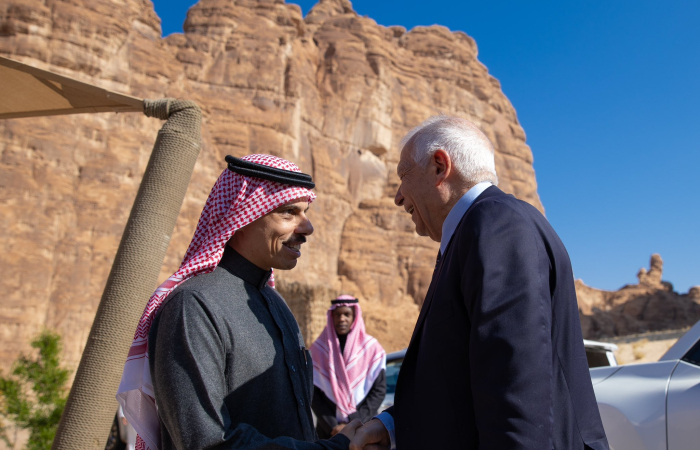
EU High Representative for Foreign and Security Policy, Josep Borrell, visited Saudi Arabia on 7-8 January for talks with Foreign Minister Prince Faisal bin Farhan and the Secretary General of the Gulf Cooperation Council Jasem Mohamed Albudaiwi. A statement from the European External Action Service  in Brussels said that the mission follows his trip to Lebanon and is part of Borrell’s engagement with regional partners to advance diplomatic efforts with a view to creating the conditions to reach a just and lasting peace between Israel, Palestine and in the region. "The trip will be an occasion to discuss all aspects of the situation in and around Gaza, including its impact on the region. He will also address the worrying escalation in the Red Sea", the statement added. During the meetings with Saudi officials in Al-Ula bilateral cooperation and regional priorities in the framework of the EU’s partnership with the Gulf Cooperation Council were discussed.