Region

EU plus

Stories in this section cover the EU-27 countries plus the UK, Norway, Switzerland, Iceland, Liechtenstein, Monaco, Andorra and the Balkan Countries (Albania, Serbia, Montenegro, Bosnia-Herzegovina, Kosovo, North Macedonia).

Editor's choice
Opinion
Opinion: The European Union must recognise that the C5 have now become the C6

Opinion: The European Union must recognise that the C5 have now become the C6

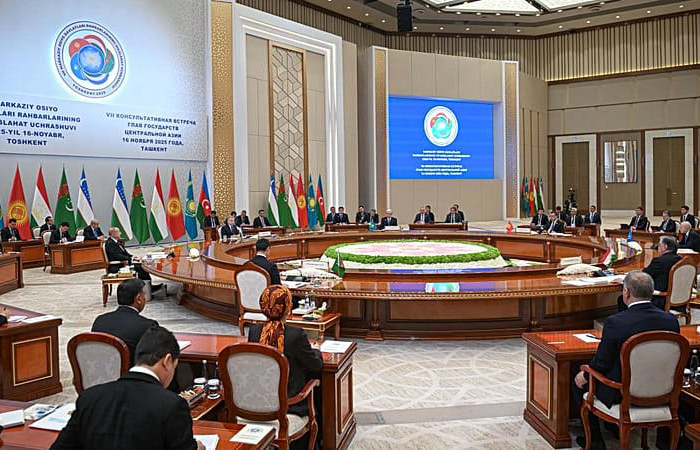
In recent years, Eurasia has undergone a structural transformation in how regions connect, trade, and cooperate. The combination of geopolitical shocks, disrupted supply chains, and the search for secure east–west routes has elevated the importance of the Trans-Caspian space. The states of Central Asia, once constrained by geography, have taken unprecedented steps to strengthen regional coordination, modernize infrastructure, and integrate more closely with Europe. Meanwhile, Azerbaijan has rapidly emerged as an indispensable connector linking Central Asia with the South Caucasus, Türkiye, and European markets. This new reality was formally acknowledged in November 2025 when Azerbaijan was unanimously welcomed as a full participant in the Consultative Meeting of Central Asian Heads of State in Tashkent. What had long been a C5 grouping transformed into a C6, marking a historic moment: the Caspian was no longer a frontier separating two regions but the center of a unified geopolitical and geo-economic space. President Ilham Aliyev described this alignment as the emergence of “a single geopolitical and geo-economic region,” while President Shavkat Mirziyoyev called Azerbaijan’s inclusion “historic” and proposed transforming the consultative platform into a structured regional institution capable of shaping security, economic, environmental, and digital policy. The Caspian is no longer a boundary; it is the heart of an integrated region. The transformation of the EU and U.S. C5+1 formats into C6+1 is the logical next step to ensure that both sides of the Caspian advance together – coherently, strategically, and with shared purpose. (click the image to read the full op-ed).
Filter archive

Publication date
Editor's choice
Opinion
Opinion: German diplomacy on the move in the South Caucasus

Opinion: German diplomacy on the move in the South Caucasus

"The EU cannot afford to overlook the strategic importance of the South Caucasus", writes Simona Scotti in this op-ed for commonspace.eu. "If on the one hand over the past two years significant steps have been undertaken, including the deployment of the EUMA in Armenia and the Brussels track of negotiations led by Charles Michel, on the other hand some more concrete actions, with a well-defined and consistent strategy, would be appreciated. The lack of a clear and coherent vision has destabilized Armenia and Azerbaijan, which have often questioned to which extent they can really trust a Western involvement in the region."
Editor's choice
News
Armenian and Azerbaijani foreign ministers meet in Berlin as German diplomacy emerges out of the shadows to save the day for Europe

Armenian and Azerbaijani foreign ministers meet in Berlin as German diplomacy emerges out of the shadows to save the day for Europe

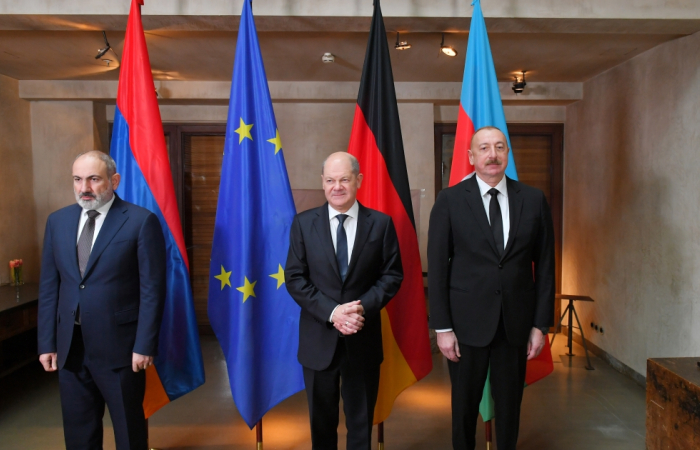
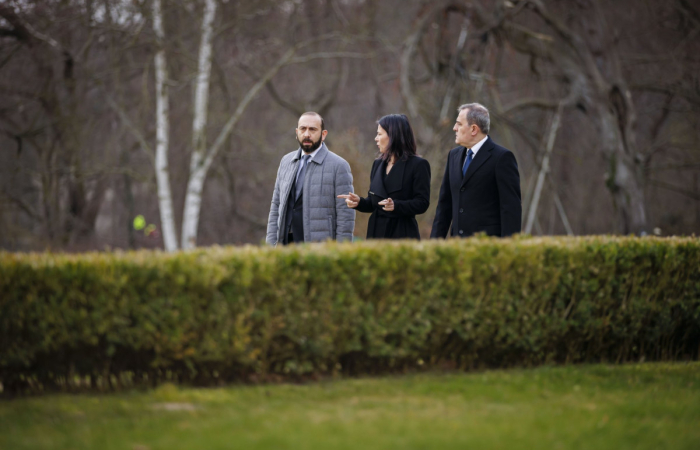
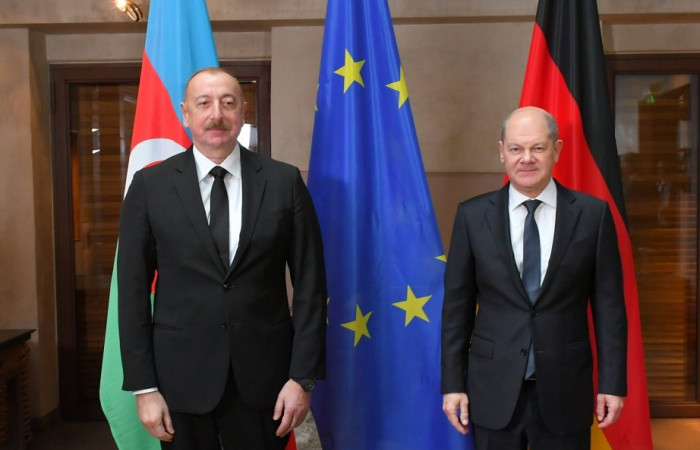
German diplomacy has been in the South Caucasus from the day after the three countries declared their independence in 1991. Germany was the first country to set up embassies in the region, but generally German diplomacy has been low-key – preferring to let others, namely France, and later the EU, to do the heavy lifting when it came to issues like supporting the Armenia-Azerbaijan peace process. This has changed recently. After the untimely intervention of French president Emanuel Macron in the process that was led by EU Council president Charles Michel in 2022, and given Azerbaijan’s refusal to negotiate in this framework because of what it claims is French bias towards Armenia, German Chancellor Olaf Scholz was in 2022 reluctantly persuaded to engage with the process directly, and join the Macron-Michel tandem. Nothing at first seemed to have come out of that, and German diplomacy got overshadowed by some missteps in Paris and Brussels, not to mention some awkward phrases of its own foreign minister when she visited the region last year. But it seems that behind the scenes, German diplomacy persisted. Earlier in February Armenian Prime Minister Nikol Pashinyan and Azerbaijani President Ilham Aliyev, travelled to Munich to attend the annual security conference, and on the margins had a long-awaited meeting, bilaterally and later with Chancellor Scholz. At the meeting concrete decisions were taken on follow-up, and thanks to the usual German efficiency the foreign ministers of the two countries were in Berlin on Wednesday (28 February) for detailed talks about the peace treaty. Most of the discussions were in the bilateral format, but there was also a meeting of the Ministers with their German counterpart. The talks continue today. It is the latest episode in a long saga, but not an insignificant one. Germany is a political and economic heavyweight, and its direct involvement may just be what is needed to get the ongoing negotiations between Armenia and Azerbaijan across the line. At a time when other elements of European diplomacy appear not to be so effective the German intervention is also seen as saving the day for Europe, that needs to remain present and visible in the region.
Editor's choice
Opinion
Opinion: Azerbaijan is not de-coupling from the West

Opinion: Azerbaijan is not de-coupling from the West

Over the past two years, since the beginning of the Russia-Ukraine conflict, Azerbaijan’s foreign and security policies have drawn varying interpretations from experts and political observers. "The delicate balancing act pursued by Baku between competing global powers while safeguarding the country’s national interests and restoring its territorial integrity has appeared as an intriguing case for the studies of international relations", writes Vasif Husseynov in this op-ed for commonspace.eu. "Amidst the evolving dynamics of regional geopolitics, Azerbaijan’s recent engagements with Western counterparts underscore its unwavering commitment to maintaining robust relations with the West. Despite the complexities of navigating relations with neighboring powers, Azerbaijan remains steadfast in its pursuit of multilateral or, as better known in the Azerbaijani  discourse, balanced approach in foreign policy", he argues.
Editor's choice
News
5th European Union-Central Asia meeting on Afghanistan held in Bishkek

5th European Union-Central Asia meeting on Afghanistan held in Bishkek

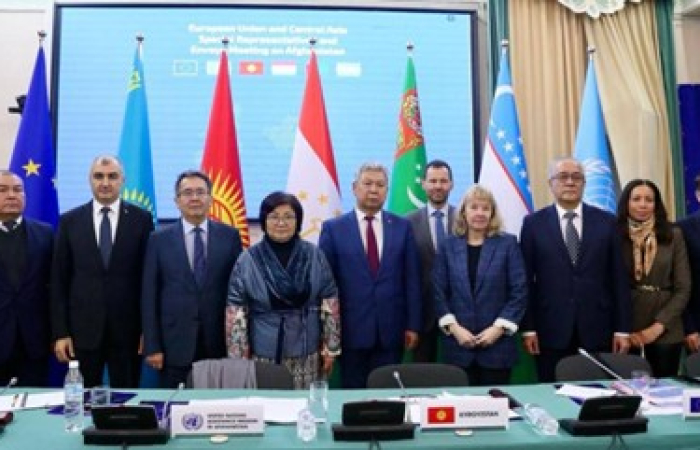
The fifth European Union-Central Asia meeting focusing on Afghanistan took place in Bishkek on 14 February. Discussions centred around the situation in Afghanistan, with particular emphasis placed on finding effective ways to interact with the country’s de facto government. Participants praised the recent United Nations (UN) report on Afghanistan and endorsed UN Secretary-General António Guterres’s initiative to establish the position of UN Secretary-General’s Special Envoy for Afghanistan. Roza Otunbayeva, the Secretary-General’s Special Representative for Afghanistan and Head of the UN Assistance Mission in Afghanistan, also attended the meeting.  The European Union was represented by the EU Special Representative for Central Asia, Terhi Hakkala.
Editor's choice
News
Busy time for Aliyev and Pashinyan at the Munich Security Conference

Busy time for Aliyev and Pashinyan at the Munich Security Conference

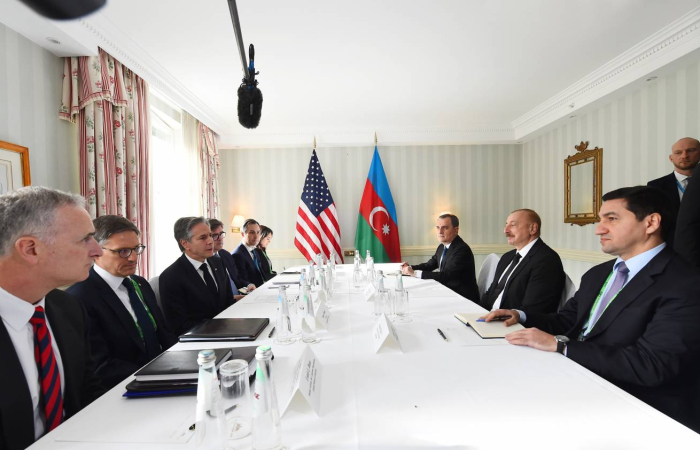
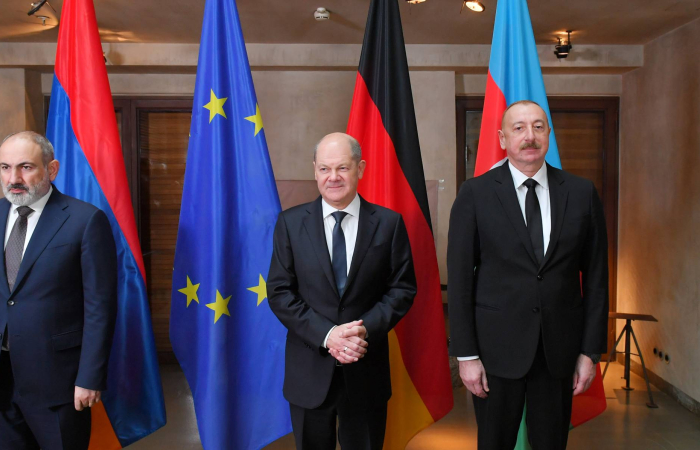
Armenian prime minister, Nikol Pashinyan, and Azerbaijani president, Ilham Aliyev, are this weekend both attending the Munich Security Conference. On the margins of the big event the two leaders have held a series of bilateral meetings with world leaders and statesmen. Of special significance however was their own bilateral meeting, which followed a trilateral meeting hosted by the German Chancellor, Olaf Scholz. In a short read out of the Aliyev-Pashinyan meeting, the website of the Azerbaijani president said "Negotiations on the peace treaty between the two countries, normalization of relations, border delimitation issues were discussed at the meeting. The Ministries of Foreign Affairs were instructed to hold a meeting on the peace agreement and a meeting of the border delimitation commission soon. The mutual compromises and progress achieved during COP29 between the two countries were positively evaluated." The website of the Armenian prime minister makes no mention of the bilateral meeting but highlights the meeting with Scholz, adding that "the process of regulating Armenia-Azerbaijan relations and steps aimed at ensuring peace and stability in the region were discussed. It was agreed to continue the work on the peace treaty." Both Aliyev and Pashinyan have also had bilateral meetings with the German Chancellor, as well as with US Secretary of State, Antony Blinken, and OSCE Chairman-in-Office, Minister of Foreign Affairs of Malta Ian Borg. The meetings highlight the interest of the international community to support Armenia and Azerbaijan in their quest for peace, despite on-going problems and incidents on the ground. For Azerbaijan the meetings in Munich are also an opportunity to prepare for COP29 - the Climate Convention framework meeting which is scheduled to be held in Baku in November. Aliyev met with US Special Envoy on Climate, John Kerry, and also invited him for the Baku event.
Editor's choice
News
Work launched on "an ambitious EU-Armenia Partnership Agenda"

Work launched on "an ambitious EU-Armenia Partnership Agenda"

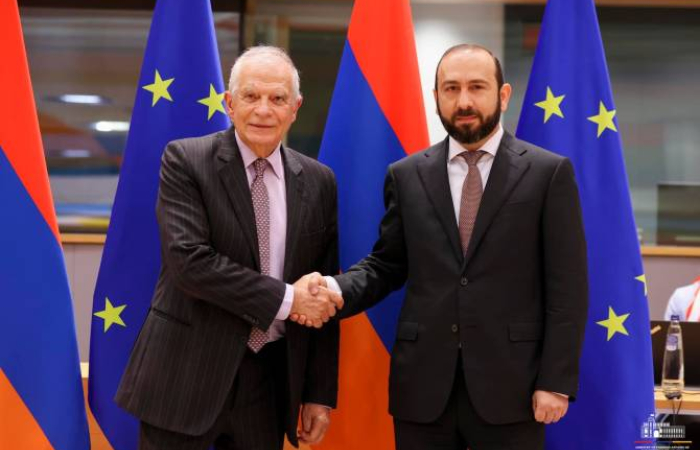
The European Union and Armenia have launched work on a new "ambitious partnership agenda". This was announced by EU High Representative for Foreign and Security Policy, Josep Borrell at the end of a meeting of the EU Armenia Partnership Council. Foreign Minister Ararat Mirzoyan led the Armenian side during the discussions. At the end of the meeting Borrell spoke to the media. Addressing Foreing Minister Mirzoyan, Borrell said: "In October in the European Parliament, your Prime Minister [Nikol Pashinyan] said that Armenia is ready to move closer to the European Union.  In response, last October, the European Council, at the highest political level of the European Union, tasked me and the [European] Commission to explore ways to strengthen our relations - EU-Armenia relations - “in all their dimensions”. In this context, today we decided to launch work on an ambitious new EU-Armenia Partnership Agenda.  This decision sends a strong signal of our mutual interest in a new strategic phase in our relations, and it will provide a clear roadmap and a vision for the way forward.This is about the future. The future starts today".