US brokers agreement to end Russia - Ukraine military action in the Black Sea

Russia and Ukraine agreed Tuesday to halt military strikes in the Black Sea and on energy sites during talks brokered by the United States, which offered as a first concrete incentive to Moscow to ease pressure on agricultural exports. With President Donald Trump pushing for a rapid end to the war that has killed tens of thousands of people, US negotiators shuttled separately over three days in the Saudi capital Riyadh between delegations from Ukraine and Russia.

In parallel statements, the White House said that each country "agreed to ensure safe navigation, eliminate the use of force and prevent the use of commercial vessels for military purposes in the Black Sea." The United States said it would also look for ways to enforce a ban on strikes on energy infrastructure in the two countries.

The Kremlin meanwhile said the agreement to halt strikes on the Black Sea could only come into force after the lifting of restrictions on its agriculture sector. Ukrainian President Volodymyr Zelensky, who has turned to diplomacy after heavy pressure from Trump including a brief ban on US aid and intelligence sharing, said it was too early to tell if the agreements will work but that they were "the right steps."

"No one can accuse Ukraine of not moving towards sustainable peace after this," Zelensky told a news conference in Kyiv. Zelensky said that the talks also discussed bringing in third parties to oversee a future truce. He said that Turkey, which has maintained ties with both sides, could monitor the situation on the Black Sea and that a Middle Eastern nation could look at the energy agreement.

Trump after taking office spoke directly to Russian President Vladimir Putin, ending the ostracization of him by the West since he ordered the invasion of Ukraine in 2022. In the first concrete step by the United States toward Russia in return for the engagement, the White House said it would "help restore access to the world market" for Russian agricultural and fertilizer exports. The United States never directly put sanctions on Russian agriculture but had restricted access to payment systems used for international transactions. 

The issue became a major talking point for Russia, which told countries in the developing world that US policies -- not the war itself -- were contributing to higher prices. Moscow said the deal would "come into force" after the "lifting of sanctions restrictions" on the Russian Agricultural Bank and other "financial institutions involved in international trade of food," and only after they are reconnected to the SWIFT international payment system.

Zelensky, while saying he did not know full details of the US decision, voiced alarm. "We believe that this is a weakening of the position and a weakening of sanctions," he said. Ukrainian Defense Minister Rustem Umerov, who took part in the talks, said that details on the Black Sea agreement were still being worked out. He also warned that if Russian warships moved from the eastern part of the Black Sea then "Ukraine will have full right to exercise right to self-defense." Ukraine earlier this month agreed to a US-proposed unconditional ceasefire, but Russia turned it down, with Kyiv accusing it of wanting to gain more battlefield advantage first. 

Russian Foreign Minister Sergei Lavrov gave no sign that Moscow was closer to agreeing to a wider ceasefire and put a priority on shipping through the Black Sea. A previous UN-brokered deal that allowed millions of tonnes of grain and other food exports to be shipped safely from Ukraine's ports, but Russia had complained that it was not beneficial for its trade.

Before the US announcement on agricultural exports, Lavrov accused Western countries of trying to "contain" Russia like "Napoleon and Hitler." The Saudi talks came as both Russia and Ukraine escalate their attacks on the ground, with Kyiv saying its air defense units had downed 78 out of 139 drones launched by Russia Tuesday.  

In Ukraine's northeastern city of Sumy, officials said the toll from a Russian strike in a residential area a day earlier climbed to 101 wounded, including 23 children, with one adult and one child in serious condition. Russia has advanced in some areas of the front for months and on Tuesday claimed to have captured two more villages in southern and eastern Ukraine. 
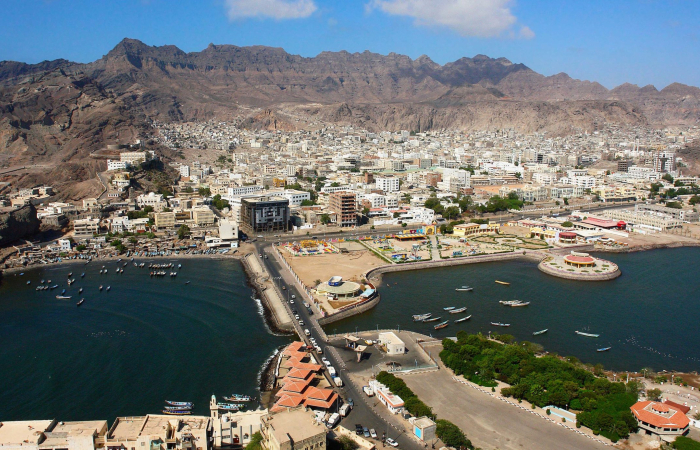
Source: commonspace.eu with agencies. Photo: AFP - Ukraine's President Volodymyr Zelensky during a meeting with officers of the Ukrainian Armed Forces at an undisclosed location in the Donetsk region.

Related articles

Editor's choice
News
Council of Europe launches new International Claims Commission for Ukraine

Council of Europe launches new International Claims Commission for Ukraine

Thirty-four countries and the European Union have signed a new convention establishing an International Claims Commission for Ukraine at a diplomatic conference co-hosted by the 46-nation Council of Europe and the Netherlands in the Hague. The diplomatic conference was attended by leaders and high-level representatives from over 50 states, including the President of Ukraine, Volodymyr Zelenskyy, the President of the Republic of Moldova, Maia Sandu, and the Prime Minister of the Netherlands, Dick Schoof.  “Today marks a major step forward in ensuring accountability for Ukraine. The International Claims Commission represents justice and hope for tens of thousands of victims—our determination that those who have suffered will not be forgotten. I call for quick ratifications so we can get the commission rapidly up and running for the people of Ukraine,” said Council of Europe Secretary General Alain Berset. Ukrainian President Volodymyr Zelenskyy said: “We expect that every mechanism for compensation from the Register of Damage and Claims Commission to the actual payments – will start working and receive strong and sufficient international support, so that people can truly feel that any kind of damage caused by the war can be compensated. This war, and Russia’s responsibility for it, MUST become a clear example – so that others learn not to choose aggression.” “Accountability is about creating the conditions for peace that endures. And therefore, accountability is a condition of security – today and for the future. But accountability is not only about Ukraine. And it is not only about one aggressor and one victim. Accountability is about Europe. About every country in Europe. It is about whether Europe, as a whole, is willing to defend its peace,” said Maia Sandu, President of the Republic of Moldova, which currently holds the Presidency of the Council of Europe’s Committee of Ministers. The Prime Minister of the Netherlands, Dick Schoof, said: “Every day Russia is deliberately bombarding homes, destroying businesses and damaging infrastructure in Ukraine. Russia must compensate Ukraine for the damage caused. That is why we have launched the International Claims Commission for Ukraine and we are honoured to host it.” The International Claims Commission will be the second part of a comprehensive compensation mechanism related to Russia’s war of aggression, building on the existing Register of Damage for Ukraine. The claims commission will be established within the framework of the Council of Europe and will also be open to other countries. The Register of Damage for Ukraine, created in 2023, collects and records compensation claims submitted by individuals, organisations and public bodies in Ukraine. Forty-four states and the European Union have so far joined the Register, which has already received 86,000 claims. The International Claims Commission will review, assess and decide upon claims submitted to the Register of Damage for Ukraine and determine the amount of compensation, if any, which is due in each case. The convention establishing the commission will enter into force once it has been ratified by 25 signatories, as long as sufficient funds have been secured to support its initial work.

Popular

Editor's choice
News
Council of Europe launches new International Claims Commission for Ukraine

Council of Europe launches new International Claims Commission for Ukraine

Thirty-four countries and the European Union have signed a new convention establishing an International Claims Commission for Ukraine at a diplomatic conference co-hosted by the 46-nation Council of Europe and the Netherlands in the Hague. The diplomatic conference was attended by leaders and high-level representatives from over 50 states, including the President of Ukraine, Volodymyr Zelenskyy, the President of the Republic of Moldova, Maia Sandu, and the Prime Minister of the Netherlands, Dick Schoof.  “Today marks a major step forward in ensuring accountability for Ukraine. The International Claims Commission represents justice and hope for tens of thousands of victims—our determination that those who have suffered will not be forgotten. I call for quick ratifications so we can get the commission rapidly up and running for the people of Ukraine,” said Council of Europe Secretary General Alain Berset. Ukrainian President Volodymyr Zelenskyy said: “We expect that every mechanism for compensation from the Register of Damage and Claims Commission to the actual payments – will start working and receive strong and sufficient international support, so that people can truly feel that any kind of damage caused by the war can be compensated. This war, and Russia’s responsibility for it, MUST become a clear example – so that others learn not to choose aggression.” “Accountability is about creating the conditions for peace that endures. And therefore, accountability is a condition of security – today and for the future. But accountability is not only about Ukraine. And it is not only about one aggressor and one victim. Accountability is about Europe. About every country in Europe. It is about whether Europe, as a whole, is willing to defend its peace,” said Maia Sandu, President of the Republic of Moldova, which currently holds the Presidency of the Council of Europe’s Committee of Ministers. The Prime Minister of the Netherlands, Dick Schoof, said: “Every day Russia is deliberately bombarding homes, destroying businesses and damaging infrastructure in Ukraine. Russia must compensate Ukraine for the damage caused. That is why we have launched the International Claims Commission for Ukraine and we are honoured to host it.” The International Claims Commission will be the second part of a comprehensive compensation mechanism related to Russia’s war of aggression, building on the existing Register of Damage for Ukraine. The claims commission will be established within the framework of the Council of Europe and will also be open to other countries. The Register of Damage for Ukraine, created in 2023, collects and records compensation claims submitted by individuals, organisations and public bodies in Ukraine. Forty-four states and the European Union have so far joined the Register, which has already received 86,000 claims. The International Claims Commission will review, assess and decide upon claims submitted to the Register of Damage for Ukraine and determine the amount of compensation, if any, which is due in each case. The convention establishing the commission will enter into force once it has been ratified by 25 signatories, as long as sufficient funds have been secured to support its initial work.