Editor's choice
News
Armenia-Azerbaijan Strategic Expert Platform: Members emphasise the importance of the present moment for the South Caucasus and call for the momentum to be used for the long-term peace and prosperity of the region

Armenia-Azerbaijan Strategic Expert Platform: Members emphasise the importance of the present moment for the South Caucasus and call for the momentum to be used for the long-term peace and prosperity of the region

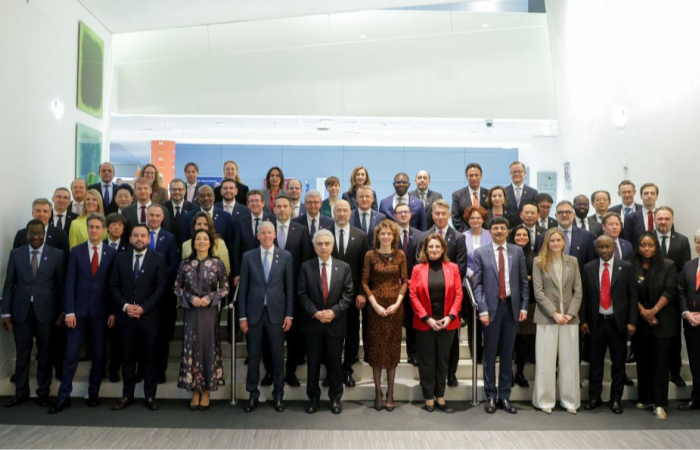
On 27 February 2026, the members of the Armenia-Azerbaijan Strategic Expert Platform met in Antwerp, Belgium, to assess developments in the South Caucasus following the initialling of a peace agreement between Armenia and Azerbaijan on 8 August 2025 at the White House. The members described the present moment as one of major importance for the region and its neighbours, urging leaders and societies alike to use the current momentum to secure long-term peace and prosperity. Established in 2024 with the support of LINKS Europe, the Platform provides a space for direct dialogue and joint analysis between Armenian and Azerbaijani experts. The members also reaffirmed the importance of continued international engagement and expressed strong support for LINKS Europe’s ongoing peacebuilding work in the region. (Click on the image above for the full statement.)
Editor's choice
Interview
Thursday Interview: Dr. Anar Valiyev

Thursday Interview: Dr. Anar Valiyev

Dr. Anar Valiyev is an Associate Professor of Urban and Public Affairs at ADA University in Baku, Azerbaijan, with more than 18 years of experience in higher education. His research focuses on public policy, urban development, governance, and post-Soviet regional affairs. He holds a PhD in Urban and Public Affairs from the University of Louisville and has published widely on urbanisation, policy reform, and regional connectivity in the South Caucasus and beyond. This week, commonspace.eu spoke with Dr. Valiyev in Brussels ahead of a roundtable jointly organised by LINKS Europe Foundation and the European Policy Centre. He is taking part in a panel discussion focusing on the Armenia–Azerbaijan peace process, its implications for both countries and the wider region, the involvement of the European Union and the United States, and the challenges that lie ahead. In this interview, he reflects on how his research has evolved over nearly two decades in academia, examines the transformative potential of regional connectivity and trade, discusses the strategic role of energy in Azerbaijan’s foreign policy, and highlights the importance of people-to-people ties through education as a form of long-term soft power. (Read the full interview by clicking on the image above)
Editor's choice
News
Washington to invest in Armenia’s nuclear energy sector

Washington to invest in Armenia’s nuclear energy sector

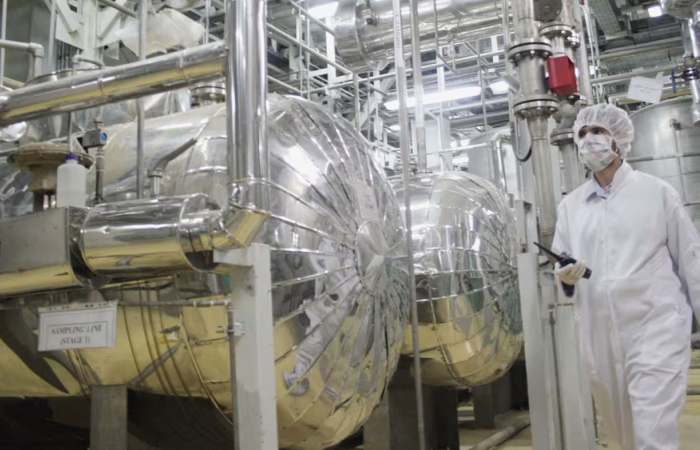
US Vice President JD Vance announced a $9 billion U.S. investment in Armenia’s nuclear energy sector during a visit to Yerevan, saying the two countries had completed negotiations on a civil nuclear cooperation framework that will enable joint projects, including the use of US small modular reactor technology. Vance said the initiative aims to strengthen Armenia’s energy security while creating jobs in the United States. At a joint briefing with Prime Minister Nikol Pashinyan, Vance also confirmed that Washington had approved the sale of V-BAT drones to Armenia in a deal worth $11 million. The US vice president voiced support for Pashinyan ahead of Armenia’s parliamentary elections, scheduled for June 7, describing him as a partner capable of building long-term cooperation with Washington. Vance also commented on the implementation of the "Trump Route for International Peace and Prosperity" project, which, in his opinion, will radically change the entire South Caucasus, open "a new world for international trade, transit and energy flows, and provide unprecedented connectivity between Armenia and neighboring countries." US Vice President Vance visited Armenia on Monday (9 February)>, where he held talks with prime minister Nikol Pashinyan. On Tuesday he is expected to go to Baku to meet President Ilham Aliyev.
Editor's choice
Monday Commentary
Monday Commentary: It is time for Iran to turn the page

Monday Commentary: It is time for Iran to turn the page

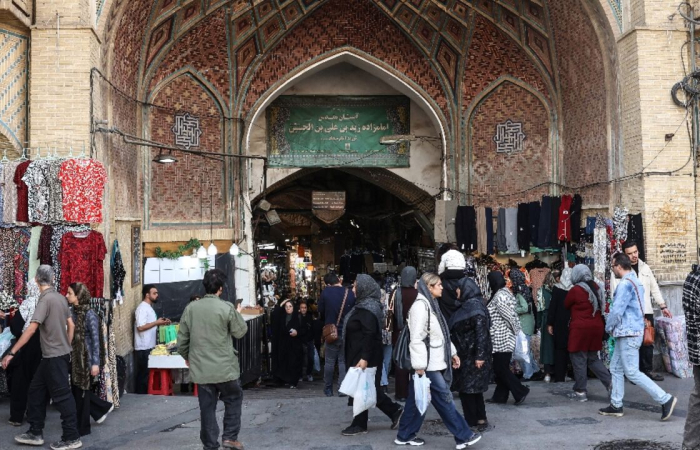
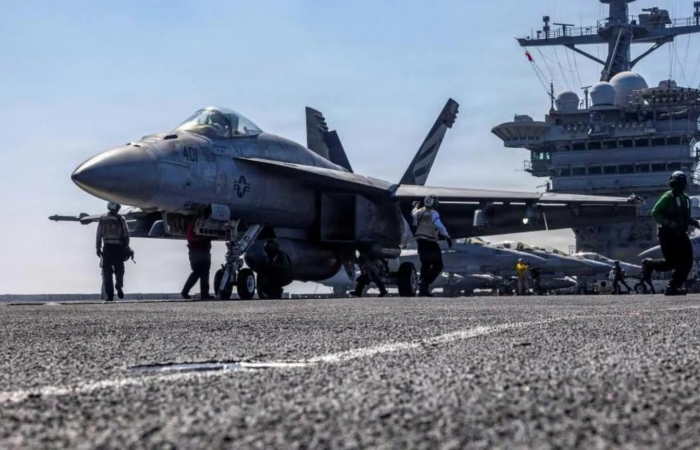
One slogan at a pro-democracy Iran rally held in Berlin, one of many that took place in Europe this weekend, caught my attention. It said “No Shah, no Mullahs”. It caught the dilemma of many Iranians, inside and outside the country, that are being forced into a false choice between the present clerical regime, and the “Shah”, the son of Mohammed Reza Pahlavi, who ruled Iran from 1941 until the 1979 revolution. For most of the time, and certainly since 1953, the Shah was absolute ruler. Mohammed Reza Pahlavi was no democrat. He ruled as an absolute dictator, with the help of a secret police that tortured and abused people. It is at best disingenuous, at worst an act of great folly and cynicism, that in the United States, the son and heir of Mohammed Reza Pahlavi is being promoted as the alternative to the clerical regime that currently rules Iran. Today Iran is also ready for change, but this change cannot be going back half a century in time. No Shah, no Mullahs, as the slogan in Berlin said. Its time for  Iran to turn the page, but this has to be done by the Iranian people in their own way. You cannot bomb a new regime to replace the present one. The Iranian system is resilient, and will not allow change imposed from outside. What will emerge will not be what Israel and the US wants, but it can be what the region needs: a peaceful, stable and prosperous Iran at peace with itself and its neighbours. Change is likely to come incrementally, and from inside the system. Many inside the system understand that change is needed. (click the image above to read Dennis Sammut's this week's Monday Commentary in full).
Editor's choice
Event
Italians put on a spectacular show at opening of 2026 Winter Olympics in Milan-Cortina

Italians put on a spectacular show at opening of 2026 Winter Olympics in Milan-Cortina

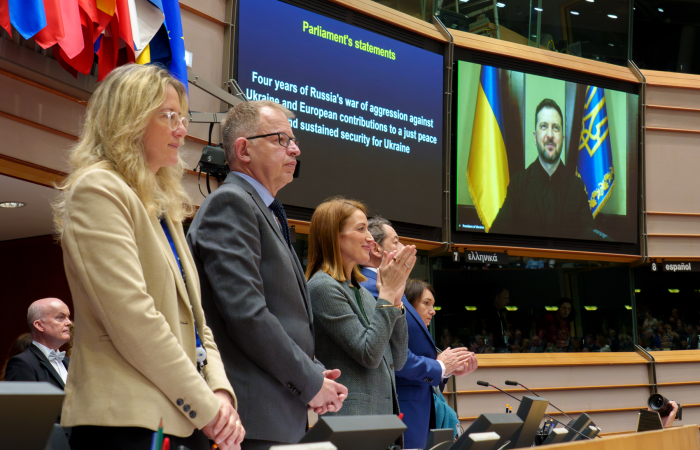
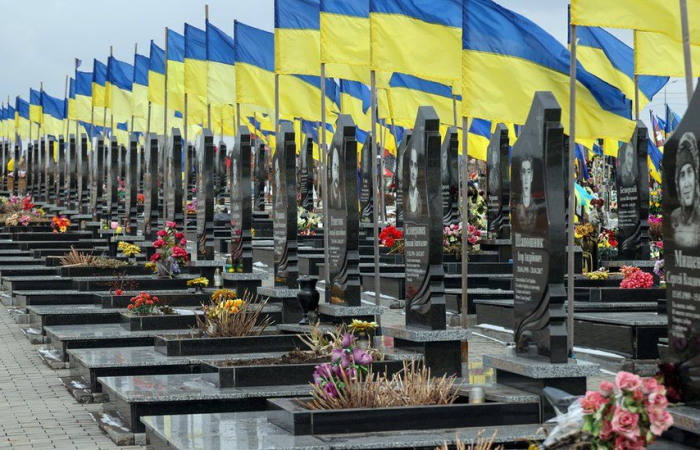
The Milan-Cortina Winter Olympic Games were inaugurated with a magnificent opening ceremony split across four locations. Milan's iconic San Siro stadium was the primary venue, with elements of the ceremony also taking place in Cortina, Livigno and Predazzo. It was an impressive production that went off without a hitch. Two Olympic cauldrons were lit - one in Milan and the other in Cortina - with Italian tenor Andrea Bocelli performing a rousing rendition of Nessun Dorma as the torch entered the San Siro. That followed a jubilant ending to the athlete's parade, with the Italy team the last to be brought out to huge cheers in all four locations. Italy aside, the warmest welcome was reserved for the Ukrainian athletes, while Team USA were also loudly cheered. But there were boos when US vice-president JD Vance was shown on the big screen, with negative crowd reactions for the Israel and Georgia teams as well. (click image above to read more)
Editor's choice
Commentary
B5+1 in Bishkek and critical minerals in Washington

B5+1 in Bishkek and critical minerals in Washington

  On Wednesday, February 4, the Kyrgyz government, in coordination with the Center for International Private Enterprise (CIPE), kicked off a two-day B5+1 business forum in Bishkek. This meeting was announced back in December and covered in a previous Central Asia Concise newsletter. As a reminder, the B5 + 1 format is supported by the U.S. Department of State and aims to foster relations as well as high-level engagement between government and business leaders to ultimately advance U.S.-Central Asia economic cooperation in the region. The B5+1 serves as the business counterpart to the political level C5+1 format.  Crucially, the C5+1 was traditionally held between Central Asian and U.S. foreign ministers but recently took place at the heads of state level at the White House in November 2025. The December Central Asia Concise newsletter noted that the upgrading of the C5 + 1 not just shows increased U.S. interest in the region but may indicate if the U.S. is serious about translating its general policy objectives of increasing economic cooperation with the region to concrete outcomes and collaboration with key regional business stakeholders. Although the 2-day forum has not yet concluded, the unprecedented size and prominence of the U.S. business delegation, including over 50 representatives from major corporations, all but confirms this interest. In a commentary on CENTRAL ASIA CONCISE, the commonspace.eu editorial team says that an underreported development last month, but a contextually important one, was Kazakhstan’s Mazhilis (lower house of parliament) accepting two draft laws regulating the activities of the Collective Security Treaty Organization (CSTO). According to Mazhilis deputy Aigul Kuspan. The first law ratifies the amendments to the Agreement on the Status of Forces and Assets of the CSTO Collective Security System that expand the grounds for sending formations to the territory of the participating member states, including crisis prevention, humanitarian assistance and surprise inspections, whereas the second law looks to improve the legal framework for military transportation. Considering the increasingly hostile rhetoric from Russia, the accepted draft laws should certainly raise questions in Kazakhstan’s parliament as well as civil society. Vladimir Solovyov does not speak for the Russian state, but his shows have a clear track record of often floating narratives, talking points, and rhetoric that later become Kremlin policy, most famously framing Ukraine’s government as a corrupt ‘nazi’ infested regime oppressing its people. Overall, for Central Asian countries, which are still dependent on Russia in numerous ways, their response to this rhetoric, but more importantly, any forging of new economic ties, on critical raw minerals, for example, will be important to redefining their relationship with this historically imperial neighbour.