


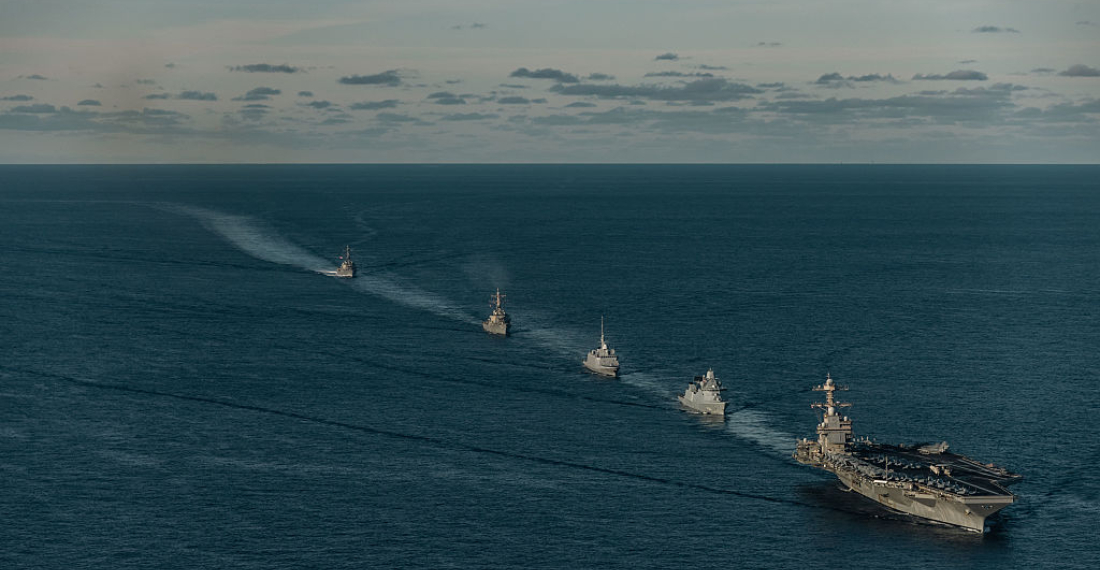
The United States has significantly expanded its military presence in the Middle East as President Donald Trump warned Iran to reach a deal within a 15-day deadline, raising concerns about a potential escalation of tensions in the region.
According to defence analysts, the scale and speed of the deployment are sufficient to sustain a weeks-long air campaign. The build-up includes additional naval forces, fighter aircraft, refuelling and transport planes, as well as air defence systems deployed to bases across the region. The United States Navy is reported to have at least one aircraft carrier already in the area, with further carrier strike groups and destroyers en route.
Former United States defence officials said the deployment echoes the military posture seen ahead of the 2003 invasion of Iraq. They warned that the current situation carries a high risk of miscalculation, particularly as United States and Iranian forces have already had limited confrontations in recent weeks.
The military build-up comes as United States and Iranian officials continue indirect talks in Geneva on Iran’s nuclear programme, with both sides reporting limited progress but remaining far apart on key issues.
Iran’s Revolutionary Guards this week conducted a naval exercise in the Strait of Hormuz, a vital maritime trade route. That was followed by Iranian and Russian naval drills in the Islamic republic’s southern waters on Thursday. The Quds, a conservative online news outlet, wrote on Thursday that the message of the drills was that “Iran’s coasts are no place for the enemy’s surfing”. “The drill with Russia will help foil the enemy’s psychological warfare,” it added.
Source: commonspace.eu with the Financial Times



